Jensen Huang Champions Open-Source AI: Distillation Is Not Plagiarism, DeepSeek and Kimi Are Excellent

Jensen Huang defends AI distillation as legitimate, praises Chinese models, and rallies 20+ companies behind open-source AI.
NVIDIA CEO Jensen Huang publicly defended knowledge distillation in AI as a legitimate learning technique rather than plagiarism, praising Chinese models DeepSeek and Kimi as excellent. He debuted on X with an open letter co-signed by 20+ companies including Microsoft and Meta supporting open-source AI — notably without OpenAI or Google. His stance reflects both technical conviction and NVIDIA's business logic: as the dominant AI chip maker, a thriving open-source ecosystem drives more computing demand.
Jensen Huang's Clear Stance: Distillation Is Not Plagiarism
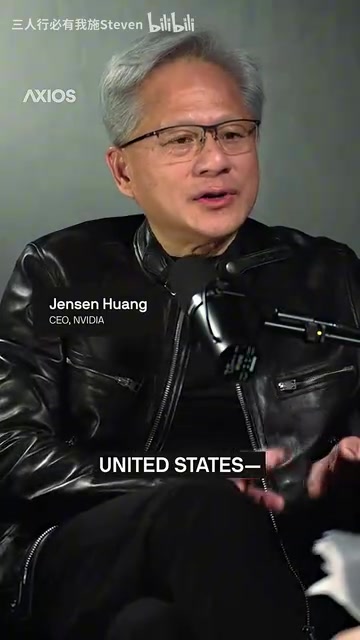
Recently, NVIDIA CEO Jensen Huang expressed a remarkably direct opinion on one of the most controversial topics in AI — knowledge distillation from open-source models. When asked whether open-source models extracting knowledge from other models constitutes "plagiarism," Huang didn't hedge. He directly labeled distillation technology as "legitimate."
His analogy was compelling: "Humans ask each other questions and learn from each other every day — why shouldn't AI be allowed to extract knowledge?" In his view, the advantages open-source models have over closed-source ones aren't rooted in copying, but rather represent the core logic and natural trajectory of AI development. This statement effectively validates the technical legitimacy of the entire open-source AI ecosystem.
Knowledge distillation is a technique that compresses and transfers capabilities by having a "student model" learn from the outputs of a "teacher model." It's widely used to reduce model size and improve inference efficiency. The technique was formally proposed by deep learning pioneer Geoffrey Hinton and colleagues in 2015. Its core idea is to use the probability distributions ("soft labels") output by large teacher models to guide the training of smaller student models. Soft labels contain the teacher model's rich understanding of relationships between categories — far more informative than simple correct/incorrect labels. In the era of large language models, distillation is widely used to transfer capabilities from top-tier closed-source models like GPT-4 into smaller open-source models — which is precisely where the controversy lies. At its essence, this debate is a deeper discussion about the boundaries of intellectual property in the AI era. Huang's choice to stand on the side of openness reflects both a technical judgment and a commercial position.
Huang's X Platform Debut: 20+ Companies Unite to Support Open-Source AI
Carrying this firm belief in open source, Jensen Huang posted his very first tweet on Elon Musk's X platform. According to available data, the post attracted over 10,000 followers within 20 minutes, with numerous tech industry leaders quickly engaging.
What's particularly noteworthy is the content attached to the tweet — an open letter co-signed by more than 20 companies, providing a comprehensive defense of open-source AI. Tech giants Microsoft and Meta were prominently listed. However, conspicuously absent from the list were OpenAI and Google — two companies known for their closed-source large models.
This detail reflects a deep strategic split within the AI industry. This divide traces back further: after Meta released its LLaMA series models in 2023, it officially kicked off the open-source competition in large models. The open-source camp argues that releasing model weights and training methods accelerates technological iteration, lowers industry barriers, and enhances model auditability and safety. The closed-source camp maintains that model training requires enormous R&D investment, that open weights undermine commercial returns, and that they could be exploited by malicious actors. OpenAI's shift from its original open-source philosophy to closed-source commercialization perfectly encapsulates this strategic divide. Huang's position is crystal clear: "The world needs both frontier closed-source models and frontier open-source models." He doesn't reject the closed-source approach entirely but emphasizes that both should coexist to drive industry progress.
Huang Praises Chinese AI Models: DeepSeek and Kimi Earn High Marks
During the interview, Huang gave high praise to open-source models from China. He called DeepSeek — which shook the global AI community — and Kimi K2 "excellent," stating plainly that "excellent open-source models deserve to be used."
DeepSeek was developed by a team under Chinese quantitative fund High-Flyer. Its DeepSeek-V3 and DeepSeek-R1 models attracted global attention in early 2025, achieving performance close to GPT-4 at a fraction of OpenAI's training costs — at one point triggering significant turbulence in U.S. tech stocks. Kimi K2, developed by Moonshot AI, employs a trillion-parameter-scale Mixture of Experts (MoE) architecture and matches international top-tier models across multiple benchmarks. Both models chose the open-source route, allowing developers worldwide to freely use and modify them, making them representatives of China's open-source AI strength.
Even more significant, Huang publicly corrected misconceptions about Chinese models. He pointed out that Wall Street previously misunderstood DeepSeek and is now misunderstanding Kimi. He stated clearly that claims about "Chinese large models having backdoors" are entirely wrong.

Elon Musk echoed these sentiments, suggesting that China is very likely to become a leader in AI, and that even U.S. attempts to restrict it would struggle to stop this trend. These statements are particularly sensitive given the current context of U.S.-China tech competition. Since 2022, the U.S. Department of Commerce has implemented multiple rounds of chip export controls targeting China, restricting exports of NVIDIA's high-end AI chips like the A100 and H100. NVIDIA subsequently released downgraded chip versions for the Chinese market, but these products were later also brought under restrictions. Yet Chinese models like DeepSeek have achieved breakthrough results despite these constraints, partly validating the limitations of technology blockade strategies. These statements from industry leaders reflect a realistic understanding of technological globalization — technology blockades may not truly prevent competitors from rising, and could instead weaken one's own market position and innovation momentum.
NVIDIA's Business Logic: Free-Flowing AI Is the Ultimate Money Printer
Why is Huang so adamant about championing open source? Beyond technical conviction, there's clear business logic at play.
Cheaper, more open models mean lower barriers to entry, attracting more developers, enterprises, and research institutions to build AI applications. Running these applications requires computing power — precisely the massive demand for NVIDIA GPU chips and data centers. Currently, NVIDIA commands over 80% of the global AI training chip market. Its flagship H100 and latest Blackwell series GPUs serve as core infrastructure for major AI labs and cloud providers. Beyond hardware sales, NVIDIA has built a complete software ecosystem including the CUDA programming framework, TensorRT inference optimization engine, and NeMo large model training platform. This "selling pickaxes" business model means that regardless of which model company ultimately wins, as long as the AI industry keeps expanding, NVIDIA continues to benefit. In other words, the more the open-source ecosystem thrives and AI applications proliferate, the more NVIDIA's hardware business flourishes.
Huang summed up the core insight in one sentence: "AI competition isn't a race with a finish line — restricting others only weakens your own competitiveness." From NVIDIA's perspective, freely flowing, widely used AI is the ultimate "money printer." This represents a fundamental difference in interests from companies that monetize closed-source models directly — OpenAI and Google's core business models convert model capabilities directly into revenue through API calls and subscription services, meaning open source represents a loss of core assets. NVIDIA, as an infrastructure provider, benefits from broader AI usage overall. This fundamental divergence of interests clearly explains why OpenAI and Google are absent from the open letter.
Conclusion: The Signals Behind the Open-Source AI Debate
Is Huang's high-profile championing of open source driven by genuine belief in AI's fundamental nature, or shrewd commercial calculation? The answer likely isn't either/or.
As a provider of computing infrastructure, NVIDIA's interests are naturally aligned with the prosperity of the entire AI ecosystem rather than the success or failure of any single model company. Huang's "open-source conviction" therefore aligns perfectly with his business interests — making his position appear sincere while making it impossible to ignore the strategic calculus behind it.
Regardless of motivation, his statements send at least one important signal: in the long race of AI, openness and collaboration may better align with the natural laws of technological development than blockades and restrictions. And the fact that Chinese open-source models have received public endorsement from NVIDIA's CEO marks a subtle yet profound shift in the global AI landscape.
Related articles

Claude Code vs Codex: A Deep Comparison to Help You Choose the Right AI Coding Assistant
Deep comparison of Claude Code vs Codex: architecture differences, behavior patterns, and use cases. Based on SWE-RPG benchmark data, choose the right AI coding assistant for your team.

Meta's Alleged Addictive Design: A Full Breakdown of the Hook, Hold, Harvest, and Hide Strategy
Meta lawsuit reveals a four-step product design strategy: Hook, Hold, Harvest, Hide. A deep analysis of addictive design in the attention economy and its ethical implications for the AI era.

Running an AI Coding Agent on an Amiga 500: How 1987 Hardware Connects to Modern AI
A developer ran an AI coding agent on a 1987 Amiga 500 with a 7MHz CPU and 1MB RAM. Learn how client-server architecture enables vintage hardware to access modern LLMs.