Claude Code vs Codex: A Deep Comparison to Help You Choose the Right AI Coding Assistant

A data-driven comparison of Claude Code and Codex to help you pick the right AI coding assistant.
This article provides a deep comparison of Claude Code and Codex, two leading AI coding assistants, analyzing their architectural differences (Shell vs Engine), behavioral patterns, and real-world failure modes based on SWE-RPG benchmark data. It reveals that 46.7% of AI agent failures occur during planning — not coding — and offers practical guidance for choosing the right tool based on your team's specific bottleneck: speed, safety, or cost.
The Gap Between Marketing Dreams and Academic Reality
Almost every AI coding tool demo sells the same dream: you hit Enter, step back, and watch a fully autonomous AI developer build an entire application from scratch while you grab a cup of coffee. Reality, however, is far less glamorous than the marketing narrative.
According to data from the SWE-RPG benchmark paper, when researchers tested today's top coding agents on real GitHub issues, they found an average solve rate of only 31.5%. This means that in real-world engineering scenarios, more than two-thirds of tasks cannot be autonomously completed by AI. SWE-RPG (Software Engineering Role-Playing Game) is a next-generation AI coding capability evaluation framework built upon SWE-bench. SWE-bench was originally proposed by a Princeton University team in 2023, constructing test sets by extracting resolved issues and corresponding pull requests from real GitHub repositories. SWE-RPG builds on this by introducing more fine-grained scoring dimensions — evaluating not just final patch correctness, but also independently scoring intermediate steps like requirements understanding, planning quality, and code style. This reveals the weak links of AI agents across the full software engineering workflow. It's precisely this multidimensional evaluation that gives us the first clear view of exactly where AI agents fall short.
Even more concerning: if you throw an aggressive, reckless AI directly into a codebase that demands strict object-oriented conventions, frustration is virtually guaranteed. Choosing the right AI coding assistant isn't about staring at intelligence benchmark scores to see which one is smarter — it's about matching the agent's behavioral patterns to your team's specific constraints.
Deconstructing AI Coding Tool Architecture: Shell and Engine
To truly understand the differences between Claude Code and Codex, we can break an AI development system into two parts: the Shell and the Engine.
Division of Responsibilities Between Shell and Engine
The Shell is the outer framework, responsible for reading files, invoking tools, and controlling your terminal. The Engine is the internal brain — large models like Opus 5 or GPT 5.4 that provide the underlying reasoning capabilities. Together, these two components determine an AI coding agent's ultimate performance. From a technical architecture perspective, the Shell is essentially an Orchestration Layer that determines how the agent interacts with the external environment — including file system read/write operations, terminal command execution, and version control operations. Different Shells exhibit significant differences in tool-calling strategies, context management approaches, and security boundary settings, all of which directly shape the AI agent's behavioral style. The Engine, as the reasoning core, determines the agent's "IQ ceiling," but even the most powerful engine can't reach its full potential if constrained by a poorly designed Shell.
The Hidden Trap of Subscription Plans
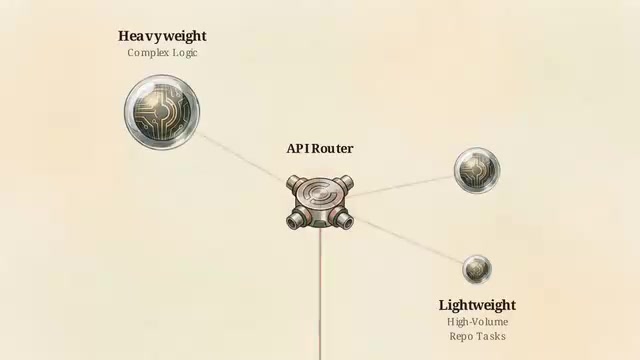
Most developers default to standard subscription plans, but this approach forcibly locks a specific Shell to a single Engine. If you're paying a flat rate, you're forced to invoke their most expensive engine even for running a simple, low-risk script — a waste of money.
The alternative is API routing. It lets you decouple the Shell from the Engine, paying per token on a pay-as-you-go basis. An API Router is a middleware architecture that acts as an intelligent dispatch layer between developers and multiple LLM APIs. Representative products include OpenRouter and LiteLLM. Token-based billing is the standard pricing model for LLM APIs, charging separately for input and output tokens. One token roughly corresponds to 0.75 English words or 0.5–1 Chinese characters. Token pricing varies dramatically across models — as of mid-2025, top-tier reasoning models (like Claude Opus, GPT-4.5) might cost $10–15 per million input tokens, while lightweight models (like GPT-4o-mini, Claude Haiku) can be as low as $0.10–0.25.
With routing, you can swap brains on the fly: for example, have a terminal agent use an inexpensive model to read the entire codebase and understand context, then switch to a heavyweight model for the actual code refactoring. This is the core value of API routing — dynamically selecting models based on task complexity, using cheap models for low-complexity tasks like code reading and documentation generation, and only invoking expensive models for critical architectural decisions and complex refactoring. This can reduce overall costs by 50%–80%. The biggest limitation of flat-rate subscriptions is precisely the sacrifice of this flexibility in tool scaling.
Where AI Agents Actually Fail: Planning Is the Danger Zone
We finally have concrete data on exactly where AI agents fail. The scoring system in the SWE-RPG benchmark paper covers requirements understanding, planning, and final patch correctness, revealing a counterintuitive conclusion.
Failure Happens Before Writing Code
The data shows that 46.7% of agent failures occur during the planning and requirements analysis phase — long before the first line of code is written. In practice, developers often submit vague requests, forcing the AI to guess at constraints. Once an agent fabricates incorrect business logic or misunderstands the target architecture, all the code it subsequently generates is completely useless.

This finding aligns closely with classic software engineering research. As early as 1981, Barry Boehm noted in his cost estimation model that defects introduced during the requirements phase cost 5–10x more to fix if discovered during coding, and potentially 100x more if found after deployment. AI agents face the same problem, arguably even more severely — because they lack the domain intuition that human engineers accumulate through years of experience and cannot make reasonable assumptions when information is incomplete. Most current AI agents focus their prompt engineering on code generation capabilities while severely neglecting guidance for requirements clarification and architectural planning.
This highlights a critical fact: raw coding ability cannot compensate for a fundamentally flawed plan. These planning failures persist because agents either rush through analysis or lack sufficient autonomy to formally challenge a bad requirement. Addressing this problem requires examining the specific tool architectures involved.
Claude Code Review: A Brilliant but Impatient Developer
Claude Code's design philosophy prioritizes execution speed over thorough requirements analysis. It tends to aggressively patch files to get programs running as quickly as possible, optimizing for rapid prototyping.
The Cost of Speed: Accumulated Technical Debt
This strong bias toward "moving fast" causes Claude Code to frequently skip the architectural due diligence that complex codebases require. Instead of creating separate, modular files for new features, it has a strong tendency to cram more functions into existing "God Classes." A God Class is a notorious anti-pattern in object-oriented programming, referring to a class that takes on too many responsibilities and contains a large number of unrelated methods and properties. This design violates the Single Responsibility Principle (SRP) from the SOLID principles, resulting in highly coupled code that's difficult to test and maintain. When a class balloons to thousands of lines, any local modification can trigger a chain reaction. Martin Fowler lists it as a priority code smell in Refactoring, recommending Extract Class and the Delegation pattern as refactoring strategies. In its rush to execute, Claude Code frequently disregards these fundamental object-oriented principles.

Therefore, if you want to keep your codebase clean, you must actively manage its context window and continuously supervise its raw output. To use a vivid analogy: Claude Code is like a brilliant but eager junior developer — unmatched at rapid prototyping, provided you're willing to invest time afterward paying down technical debt.
Technical Debt is a metaphor coined by Ward Cunningham in 1992, comparing compromises made in code for the sake of speed to financial debt — it accelerates delivery in the short term but generates "interest" over time in the form of exponentially growing maintenance costs. A 2020 McKinsey study found that large enterprises spend an average of 40% of their software budgets paying down technical debt. In the context of AI-assisted programming, this problem is further amplified: AI-generated code tends toward "good enough to run" implementations, lacking consideration for readability, testability, and architectural consistency. If teams don't establish systematic code review and refactoring practices, the sheer volume of AI-generated code can actually accelerate technical debt accumulation.
Codex Review: A Methodical Senior Engineer
In stark contrast to Claude Code, Codex takes a highly disciplined, highly autonomous approach.
Strict Constraints in Exchange for Code Maintainability
Codex is designed to run in a sandbox work tree and strictly adhere to the constraints and rules you set in your prompts. A sandbox work tree is an isolated execution environment derived from Git's worktree functionality. Git worktree allows developers to check out multiple working directories simultaneously within the same repository, each corresponding to a different branch and completely independent of one another. Codex leverages this mechanism to create an isolated workspace for each task, ensuring that the AI agent's file modifications don't affect the main branch or other parallel tasks. This design borrows from containerization principles — each task runs in its own "sandbox," so even if the agent generates incorrect code or executes dangerous operations, the production environment remains uncontaminated. This is particularly critical for enterprise-level multi-team collaboration scenarios, as it architecturally eliminates cross-contamination risks between parallel tasks.
Codex doesn't blindly race to the finish line. Instead, it proactively pauses mid-task, rolls back, and cleans up its own code. The tradeoff here is raw speed: for identical tasks, Codex runs three to four times slower than Claude Code. However, because it strictly follows constraint prompts and uses isolated work trees, Codex can handle multiple unattended tasks across parallel branches simultaneously with no risk of cross-contamination. This "slow is fast" philosophy offers significant advantages in large-scale engineering — when you dispatch 10 independent tasks simultaneously, Codex's total throughput may actually exceed that of Claude Code, which requires individual supervision. In essence, Codex is like a methodical senior engineer — you trade iteration speed for strict safety and maintainability.
How to Choose an AI Coding Assistant Based on Your Bottleneck
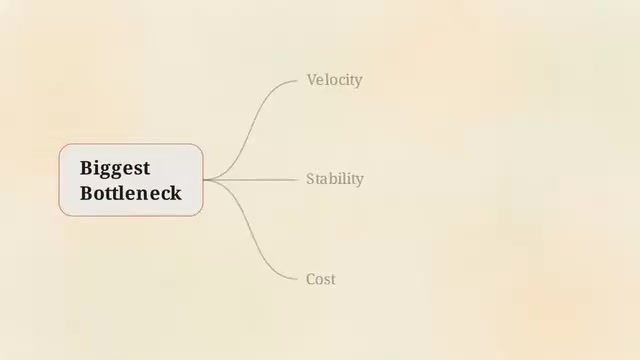
No agent is perfect — efficiency comes from intentional tradeoffs. Map these characteristics to your biggest bottleneck, and the choice becomes obvious.
Three Typical Use Cases
- Solo Hackers / Entrepreneurs: If your primary constraint is pure output speed, Claude Code is your tool. In the early startup phase, the speed of market validation matters far more than code quality — as Y Combinator's classic creed goes, "launch first, optimize later." You simply accept one tradeoff: you'll need to refactor the architecture later. For MVP (Minimum Viable Product) development and rapid prototype validation, Claude Code's aggressive style perfectly matches the startup tempo where "speed is everything."
- Senior Engineers / Enterprise Teams: If your top concern is preventing technical debt and ensuring system stability, Codex is the definitive choice. In enterprise environments, a single problematic line of code reaching production can mean hours of incident investigation and lost customer trust. Codex's sandbox isolation mechanism and constraint compliance make it a tool you can confidently use for unmonitored code integration, particularly well-suited for automated code review and refactoring tasks in CI/CD pipelines.
- Scale Builders / Token Budget–Conscious Teams: If you're dealing with massive, sprawling codebases on a limited budget, you need an entirely different approach — use an API router to decouple tools from engines, feeding large context windows into cheaper models (like the new Spark) to control costs. For large codebases with hundreds of thousands of lines, simply having the AI "understand" the entire project can consume millions of tokens. If you use top-tier models exclusively, a single context load could cost over $10. With a tiered routing strategy, you can compress that cost to one-tenth of the original.
Conclusion: You Are the One Driving Engineering Decisions
Ultimately, what tradeoff do you prefer — speed, safety, or cost? AI is just a tool framework; you are still the one driving the engineering decisions.
Rather than being led around by whichever marketing slogan shouts the loudest, calmly choose the specific tool that truly respects your codebase's rules. Understand the division between Shell and Engine, recognize that the planning phase is the real danger zone for failures, and then make your tradeoff based on your own bottleneck — that's the right approach to choosing an AI coding assistant.
Key Takeaways
Related articles

Apple HomeView Hands-On Review: Is the $300 Smart Home Hub Worth It?
Apple HomeView hands-on: a $300 smart home hub with facial recognition for quick account switching, but no App Store or voice recognition. Is the wall-mounted version worth it? Should you buy the first generation?

Meta Muse Wonder Launch: What It Means for Meta's Return to the Frontier AI Race
Meta releases Muse Wonder and WonderFull, benchmarks reach the frontier, community feedback is polarized. An in-depth look at Meta's return to the frontier AI race, its personal agent strategy, and Zuckerberg's different path.

Apple Home Smart Home Lineup Leaked: LG and Schneider Team Up, UWB Door Lock on Board
Apple Home ecosystem gains new LG and Schneider devices: UWB smart lock with proximity unlock, 2.5K dual-camera doorbell, privacy indoor camera, and AirPods-like seamless pairing.