Jensen Huang "Honeypot Gate" Rumor Sparks Meme Frenzy Online

Jensen Huang is caught in an unverified "honeypot" rumor, and netizens quickly produced a flood of memes.
NVIDIA CEO Jensen Huang has recently been caught up in a so-called "honeypot" rumor. The original report framed it as an "alleged honeypot scandal," the facts remain unverified, and NVIDIA has not issued a public response. Despite the unclear truth, the internet quickly responded with memes, with netizens creating numerous remixes around signature symbols such as the leather jacket and kitchen product launches, described as "top-notch" in quality. The article notes that the most notable aspect of this incident is not the rumor itself, but that the public opinion arena completed the transformation from "news" to "entertainment material" before fact-checking even began — highlighting the speed and distortion risks of information spread in the social media era, and once again confirming the pattern that distinctive personas are naturally easy to meme.
NVIDIA CEO Jensen Huang has recently been caught up in a so-called "honeypot" rumor. Although the facts remain unclear, the internet has already been quick to respond with memes. According to an RSS source, the controversy rapidly spawned a wave of high-quality meme creations, marking an unexpected collision between the tech world and internet culture.
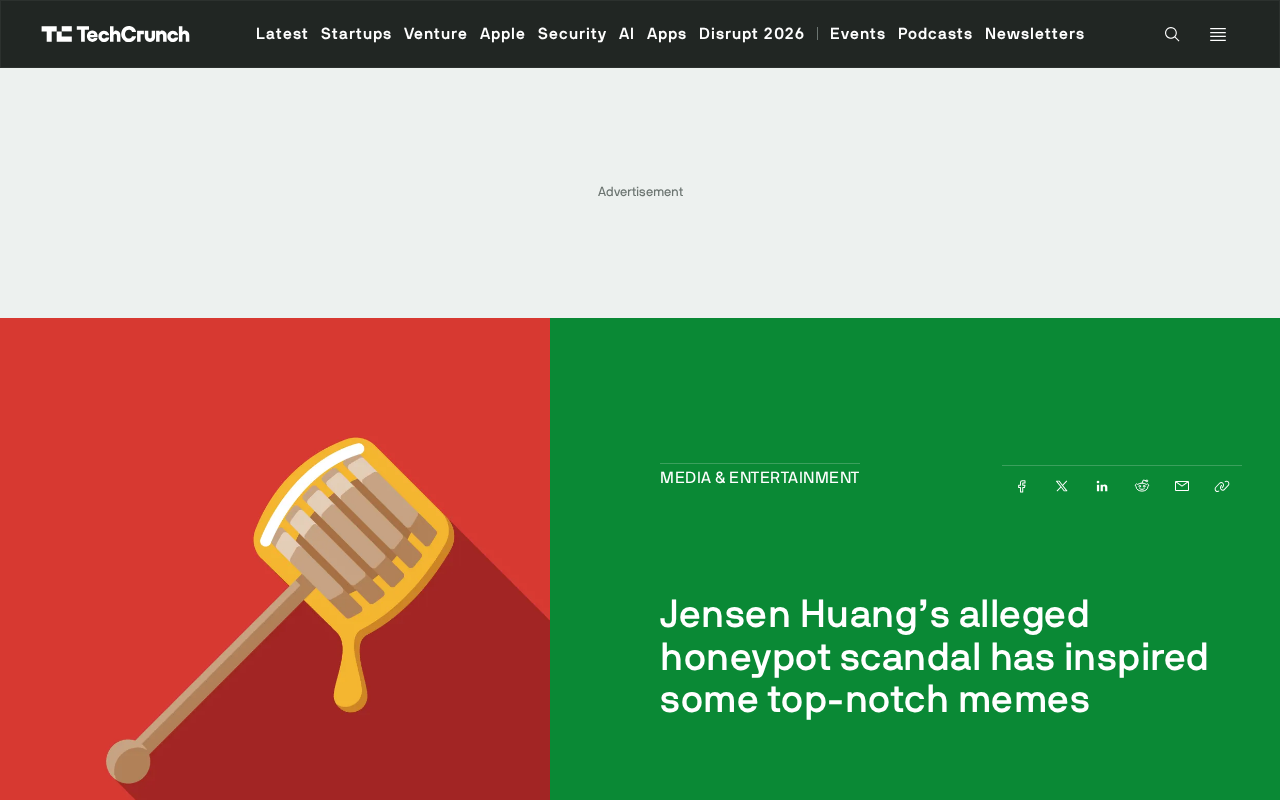
Where the Rumor Came From: An Unverified "Honeypot" Story
A so-called "honeypot," in the context of cybersecurity, usually refers to a decoy system designed to attract attackers and gather intelligence. But in gossip contexts, it often implies some kind of elaborately designed trap. This time, Jensen Huang has been drawn into the latter narrative — the specific details currently exist only at the rumor level, lacking any verifiable hard evidence.
The original report used fairly restrained wording: "alleged honeypot scandal." This phrasing itself indicates that the matter remains at the stage of allegations and speculation. But in the age of social media, ambiguity is precisely the best fuel for memes.
The Technical Meaning and Semantic Drift of "Honeypot"
In the field of cybersecurity, a honeypot is a deliberately deployed decoy system that appears to be a real service with vulnerabilities, but is actually used to lure attackers in and record their attack methods and toolchains, thereby providing intelligence to defenders. Honeypots fall into two categories: low-interaction and high-interaction. The former simulates only a small number of services, making deployment simple but yielding limited information; the latter allows attackers to penetrate deeper into the system, capturing richer behavioral data, but at higher risk and operational cost. The core value of a honeypot lies in "deception" and "observation" — it does not perform production tasks itself, so any access can be treated as suspicious behavior.
It is precisely this metaphor of "setting a trap to lure" that has caused the term honeypot to spill out of its technical context and into narratives about social gossip and romance scams, where it refers to an elaborately laid trap or a honey-trap-style snare. Understanding this semantic drift is important: when a report connects a public figure to honeypot, it is not borrowing the technical meaning from firewalls and intrusion detection, but rather the colloquial extended sense of "being set up by someone." Conflating the two easily leads to misreading and makes the rumor seem more technical than it actually is.
Why the Memes Exploded: Tech Titans' Personas and Internet Deconstruction
In recent years, Jensen Huang has become deeply embedded in public consciousness through his leather jacket look, kitchen product launches, and "Godfather of AI" image. This highly symbol-laden persona is naturally suited to deconstruction. When a public figure known for a serious tech-leader image is suddenly linked to a gossip rumor, the reaction of internet creators is almost reflexively immediate.
According to the RSS source, netizens were "having a field day," producing memes described as "top-notch." Such creations typically revolve around a few directions: variations on the leather jacket meme, rewrites of the product launch scenes, and puns on the word "honeypot." The original material did not elaborate on the specific meme content, but judging from the buzz, the topic has already taken on characteristics of viral spread.
The Spread Mechanism of Memes and "Symbolic Personas"
Meme was originally proposed by Richard Dawkins in The Selfish Gene, referring to units of culture that are copied, mutated, and spread like genes. In the internet context, memes usually take the form of templated image-plus-text formats, and their power comes from "applicability": a fixed template paired with different text can be quickly remixed by countless people, creating low-cost, high-frequency diffusion.
In communication studies, the explosion of a meme often depends on two conditions: first, the material itself has highly recognizable visual symbols; second, the event leaves enough interpretive gaps. Jensen Huang's leather jacket, kitchen launch backdrop, and signature opening lines are all extremely strong persona symbols that can be recognized almost without additional explanation; and the factual ambiguity implied by "alleged" happens to leave creators free space to fill in. The more vivid the symbols and the more uncertain the information, the lower the barrier to deconstruction and remixing — this is precisely the structural reason why tech titans' personas are so easily turned into meme fodder.
The Mismatch Between Rumor, Fact, and the Public Opinion Arena
The most intriguing aspect of this incident is not the rumor itself, but the speed of reaction in the public opinion arena. An unverified piece of news completed its transformation from "news" to "entertainment material" before fact-checking even began. For tech media, this raises an old question: when the only source is "alleged," where are the boundaries of reporting?
NVIDIA and Jensen Huang have not yet issued any public response to the rumor (based on available material). In the absence of an official statement, any judgment about the truth of the matter is premature. The rational attitude is: treat the memes as an internet cultural phenomenon, treat the rumor as information pending verification, and avoid conflating the two.
The Legal and Journalistic Weight of "Alleged"
In English-language news reporting, alleged is a qualifier with clear legal and ethical implications, meaning "claimed but not yet proven." It is not entirely equivalent to the broad Chinese term "涉嫌": using alleged means the media, when stating an accusation, explicitly attributes it to the accuser rather than to the facts themselves, thereby avoiding legal liability for defamation and signaling to readers that "this information is unverified."
In journalistic practice, when the only source is at the alleged level, the standard approach is to identify the source, indicate the verification status, and give the party involved an opportunity to respond. This explains why the original text emphasized that the report "used fairly restrained wording": the phrasing itself is a firewall. When interpreting such reports, readers should treat alleged as a warning label — it indicates the level of certainty of the information, not the likelihood of the event's truth. Ignoring this qualifier often leads to misreading "someone said this" as "this is how it is," which is precisely the starting point for rumors to accelerate into distortion in the public opinion arena.
Lessons for Tech Brands: The More Distinctive the Persona, the Easier It Is to Meme
The Jensen Huang case once again confirms a pattern: the more distinctive a public persona, the more easily it becomes a meme material library. This is not purely bad for tech brands — the viral spread of memes brings enormous exposure, but the cost is a partial surrender of narrative control.
For readers following the AI industry, the practical impact of this controversy will most likely remain at the level of public opinion. What truly deserves continued attention is still NVIDIA's moves in the AI computing power sector. As for whether this "Honeypot Gate" rumor will have any follow-up hard evidence, for now we can only wait and see.
Related articles

ChatGPT Plus Subscription Pitfall Guide: Go/Plus/Pro Tier Comparison and Quick Activation
A complete ChatGPT Plus subscription guide based on a Bilibili tutorial: from registering an account, comparing Go/Plus/Pro tiers, to the practical steps for quickly completing your subscription.

GPT-6.2 Sol/Astra Released! A Step-by-Step ChatGPT Plus Subscription Guide and Tier Comparison
GPT-6.2 Sol/Astra is out—here's a ChatGPT Plus subscription guide: register an account, compare Go/Plus/Pro tiers, and subscribe in a minute.

Comparing Three Channels for Subscribing to GPT Plus in China: Is Website Top-Up the Easiest?
How to subscribe to GPT Plus in China? This article compares website top-up, credit card, and mobile top-up channels—process, cost, and risk—with steps and tips to help you choose wisely.