JetBrains Empowers Local Qwen Deployment on Mac: A Comprehensive Developer Experience Upgrade

JetBrains IDE integration makes running Qwen LLMs locally on Mac easier, boosting privacy and cutting costs.
JetBrains is integrating support for running Qwen large language models locally on Mac, leveraging Apple Silicon's unified memory architecture. This lowers deployment barriers by embedding model inference into familiar IDE workflows, offering developers better data privacy, reduced API costs, and seamless AI-assisted coding without cloud dependencies. The trend reflects a broader shift toward mainstream local LLM tooling.
A New Option for Running Large Models Locally
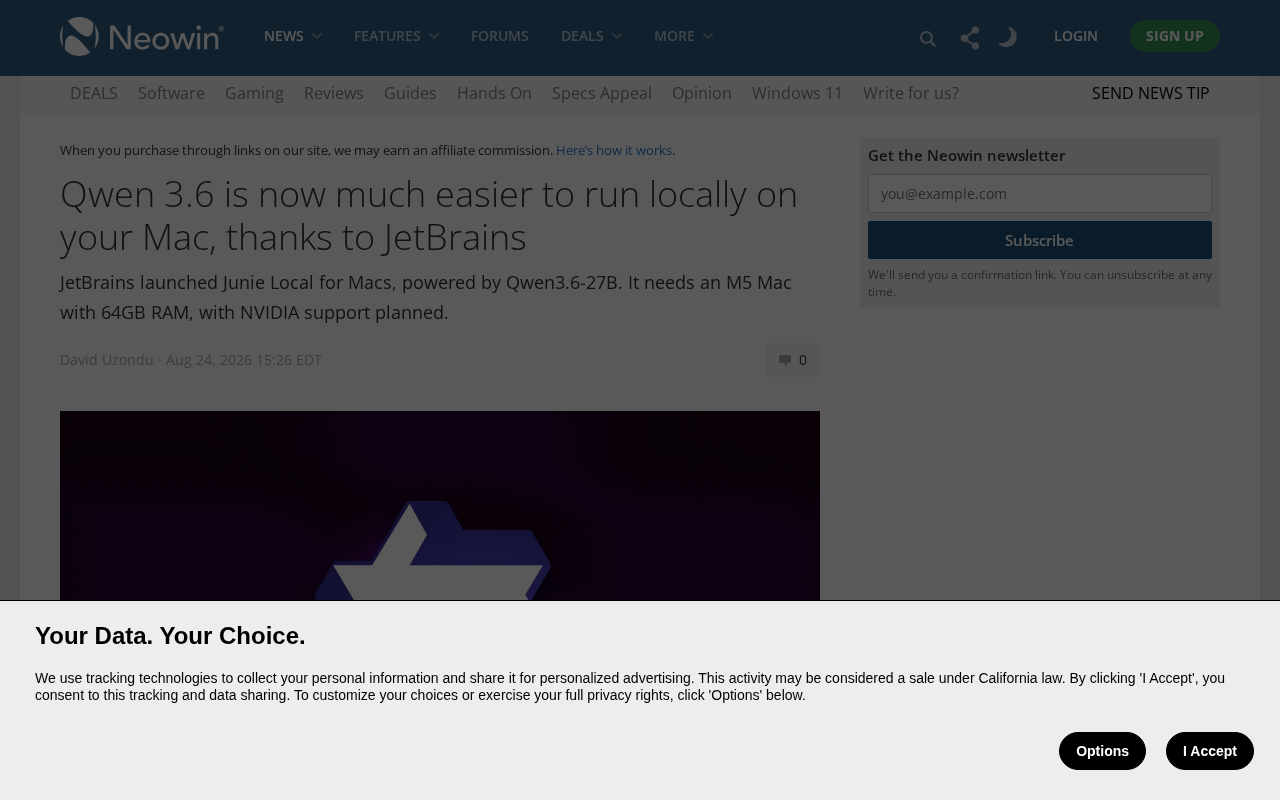
Recently, a discussion on Hacker News caught the attention of the developer community: thanks to tooling support from JetBrains, the Qwen series of large language models can now run more easily on Mac devices locally. While the post only received 29 upvotes and 10 comments, it reflects a rapidly growing trend — migrating LLM runtime environments from the cloud to developers' personal devices.
For developers who have long relied on cloud-based API calls to large models, local deployment means lower latency, better data privacy protection, and freedom from API call limits and fees. JetBrains, as a well-established development tools company, undoubtedly provides engineering-level momentum to this process.
Why Local Deployment of Qwen Deserves Attention
Qwen's Positioning and Advantages
Qwen (Tongyi Qianwen) is an open-source large language model series released by Alibaba. With its balanced performance on both Chinese and English tasks and relatively friendly open-source licensing, it has become an important choice for developers' local experimentation and secondary development. The Qwen series is released under the Apache 2.0 license, meaning developers can freely use, modify, and distribute the model in commercial projects without paying licensing fees or facing complex legal constraints. Compared to Meta's Llama series (whose license has additional restrictions for companies with over 700 million monthly active users) and fully closed-source models like GPT-4, Qwen's open-source nature makes it naturally suited for local deployment and deep customization scenarios.
As model quantization technology matures, an increasing number of larger-parameter models can run smoothly on Macs equipped with Apple Silicon chips. Two key model formats need explanation here: GGUF (GPT-Generated Unified Format) is a model format defined by the llama.cpp project that stores model weights in quantized form as a single file, supporting mixed inference on CPU and GPU — it's one of the most universal formats for local deployment; MLX is Apple's machine learning framework and its accompanying model format, designed specifically for Apple Silicon, capable of fully leveraging M-series chip hardware characteristics for optimal performance.
The advantage of M-series chips' Unified Memory Architecture is particularly prominent in local LLM scenarios. In traditional PC architectures, CPU and GPU each have separate memory spaces, and data transfer between them creates bandwidth bottlenecks. Apple Silicon's unified memory allows CPU, GPU, and Neural Engine to directly access the same physical memory without data copying. For large language models, the memory occupied by model weights can be directly read by the GPU for matrix operations, meaning a Mac with 64GB or 128GB of unified memory can load larger models than similarly-priced discrete GPUs (which typically only have 8-24GB of VRAM). This is an important context for why this discussion centers on Mac as the core scenario.
The Practical Significance of Lowered Deployment Barriers
In the past, running a large model locally often required developers to manually handle environment configuration, model format conversion, inference framework selection, and a series of other tedious steps. Specifically, developers might need to: install specific versions of Python and dependencies, download tens of GB of model files and perform format conversion (e.g., from Hugging Face's safetensors format to GGUF), select an appropriate inference backend (llama.cpp, vLLM, TGI, etc.) and configure quantization parameters, and handle compatibility issues across different operating systems and hardware platforms. Any error in any step could lead to deployment failure or severely underperforming results.
JetBrains' tooling intervention essentially integrates these scattered technical details into the IDE workflow that developers are already familiar with, significantly lowering the barrier to entry. This approach is similar to how Docker encapsulates complex environment configurations into container images — developers don't need to understand every underlying detail, they just need to focus on the functionality they actually need.
The Engineering Value of JetBrains' Local LLM Integration
Understanding IDE Integration from a Toolchain Perspective
JetBrains' IDEs — IntelliJ IDEA, PyCharm, WebStorm, and others — have a massive developer user base, with hundreds of millions of active users globally according to their official data. JetBrains began offering AI Assistant features in 2023, initially relying primarily on cloud-based large models (such as OpenAI's GPT series) for code completion and conversational capabilities. The integration of local models represents an important architectural shift: inference computation moves from the cloud down to the developer's local machine.
Integrating local LLM capabilities into these tools means developers can invoke local models for code completion, Q&A, debugging assistance, code refactoring suggestions, documentation generation, and other tasks without leaving their familiar coding environment. From a technical implementation perspective, IDE integration with local models is typically achieved through built-in inference servers (or API connections to local inference tools like Ollama). The model runs as a resident process in the background, and the IDE interacts with it through local HTTP requests or inter-process communication, with response latency typically ranging from milliseconds to seconds — far lower than the network round-trip time of cloud APIs.
The value of this integration lies in the word "seamless." When model inference becomes a native IDE feature, AI-assisted programming no longer depends on network connectivity, and there's no need to worry about sensitive code leaking to third-party servers. This is particularly critical for industries with strict data compliance requirements, such as finance, healthcare, and defense.
The Dual Considerations of Privacy and Cost
The most direct benefit of local deployment is that data never leaves your machine. All inference processes run on the developer's own device, and sensitive information like code and documents never needs to be uploaded to the cloud. As global data protection regulations become increasingly strict, the value of this advantage continues to grow: the EU's GDPR (General Data Protection Regulation) imposes strict restrictions on cross-border transfer of personal data; China's Data Security Law and Personal Information Protection Law require security assessments for data leaving the country; many companies' internal compliance policies explicitly prohibit uploading source code to external AI services. Local deployment fundamentally avoids these compliance risks because data always remains within the physical control of the enterprise or individual.
From a cost perspective, while local operation requires some hardware investment, for heavy users who frequently use large models, one-time hardware costs are often lower than long-term cloud API subscription fees. To put it in concrete numbers: OpenAI GPT-4o's API costs approximately $5 per million input tokens and $15 per million output tokens; an active developer might generate tens of thousands to hundreds of thousands of tokens in interactions daily, with monthly costs potentially reaching $50-200 or more. By comparison, an M4 Pro Mac (approximately $2,000-3,000) can smoothly run 7B-32B parameter quantized models, and when amortized over a three-year lifespan, the marginal hardware cost is far lower than continuous API subscriptions. When the model scale and response quality meet daily needs, the economics of the local solution become increasingly favorable.
Evolution Trends in the Local LLM Ecosystem
From Niche Hobby to Mainstream Tool
Running large models locally was once a niche pursuit for geeks and researchers, requiring strong technical backgrounds. Today, with the proliferation of user-friendly tools and the participation of mainstream vendors like JetBrains, local LLMs are moving from the margins into mainstream developers' everyday toolboxes.
It's worth introducing each of these key tools and their roles: Ollama is a command-line tool that wraps model downloading, quantization, and execution into Docker-like simple commands (such as ollama run qwen2.5) and provides a local API interface compatible with OpenAI's format, allowing any application that supports the OpenAI API to connect to local models with zero modifications; LM Studio offers a graphical interface that lets even non-technical users download and run various open-source models with one click, with built-in model search, parameter adjustment, and chat interfaces; MLX is Apple's open-source machine learning framework, deeply optimized for Apple Silicon's hardware characteristics, including native support for unified memory and efficient Metal GPU scheduling, enabling inference speeds 2-5x faster than general-purpose frameworks for the same model on Mac.
This trend is driven by multiple converging forces: continuously improving open-source model quality (Qwen, Llama, Mistral, and other models are approaching or matching closed-source models on multiple benchmarks), steadily increasing consumer-grade hardware computing power, and increasingly mature quantization and inference optimization technologies. Regarding quantization technology, its core principle is compressing model weights from high-precision floating-point numbers (such as FP16, 2 bytes per parameter) to low-precision integer representations (such as INT4, only 0.5 bytes per parameter), thereby reducing model memory footprint to one-quarter of the original, while keeping precision loss within acceptable bounds through carefully designed quantization algorithms (such as GPTQ, AWQ, GGML, etc.). The combined effect of these three factors is gradually turning "everyone can run large models on their own computer" from a slogan into reality.
Developer Experience Becomes the Competitive Focus
You might not have noticed, but the core of this discussion isn't about improvements in model capability itself, but rather the experiential improvement of being "easier to run." This reveals an important signal: in an era where model capabilities are trending toward homogenization, the toolchain surrounding large models and the developer experience are becoming the new competitive focus.
This competitive landscape isn't without precedent in the software industry. Looking back at history, Linux's dominance in the server space wasn't achieved overnight — Ubuntu's success was largely due to dramatically lowering the barriers to installing and using Linux. Similarly, Docker's ability to disrupt traditional application deployment fundamentally came from simplifying complex environment isolation and dependency management into a few lines of configuration. In the large model space, capability gaps between models are narrowing, and the question of "can you get an average developer up and running in five minutes" is becoming the key factor determining market share.
Whoever can enable developers to complete model deployment and usage with the fewest steps and lowest cognitive burden is most likely to win the developer ecosystem. JetBrains' latest effort is a concrete embodiment of this logic.
Conclusion
Although this Hacker News discussion hasn't generated explosive engagement, the direction it reflects deserves attention from every practitioner focused on AI engineering. The barriers to local large model deployment are being systematically lowered, and the participation of mainstream development tool vendors is accelerating this process.
For developers, now may be a good time to try incorporating local LLMs into your daily workflow. Whether motivated by privacy considerations, cost control, or pure technical exploration, locally running open-source models like Qwen is no longer an unreachable technical challenge. As the tool ecosystem continues to mature, local AI-assisted development will become the norm in the near future.
Related articles
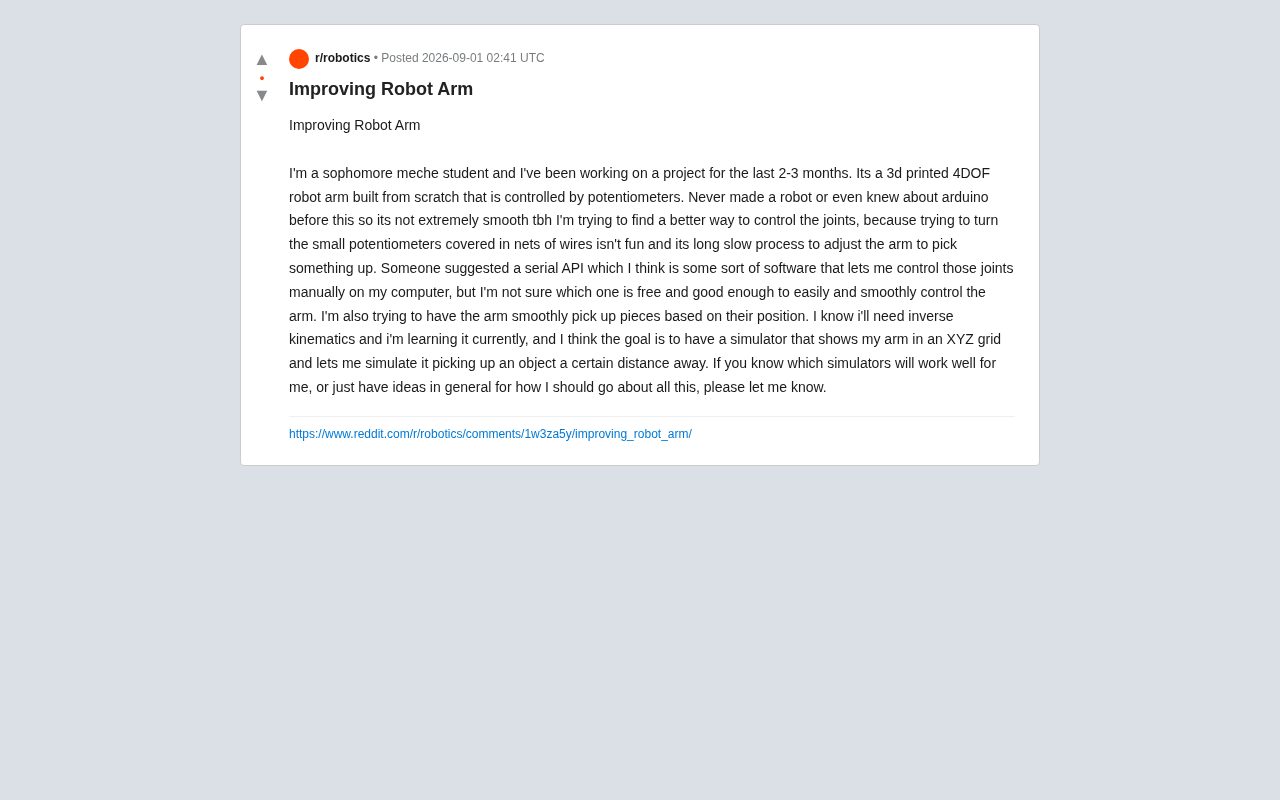
4DOF Robotic Arm DIY Tutorial: A Progressive Guide from Potentiometer Control to Inverse Kinematics
Complete guide to building a 4DOF robotic arm: from potentiometer control to Python serial communication, inverse kinematics, PyBullet simulation, and vision-based grasping for Arduino robotics beginners.
Google Antigravity + Gemini 3.7 Flash: An Efficient Approach to Multi-Agent Collaboration
Explore how Google's Antigravity orchestration platform and Gemini 3.7 Flash model work together to solve complex multi-agent math and engineering problems.
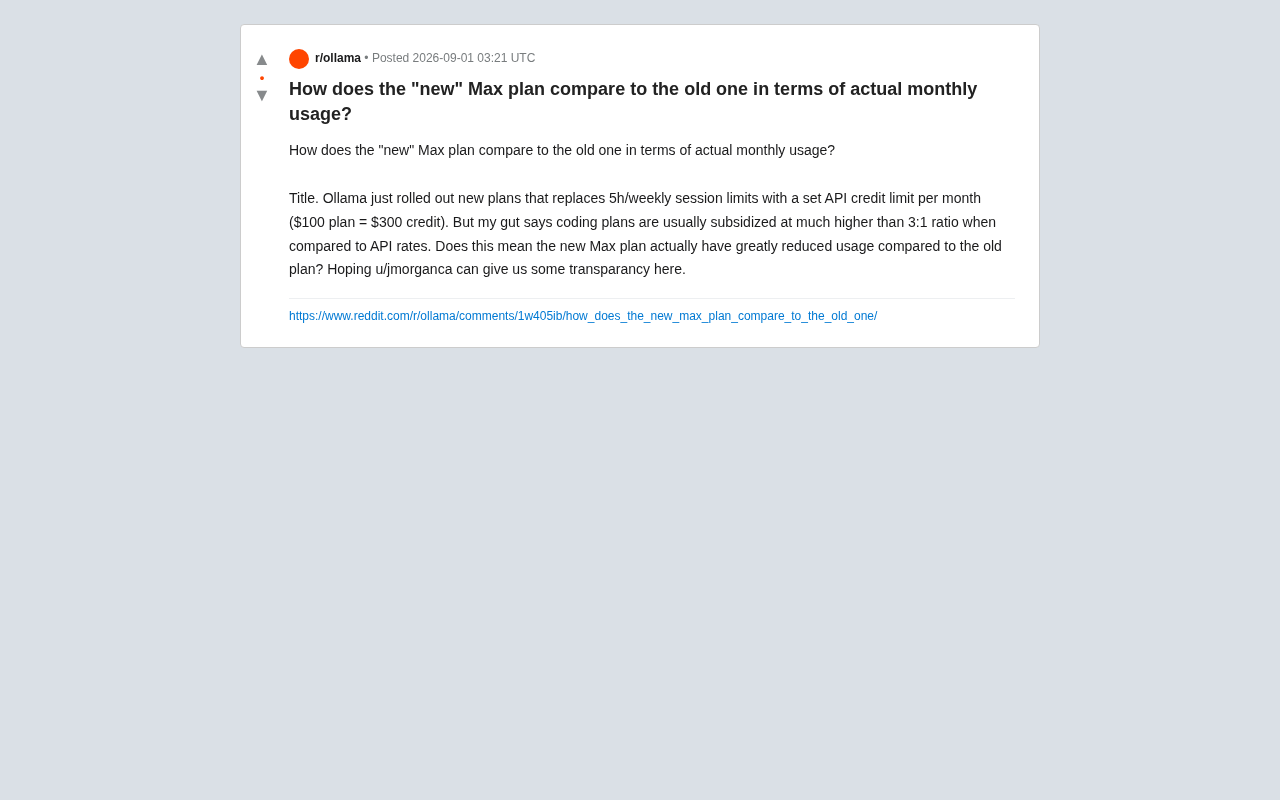
Max Plan Shifts from Subscription to Credits — Has Your Usage Actually Shrunk?
AI coding subscriptions shift from session-time to API credits. A $100 Max plan now offers $300 in credits at a 3:1 ratio — has actual usage really shrunk?