JetBrains Posts Its First Net Loss: The Growing Pains of an IDE Giant in Transition

JetBrains posts its first net loss, revealing the strategic bind facing traditional paid IDEs in the AI era.
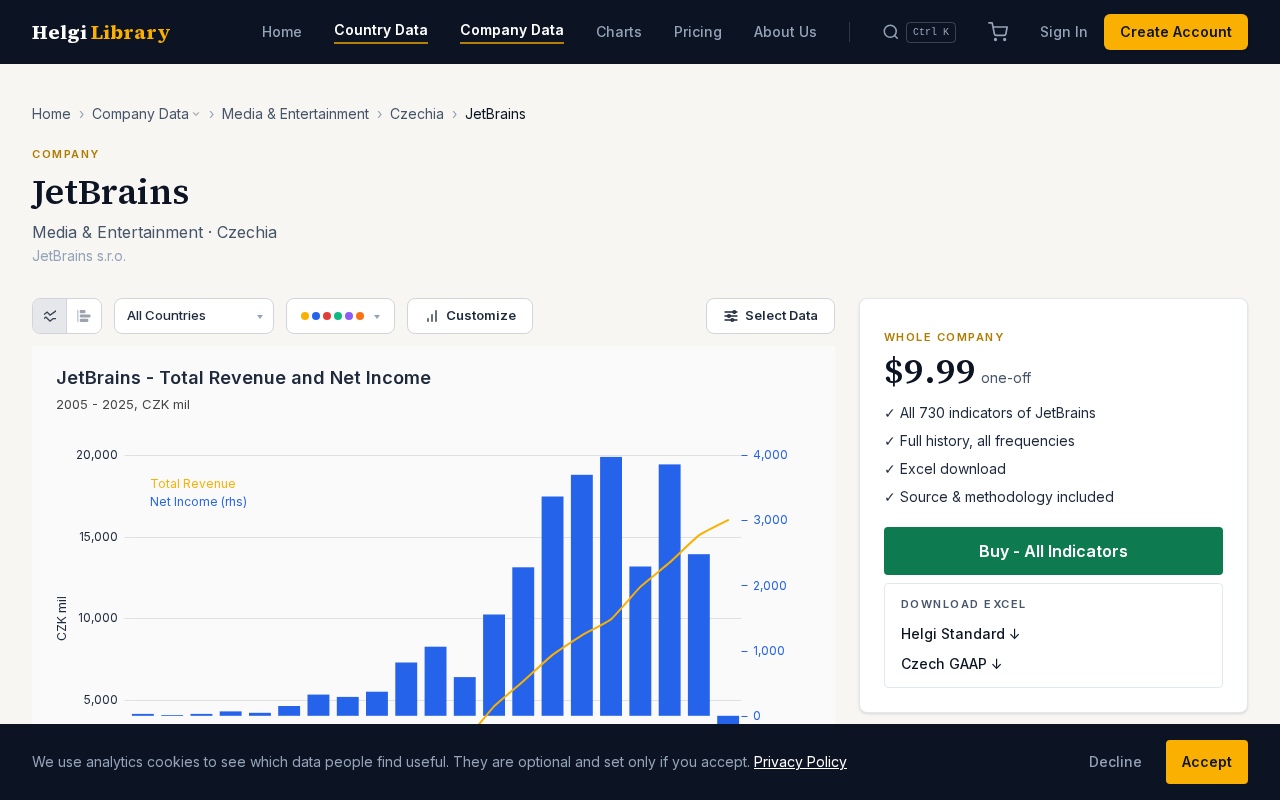
JetBrains, long celebrated for its financial stability, has posted a net loss for the first time in its traceable history — sparking debate on Hacker News. Analysts point to heavy AI R&D spending on its AI Assistant and one-time restructuring costs tied to its Eastern Europe team relocations as likely culprits. The deeper context is a market under pressure: AI-native editors like Cursor are redefining the coding experience, and the free VS Code ecosystem keeps squeezing the space for paid IDEs. JetBrains now faces a stark choice between under-investing in AI and risking irrelevance, or going all-in and accepting short-term losses. Community reactions are split between viewing this as a healthy strategic investment cycle and worrying that rising prices and lagging AI features are eroding the company's core user base.
JetBrains Goes into the Red for the First Time
For years, JetBrains has been one of the most financially stable companies in the developer tools space. Its IDE lineup — IntelliJ IDEA, PyCharm, WebStorm, and more — covers virtually every mainstream programming language, building exceptional user stickiness and a reliable stream of subscription revenue. Yet according to discussions on Hacker News, this company, long celebrated for its profitability, has posted a net loss for the first time in its traceable financial history.
The news sent ripples through the developer community. For a private company that has historically maintained healthy cash flow and operated without meaningful external funding pressure, a net loss is more than just a number — it reads like a signal. It suggests the company is undergoing some kind of structural shift, whether the result of a deliberate strategic bet or mounting pressure from the market.
What's Behind the Loss
Without access to a full financial report, community analysis has coalesced around a few key theories. The most widely discussed is large-scale R&D spending, particularly the sustained costs of competing in the AI coding assistant space. JetBrains has in recent years launched its own AI Assistant and invested in building LLM-powered code completion and conversational capabilities. This kind of work typically demands enormous compute costs and top-tier engineering talent — expenses that subscription revenue rarely covers in the short term.
Another factor worth examining is rising operational costs driven by macroeconomic and geopolitical forces. JetBrains has deep historical ties to Eastern Europe, and recent years have brought significant team relocations and organizational restructuring. These changes leave a mark on the books. One-time restructuring charges, currency fluctuations, and global team expansion could all be technical contributors to a single year of losses.
It's important to note that a net loss does not equal business collapse. When a mature company swings to a loss in a given fiscal year due to large investments or a restructuring event, it's often a transient accounting phenomenon rather than a sign of fundamental operational deterioration.
JetBrains' roots in Eastern Europe trace back to the company's founding: three Russian engineers — Sergey Dmitriev, Valentin Kipiatkov, and Eugene Belyaev — established the company in St. Petersburg in 2000. Over the following years, JetBrains maintained major R&D centers in Russia and the Czech Republic (Prague serves as its European headquarters). After Russia's invasion of Ukraine in 2022, large numbers of Russian engineers faced uncertainty around visas, payroll, and career continuity, prompting the company to accelerate relocations to Serbia, Armenia, the Netherlands, and elsewhere. Large-scale personnel moves like these involve relocation allowances, legal compliance costs, and variations in employer expenses across different jurisdictions. Even if the core business remains fundamentally unchanged, these costs can create significant one-time charges that meaningfully distort a single year's income statement.
Competitive Pressure in the Age of AI
JetBrains' situation becomes even more meaningful when viewed against the broader industry backdrop. The rise of AI-native coding tools like GitHub Copilot and Cursor has placed traditional IDE vendors under unprecedented competitive pressure.
Editors like Cursor have directly redefined the coding experience, drawing in large numbers of efficiency-focused developers. Meanwhile, VS Code — free, open-source, and backed by a massive extension ecosystem — continues to erode the market for paid IDEs. JetBrains still holds a strong position in heavy-duty development scenarios (Java enterprise development, the Kotlin ecosystem, and so on), but staying competitive on AI capabilities requires enormous ongoing investment.
This creates a genuine dilemma: skip the AI investment and risk being marginalized; go all-in on AI and face short-term financial pain. The first net loss in the company's history may well be the direct financial expression of that strategic choice.
Cursor is an AI-native code editor built on a heavily modified fork of the VS Code codebase, developed by the startup Anysphere. Its core value proposition is embedding large language model capabilities directly into the editor workflow — supporting multi-file context understanding, natural language code generation and refactoring, and an "Agent mode" that lets AI autonomously complete tasks across files. Unlike GitHub Copilot, which layers AI assistance on top of an existing editor as a plugin, Cursor treats AI interaction as a first-class citizen. The entire paradigm shifts from "developer writes code, AI helps with completion" to "developer describes intent, AI generates a draft, developer reviews and refines." This experience difference has proven compelling for engineers chasing development velocity, and Cursor accumulated a large base of paying users rapidly through 2024 — directly challenging the "deep language awareness" that has long been JetBrains' core differentiator and justification for its subscription pricing.
A Community Divided
The discussion on Hacker News reflects a clear split in opinion. One camp sees this as a normal investment cycle — JetBrains, as a long-term-oriented company, is making a rational choice to sacrifice near-term profit in exchange for future competitiveness. They remain confident in the product quality and user loyalty the company has built.
A more pessimistic camp worries that subscription price increases, bloated feature sets, and AI capabilities that lag behind specialized competitors are quietly eroding JetBrains' core appeal. Some users have noted that a growing number of developers have shifted to the free VS Code plus AI plugin combination for cost reasons — a real threat to a company whose lifeblood is subscription revenue.
Other commenters cautioned against reading too much into a single year of losses. The more important question, they argued, is whether subsequent years show a trend — and whether the AI investment translates into genuine product competitiveness and paying user conversion.
What This Means for Developers
For developers and teams that rely on the JetBrains toolchain, this news is worth paying attention to, but not cause for panic. Product stability and service continuity won't change because of a single financial blip. What's genuinely worth watching is how JetBrains adjusts its pricing strategy, whether it accelerates the commercialization of AI features, and whether any of this affects its historically generous licensing and educational discount policies.
In the longer view, this episode reflects a deep transformation underway across the entire developer tools industry. AI is reshaping the way code gets written, and the traditional moats that protected legacy tooling are being reassessed. Whether it's JetBrains, Microsoft, or emerging AI coding startups, every player must find a new equilibrium between user experience, business model, and technical investment.
Who will come out ahead in this transition is a question only time can answer. What's already clear is that the developer tools market has entered a new phase — one defined by fierce competition and accelerating innovation.
Related articles

@ai-sdk/vue 3.0.306 Patch Release Syncs with [email protected] Update
@ai-sdk/vue 3.0.306 released, synced with [email protected]. A routine patch release for the Vercel AI SDK ecosystem with no public API changes; the Vue adapter layer stays version-aligned with the core package.

Gemini 4 Argon API Launches: The Era of Million-Token Output Begins
Google launches Gemini 4 Argon with sparse MoE architecture, up to 1M output tokens, and a 68.90% Vals Index score, available across API, AI Studio, and the Gemini app.

DukaanAI: Turning Product Photos into Inventory Lists with Open-Source AI
DukaanAI is an AI inventory tool for small retailers that turns product photos into inventory entries using the open-source Gemma 3 model, with local inference, editable fields, and CSV export.