Jev Decision Model Goes Viral: Why Developers Worldwide Are Copying It

Jev replaces conversation with a System 1-style decision model, built for code calls and batch automation.
Jev is a new AI model that outputs only structured decisions (yes/no, multiple choice, scoring) instead of natural language, positioned as a "decision engine for code to call" rather than a chatbot. Drawing on System 1 intuitive judgment, it shows speed and cost advantages in batch classification, model routing, and real-time teleprompting. OpenAI, Cloudflare, and Ollama have all followed with similar capabilities, with Jev temporarily leading in accuracy and price. Debate centers on the "AI-era if statement" label, but its generalization is seen as the key differentiator.
Jev Decision Model Goes Viral: Why Developers Worldwide Are Copying It
An AI that seems "not particularly smart" is sweeping the developer community. It can't chat, can't call tools, can't search the web—yet OpenAI, Cloudflare, and Ollama have all followed suit with similar products. This model, called Jev, is redefining how AI interacts with code.
What Is Jev: Decision Instead of Dialogue
When you talk to ChatGPT or Claude, you type text and get text back. We've come to take this interaction paradigm for granted. But Jev takes another path: you input text, and it outputs a decision—not a paragraph.
According to a demo by YouTube tech creator Jev, in the Jev playground you submit a YouTube comment and ask "Is this spam?" The model returns a result almost instantly: approximately 92% confidence that it's spam. Switching to the JSON view reveals that Jev delivers not natural language but structured decision data.
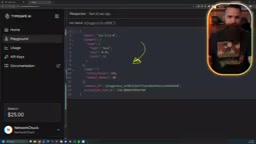
Jev supports only three response types:
- Newell: essentially a yes/no judgment with a confidence score
- Choice: pick one from multiple given options
- Score: rate something on a dimension (e.g., sentiment polarity)
This limitation isn't a flaw—it's the core of the design. Jev is positioned not as a "chatbot" but as a "decision engine for code to call."
Why So Fast? The Divide Between System 1 and System 2
Jev's speed advantage stems from the fact that it targets "System 1" thinking from cognitive psychology. In Thinking, Fast and Slow, Daniel Kahneman distinguished two modes of thought: System 2 is slow, step-by-step reasoning; System 1 is instant intuitive judgment.
Mainstream large language models are essentially products of System 2—they're trained as assistants, inclined to elaborate reasoning and organize language. But many scenarios don't need this heavyweight thinking at all. In the Jev team's words, it's like "using a chainsaw to cut bread."
Take judging whether the password 123 is strong enough. Traditional code uses if statements to check length, uppercase/lowercase, digits, and symbols—which obviously can be bypassed. A dedicated classifier can identify weak passwords but can only answer this one question. Jev's difference: it can answer new questions without retraining, with speed comparable to a dedicated classifier and accuracy nearly as good, while eliminating the entire workflow of a machine learning engineer preparing datasets.
According to the video demo, for the same spam-comment judgment, Jev took about 17 seconds (including interaction overhead in the demo), while ChatGPT in a custom interface returned "yes" in about 2 seconds. But when the task scales to batch-classifying 100 real comments, the gap widens rapidly—Jev finishes almost instantly, while ChatGPT is still processing.

This reveals a key point: Jev's advantage isn't in single conversations but in batch, background, automated scenarios in terms of speed and cost structure.
Daniel Kahneman is the 2002 Nobel laureate in economics. In his 2011 book Thinking, Fast and Slow, he systematically articulated dual-system theory. System 1 refers to automatic, fast, intuitive thought processes that consume almost no cognitive resources—such as recognizing a familiar face or understanding your native language. System 2 is slow, attention-demanding, step-by-step reasoning—such as calculating 17×24. Kahneman noted that most everyday human judgments are made by System 1, with System 2 called upon only for complex or uncertain situations. This framework was later widely borrowed in AI: traditional large language models often simulate System 2-style step-by-step reasoning when generating responses, while decision models attempt to replicate System 1's intuitive judgment to output results with extremely low latency. Jev uses this theory to position its design—it doesn't pursue deep thinking, only fast judgment.
Who's Copying? An Arms Race in Decision Models
Jev isn't alone. The video mentions that OpenAI announced a Decisions API at Dev Day, Cloudflare launched Clef (with a locally runnable version), and Ollama also offers similar capabilities. Jev's creator ran multiple decision models simultaneously on a local Mac for comparison.

In a classification test with 20 real bot comments and 107 real fan comments, Jev led among cloud models, with OpenAI's Decisions API close behind—slightly lower accuracy but not by much. Among local models, Clef 27B was the most accurate local option. On cost, Jev is the cheaper choice—OpenAI's Decisions API is about 2.4 times the price of Jev.
You may not have noticed that Jev has closed-source weights and undisclosed training data. We only know it's been extremely optimized for one thing: "making decisions." This opacity is both a moat and a source of community skepticism.
Cloudflare Clef is a decision model series from Cloudflare. The name "Clef" comes from the musical clef, hinting that it excels at "reading signals" rather than "playing the melody." Clef offers a locally runnable version, meaning developers can deploy it on their own hardware without sending data to the cloud—especially friendly for privacy-sensitive or offline scenarios. In the comparison test mentioned in the original article, Clef 27B was the most accurate local model; 27B refers to its 27 billion parameters, a medium-scale model that can run on a single high-end consumer GPU or Mac unified memory. OpenAI's Decisions API is a hosted decision service announced at Dev Day, billed per call at about 2.4 times the price of Jev. Ollama, as a local LLM runner, also provides similar decision capability wrappers, letting developers call decision models from different sources via a unified interface. The simultaneous moves by these three indicate that decision models are moving from an experimental concept to standardized infrastructure.
Real-World Use Cases: From Model Routing to Real-Time Teleprompter
The value of decision models isn't in "asking it a question" but in "embedding it into workflows." The video demonstrates several representative uses:
Model routing: Use Jev to judge the difficulty of user questions, routing "2+2" to a small model and "prove there are infinitely many primes" to a large model. The whole process completes in milliseconds, without needing another LLM to first "think about whether this question is hard."
Smart teleprompter: Combining real-time transcription (ElevenLabs) with Jev, transcription text is sent to Jev every half second to determine whether a talking point has already been covered. Originally this solution cost about $30 per hour—over a hundred dollars for a three-hour show. With Jev, the cost becomes acceptable.
AI web browsing and ordering: Let Jev make decisions in a browser agent, ordering a large thin-crust Canadian bacon and pineapple pizza from Domino's—the whole process takes about 15 seconds; the same task with Codex takes about a minute.
Community projects: jev-grep uses Jev to locate relevant files for coding agents, claiming to reduce coding agent costs by about 40%, with the repo gaining 1,200 stars in two days; there's also a Hermes plugin and a "Jev plays Doom" demo.

Model routing is one of the most typical applications of decision models. The core idea: user requests of varying difficulty should be handled by models of different scales, reducing costs while maintaining quality. The traditional approach relies on another LLM to first judge "is this question hard," but that step itself consumes hundreds of milliseconds and extra tokens. Decision models can perform the same difficulty classification in milliseconds, and the output is a structured routing label rather than natural language, making it easy for code to consume directly. The real-time teleprompter scenario demonstrates decision models' extreme latency requirements: processing transcript text every half second to determine whether a talking point has been covered—this high-frequency, low-latency calling pattern almost rules out traditional conversational models. jev-grep is a community-built coding aid using Jev; it lets coding agents use a decision model to quickly judge relevance when retrieving files, avoiding having the main model read files one by one, claiming about 40% lower agent costs. The common thread across these use cases: decisions happen inside the workflow, not facing end users.
Controversy: Intelligent Decisions or AI-Era If Statements?
Not everyone is convinced. Some in the community argue that Jev is nothing more than "AI-powered if statements." Diogo Almeida, co-founder of TypeSafe and a former participant in OpenAI's InstructGPT research, doesn't shy away: understanding Jev as an "intelligent if statement" or "AI-enhanced logic gate" isn't wrong—his child summed up the model as "a logic gate that uses AI to decide which path to take."
But Almeida emphasizes that the key difference between Jev and dedicated classifiers is generalization: a classifier answers only one question, while Jev can answer arbitrary questions without retraining. Another interviewee, Ali, likened Jev to Docker—hard to understand when it first appeared, now the default choice for infrastructure.
Almeida also offers a broader perspective: the AI industry has long suffered from overpromising, with the narrative of "building a machine god in the data center" obscuring AI's many forms. Decision models represent another direction—making AI reliable, embeddable, and predictable.
InstructGPT is a model released by OpenAI in 2022. It was the predecessor of ChatGPT and the first to systematically apply reinforcement learning from human feedback (RLHF) to instruction-following tasks. Diogo Almeida participated in that research as co-founder of TypeSafe, and his background gives him authority on the question of whether decision models are just if statements. In traditional programming, an if statement is a deterministic logic branch: if the condition is true, execute A; otherwise execute B. The difference with decision models like Jev is that their "conditions" aren't hand-written rules but generalized judgment capabilities learned from data—give it a question it has never seen, and it can still output a decision with a confidence score. Almeida summarizes this difference as "AI-enhanced logic gates," acknowledging the formal similarity to if statements while emphasizing the qualitative change brought by generalization. The Docker analogy points to the infrastructure adoption curve: new technologies are often questioned with "why is this necessary" until they become the default, at which point people forget they were ever unfamiliar.
Do You Need Jev?
The most honest answer: if you're a developer, or already using AI to generate code, then decision models like Jev are worth watching. As the video says, "we're all developers now"—many creators build things through coding agents without directly touching the underlying code. TypeSafe provides an official Agent Skill for this, letting coding agents understand how to call decision models themselves.
But if you're expecting yet another AI assistant to chat with, Jev will disappoint you. It can't chat, and it doesn't intend to. Its conversation partner is code, not people.
Whether decision models will become default infrastructure like Docker is too early to say. But the simultaneous moves by OpenAI, Cloudflare, and Ollama already show one thing: when everyone is copying the same thing, it's probably not a gimmick.
One-line Summary
Jev replaces conversation with a System 1-style decision model, built for code calls and batch automation.
Paragraph Summary
Jev is a new AI model that outputs only structured decisions (yes/no, multiple choice, scoring) instead of natural language, positioned as a "decision engine for code to call" rather than a chatbot. Drawing on System 1 intuitive judgment from cognitive psychology, it shows speed and cost advantages in batch classification, model routing, and real-time teleprompting. OpenAI's Decisions API, Cloudflare Clef, and Ollama have all followed with similar capabilities, with Jev temporarily leading in accuracy and price. Community debate centers on the "AI-era if statement" label, but its generalization—answering new questions without retraining—is seen as the key differentiator. Real-world use cases already cover model routing, AI web ordering, and coding agent file retrieval.
Related articles

Anthropic's IPO Crisis: Why $16.8B in Revenue Can't Buy a High Valuation
Anthropic posted $16.8B in Q3 revenue with 85% gross margin yet faces a cut to its IPO valuation. A deep dive into halved growth, the token price war, circular financing, and the clash between safety ideals and capital reality.

Anthropic Races Toward the Largest IPO in History: Can a $100 Billion Raise Ignite the AI Investment Boom?
Anthropic may file its prospectus as early as October 23, aiming to raise up to $100 billion at a valuation of up to $2 trillion, potentially the largest IPO ever. Q3 revenue hit $16.8 billion, up nearly 50% quarter over quarter, with adjusted profitability, but slowing growth has led some investors to cut valuation to $1.5 trillion. The IPO is a key test of whether the AI investment boom can continue.

Bessemer Partner on Anthropic IPO: The Public's First Direct Investment in AI Software
Bessemer partner Byron Theta on the Anthropic IPO: why it's called the moment everyone's been waiting for, the $650M four-round investment, the LP liquidity bind, and expectations of a 2027 IPO wave—plus open-source model pricing pressure, existential risk disclosures, and what the founders' 50.1% voting structure means for ordinary investors.