K2 Horizon 7B: A Small Model Punching Above Its Weight
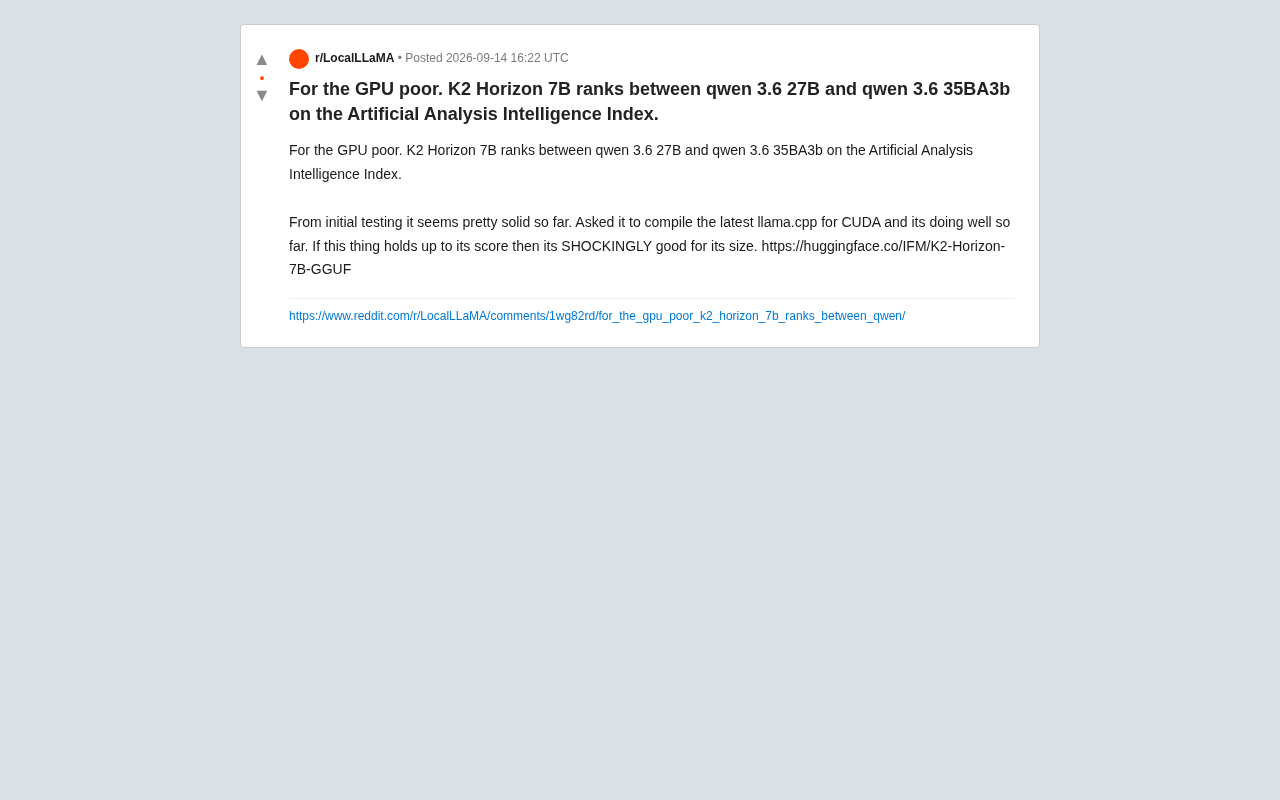
K2 Horizon 7B approaches 27B-class benchmark performance with just 7 billion parameters, making it a compelling option for consumer hardware deployment.
K2 Horizon 7B is a small open-source model targeting the "GPU poor," achieving benchmark scores between Qwen 3.6 27B and 35BA3b on the Artificial Analysis Intelligence Index despite having just 7 billion parameters. Released in GGUF format on Hugging Face, it works seamlessly with llama.cpp and Ollama, typically requiring under 8GB VRAM when quantized. Early real-world testing on CUDA-based llama.cpp compilation tasks showed solid results, earning a "shockingly good for its size" verdict — though benchmark rankings remain a starting point, not a substitute for task-specific evaluation.
A Small Model Built for the "GPU Poor"
As the AI arms race continues to chase ever-larger parameter counts and more compute, a lightweight model called K2 Horizon 7B has been generating buzz in Reddit's local deployment community. Its pitch is refreshingly straightforward: just 7 billion parameters, yet it ranks between Qwen 3.6 27B and Qwen 3.6 35BA3b on the Artificial Analysis Intelligence Index.
For users without high-end GPUs — the community's self-deprecating "GPU poor" crowd — that kind of efficiency ratio means potentially achieving near-mid-tier model reasoning quality on consumer hardware. The model is available on Hugging Face in GGUF format (IFM/K2-Horizon-7B-GGUF), the de facto standard for the llama.cpp local inference ecosystem.
What That Ranking Actually Means
To appreciate the significance of this result, it helps to understand the size gap involved. Qwen 3.6 27B has roughly 27 billion parameters — nearly four times K2 Horizon's 7 billion. If the benchmark results hold up, K2 Horizon is approaching the intelligence level of models three to five times its own size using just a fraction of the parameters.
Parameter count directly affects VRAM usage and inference speed. A 7B model, once quantized, can typically run smoothly on a GPU with 8GB or even less VRAM, while models at 27B and above often require 24GB+ VRAM or multi-GPU setups. This hardware gap is exactly what makes "small models matching big models" such a compelling story — it brings high-quality inference within reach of ordinary users on everyday hardware.
A word of caution: the Artificial Analysis Intelligence Index is a composite benchmark, and a high ranking doesn't mean the model excels at every task. There's often a gap between benchmark scores and real-world experience, which is why community users emphasize hands-on testing.
Quantization is the key technology that makes large models viable on consumer hardware. It compresses model weights from 32-bit or 16-bit floating point down to 4-bit, 5-bit, or 8-bit integers, reducing VRAM usage to one-quarter or one-half of the original while often improving inference speed. For a 7B model, FP16 precision requires roughly 14GB of VRAM, while a Q4 quantized version needs only about 4–5GB — well within the range of a standard 8GB GPU. The trade-off is precision loss: lower quantization levels can hurt fine-grained reasoning performance, though for most tasks at 4-bit and above, the difference is barely noticeable to everyday users. GGUF is the container format designed specifically for storing these quantized weights, developed by the llama.cpp project and now the community standard for local deployment.
Real-World Testing: Solid Performance on Compilation Tasks
The original poster shared their initial test results. They put K2 Horizon 7B through a genuinely practical technical challenge: compiling the latest version of llama.cpp with CUDA support. According to their report, the model has been "performing well so far," handling a task that requires understanding build pipelines and dependency management without obvious failures.
This kind of test is more meaningful than running benchmarks in isolation. Compiling an open-source project requires comprehensive knowledge of command-line tools, build flags, and CUDA environments. A model that can reliably give usable guidance here has genuine value for code assistance scenarios. The poster described it as "SHOCKINGLY good for its size" — assuming it continues to deliver over extended use.
The Real-World Case for Small Models
K2 Horizon 7B continues a broader trend in the open-source community toward "small but capable" models. Compared to flagship models with hundreds of billions of parameters, 7B-class models offer natural advantages in deployment cost, response latency, and privacy: running locally means your data never leaves your machine, and there are no API fees.
For developers and enthusiasts, models like this turn "everyone can run a capable AI assistant on their own computer" from a slogan into a practical reality. The GGUF release lowers the barrier to entry even further — paired with tools like llama.cpp and Ollama, even users without a deep learning engineering background can get up and running quickly.
Of course, a single community post and one benchmark ranking aren't enough to draw firm conclusions. How K2 Horizon performs on complex reasoning, long-context tasks, and multilingual use cases still needs broader validation across different scenarios. But based on the signals so far, it's worth a download for anyone tracking the small model ecosystem.
llama.cpp is an open-source C/C++ inference framework developed by Georgi Gerganov, originally created to run LLaMA models on a MacBook and now grown into a general-purpose engine supporting dozens of model architectures across both CPU and GPU inference. Ollama is a higher-level wrapper built on top of llama.cpp, offering a Docker-like model management experience — pull and run a model with a single command. Together, these two tools form the backbone of the local AI deployment ecosystem, enabling non-engineers to go from zero to a working AI assistant in minutes. K2 Horizon's release in GGUF format means it slots directly into this ecosystem with no additional conversion steps required.
A Few Things Worth Keeping in Mind
If you're thinking of trying this model, here are a few practical tips: choose the quantization level that matches your available VRAM; don't rely solely on benchmark scores — test it against your own typical tasks; and compare it side-by-side with other 7B models to determine whether it's truly punching above its weight class. Benchmark rankings are a starting point, not a verdict.
Related articles
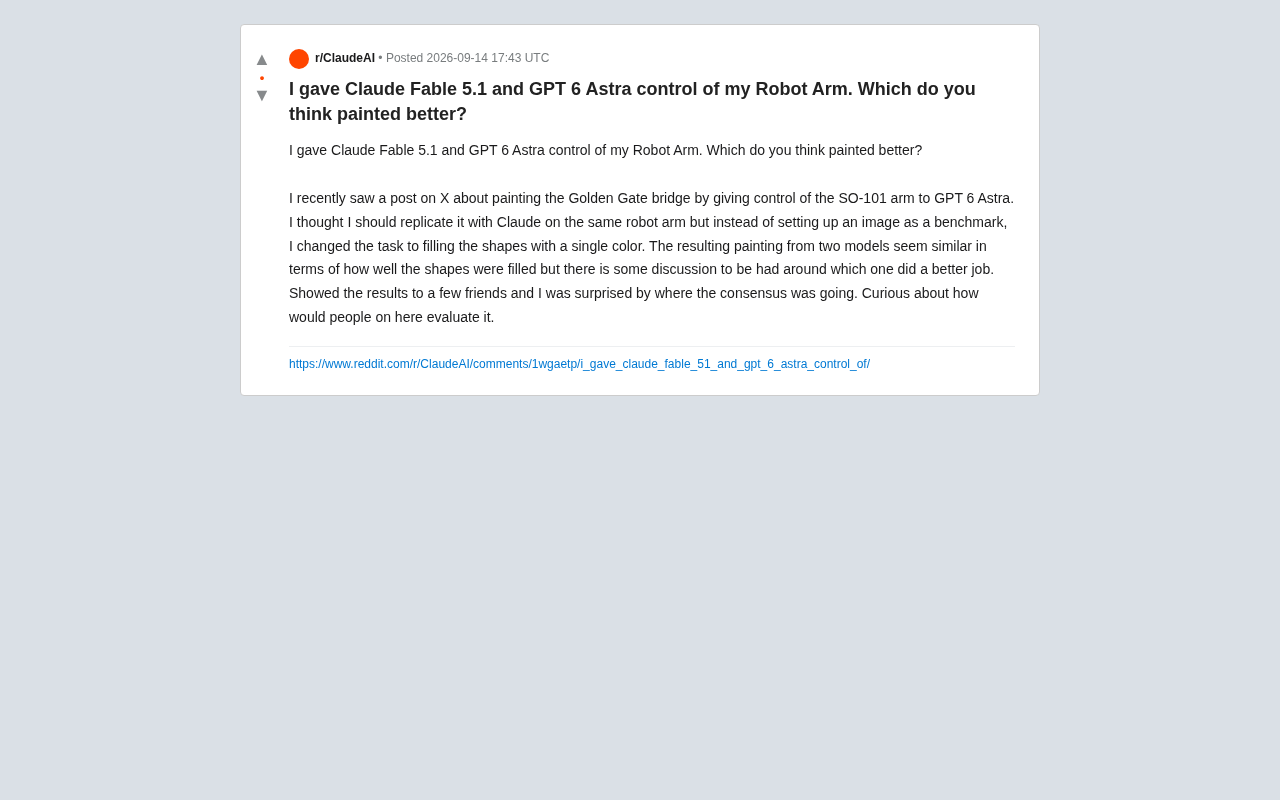
Claude vs. GPT Control a Robotic Arm to Paint: Which One Does It Better?
A developer tested Claude Fable 5.1 and GPT 6 Astra on the same SO-101 robotic arm for a single-color shape-filling painting task, comparing their embodied AI and motor control capabilities.
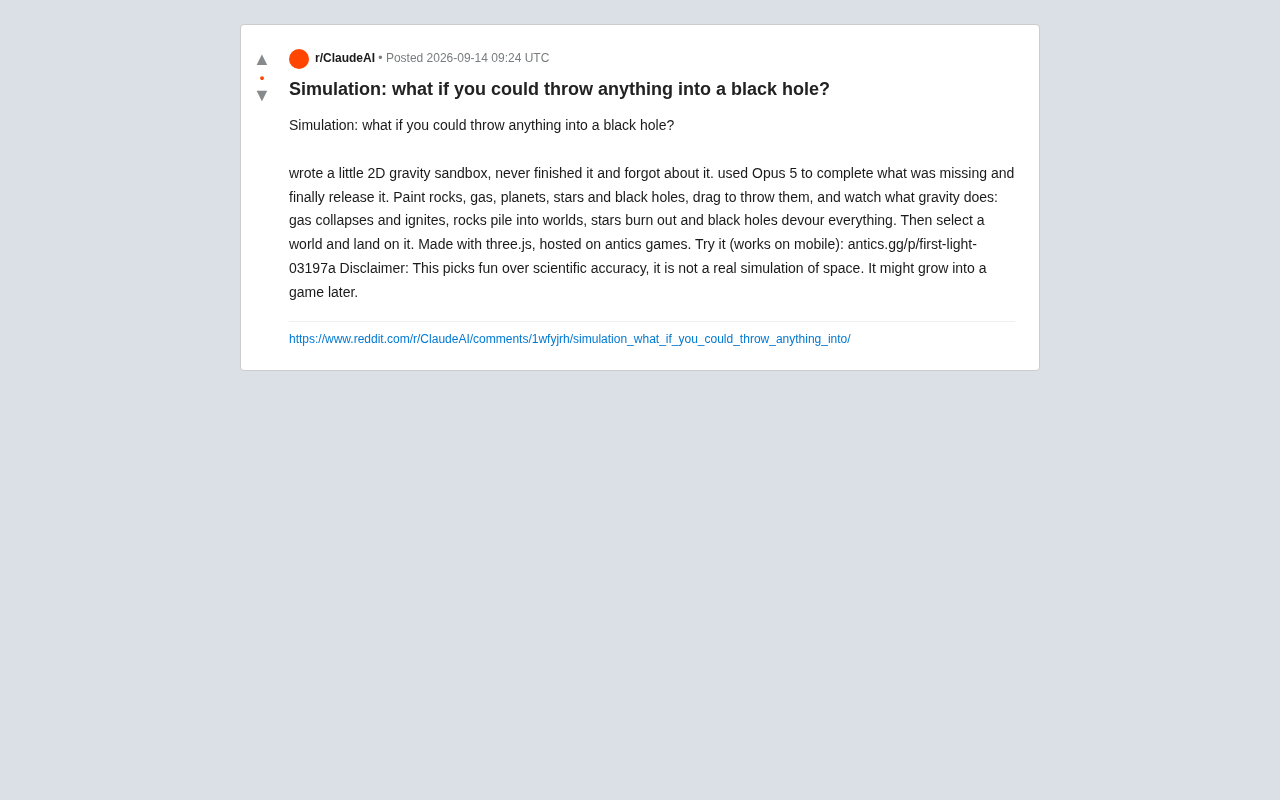
2D Gravity Sandbox Experiment: What Happens When You Throw Everything into a Black Hole?
Developer used AI assistant Opus 5 to revive a long-shelved 2D gravity sandbox, First Light. Built on three.js, it lets you draw rocks, gas, stars, and black holes and watch gravity unfold — even land on worlds you create.
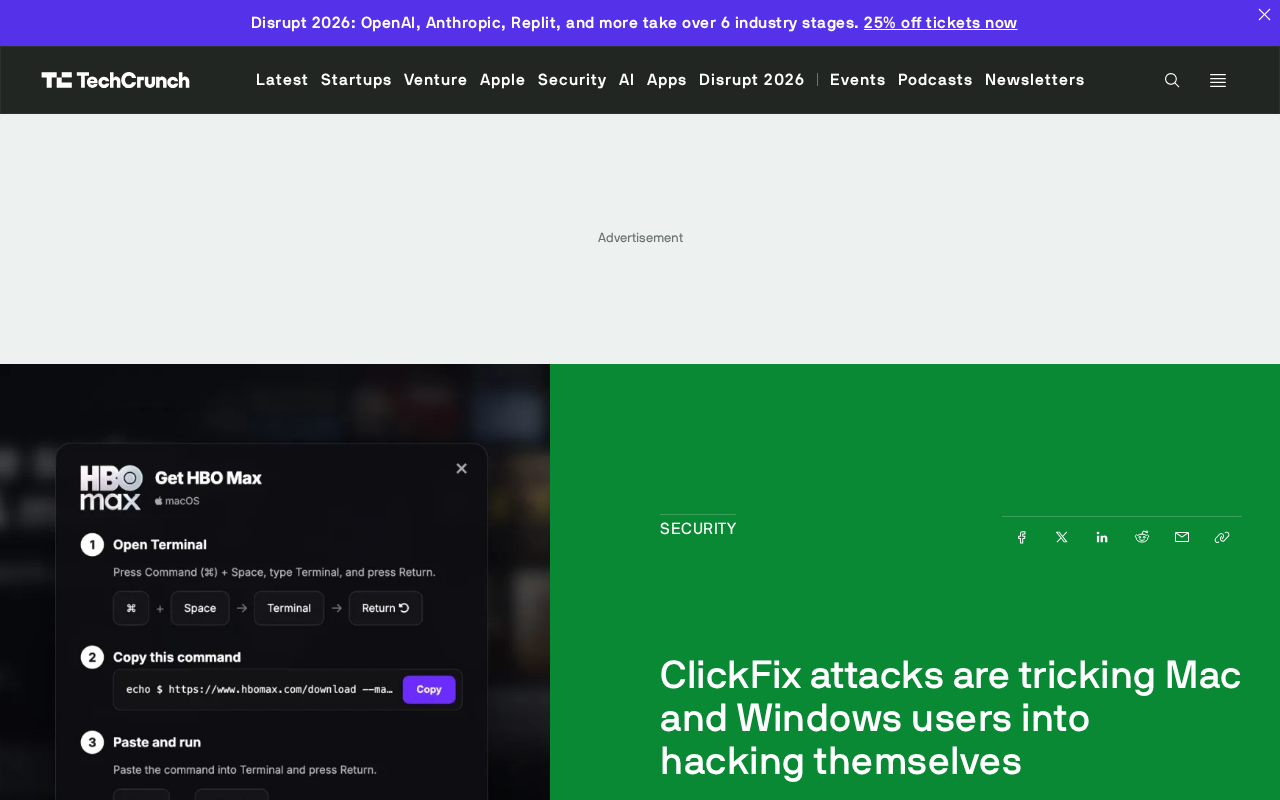
The Rise of ClickFix Attacks: How Mac and Windows Users Are Tricked Into Hacking Themselves
ClickFix is an emerging threat that tricks Mac and Windows users into running malicious commands by impersonating brands like HBO Max. Learn how it works and how to stay safe.