Keylogger Detection and Containment: A Practical Guide for Enterprise Security
Keylogger Detection and Containment: A…
A systematic look at software and hardware keyloggers and the detection-containment loop.
Based on Keylogger Detection and Containment, this article systematically outlines a keylogger protection framework. It first distinguishes software and hardware forms, noting their detection paths differ entirely: software relies on behavioral monitoring, global hook identification, and integrity verification, while hardware requires physical inspection and supply chain management. It then stresses that detection is adversarial and rules often lag variants, so continuous monitoring and baseline comparison are essential. Containment follows "disconnect, clean, verify," with credential rotation highlighted as a critical but often overlooked standard action. Finally, from an enterprise perspective, keylogger protection tests endpoint visibility and response processes—layered defense and closed-loop management are more realistic than any single tool.
Keyloggers are a stealthy and dangerous threat in enterprise endpoint security—they don't encrypt files or pop up windows; they quietly record every keystroke and continuously exfiltrate account credentials, chat content, and business data. A PDF resource shared on Hacker News, Keylogger Detection and Containment, focuses precisely on the two phases of "detection" and "containment." Based on that material, this article outlines the types of keyloggers, detection approaches, and containment priorities, with some practical analysis added.
Two Basic Forms of Keyloggers
Before understanding detection methods, you must first distinguish the adversary's form. Keyloggers fall broadly into two categories: software-based and hardware-based. Software keyloggers reside in the system as processes, drivers, scripts, or browser extensions, stealing keystrokes by hooking keyboard input, polling keyboard state, or reading input buffers. Hardware keyloggers are inserted between the keyboard and the host, or disguise themselves as the keyboard itself, remaining almost completely transparent to the operating system.
This classification directly determines detection strategy: software keyloggers can be discovered through endpoint-side behavioral and integrity checks, while hardware keyloggers rely more on physical inspections and supply chain management. The material emphasizes that the two threat types require different detection and containment paths; conflating them leads to blind spots.
Detection: From Behavioral Characteristics to Integrity Verification
Core Approaches for Software Detection
The common behavioral trait of software keyloggers is "anomalous access to keyboard input." Detection can start at several levels: monitoring unexpected calls to keyboard input APIs, identifying suspicious global hooks, checking anomalous input method or accessibility components, and auditing startup items and scheduled tasks. The material suggests that single-point indicators are easily bypassed; instead, combine process behavior, network egress, and file artifacts for correlated analysis.
Global hooks are an interception mechanism in the Windows message system: a process registers a callback function via SetWindowsHookEx to capture keyboard, mouse, and other input events at the system level—even if the target window doesn't belong to it. WH_KEYBOARD_LL (low-level keyboard hook), the type most commonly used by keyloggers, falls into this category and can read keystrokes before they reach any application. Legitimate software also uses hooks—input methods, screen word-capture tools, and accessibility programs—so the key to detection is not the mere "presence of a hook" but whether the hook's registrant is trustworthy and whether it matches a known business purpose. Cross-referencing driver signatures, process paths, and parent-child relationships is more effective than simply enumerating hooks.
Hardware and the Supply Chain Perspective
Hardware keyloggers cannot be found through software scans. The material recommends incorporating physical inspections into routine security procedures—for example, periodically checking keyboard ports and adapters at critical positions. Meanwhile, supply chain trustworthiness at the procurement stage is an even earlier line of defense—peripherals of unknown origin are themselves a risk.
Hardware keyloggers typically fall into two types: inline devices plugged between the keyboard and the USB/PS2 port, resembling a short adapter; and disguised devices built directly into keyboards, KVM switches, or even USB hubs, indistinguishable in appearance from genuine products. Because they operate at the electrical and firmware layer, the operating system sees only an ordinary HID keyboard device, completely invisible to conventional antivirus and EDR. Practical physical inspection measures include: checking keyboard cables and ports for extra adapters, using tamper seals or lockable cases at critical workstations, and periodically comparing peripheral serial numbers against the asset inventory. For highly sensitive areas, policies such as disabling USB storage-class devices and allowing only whitelisted HID devices can further reduce the attack surface.
Limitations of Detection
It's important to recognize that keylogger detection is inherently adversarial. Attackers can delay exfiltration, encrypt communications, or masquerade as legitimate input components, and detection rules often lag behind variants. The material's position is that detection is not a one-time task but a combination of continuous monitoring and baseline comparison.
Adversarial detection refers to the ongoing contest between defenders and attackers: attackers adapt their behavior to known detection rules—for example, caching keystroke data locally, exfiltrating in scheduled batches, or blending C2 communications into normal HTTPS traffic—thereby evading rules based on fixed signatures and frequencies. This explains why signature-based detection inevitably lags—a variant needs only minor code changes to bypass it. A more robust approach is to establish a behavioral baseline: record which processes normally access input APIs, which domains they connect to, and their memory usage under normal conditions, then alert on deviations from the baseline. Baseline comparison doesn't eliminate the adversarial dynamic, but it shifts the detection focus from "known bad" to "anomalous," raising the attacker's cost of evasion.
Containment: Isolation, Removal, and Recovery
Once detected, the containment phase determines the scope of damage. The material's approach can be summarized as "disconnect first, clean second, verify last": immediately isolate affected endpoints and block data exfiltration channels; then remove malicious components, including processes, services, drivers, and persistence mechanisms; finally verify removal effectiveness and assess whether credentials have been compromised.
Credential rotation is an easily overlooked step. The direct target of keyloggers is often account credentials—even after malware is removed, leaked credentials remain valid. The material emphasizes that the containment process should treat "credential reset for affected accounts" as a standard action, not an optional one.
Implications for Enterprise Security Architecture
Viewed within the broader enterprise security framework, the value of keylogger protection lies in the fact that it tests two fundamentals: "endpoint visibility" and "response process." If the endpoint lacks the ability to monitor input-related behavior, detection is impossible; if the response side lacks clear isolation and credential-handling procedures, containment will be sluggish.
Another point worth emphasizing is layered defense. Keyloggers are just one link in the data-theft chain; attackers may use multiple methods simultaneously. Building detection, containment, and credential management into a closed loop is more realistic than pursuing a single "silver bullet" tool. The material itself leans toward this systematic perspective rather than recommending a specific product.
Endpoint visibility is the prerequisite for detection capability—it refers to whether the security team can obtain real-time telemetry from endpoints, including process creation, module loading, driver installation, network connections, and registry changes. Endpoints lacking such data are essentially "black boxes" in security operations: even if an anomalous input API call appears in the logs, there's no context to correlate it with. EDR products emphasize telemetry coverage precisely because it determines the ceiling for subsequent detection rules and threat hunting. For enterprises, when assessing keylogger protection capabilities, the first step should be inventorying the scope and retention period of endpoint telemetry—before discussing the sophistication of detection rules. Without visibility, even the best rules have nowhere to land.
Summary
The framework provided by Keylogger Detection and Containment is not complex: distinguish software from hardware types, use behavioral monitoring and integrity checks for detection, and use isolation, removal, and credential rotation for containment. The real challenge is making these actions part of daily operations. For security teams, this material is best used as a self-assessment checklist—verifying existing capabilities item by item and identifying gaps.
Related articles
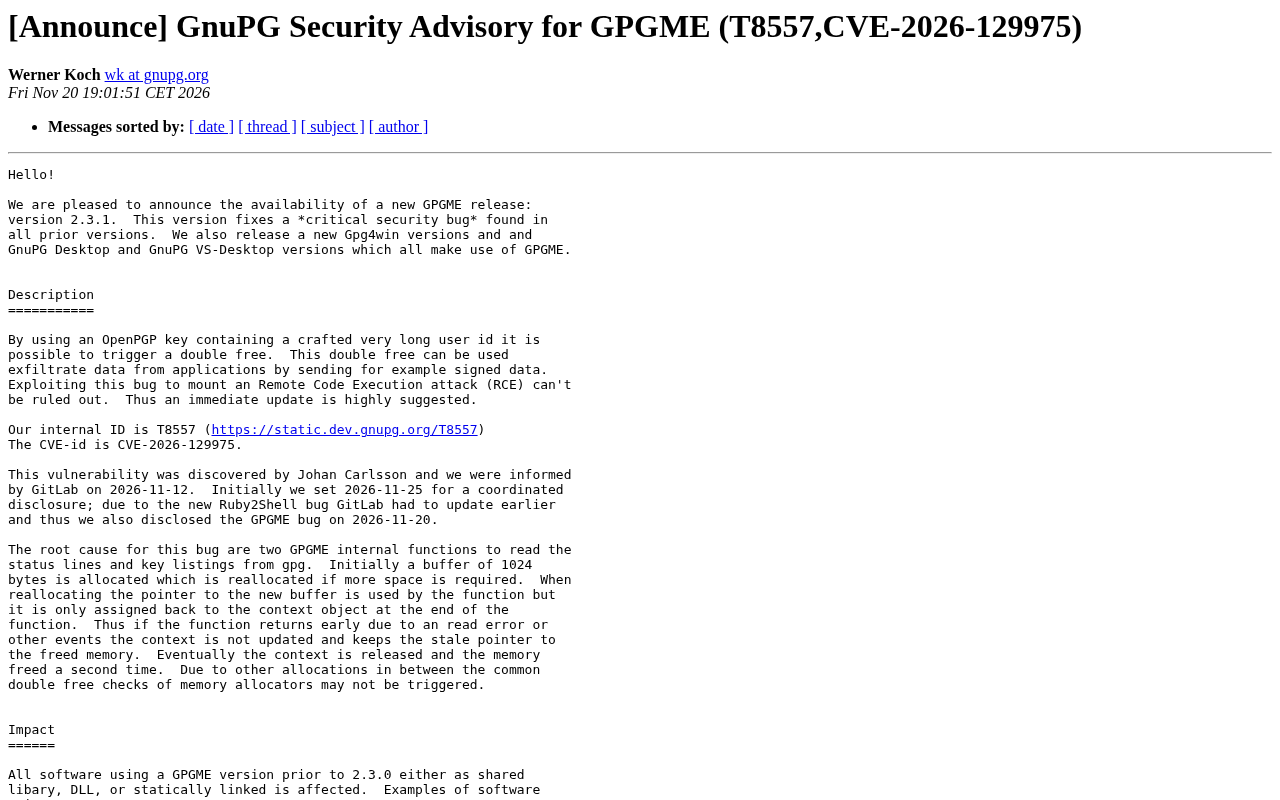
GnuPG Discloses Remote Code Execution Vulnerability, Renewed Focus on Encryption Tool Security
GnuPG's official mailing list disclosed a remote code execution (RCE) vulnerability, sparking nearly 100 comments on Hacker News. This article summarizes the disclosure, impact assessment, and security lessons for encryption tools to help developers prioritize incident response.

Together.ai Reportedly Exposes Prompt Leakage Vulnerability: Request Handling Mechanism Raises Concerns
Together.ai is reportedly exposed on Hacker News for request prompt leakage. This article analyzes the incident background, the isolation challenges of multi-tenant inference platforms, and the security implications for developers and the AI infrastructure industry.

Codex for Beginners: 13 Hands-On Projects from Installation to Building Websites and Blender Modeling
Complete Bilibili Codex beginner tutorial: from registration and installation, permissions and model selection, to 13 hands-on scenarios including environment setup, GPT image generation for personal websites, Skill packaging, MCP connection to Blender modeling, CapCut control, scheduled tasks, and mobile control.