Kimi K3.1 Pro Hands-On: Beats GPT-6.2 Astra on Benchmarks, But Loses on Interaction in Real-World Tests

Kimi K3.1 Pro beats GPT-6.2 Astra on benchmarks, but three hands-on tests reveal gaps in interaction and visual design.
Based on a Bilibili creator's hands-on test video, the article compares Kimi K3.1 Pro, GPT-6.2 Astra, and DeepSeek V4.1 Flash 1017 across three development tasks. Kimi leads GPT-6.2 Astra on Terminal Bench 4.0 and SWE Marathon V1.1, but in a tower defense game, a robotic arm, and a 3D Earth-Moon-Sun simulator, its interaction feedback and 3D visual focus fall short. GPT-6.2 Astra performs best in UI architecture and system integration; DeepSeek is fastest with the lowest API price. Kimi's 199 RMB Pro plan supports three complex projects, with API pricing between DeepSeek and GPT. The article offers selection advice by requirement and notes testing limitations.
Kimi K3.1 Pro surpasses the previous-generation GPT-6 Astra in official coding benchmarks, but benchmarks are not the same as delivery. Based on a hands-on test video from a Bilibili creator, this article compares the real-world performance of Kimi K3.1 Pro, GPT-6.2 Astra, and DeepSeek V4.1 Flash 1017 across three development tasks, and offers model-selection advice factoring in pricing and usage quotas.
The Basics of the Three Models
Kimi K3.1 Pro uses a Mixture-of-Experts architecture with 2.8 trillion total parameters, activating roughly 104 billion parameters per inference. It supports a 1 million Token context and native multimodal capabilities. This generation's update focuses on strengthening code development, 3D creation, and long-horizon Agent tasks.
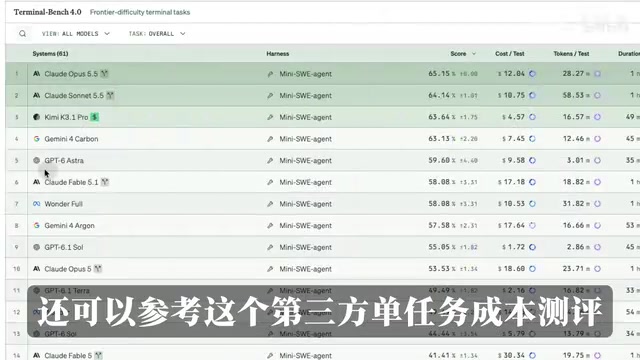
On benchmarks: in Terminal Bench 4.0, Kimi K3.1 Pro scores 65.7%, which is 1.6 percentage points higher than GPT-6.2 Astra's 64.1% from independent evaluation; DeepSeekAd V4.1 Flash 1017 scores 42.3%. In SWE Marathon V1.1, Kimi leads with 51.7%, 9.2 points ahead of GPT-6 Astra's 42.5%, and also exceeds Claude Opus 5.5's 46.3%. On the numbers alone, Kimi has entered the flagship competitive range.
But does a benchmark lead translate into a usable project? The creator set up three development tasks to verify. In the tests, GPT-6.2 Astra ran through Codex with reasoning effort set to Medium; DeepSeek and Kimi were both set to Max. All three were completed in the official desktop version's standalone workspace.
Mixture-of-Experts (MoE) is a sparse-activation model structure: the model internally consists of multiple "expert" subnetworks, and only a subset is activated during each forward inference. The gap between Kimi K3.1 Pro's 2.8 trillion total parameters and its roughly 104 billion activated parameters comes precisely from this design—the total parameter count determines the model's upper bound on knowledge capacity, while the activated parameter count directly affects the compute and VRAM overhead of a single inference.
The significance of this architecture is that it lets the model "remember more while computing less," keeping inference costs manageable while scaling up parameter count. The trade-off is increased routing complexity, and actual performance often depends more on whether the training data distribution and expert division of labor are reasonable. So when looking at MoE models, total parameters and activated parameters need to be understood separately—you cannot simply compare "2.8 trillion" directly against a dense model's parameter count.
Terminal Bench and SWE Marathon are both benchmarks targeting coding and Agent capabilities, but with different emphases. Terminal Bench mainly assesses a model's ability to operate in a command-line environment, including file read/write, script execution, and dependency troubleshooting—close to a real developer's terminal workflow. SWE Marathon leans more toward long-horizon software engineering tasks, requiring the model to maintain context over a longer time span, advance step by step, and ultimately deliver a runnable result.
Scores on such benchmarks reflect a model's capability ceiling in a controlled environment, but test cases are usually trimmed and differ from real projects with ambiguous requirements, cross-module coupling, and repeated rework. So benchmark scores are suitable as a reference for horizontal comparison, not as a direct proxy for delivery quality—which is exactly why the original article emphasizes that "benchmarks are not the same as delivery."
Hands-On Across Three Development Tasks
Tower Defense Game: The Gap in Multi-System Integration
The first task is a cyber city tower defense, requiring a power system added to the base game—turrets stop firing when out of power, enemies can disable power stations, while retaining coin upgrades and wave functionality.
DeepSeek retained building, coins, and upgrade functionality, and turrets show a prompt that they cannot attack when out of power. Core functionality is in place, but power status feedback is scattered and the UI information architecture is not clear enough. Kimi implemented EMP 5-second disruption and independent power station status, but the effect of power loss on turrets is not presented in a centralized way—individual features have good completion, but visual feedback for cross-system state linkage is insufficient. GPT-6.2 Astra, meanwhile, presents grid count, failure countdown, and turret power status in a unified way; when only one of two power stations is running, players can directly grasp the change in power supply.
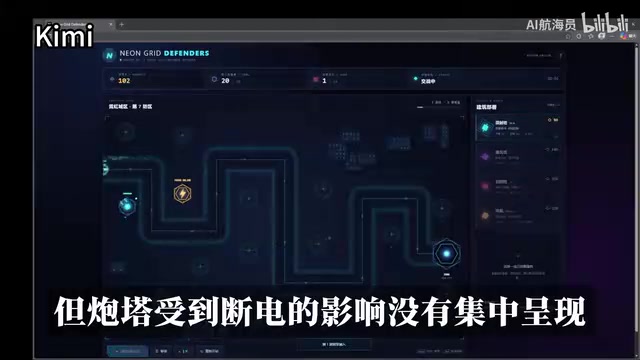
In this round, GPT-6.2 Astra is clearly superior in UI information architecture, interaction feedback, and system-level feature integration, making it better suited for developing complex games with multiple interacting mechanics.
Robotic Arm: The Trade-Off Between Speed and Observability
The second task is an automated sorting robotic arm, assessing motion control, state synchronization, and system stability. The arm needs to identify packages of different colors and accurately grasp them into the corresponding sorting bins.
DeepSeek completed the sorting of 16 packages at triple speed with 0 failures, with a clear action state machine display and good high-speed performance, but lacking detailed operation records. Kimi also implemented automatic grasping and color sorting, completing 8 items at triple speed with 0 failures; its UI control panel and real-time monitoring are relatively complete, but the validation sample for continuous sorting is small, so stability evidence is insufficient. GPT-6.2 Astra completed 18 items at double speed with 0 failures, and also provides categorized statistics and item-by-item operation logs, with better observability and result traceability—but it lacks triple-speed validation under the same conditions, so high-speed stability cannot be confirmed.
In this round, DeepSeek was the fastest, GPT-6.2 Astra had the most complete records, and Kimi performed moderately.
3D Earth-Moon-Sun Simulator: Kimi's Strengthened Direction Falls Short
The third task is a 3D Earth-Moon-Sun simulator, requiring celestial body motion, lunar phase changes, timeline control, view switching, and a solar eclipse demonstration—exactly the 3D direction Kimi focused on strengthening this generation.
DeepSeek implemented celestial body motion, lunar phase changes, and view switching; the first-quarter moon's illuminated fraction is shown as 50%, and the lunar texture and terminator line are clear, with excellent 3D rendering and lighting—but the interaction information layout is scattered and the UI design has room for improvement. Kimi also implemented orbital motion, time control, and astronomical parameter display, with relatively complete feature module coverage, but the celestial body models are too small, the moon's illumination changes are not intuitive enough, and scene composition and visual hierarchy design have obvious deficiencies. GPT-6.2 Astra implemented dynamic lunar phase display, timeline control, and a standalone solar eclipse demonstration mode, and also added explanations of the moon's illuminated fraction and orbital inclination, with more complete feature planning, interaction design, and scientific information visualization—but the physical accuracy of the eclipse shadow still lacks complete verification.
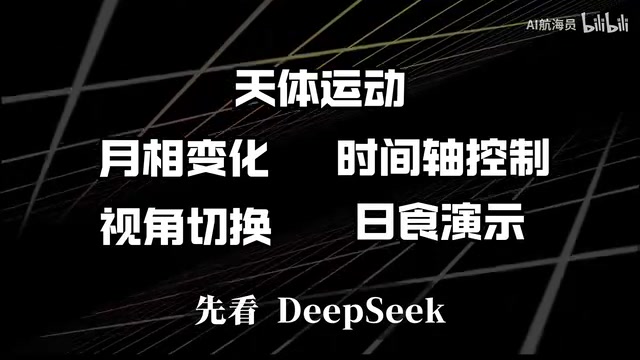
After finishing all three tasks, Kimi still has clear room for improvement in interaction feedback for complex systems and visual focus in 3D scenes—especially since the celestial simulator did not highlight the most important lunar phase observation effect.
Pricing and Quotas: Can the 199 RMB Plan Hold Up?
The creator used the Kimi 199 RMB Pro plan to run all three complex development projects in full, and only near the end of the third test did it almost trigger a single 5-hour quota limit. This shows that the 199 RMB plan can already support complex programming tasks of a certain intensity.
On API pricing, Kimi K3.1 Pro is 13 RMB per million input Tokens and 68 RMB for output; GPT-6.2 Astra is 8 USD per million input and 40 USD for output, which at exchange rates makes the standard API unit price about 4 times Kimi's; DeepSeek V4.1 Flash 1017 is cheaper still, at about 1 RMB per million input and about 4 RMB for output, with prices doubling during peak hours. Comparing API unit prices alone, DeepSeek's cost advantage is very obvious, with Kimi in between. For actual project costs, third-party per-task cost evaluations can also be referenced.
Token billing is the common pricing method for large model APIs: input Tokens refer to the prompt sent into the model (including system instructions, code context, and conversation history), while output Tokens refer to the model's generated reply. The special thing about coding scenarios is that the input side is often much larger than the output side—a single code completion may carry an entire file or even multiple files as context, so the impact of input unit price on total cost is often underestimated.
In addition, most vendors charge different rates for ultra-long contexts, peak hours, or cache misses. DeepSeek's "peak-hour price doubling" mentioned in the article is one such case. When estimating costs, you should calculate comprehensively based on the input-output ratio per task, context length, and call frequency, rather than just comparing the two numbers on the price list.
Selection Advice: Match by Requirement
After three tests, the characteristics of the three models are clear.
GPT-6.2 Astra: Its strengths are concentrated in feature planning, UI information architecture, and system-level interaction design. In the tower defense game, grid status, failure countdown, and turret power information are fully integrated; the robotic arm project provides detailed operation logs; the celestial simulator balances interactive functionality and scientific explanation. When you need to develop complete applications with multi-module linkage and complex features, it remains the more recommended choice.
DeepSeek V4.1 Flash 1017: Core feature implementation and some 3D rendering performance are competitive; its main weaknesses are UI information organization and product details. Combined with its extremely low API price, it is well worth considering if you prioritize development cost.
Kimi K3.1 Pro: Basic feature coverage is decent, but interaction feedback for complex systems and visual focus in 3D scenes still have room for improvement. If you are pursuing a complete product experience, this round of testing still favors GPT-6.2 Astra; but Kimi is already close to its competitors on some coding benchmarks and remains very competitive among domestic models.
One note: the three tests only illustrate part of the picture. Real code maintenance, complex fault repair, and long-term runtime stability still need further verification. The creator also expressed anticipation for Zhipu GLM 5.5 and Qwen Kun 4.0, to see whether domestic models can push the ceiling higher.
One-line Summary
Kimi K3.1 Pro beats GPT-6.2 Astra on benchmarks, but three hands-on tests reveal gaps in interaction and visual design.
Paragraph Summary
Based on a hands-on test video from a Bilibili creator, the article compares Kimi K3.1 Pro, GPT-6.2 Astra, and DeepSeek V4.1 Flash 1017 across three development tasks. Kimi leads GPT-6.2 Astra on Terminal Bench 4.0 and SWE Marathon V1.1, but in three hands-on tasks—a tower defense game, a robotic arm, and a 3D Earth-Moon-Sun simulator—its interaction feedback for complex systems and visual focus in 3D design fall short of competitors. GPT-6.2 Astra performs best in UI information architecture and system integration; DeepSeek is fastest and has the lowest API price. On pricing, Kimi's 199 RMB Pro plan can support three complex projects, and its API unit price sits between DeepSeek and GPT. The article ends with selection advice by requirement and notes the limitations of the test conclusions.
Related articles
The New AI Testing Frontier: Deploying Tencent's Open-Source Knowledge Base and Hands-On RAG Evaluation
Starting from AI testing's evaluation challenge, this article covers deploying Tencent's open-source WeKnora, comparing production vs. learning setups, and explaining RAG evaluation principles and hands-on paths.

Why Learn Python in the AI Era? A Deep Dive with the Author of 'Python Crash Course'
Eric Matthes, author of 'Python Crash Course', discusses why Python remains essential in the AI era, the democratization and risks of AI coding tools, and the value of human creators.

Convex Skill Allegedly Uploads User App Ideas to Remote Servers Without Consent
Convex backend skill allegedly sends user app ideas to remote servers without disclosure, sparking Hacker News debate. We analyze the privacy risks and transparency issues.