Kimi K3 Hands-On Tutorial: Claude Code Sub-Agent Configuration & GPT-5.6 Comparison Test
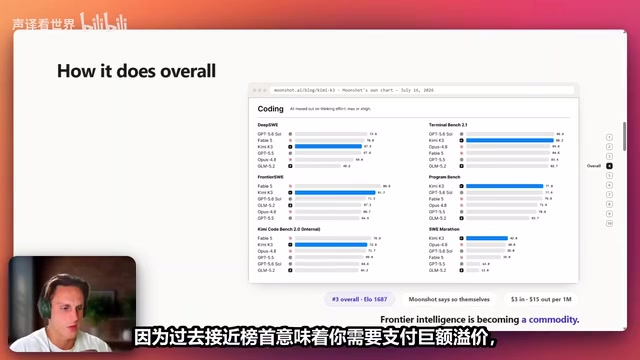
Configure Kimi K3 as a Claude Code sub-agent and benchmark it against GPT-5.6 and Fable 5.
This tutorial walks through configuring Moonshot's Kimi K3 — a 2.8T parameter MoE model topping the Frontend Code Arena — as a sub-agent in Claude Code. It covers API key setup, automated configuration, and a three-way creative comparison with GPT-5.6 and Claude Fable 5 using YFlow workflows, while addressing speed limitations and data privacy concerns.
What Is Kimi K3: The Open-Source Newcomer Topping the Frontend Arena
Moonshot AI Lab's latest release, the Kimi K3 model, shot straight to the top of the Frontend Code Arena upon its debut. According to video creator Andrew, this is a 2.8 trillion parameter Mixture of Experts (MoE) model with a 1 million token ultra-long context window, priced comparably to Claude Sonnet — a value proposition that puts real pressure on the entire industry.
Mixture of Experts (MoE) is a sparsely-activated neural network architecture whose core idea is distributing model parameters across multiple "expert" sub-networks, activating only a small subset during each inference pass. For example, while Kimi K3 has 2.8 trillion total parameters, it may only activate tens of billions during actual inference, making computational costs far lower than a dense model of equivalent scale. This architecture was first popularized by Google's Switch Transformer paper and has since been widely adopted by models like Mixtral and DeepSeek-V2. The key component of MoE is the "Router," which determines which experts should process each token. This explains how K3 can offer service at Sonnet-level pricing — despite the massive total parameter count, the computation per inference is kept within a reasonable range.
A 1 million token context window means the model can process approximately 750,000 English words or nearly 500,000 Chinese characters in a single conversation — equivalent to reading about 10 standard-length technical books at once, or the complete codebase of a medium-to-large software project. For frontend development scenarios, this means the model can simultaneously understand an entire project's component structure, style files, state management logic, and business code without requiring developers to repeatedly provide context fragments. By comparison, Claude 3.5 Sonnet's context window is 200K tokens, and GPT-4o's is 128K tokens.
Interestingly, Kimi K3's launch video was itself edited and created by K3, indirectly demonstrating its capabilities in multimodal creative tasks. The author specifically emphasized that Frontend Code Arena rankings are based on human voting comparisons on real frontend tasks — users compare outputs from two models and select the better one, rather than models self-evaluating. This gives the #1 ranking meaningful credibility.
The Frontend Code Arena uses an ELO rating mechanism, similar to chess ranking systems. Users submit a frontend development task, the system randomly selects two anonymous models to generate code separately, and users choose the better output without knowing which model produced which. After extensive blind comparisons, the system calculates each model's ELO score based on win/loss relationships. This "human preference alignment" evaluation method reflects actual user experience better than standardized benchmarks like MMLU, because it measures the combined performance of visual results, code quality, and interaction experience rather than isolated knowledge Q&A ability.
Keeping Rankings in Perspective: Not a Universal Domination
While recommending the model, the author maintains admirable restraint. He explicitly points out that Kimi K3's #1 ranking is limited to the frontend leaderboard only. In broader general coding and agentic system tests, K3 actually typically ranks second or third, with Claude Fable 5 often above it, though K3 also frequently beats GPT-5.6.
The deeper significance here is that in the past, using a near-top-ranking model often required paying a substantial premium. Now, you can get a model rivaling GPT-5.6 — and even outperforming Opus on certain tasks — at Sonnet-level pricing. Anthropic and OpenAI are facing genuine pricing pressure.
Three Critical Issues to Know Before Using Kimi K3
The author professionally highlights several key limitations, making this one of the most valuable sections of the content:
- No open weights yet: The official claim is that open weights will be released on July 27, but as of recording, they haven't actually been made public.
- Slower on difficult tasks: Some users report that certain frontend tasks took up to 35 minutes to process. This relates to MoE architecture routing overhead and attention computation for ultra-long contexts — when task complexity increases, the model may need to activate more experts and perform deeper reasoning chains, causing significant latency increases.
- Data training & privacy risks: Any content sent via the API may be used to train future models. The author states candidly that this is a Chinese model, and users need to assess data flow risks for themselves.
Regarding data privacy, the relevant background is: when users send data to AI models via API, that data is transmitted to the model provider's servers for processing. Different countries and regions have different legal frameworks for data storage, cross-border transfer, and usage purposes. China's Data Security Law and Personal Information Protection Law mandate data localization requirements, while the EU's GDPR and various US state privacy laws have their own restrictions on data export. For enterprise users, sending commercial code or customer data to servers in specific jurisdictions may trigger compliance risks. A pragmatic approach: feel free to use it for learning and non-sensitive projects, but carefully evaluate data flow when dealing with customer data or core intellectual property.
These three reminders are particularly important for developers planning to use K3 in production environments — the value proposition is tempting, but speed and data security trade-offs must be weighed.
Configuring Kimi K3 as a Sub-Agent in Claude Code
The entire configuration process is designed to integrate through Claude Code as a sub-agent, with clear logic and a low barrier to entry.
The sub-agent pattern is a hierarchical AI system architecture where a "primary agent" (like Claude Code) handles user intent understanding, task decomposition, and dispatches specific subtasks to different "sub-agents" for execution. This pattern borrows from the microservices architecture philosophy in software engineering — each sub-agent focuses on its area of expertise while the primary agent handles orchestration and coordination. In practice, the primary agent calls sub-agents via API, passes context and instructions, receives results, and integrates them. This is more powerful than simple model switching because the primary agent can provide each sub-agent with customized system prompts, constraints, and output format requirements.
Step 1: Obtain the Kimi K3 API Key
After logging into the Kimi website, select a plan (the author recommends choosing a subscription plan over pure API billing, as subscriptions are more cost-effective for heavy usage), navigate to the Console page, create an API key, and copy it.
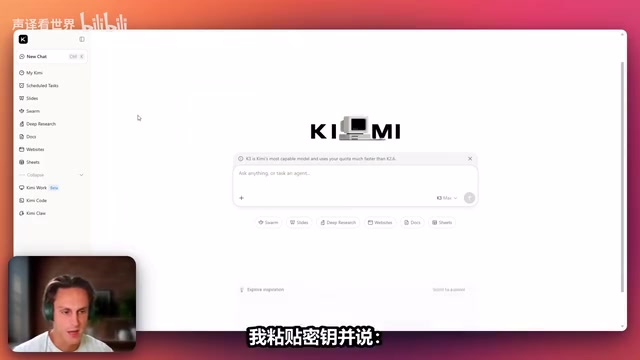
Step 2: Let Claude Code Handle the Configuration Automatically
In VS Code with the Claude Code plugin installed, paste the key and enter the instruction: "Please help me set up K3 so I can use it as a sub-agent." About two minutes later, Claude responds that it's done — the Kimi Builder sub-agent is configured and the key is verified as working.
An important security reminder: The author emphasizes that API keys are essentially passwords. He only pasted it directly because this was a disposable $20 temporary account that could be revoked at any time. Never paste important keys directly into chat windows — always manage them in .env files. A .env file is a standard environment variable management method that separates sensitive information (such as API keys and database passwords) from code and excludes them from version control via .gitignore, preventing accidental key exposure to public repositories. This detail reflects the author's commitment to development best practices.
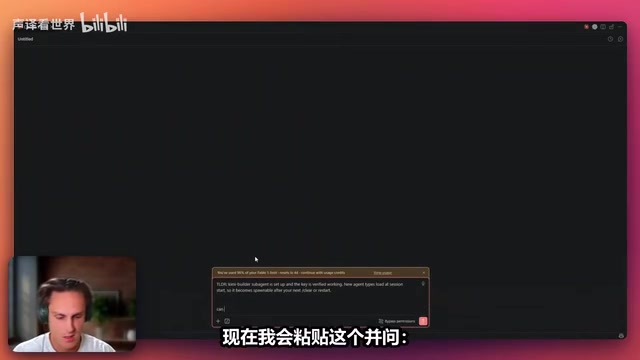
Once configured, whenever you need to invoke Kimi, simply tell Claude to use the corresponding Kimi sub-agent.
Practical Example: Kimi K3 vs. GPT-5.6 vs. Fable 5 — Three AI Directors Face Off
The most exciting hands-on portion of this tutorial involves building a "viral visual template" with three models competing head-to-head.
Building the YFlow Workflow
The author uses YFlow (a node-based creative canvas) as the stage. YFlow is a node-based visual workflow platform with a design philosophy similar to ComfyUI or Unreal Engine's Blueprint system. Users build automated pipelines by dragging and connecting nodes of different functions, where each node represents an atomic operation (such as image generation, video synthesis, text processing, etc.). This visual orchestration approach lowers the barrier to building complex AI pipelines while maintaining high customizability.
Similarly, the author first creates an API key on YFlow's settings page, then has Claude Code complete the YFlow API configuration.
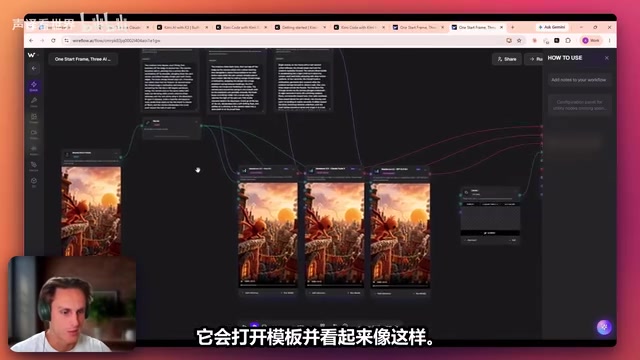
The core logic of the entire workflow is: a shared starting frame (image seed) branches into three pipelines, each assigned to a different "AI director" — Kimi K3, Claude Fable 5, and GPT-5.6. Each model views the same reference static image, independently generates dynamic video prompts, which are then injected into their corresponding Zdance video nodes. This experimental design follows basic scientific comparison principles — controlling variables (same input image and same video generation engine) while only changing the prompt generator, thereby fairly evaluating different models' creative understanding and prompt engineering capabilities.
Having Claude Code Learn the Workflow and Inject Prompts
The author copies the YFlow workflow URL to Claude Code and inputs: "Can you learn this workflow? I plan to change the prompts." Claude quickly understands this is a three-way AI director comparison flow and, following instructions, generates three sub-agents that each view the reference image, write dynamic prompts, and automatically insert them into the corresponding nodes.
For example, Kimi K3 generated approximately 110 words of prompts, detailing different movements and camera angles. Back in the workflow, you can see purple text connection lines automatically routing each prompt to its corresponding Zdance node, with the same starting frame driving three different creative directions.
Downstream Compositing and Publishing
Downstream in the workflow is an image compositor that overlays black layers onto Zdance video clips, ultimately producing finished videos ready for direct publishing to Twitter or LinkedIn. The author states that both the template and the skill pack for configuring sub-agents in Claude Code will be shared.
Conclusion: Kimi K3's Value Revolution and Pragmatic Model Selection Advice
The emergence of Kimi K3 signals that high-performance AI models no longer necessarily come with steep premiums. For developers primarily focused on frontend UI design and visual creativity, its #1 ranking chart is highly relevant; however, for general coding and complex agentic tasks, Fable 5 and GPT-5.6 still hold advantages.
More importantly, this tutorial demonstrates a modern workflow paradigm: orchestrating multiple models as sub-agents within Claude Code, completing key configuration, workflow learning, and prompt injection through natural language instructions. This "AI orchestrating AI" paradigm may be the most noteworthy trend for developers amid the current model wars. It represents a paradigm shift from "humans directly using tools" to "humans directing AI to use AI" — where developers' core competitiveness moves from writing code to designing system architecture and orchestration strategies. Of course, speed bottlenecks and data privacy risks remain unavoidable real-world considerations in model selection.
Key Takeaways
Related articles
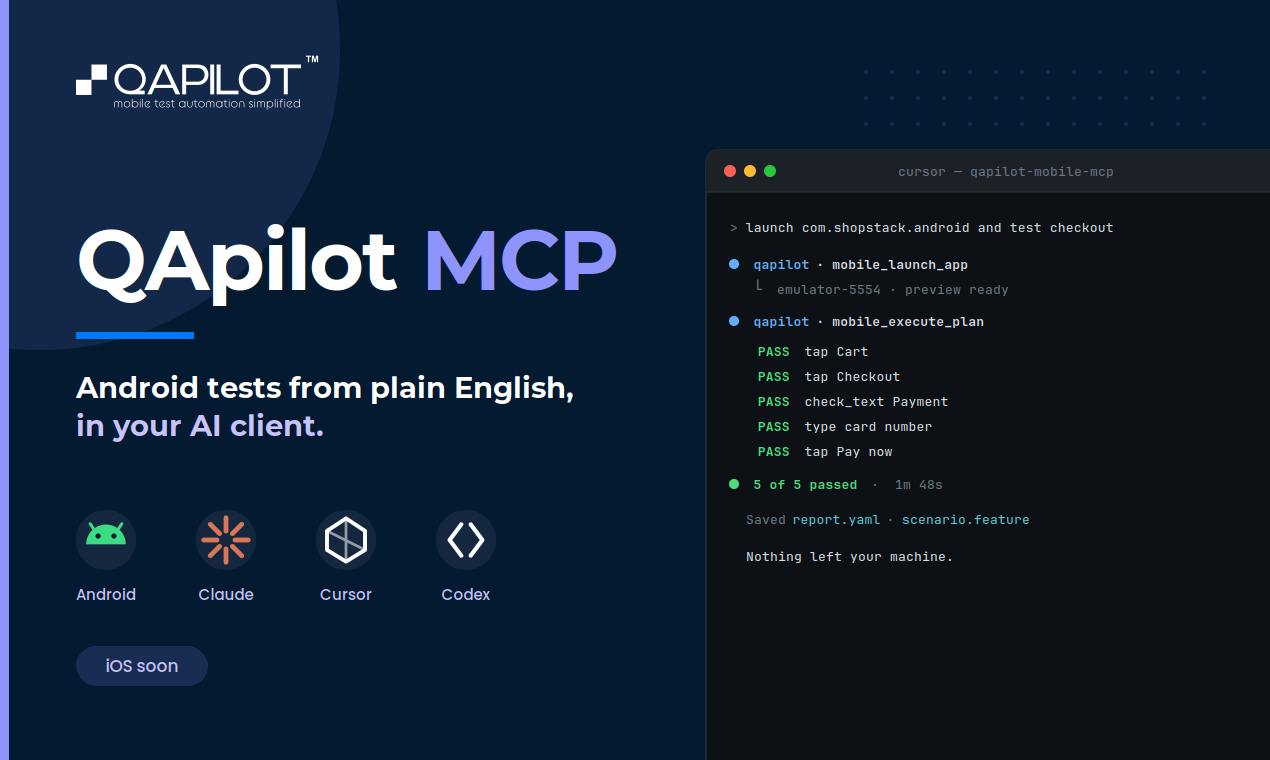
QApilot MCP: Test Android Apps in Natural Language Inside Your AI Coding Assistant
QApilot MCP lets developers test Android apps in natural language inside Claude, Cursor, and Codex — no Appium code needed. Auto-generates reusable Gherkin test cases.
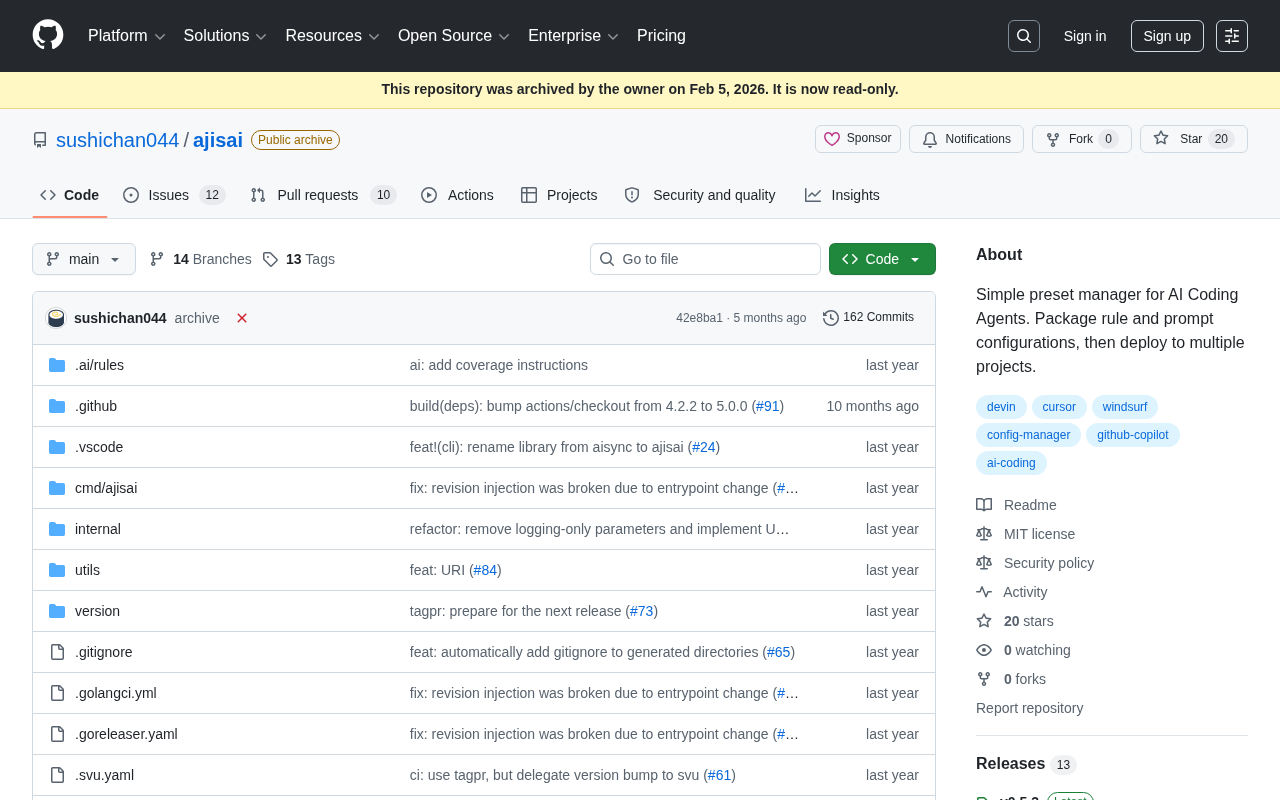
ajisai: A Preset Management Tool for Unifying Rules and Prompts Across AI Coding Assistants
ajisai is a Go-based preset manager for AI coding assistants like Cursor and Claude Code. Package rules and prompts once, deploy everywhere. Early-stage but promising.
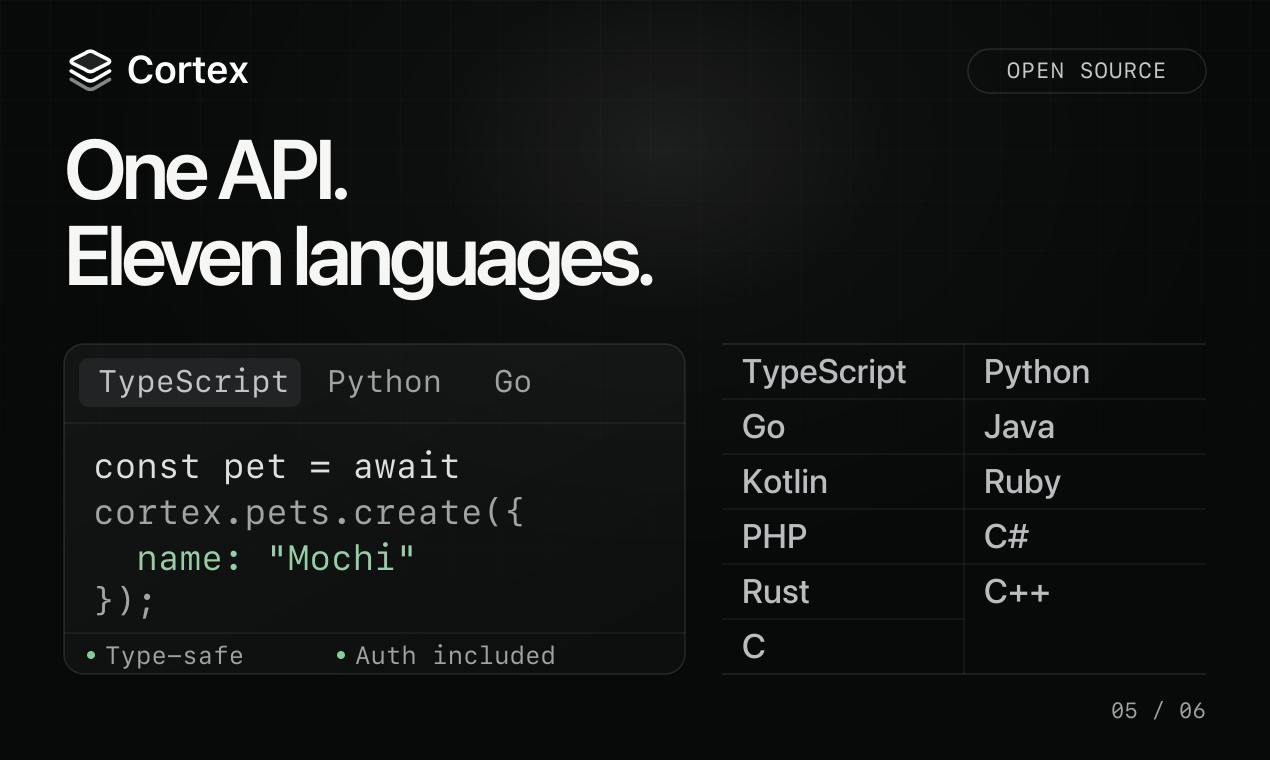
Cortex: Convert API Specs into Docs, SDKs, and MCP Servers in One Click
Cortex is an open-source tool that converts OpenAPI, GraphQL, gRPC and more into interactive docs, typed SDKs in 11 languages, and MCP servers for AI agents.