Koed: A Dedicated Memory Assistant for Every Coding Project

Koed gives coding projects a local, open-source project-level memory assistant called Kin, letting AI coding agents remember context across sessions.
Koed is an open-source AI coding assistant that debuted on Product Hunt. Its core feature is a customizable Kin assistant for each project that remembers the developer's work habits, technical decisions, and rejected approaches, guiding coding agents like Claude Code, Codex, and Pi to reduce repeated explanations and token consumption. It runs locally to protect code privacy, is currently free and open source for independent developers, with future plans for more integrations, optional cloud processing, and team sharing. The article sees Koed as reflecting a shift in AI coding competition toward context management and project memory, though memory accuracy and team permissions remain unverified.
When AI Coding Assistants Start to "Remember" Your Project
If you regularly use AI coding agents like Claude Code or Codex, you've probably noticed a pain point: every time you start a new conversation, they know nothing about the project's background, your preferences, or the approaches you've already tried. You end up repeatedly pasting context, or watching the agent suggest ideas you've long since rejected. Koed, which just debuted on Product Hunt, aims to solve this problem with "project-level memory."
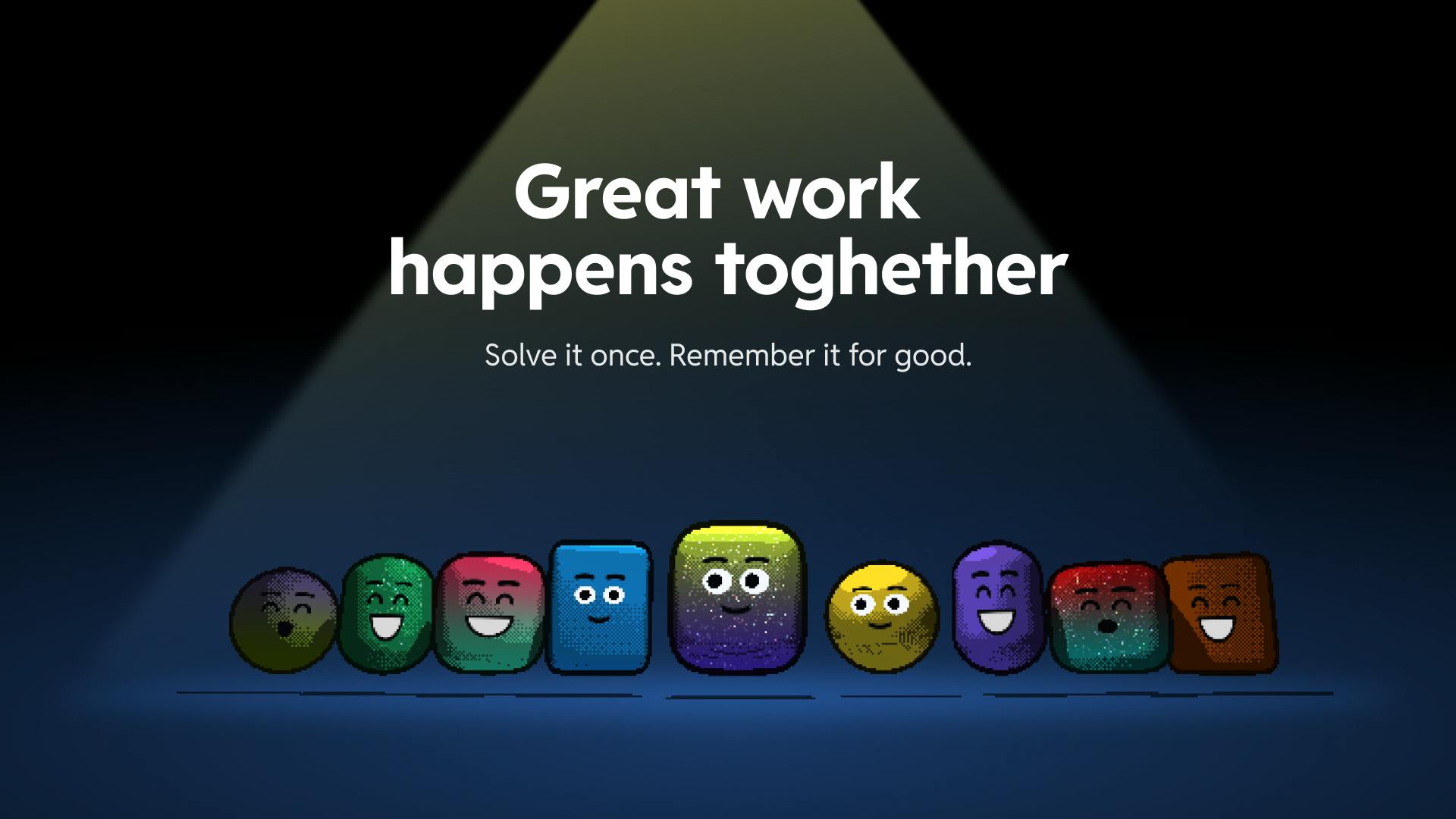
Koed received 87 upvotes and 10 comments on Product Hunt, ranking 5th for the day, with tags for open source, artificial intelligence, and tech. It positions itself as "Supercharged Agents"—which literally means "super-charged agents," but in practice means making existing coding agents smarter.
AI Coding Agent refers to a category of tools that not only generate code snippets but can autonomously execute multi-step development tasks—such as reading files, running commands, modifying multiple files, and verifying results. Claude Code, Codex, and Pi all fall into this category. They typically use conversation as their interface, with each session having an independent context window, so project knowledge is not retained across sessions. This differs from traditional code completion tools (like early Copilot): the latter only predicts the next line based on the current file, whereas agents need to understand project structure, dependencies, and historical decisions—so the experience loss from missing "memory" is more pronounced.
What Koed Does: Giving Each Coding Project a "Kin"
Koed's core concept is called Kin: every coding project gets a customizable assistant. This assistant remembers three things—how you prefer to work, the technical decisions already made in the project, and the approaches that were tried but not adopted.
In other words, Kin acts as the project's "external brain." When you issue instructions to Claude Code, Codex, or Pi, Kin uses this context to provide guidance that's more grounded in the project's reality, helping the agent work faster while consuming fewer tokens.
This differs from the approach of most AI coding tools on the market. Many products compete on the model's raw code generation capability, while Koed focuses on the "memory layer," letting existing agents perform better within a familiar project environment. For developers maintaining the same project long-term, the value of this accumulated context grows over time.
Token is the basic unit of text processed by large language models; one token roughly corresponds to 0.75 English words or half a Chinese character. Each model call is billed by the number of input and output tokens, and the context window has a limit. In coding agent scenarios, if you have to re-paste project structure, tech stack descriptions, and historical decisions in every conversation, input tokens quickly accumulate—increasing cost and potentially crowding out useful context. Koed's Kin persists project memory so the agent doesn't have to repeatedly receive the same background information, thereby reducing token consumption and lowering the risk of key information being "pushed out" due to overly long context.
Local, Free, and Open Source
Koed emphasizes on-device operation, meaning all processing happens locally. For developers concerned about code privacy, this is an important design choice—project memory and decision records are not uploaded to the cloud by default.
The product is currently free and open source and already available to independent developers. According to the official description, more coding agent integrations, optional cloud processing, and team sharing features will be added later. This means the current Kin is more about individual-level project memory, with the potential to evolve into a team-shared knowledge base in the future.
The open-source aspect is also worth noting. In the AI coding agent space, most products are closed source. Koed's choice to be open source means developers can inspect its memory mechanism, modify it themselves, or even self-host it—making it more appealing to teams with compliance requirements or those wanting deep customization.
On-device means computation and data storage occur on the user's own device rather than the vendor's cloud servers. For coding tools, this means project source code, decision records, and preference settings never leave the local machine. The opposite is cloud processing: vendor servers receive code context and call models—convenient but carrying risks of data leakage and compliance issues. Koed's choice of local operation makes it more suitable for enterprises or individual developers sensitive about intellectual property. However, local operation also means that memory storage, indexing, and retrieval must all be done locally, which places certain demands on device performance and storage management, and makes multi-device synchronization more complex.
Will the Memory Layer Become Standard for AI Coding?
Koed's emergence reflects a trend: as model capabilities converge, differentiation is shifting toward context management and project memory. Agents like Claude Code and Codex are not inherently good at retaining project knowledge across sessions, so third-party tools filling this gap is a natural product logic.
However, project memory also raises new questions—how is memory accuracy ensured? Could outdated decisions being remembered actually mislead the agent? How are permissions divided for team sharing? Koed currently only serves independent developers, and these complex scenarios remain unverified.
Judging from Product Hunt feedback, 10 comments and 87 upvotes indicate it has attracted some attention, though it's hardly explosive yet. Considering the product was just released and features are still early-stage, this result is a reasonable starting point.
Context Management refers to strategies for deciding which information should be retained, compressed, or discarded within a limited context window. As agents execute more task steps, conversation history expands, and relevant information must be filtered through summarization, retrieval-augmented generation (RAG), or structured memory. The project memory layer is essentially a form of long-term context management: storing cross-session stable knowledge (tech stack, architectural decisions, rejected approaches) externally and injecting it by relevance when needed. This is orthogonal to model capability itself—even with the same model, better context management can significantly improve output quality and consistency, which is why it's seen as a new direction for differentiation.
Who Should Try Koed
If you fit the following, Koed is worth a look: you use Claude Code or Codex on the same project long-term; you frequently need to explain project background to the agent; you're sensitive about code privacy and want tools to run locally; or you like open-source tools and are willing to give feedback on early-stage products.
If you only occasionally use AI to write scripts, or your projects have very short lifecycles, the benefits of project memory may be limited. Also, team collaboration scenarios are not yet supported and will require future versions.
Koed's approach is simple but hits the mark: rather than making the agent start from scratch every time, give it a partner that understands the project. How well that partner understands depends on how much the developer is willing to invest in "training" it—and here, training doesn't mean fine-tuning a model, but continuously recording and organizing project context.
One-line Summary
Koed provides coding projects with a local, open-source project-level memory assistant called Kin, letting AI coding agents remember context across sessions.
Paragraph Summary
Koed is an open-source AI coding assistant that debuted on Product Hunt. Its core feature is creating a customizable Kin assistant for each project that remembers the developer's work habits, technical decisions, and approaches tried but not adopted. Based on this context, it guides coding agents like Claude Code, Codex, and Pi, reducing repeated explanations and token consumption. The product emphasizes local operation to protect code privacy; it is currently free and open source, aimed at independent developers, with plans to add more agent integrations, optional cloud processing, and team sharing. The article argues that Koed reflects a trend in AI coding competition shifting from model capability toward context management and the project memory layer, though questions about memory accuracy, outdated decisions causing misdirection, and team permissions remain to be validated.
Related articles

A 19-Year-Old's Rental Horror Story: Ceiling Collapse, Bug Infestation, and the Lessons It Taught Me
At 19, my first off-campus rental brought bug infestations, no heat, a collapsed ceiling, and a ruined laptop with no renter's insurance. Here are the hard-won lessons for first-time student renters.

Veda Nurse's Cranial Nerve Exam: Why ASMR Role-Play Is Going Viral
Bilibili creator Veda's cranial nerve exam ASMR video goes viral, blending humor and sensory triggers through nurse role-play. This article analyzes its unique appeal and the audience psychology behind ASMR role-play.

LG Cinebeam AI Review: 120-Inch Giant Screen + 3000 Lumens, a New Choice for the Living Room Theater
LG Cinebeam AI projector review: 3000 ANSI lumens, 4K, 100 inches from about 8 cm and 120 inches from about 18 cm. Built-in webOS, AI Concierge voice recommendations, AI Sound Pro 11.1.2 virtual surround, and Game Optimizer—positioned for fixed living room installation, complementing the portable Cinebeam S.