Kojima Productions Disputes Reports of Studio Being in Trouble: Breaking Down the Physint-Sony Split Rumors

Kojima Productions publicly denies being in trouble after Sony drops the Physint project.
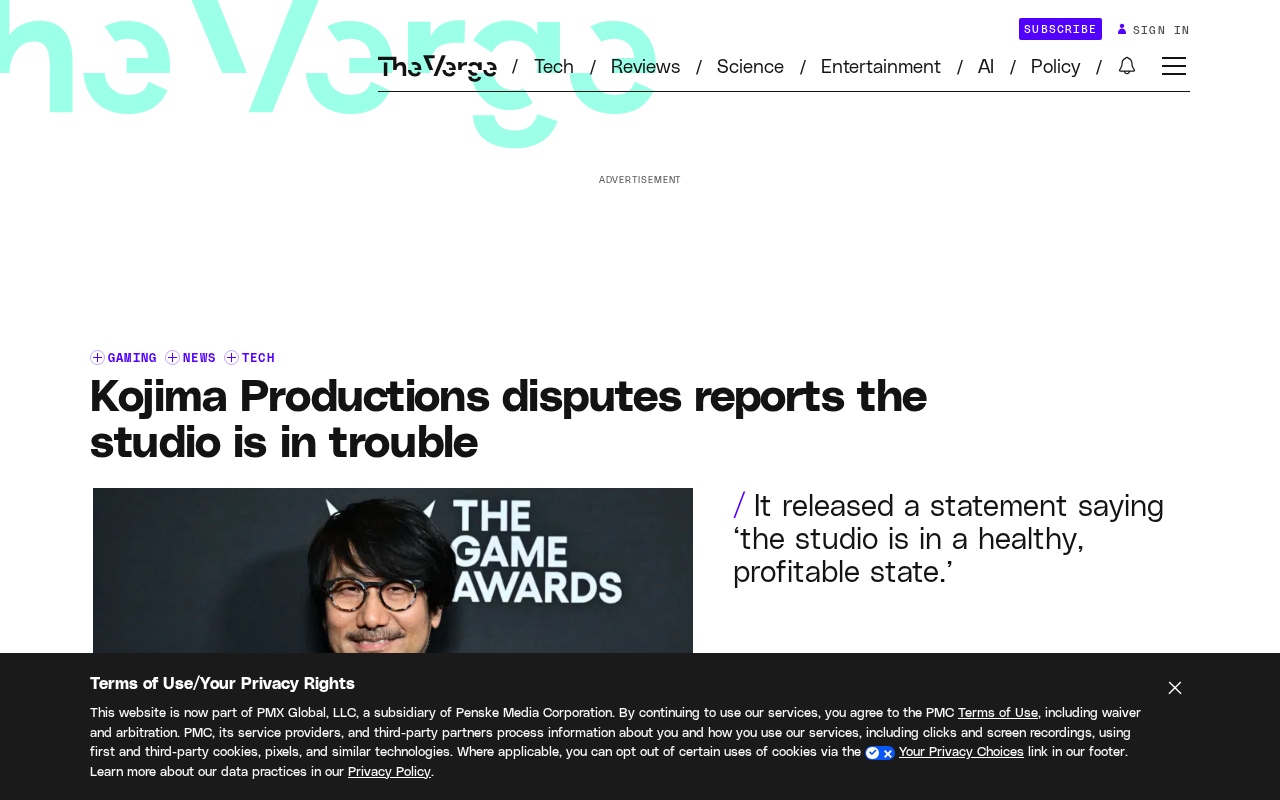
Sony's decision to drop Hideo Kojima's Physint project, with reports suggesting it will move to Xbox, has sparked widespread industry speculation. Bloomberg cited missed deadlines, budget overruns, and profitability concerns as factors behind Sony's exit. Kojima Productions responded publicly, denying characterizations that the studio is "in trouble." The article notes that media reporting and the studio's response are not addressing the same issue — one focuses on a specific project's business decisions, the other on the studio's overall health. Project-level adjustments and studio-level crises are different matters, and caution is warranted until more official details emerge.
Background: Sony Dropping Physint Sparks a Chain of Speculation
Hideo Kojima, the creator of the Metal Gear Solid series, has once again become the center of gaming industry attention. News recently broke that Sony had dropped Kojima's project Physint, with the renowned game director's latest work reportedly heading to Xbox instead. The shift immediately triggered widespread speculation about the relationship between Kojima Productions and Sony.
Numerous rumors have swirled around this so-called "breakup." A Bloomberg report attributed Sony's decision to walk away from the project to a combination of factors, including missed development deadlines, budget overruns, and concerns about profitability. Once these claims surfaced, they cast doubt on the overall health of Kojima Productions as a studio.
Physint was announced by Hideo Kojima after he completed the Director's Cut of Death Stranding. Positioned as an action espionage title, it was widely seen as a spiritual return to the Metal Gear series. The project was funded by Sony Interactive Entertainment and was being developed as a PlayStation exclusive or priority title. Kojima himself had publicly described it as a work blending cinematic storytelling with gameplay, continuing his signature cross-media creative approach. Given the fanfare surrounding the project's announcement, news of Sony shelving it generated considerable discussion and concern within the gaming community.
Kojima Productions' Official Response
In response to the negative rumors, Kojima Productions pushed back against reports characterizing the studio as being "in trouble." The studio denied descriptions of poor operational health, seeking to dispel speculation about its financial situation and project status.
For a studio whose identity is so deeply tied to its founder's personal brand and creative independence, any perceived turbulence in its relationship with a major platform partner can be easily amplified by outside observers. The decision to respond publicly reflects Kojima Productions' emphasis on reputation management, as well as its desire to maintain confidence among partners, fans, and investors.
The Industry Logic Behind the Platform Shift
Since Death Stranding, Hideo Kojima has maintained a close working relationship with Sony, which is exactly what makes the news of a project moving to Xbox so noteworthy. In recent years, Microsoft has actively used financial investment to attract high-profile third-party titles and independent creators, subtly reshaping the competitive landscape.
High-budget, high-risk creative projects frequently face tension between development timelines, cost control, and commercial returns. The "missed deadlines" and "profitability concerns" cited by Bloomberg are pain points common to AAA-scale projects. When both parties diverge in their assessment of risk, a project changing hands or shifting direction is not uncommon — and it doesn't necessarily signal a systemic problem with the studio itself.
Microsoft has faced mounting pressure in first-party content competition in recent years. One of its strategies to compensate for gaps in its own IP portfolio has been to leverage the ID@Xbox indie program and sign targeted deals with prominent creators. Although the completion of the Activision Blizzard acquisition significantly expanded the scale of Xbox Game Studios, Microsoft still needs external partnerships to reinforce its creative brand presence. Attracting a creator of Hideo Kojima's stature carries substantial symbolic value for Xbox's content image — far beyond the commercial returns of any single game. This helps explain why the platform shift has drawn such intense scrutiny across the industry.
The Information Gap Between Rumors and Clarifications
Notably, there is a clear gap between media reporting and the studio's official account. Bloomberg's report is an analytical piece based on multiple sources, examining the business decisions behind a specific project. Kojima Productions' response, on the other hand, is a denial of the broader characterization that the studio is struggling. The two are not operating on the same level — the reporting focuses on the commercial rationale behind one project's fate, while the studio is asserting the overall health of its team.
For readers, it's worth approaching this type of information with care. Project-level adjustments, platform-level negotiations, and studio-level existential crises are three distinct dimensions — they should not be casually equated. In the absence of further official disclosure, a measured and cautious judgment is the more sensible stance.
Conclusion
Kojima Productions' public clarification is a direct response to a wave of circulating rumors. Whatever the ultimate fate of the Physint project, this episode reflects the complex interplay between platform competition, the risks inherent in creative projects, and the dynamics of information flow that define today's gaming industry. Whether the studio or its partners will release more details going forward is a development well worth watching.
Related articles

uGAP: An AI Platform Unifying 100+ African Geospatial Datasets
uGAP is an African geospatial AI platform by a University of Cape Town team, unifying 120+ African datasets with a Python SDK for discovery, processing, and model training, already used in cyclone flood mapping.

Cursor Can Now Control Your Computer: AI Agents Can Drive Desktop Apps for Testing
Cursor adds desktop control: AI agents can drive desktop apps like the iOS Simulator to test their own features. We analyze the impact on dev workflows, possible technical approaches, and reliability concerns.

Vibecoding a Custom Inference Engine: High Hopes, Harsh Reality
A Reddit developer shares the real experience of vibecoding a custom inference engine: running GGUF Q4 models in the browser with WebGL2 and GLSL, only to fall into tokenizer debugging hell. This article analyzes the engineering challenges of browser-side LLM inference and why cloning llama.cpp is the more rational choice.