LangChain 1.3 Beginner's Guide: Core Concepts of LLMs and Agents Explained
LangChain bridges LLMs' three core gaps and has become the essential framework for AI application development.
This article systematically breaks down the logic behind LangChain's rise, based on Mashibing Education course content. LLMs have three inherent weaknesses: a knowledge cutoff, no built-in memory, and no access to external data. LangChain addresses all three through a unified model interface, modular architecture, and context/memory management. Architecturally, LLM is the foundation; Agent uses LangGraph's graph structure for autonomous decision-making; DeepAgent is a high-level abstraction of Agent + LangGraph; and Harness is the overarching architectural concept. Understanding this hierarchy is the key to decoding modern AI job requirements — and version 1.3 is the right place to start.
Why LangChain Has Become a Hard Requirement for AI Roles
Open any job board today and you'll find more and more listings with keywords like "LLM," "LangChain," and "LangGraph" in the requirements section. Many experienced developers — whether from frontend, QA, or Java backend backgrounds — only discover when switching jobs that nearly every AI-related role demands this tech stack. That's a direct reflection of how quickly frameworks like LangChain have risen to prominence.
As explained in courses from Mashibing Education on Bilibili, LangChain is not inherently complex or mysterious — it's simply a framework for building AI applications. What really matters is understanding why it exists and which inherent limitations of large language models (LLMs) it addresses. Once that's clear, concepts like Agent, DeepAgent, and the Harness architecture all follow naturally.
One thing worth noting: many free LangChain tutorials circulating online cover older versions like 0.2, 0.6, or 0.8, while the current release is version 1.3. Versions prior to 1.0 are rarely used in production anymore and offer limited learning value. This article is based on the 1.3 knowledge framework.
Three Inherent Limitations of Large Language Models
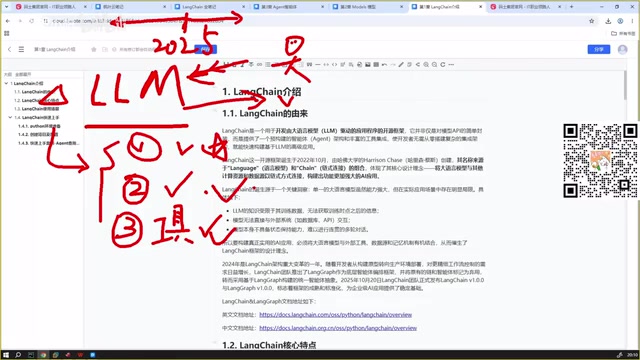
To understand why a framework like this exists, you first need to recognize what LLMs can't do. The course distills these limitations into three points — and these three points essentially drive the entire design philosophy of AI application frameworks.
First, knowledge has a cutoff date. LLMs are trained on internet data up to a specific point in time. They know nothing about events or updates that occurred after that cutoff.
Second, models have no memory. This is a common misconception among beginners. You can tell a model "my name is John," and it'll respond politely — but ask it "what's my name?" in the next conversation turn, and it won't remember. That's because the model itself has no memory storage capability. The reason chat products seem to "remember" things is that an external system is managing context on the model's behalf — not the model itself.
Third, models cannot proactively access external data. Because of the knowledge cutoff, a model has no access to your organization's real-time data. To make it useful for specific business needs, you need to bind it to Tools that can retrieve additional knowledge and data on its behalf.
There's also an important mindset correction here: learning LLM application development is not about studying algorithms. The model's capabilities are already there — your job is to put those capabilities to work, serving real business needs and building AI applications, rather than training or researching the underlying algorithms yourself.
What Problem Does LangChain Actually Solve?
Think back to when LLMs first appeared: if every developer had to implement memory management, tool-calling, and context handling from scratch, the cost would be enormous. That's what gave rise to a class of AI application frameworks that systematically encapsulate these capabilities.
LangChain's core value shows up in several areas:
A unified model interface. In the past, calling LLMs from different providers meant dealing with entirely different APIs — every time you switched models, you had to rewrite your code. With a unified framework, you only need to change the model name. The framework handles compatibility across providers so you no longer need to worry about the underlying interface differences.
Modular architecture. Running an LLM involves a lot of moving parts: state, context, conversation history, tool calls, prompts, middleware, and more. LangChain splits these into independent modules that developers can flexibly compose.
Memory and context management. As mentioned, models don't retain information on their own. The framework can automatically maintain conversation state, memory, and context without requiring extra work from the developer.
The course also mentions that comparable frameworks include the Claude SDK and OpenAI SDK, but in real enterprise environments, LangChain and LangGraph are by far the most widely used. On the language side, over 90% of companies use Python — partly because private LLM deployment (e.g., vLLM) depends on the Python ecosystem, and partly because LangChain/LangGraph were among the earliest AI application frameworks to emerge, giving them the most mature ecosystem. When new models release their APIs, they almost always add LangChain support first.
From LLM to Agent to DeepAgent
Understanding the layered relationship within this tech stack is key to making sense of job requirements. The term "Harness architecture" that frequently appears in job listings is actually an architectural concept — it encompasses a full suite of concerns including context management, tool management, execution state management, context compression, and prompting.
One concrete implementation of this architectural idea is DeepAgent. And DeepAgent didn't come out of nowhere — it's a heavily abstracted product built within the LangChain/LangGraph framework, whose foundation is an LLM plus an Agent. Going one level deeper: Agent is built on LangGraph (which is essentially a graph structure), and DeepAgent is implemented on top of "Agent + LangGraph."
So while some claim that "LangGraph is no longer relevant," that's not accurate when you look at the dependency chain. LangGraph is still important — it's just that the Workflow portion of it sees relatively less use in day-to-day development. Once you trace the LLM → Agent → DeepAgent lineage, it becomes clear why any introduction to this space has to start with these two foundational concepts.
Agent (intelligent agent) is the pivotal concept in this technical lineage and deserves its own explanation. In short, an Agent is an AI program pattern capable of "autonomous decision-making, tool invocation, and iterative execution": you give it a goal, and it determines on its own which tools to call, in what order, and whether the current result meets the requirement — looping continuously until the task is complete, rather than responding to a single query and stopping. LangGraph is the graph-structure framework that implements this kind of iterative decision logic — it models an Agent's execution as a directed graph (nodes represent steps, edges represent transition conditions), enabling branching, looping, and parallel control flows. Traditional LangChain's chain (Chain) structure only supports linear execution, whereas LangGraph's graph structure makes multi-step, stateful autonomous tasks possible. That's precisely why more complex DeepAgents must rely on LangGraph rather than a simple Chain.
LangChain Use Cases
From an application standpoint, virtually any scenario that requires integrating AI capabilities with real business needs can be built with LangChain. As long as there's a business need that requires AI, this framework can cover it.
According to the course, its complete knowledge curriculum spans eight areas: environment setup and configuration, Model, Agent, short-term memory, long-term memory, Human-in-the-Loop (HITL), Guardrails, and Agent context and Runtime management. Human-in-the-Loop and Guardrails also come up frequently in interviews. MCP, RAG (Retrieval-Augmented Generation), and a more systematic treatment of LangGraph are also in the pipeline for future updates.
For anyone looking to break into LLM application development, LangChain 1.3 is a framework worth learning from its latest version. The framework itself isn't hard — what's challenging is getting the conceptual hierarchy straight. And that's exactly what this article set out to help clarify.
RAG (Retrieval-Augmented Generation) mentioned above is currently one of the most mainstream technical approaches for deploying AI in enterprise settings. At its core, it's the standard solution to two of the LLM's biggest weaknesses: the knowledge cutoff and the inability to access private data. Here's how it works: enterprise documents, databases, and other private materials are pre-chunked and converted into vectors stored in a vector database. When a user asks a question, the system first retrieves the most relevant text chunks from the vector store, then feeds those chunks along with the question as context to the LLM — allowing the model to answer based on "just-in-time retrieved knowledge" rather than relying solely on its static training memory. MCP (Model Context Protocol) is an open protocol released by Anthropic (the company behind Claude), designed to standardize how LLMs connect with external tools and data sources. Think of it as the "USB port" of the AI application world — making tool-to-model integration more consistent and interoperable. LangChain has been progressively adding MCP support.
Related articles
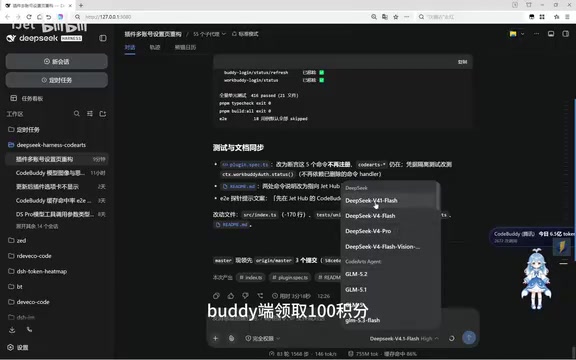
Free DeepSeek V4.1 Flash via DSH: Bulk Point Collection & International WorkBuddy Tested
DSH project update tested: WorkBuddy now offers 100 points per claim, rate limits raised beyond 80M tokens with faster resets, and international WorkBuddy supports free Hunyuan 4 and DeepSeek V4.1 Flash.
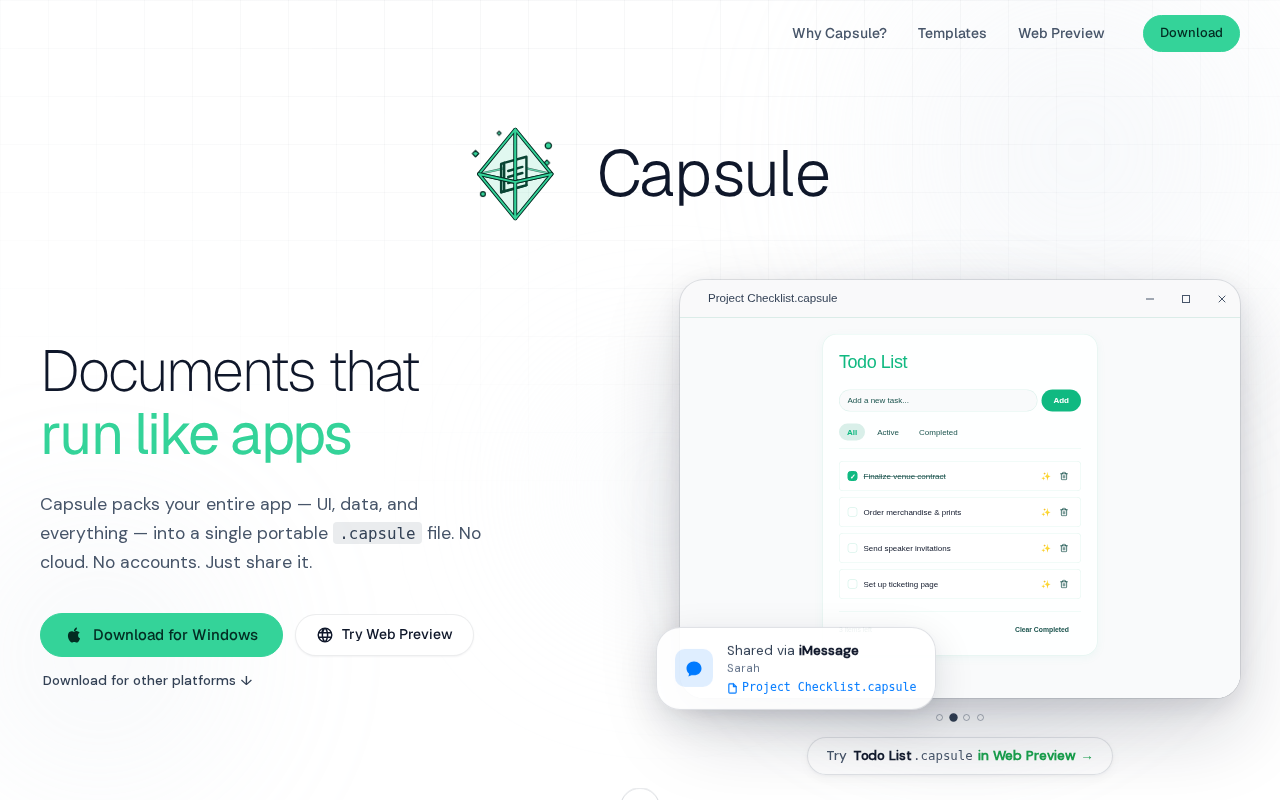
Capsule: Pack Web Apps and Data into a Single SQLite File
Capsule is a Rust/Tauri 2.0 tool that packs HTML web apps and data into a single SQLite file — privacy-first, local storage, portable sharing, with AI support.
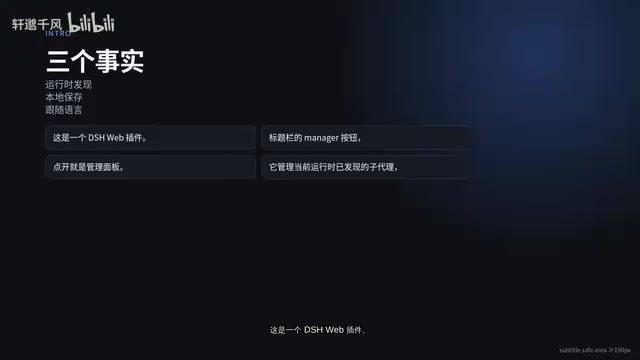
DSH-SUBAGENT-UI Plugin: The Ultimate Sub-Agent Manager for DeepSeek Harness
DSH-SUBAGENT-UI is a DeepSeek Harness browser plugin offering sub-agent overview, search, local categorization, and completion snapshots — install with one command.