LangChain Agent in Practice: A Complete Walkthrough of Project Preparation and Architecture Design
Using a fictional project as the throughline, it clarifies goals, architecture, resources, and environment prep for Agent development.
This article introduces the opening chapter of the Bilibili *Agent Project in Practice* tutorial, emphasizing that hands-on work begins with a complete fictional project demo to set expectations for the final result, followed by two-layer product and technical architecture design, supplemented with market and product analysis perspectives, and finally external resource preparation and development environment setup. The author notes that Agent projects involve model calls, tool integration, data flow, and product logic simultaneously, and that skipping goal alignment and architecture breakdown to code directly often leads to rework. The article also offers learning tips: record Demo expectations as acceptance criteria, sketch your own architecture before comparing with the tutorial, and list resources to confirm each one, to improve the transfer from tutorial to independent development.
Start with a Fictional Project to Master the Full Agent Development Workflow
Many developers learning LangChain get stuck at the stage of "understanding the concepts but not knowing how to put them into practice." The Agent Project in Practice tutorial series on Bilibili takes a more pragmatic path: it runs through a complete fictional project from start to finish, guiding learners step by step through Demo walkthrough, product and technical architecture design, resource preparation, and environment setup — all the preliminary work for Agent development. As the opening chapter of the hands-on section, this chapter focuses not on writing code, but on clarifying "what we want to build" and "what we need to prepare."
Why Preparation Deserves Its Own Chapter
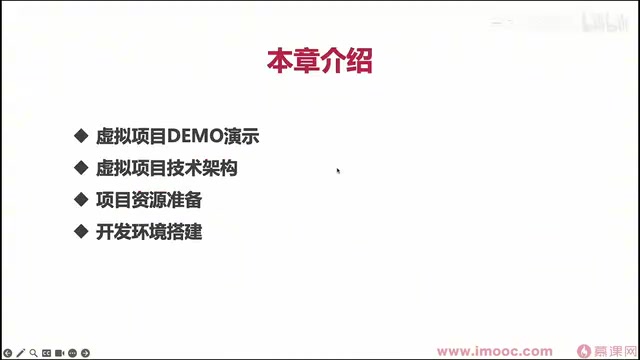
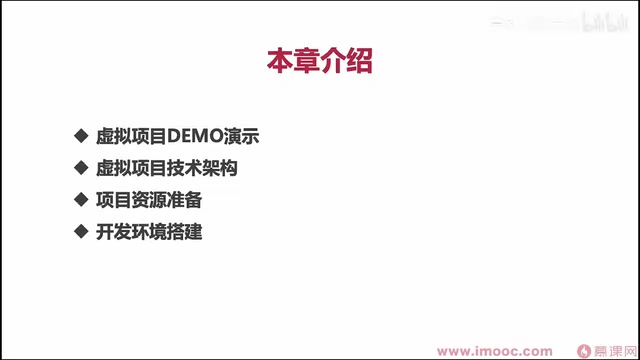
The biggest difference between an Agent project and ordinary script development is that it involves LLM calls, external tool integration, data flow, and product logic all at once. The tutorial breaks preparation into four parts: introducing the fictional project and Demo walkthrough, architecture design from product to technology, external resource preparation, and development environment setup. This order itself reflects an engineering mindset — align on goals first, then break down the structure, and only then start configuring. Skipping the first two steps and diving straight into coding often leads to rework later when the architecture isn't clear.
Fictional Project Demo: See the Destination Before Setting Off
The course opens with a complete walkthrough of a fictional project so learners can see what the final product looks like. This step is often underestimated: Agent behavior is non-deterministic, and without a clear expectation of the interaction, it's hard to judge during development whether "you got it right." By establishing an overall sense of the inputs, outputs, and intermediate process through the Demo first, the subsequent architecture design has a reference point.
Key Takeaways from the Demo
Based on the tutorial's narrative, this Demo covers the project's complete flow rather than an isolated feature. For learners, the key points to observe are how the Agent receives tasks, how it invokes external capabilities, and how it organizes the final response. These observations translate directly into the module breakdown in the architecture design that follows.
Two-Layer Architecture Design: Product and Technology
The tutorial explicitly divides architecture design into two levels: product architecture and technical architecture. Product architecture answers "who does this application solve what problem for, and how are features organized?" Technical architecture answers "which LangChain components are used, and how do the modules collaborate?" Both are essential: with only technical architecture, you risk building a feature-stuffed tool nobody uses; with only product architecture, you can't arrive at an implementable engineering solution.
A Bonus: Market and Product Analysis
The tutorial also mentions that it will walk learners through how LLM applications should approach market analysis and product analysis. This is especially valuable for learners with technical backgrounds — the success of an Agent project often depends not on whether the model calls work, but on whether the scenario selection is reasonable. Including market analysis in a hands-on course shows that this tutorial aims to cultivate developers who can independently complete a project loop, not just coders who can call APIs.
LangChain is an open-source framework for building large language model (LLM) applications, and its core value lies in decoupling and standardizing "model calls" from "external capabilities." Its key abstractions include: Model I/O (unified input/output interfaces for different models), Retriever (retrieving context from data sources), Tool (external functions that an Agent can call), and Agent Executor (the control loop that decides when to call which tool). An Agent is essentially a decision loop driven by an LLM: the model selects actions based on the current state, the executor executes the action and feeds the result back to the model, until the task is complete. Understanding this set of abstractions is what allows you to clearly map each module to a specific LangChain component when translating product architecture into technical architecture, rather than cramming all logic into a single prompt.
Market analysis and product analysis have specific focal points in LLM application development. Market analysis typically focuses on: whether the target scenario already has mature alternatives, what users are willing to pay for, and competitors' model capabilities and cost structures. Product analysis is more focused: what the core user journey is, which steps are suitable for LLMs, which must be backed by deterministic logic, and how to degrade gracefully on failure. For Agent projects, a common pitfall is "doing whatever the model can do," whereas the reasonable approach is to first define scenario boundaries and success criteria, then work backward to determine which tools and data are needed. This analysis ultimately directly influences module breakdown and the resource list in the architecture design.
Resource Preparation and Environment Setup
The last two parts of the preparation chapter are external resource preparation and development environment setup. The tutorial specifically notes that the project will involve a considerable number of external resources that need to be prepared in advance. Agent-type projects typically depend on external dependencies such as model services, tool interfaces, and data sources, and applying for, configuring, and integrating these resources often takes more time than the core logic. Mapping out the resource list in advance and completing environment setup can eliminate blockers in later development before they arise.
A Teaching Design Worth Learning From
Making "preparation" its own chapter, rather than explaining things piecemeal during coding, is a structural highlight of this tutorial. It makes hidden costs explicit: environment configuration and resource applications are unavoidable parts of real projects, and earlier is better than later. Self-learners can adopt this rhythm too — each time you start a new project, spend time clarifying the four things (goals, architecture, resources, and environment) before entering the coding phase.
External resources for an Agent project typically fall into four categories: model services (API keys, quotas, and billing), tool interfaces (credentials and rate limits for search, databases, and third-party APIs), data sources (knowledge base documents, vector database instances), and observability infrastructure (logging and call tracing). For environment setup, it's recommended to use a dedicated virtual environment to manage Python dependencies, put keys in environment variables or a .env file rather than hardcoding them, and verify each external dependency's connectivity with a minimal script before formal development. Doing these pre-checks before coding can prevent misdiagnosing "configuration problems" as "logic problems."
Practical Advice for Learners
When following this kind of hands-on project tutorial, it's easy to fall into the trap of "understanding it but not being able to build it." A few actionable practices: during the Demo walkthrough, record your own expectations for the final result as acceptance criteria for later; during architecture design, sketch your own version first and then compare it with the tutorial's explanation to identify differences; during resource preparation, list a complete inventory and confirm each item's availability one by one. These actions don't add much time cost but can significantly improve the transfer from tutorial to independent development.
The value of this tutorial lies in providing a structurally complete project sample, but real skill growth comes from taking the sample apart, reassembling it, and applying it to your own scenarios. With solid preparation, the Agent development that follows won't turn into endless debugging.
Related articles

Anthropic Goes Public: AI Bubble or Buying Opportunity?
Anthropic lists on Nasdaq, opening about a third above its IPO price. We break down the $81.3B raise, $1.5T offering valuation, and $2T market valuation, plus Claude's growth and $567M quarterly operating loss.
Why the FBI's AI Hacker Warning Hinges on a Single Word from Microsoft
FBI says AI tool Artex attacked 2,250+ organizations, but the citation trail leads to Microsoft's wording of "attempted sign-ins." The gap between attempts and breaches reveals the attack's true scale.
Fable 5.2 Powers the Creation of Getsumen Express: A Browser-Based Lunar and Martian Exploration Game
A developer used Fable 5.2 to build Getsumen Express, a browser game where players explore the Moon and Mars, scan real landmarks, shoot aliens, and ride an interstellar train. Built on Three.js and WebGPU for about $730, it showcases AI-assisted development.