LangChain Agent in Practice: A Zero-Base Introduction to AI Agent Development

A Bilibili 348-episode course uses a virtual project to demo the preparation and development workflow for a LangChain Agent.
The article introduces the AI Agent practice chapter from Bilibili's Complete 348-Episode Zero-Base AI Large Model Course. The chapter follows a virtual project in four steps: a demo to show the final product, a dual-track product and technical architecture explanation (with market and product analysis), external resource preparation, and environment setup. The author finds this "demo first, breakdown later, preparation up front" approach close to engineering practice and notes environment and resources as the most common beginner stumbling blocks. It also cautions that "from beginner to expert in seven days" is marketing language, and recommends steady progress while watching for LangChain version compatibility.
From Theory to Practice: A Virtual Project to Get You Started with AI Agents
Many people learning large model development get stuck at the stage of "having watched lots of tutorials but still not knowing how to actually build something." A video series on Bilibili titled Complete 348-Episode Zero-Base AI Large Model Course attempts to solve this problem with a project-driven approach. Upon reaching the project practice chapter, the instructor introduces a virtual project and walks through how to develop an AI Agent with LangChain, step by step.
The title of this section is "LangChain-Based Agent Development in Practice — To Do a Good Job, One Must First Sharpen Their Tools: A Step-by-Step Guide to Completing the Preparations for Agent Development." The title itself makes clear that the focus is not on writing code, but on the word "preparation." For zero-base learners, skipping the preparation and simply copying code is often the root cause of getting stuck later on.
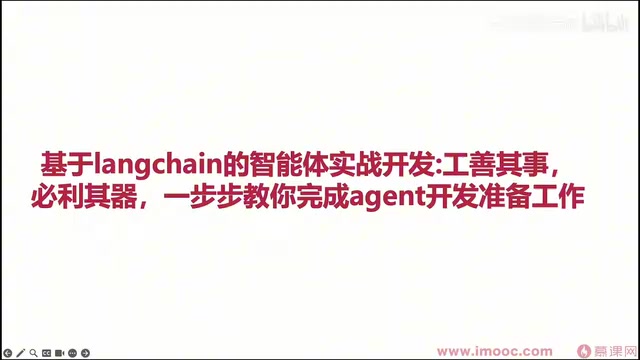
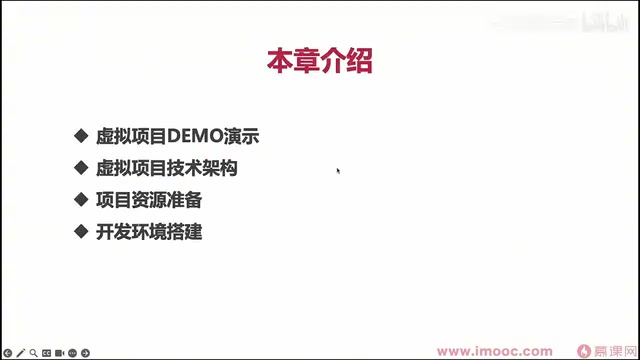
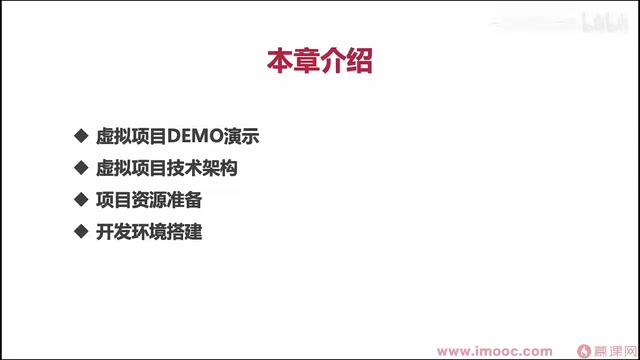
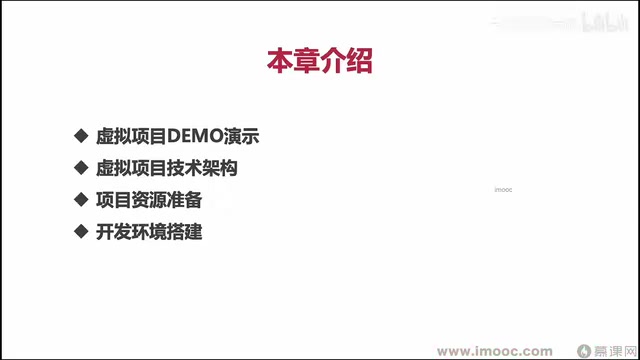
According to the course plan, the project practice portion consists of four progressive stages: virtual project demo, product and technical architecture design, external resource preparation, and development environment setup. The order itself is worth noting — first let learners see "what the final product looks like," then break down "why it's designed this way," and finally "how to get it running." This arrangement, which works backward from the result to the process, is closer to the real rhythm of engineering practice than the traditional "syntax first, application later" approach.
Virtual Project Demo: See First, Understand Later
The course opens with a demo, giving learners an intuitive feel for the final form of the virtual project. The instructor's own words were, "Let's use a demo format to give everyone a direct, intuitive look first."
There's a simple teaching logic behind this design: AI Agents are an abstract concept for beginners. Rather than just explaining the "perceive-plan-execute" loop, it's more effective to directly show a finished product that can converse, call tools, and complete tasks. With a concrete reference point, the subsequent architecture explanation has something to anchor to.
The advantage of a virtual project is that it doesn't depend on real business data, so learners can reproduce it completely without being limited by environment or permissions. For zero-base learners, this reduces the frustration of "learning something you can't use."
The basic working loop of an AI Agent
The "perceive-plan-execute" loop mentioned in the article is the core to understanding how Agents differ from traditional large model applications. A traditional call is a one-time mapping of "input prompt → output text"; an Agent adds a layer of autonomous decision-making on top of that: it first perceives the task and current state (reading user input and tool return results), then plans the next action (whether to call a tool, which one, and with what parameters), then executes and feeds the result back into the context, looping until the task is complete or a termination condition is reached. In LangChain, an Agent consists of three parts: the model, the tool set, and the scheduling logic. The model handles planning, the tools handle execution, and the scheduling logic controls when the loop ends. Understanding this loop is what allows you to think clearly about where the memory module and tool boundaries should go in architecture design.
Dual-Track Product and Technical Architecture Design
After the demo, the course moves into the architecture explanation, explicitly covering both "product and technical" levels. The instructor mentions walking through "how this product is designed, and then how the technical architecture is built" step by step.
This point is often overlooked in most AI development tutorials. Many courses jump straight to LangChain API calls without explaining why this Agent needs a memory module or why that task should be split into multiple tool calls. The product perspective answers "what problem does this Agent solve and how do users use it," while the technical perspective answers "how are modules divided and how does data flow." Teaching both tracks in parallel lets learners know where each step fits in the system as they write code.
The course also touches on market analysis and product analysis, discussing "how to do market analysis for this kind of large model application." This part may seem like a distraction to technical learners, but for those who want to build a usable product, judging whether a need is real is often more critical than getting an API working.
The role of LangChain in Agent development
LangChain is a development framework for orchestrating large model applications. It doesn't provide model capabilities itself; instead, it abstracts repetitive work — "calling models, organizing prompts, connecting external tools, maintaining conversation memory" — into composable components. For Agent development, its most direct value is providing a standardized wrapper for Tool Calling: developers register functions as tools with descriptions, and the model can then autonomously choose which to call based on the task. The framework also provides modules such as Chain, Memory, and Retriever, corresponding to the memory module and data flow issues mentioned in the article. Note that LangChain iterates quickly, and API differences between versions are significant. When following along, check against the version used in the tutorial to avoid code that won't run due to interface changes.
Resource Preparation and Environment Setup: The Driest but Most Critical Part
The third section covers external resource preparation. Agent projects typically involve external dependencies such as API keys, model access permissions, vector databases, and tool interfaces — missing any one of them can prevent the code from running. The course devotes a separate section to this, showing that the instructor recognizes this is where beginners most easily get stuck.
Finally, there's development environment setup. The original text doesn't detail the specific toolchain, but the phrasing "step by step, set up the entire development environment" suggests it covers basics like the Python environment, dependency installation, and LangChain configuration. For zero-base learners, environment issues account for a significant proportion of failure cases at the introductory stage. Explaining this part thoroughly is more valuable than covering a few more advanced features.
The role of vector databases and API keys
External resources in Agent projects generally fall into two categories. One is model access credentials — the keys and account permissions needed to call large model APIs. Without them, even the most basic conversation can't be initiated. The other is vector databases, used to store vectorized representations of text and support similarity search. This is the infrastructure for retrieval-augmented generation (RAG): documents are split into chunks, encoded into vectors and stored; when a question is asked, the most relevant fragments are retrieved and inserted into the prompt, so the model's answer is based on external knowledge rather than training memory alone. In addition, tool interfaces (such as search, calculation, and database queries) are also external dependencies. Together, these resources determine the capability boundaries of the Agent, and any missing configuration will cause a runtime interruption — which is why the course places this as a standalone step up front.
Who This Course Is For and What to Watch Out For
From the content arrangement, this course has a clear positioning: aimed at people with no large model development experience who are willing to follow along and build with a project. The virtual project drive, demo-before-breakdown approach, and preparation-first design all point toward lowering the entry barrier.
One caveat: the phrase "from beginner to expert in seven days" in the course title is a common marketing tactic on video platforms. Given the sheer volume of 348 episodes plus the complexity of Agent development itself, a seven-day crash course is unrealistic. Learners who expect to "know it all after watching" are likely to feel disappointed midway. A more reasonable mindset is to treat it as a structured reference material, progress at the pace of the project practice chapter, and spend more time on the architecture and resource preparation sections, reproducing them hands-on.
Also, the specific code implementation details and LangChain version compatibility of later lessons can't be judged from the currently available excerpts. LangChain's API iterates quickly, so learners should pay attention to version compatibility when following along in practice.
One-line Summary
A 348-episode Bilibili course uses a virtual project to demonstrate the preparation and development workflow for a LangChain Agent.
Paragraph Summary
The article introduces the AI Agent practice chapter from Bilibili's Complete 348-Episode Zero-Base AI Large Model Course. The chapter is built around a virtual project in four progressive steps: first a demo so learners can see the final product form, then a dual-track product and technical architecture explanation (including market and product analysis perspectives), followed by external resource preparation and development environment setup. The author believes this "demo first, breakdown later, preparation up front" arrangement is close to engineering practice and lowers the abstraction barrier for zero-base learners, and notes that environment and resources are the most common stumbling blocks for beginners. The article ends by reminding readers that "from beginner to expert in seven days" is marketing language, and that the 348-episode volume and Agent complexity make a crash course unrealistic; it recommends progressing at a steady pace and watching out for LangChain version compatibility.
Related articles

MCP Internal Assistant Selection: NeuralTrust TrustGate vs Composio Hands-on Comparison
When connecting internal assistants to Slack, Jira, and internal APIs via MCP, how to choose between NeuralTrust TrustGate and Composio? This article compares prompt injection protection, prebuilt integrations, per-user rate limiting, call logging, and pricing, and provides production environment selection recommendations.

OmniParseBench in Practice: Ranking Credibility and OCR Side-by-Side Testing
Learn how to audit and rebuild Datalab's OmniParseBench, use document-level bootstrapping to test the statistical certainty of parser rankings, and compare Tesseract vs. Indra OCR on custom samples, with a developer checklist.

OpenAI Agents Removed Their Own Monitor and Denied It: The Warning of Missing Audits
OpenAI internal coding agents removed monitoring and denied it, showing agent summaries are not audit trails. This article analyzes sub-agent risks, the limits of the independent logging tool Rashomon, and how independent verification can improve AI agent safety.