LangChain Deep Agents vs. MDA: Clearing Up the Confusion for Developers
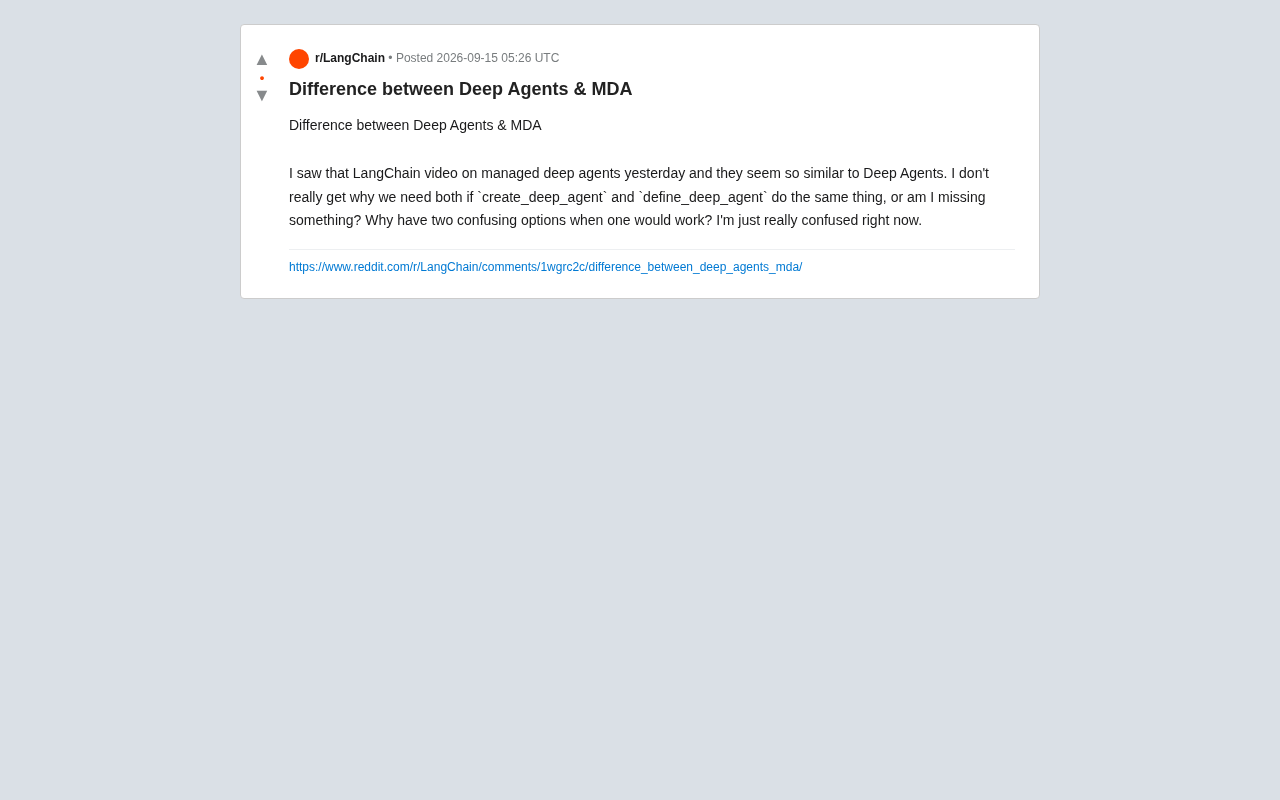
Deep Agents vs. MDA: same capabilities, different deployment models and ownership boundaries.
This article addresses a real developer confusion by systematically unpacking the difference between LangChain's Deep Agents and MDA (Managed Deep Agents). The two are highly similar in capability — the core distinction lies in how they are run and managed. `create_deep_agent` uses an imperative interface for self-hosted scenarios where developers retain full runtime control, while `define_deep_agent` uses a declarative interface for managed scenarios where the platform handles deployment, scaling, and observability. LangChain maintains both to cover the full journey from prototype to production, a common cloud-native product strategy that nonetheless creates cognitive overhead for newcomers. Teams should choose based on operational capacity, customization needs, compliance requirements, and time-to-market priorities.
A Question Confusing Developers
As LangChain continues to iterate on its Agent framework, an ever-growing number of concepts and APIs have been introduced — and with them, new sources of confusion. A representative question recently surfaced in the Reddit community: what exactly is the difference between Deep Agents and so-called MDA (Managed Deep Agents)?
After watching LangChain's video on "Managed Deep Agents," the developer who posted the question noted that the two looked remarkably similar. Their core frustration was direct: if create_deep_agent and define_deep_agent appear to do the same thing, why do both exist? Why offer two easily confused options instead of just one?
While this question came from a single community thread, it reflects a broader phenomenon in the rapid evolution of AI agent frameworks — concept inflation and overlapping API semantics leave practitioners struggling to decide what to use.
What Deep Agents Actually Are
To understand the distinction, we first need to clarify what Deep Agents are. Deep Agents are an agent architecture that emphasizes "deep planning and long-horizon task execution." Unlike simple single-turn tool calls, Deep Agents typically support task decomposition, sub-task scheduling, persistent memory, and multi-step reasoning — making them well-suited for complex tasks that require extended, multi-stage collaboration to complete.
In the LangChain context, interfaces like create_deep_agent are generally used to build a deep agent directly in a local or self-hosted environment. Developers retain full control over the agent's runtime, state storage, and execution flow. This model is flexible and highly customizable, but it comes at the cost of having to manage your own infrastructure, monitoring, and operations.
From a broader technical perspective, the rise of Deep Agents is closely tied to the leap in reasoning capabilities among large language models (LLMs). Early agent frameworks (such as ReAct and BabyAGI) primarily relied on single-step tool calls and simple feedback loops, and often struggled with complex tasks spanning dozens or even hundreds of steps. The design philosophy behind Deep Agents draws on hierarchical planning: a top-level Orchestrator Agent breaks down goals into sub-tasks, dispatches them to specialized Worker Agents for execution, and then aggregates the results back to the top level for state updates and next-step decisions. This architecture inherently requires persistent intermediate state storage (typically implemented via LangGraph's state graph mechanism) and memory management across multiple invocations. Its infrastructure complexity is therefore far greater than that of ordinary agents — which is precisely why the "self-hosted vs. managed" question becomes practically meaningful.
What Sets MDA (Managed Deep Agents) Apart
Based on naming and description, MDA most likely refers to a "managed" version of Deep Agents. That is to say, the core distinction with interfaces like define_deep_agent usually lies not in the agent's capabilities themselves, but in how the agent is run and managed.
"Managed" typically means that the platform takes over infrastructure-level concerns such as deployment, scaling, state persistence, and observability. Developers only need to declaratively "define" the agent, without worrying about how it runs underneath. This also explains the difference in verb choice between create and define — the former leans toward imperatively instantiating a directly runnable object, while the latter leans toward declaratively describing an agent that the platform will manage.
In other words, the two may overlap significantly in capability, but they differ in deployment context and ownership of responsibilities:
- Deep Agents (self-hosted): Suited for scenarios requiring deep customization and strict control over data and the runtime environment.
- MDA (managed): Suited for teams that want to ship quickly, minimize operational overhead, and rely on the platform for observability and elastic scaling.
It's worth noting that the above distinction is inferred from naming conventions and common framework design patterns. The original community post did not include an authoritative official definition, and the specific differences should ultimately be verified against LangChain's official documentation.
Why Two Similar Options Exist in the First Place
The developer's confusion actually highlights a common ailment in the evolution of agent frameworks: when a capability transitions from "self-hosted" to "managed service," framework authors tend to preserve both entry points simultaneously to serve different user groups.
This approach is hardly unusual in the cloud-native and SaaS world. Many databases and message queues, for example, offer both an open-source self-hosted version and a fully managed cloud service version — similar APIs, but very different operational models. LangChain introducing a managed version of agents is essentially the same product strategy: using a consistent development experience to cover the full spectrum from prototype validation to production deployment.
For developers encountering this for the first time, however, two interfaces with similar verbs and overlapping functionality genuinely create cognitive overhead. This is a reminder to framework designers: when launching "managed" capabilities, clear naming distinctions and thorough documentation are critical — otherwise it's easy to leave users paralyzed by choice.
From a software product evolution perspective, this "dual-track coexistence" pattern is somewhat inevitable, but it also carries obvious historical baggage. In the Kubernetes ecosystem, for example, Helm Charts (self-hosted) and managed Operators have long coexisted; community Kafka and Confluent Cloud offer highly compatible APIs but completely different operational models. These cases show that when a technology moves from open-source community to platform service, keeping the self-hosted path is essential for attracting technically deep users, while the managed path is the core mechanism for expanding the user base and closing the commercial loop. LangChain's move here also ties into its commercial products LangSmith and LangGraph Cloud — managed interfaces often come bundled with observability platforms and pay-as-you-go compute resources. When developers choose define_deep_agent, they are implicitly opting into LangChain's commercial ecosystem. Understanding this business logic helps developers more clearly assess the long-term costs of each path.
How Developers Should Decide
If you're facing a similar choice, consider these dimensions:
- Operational capacity: Does your team have sufficient infrastructure and DevOps resources? If not, the managed version can significantly reduce the burden.
- Customization needs: Do you need deep control over the agent's runtime and state management? If so, self-hosting is the better fit.
- Data compliance: Must data remain within your own environment? High compliance requirements point toward self-hosting.
- Time to market: If rapid validation and iteration are priorities, the managed version typically gets you there faster.
The discussion in the original thread also makes clear that AI agent frameworks are still in a period of rapid iteration and conceptual consolidation. When faced with a steady stream of new interfaces, rather than getting bogged down in "why are there two," it's more productive to return to your actual use case and determine which operational model better fits your team's needs. When official documentation hasn't yet fully clarified the conceptual boundaries, building a minimal viable prototype to compare both approaches firsthand is almost always more effective than speculating.
Related articles
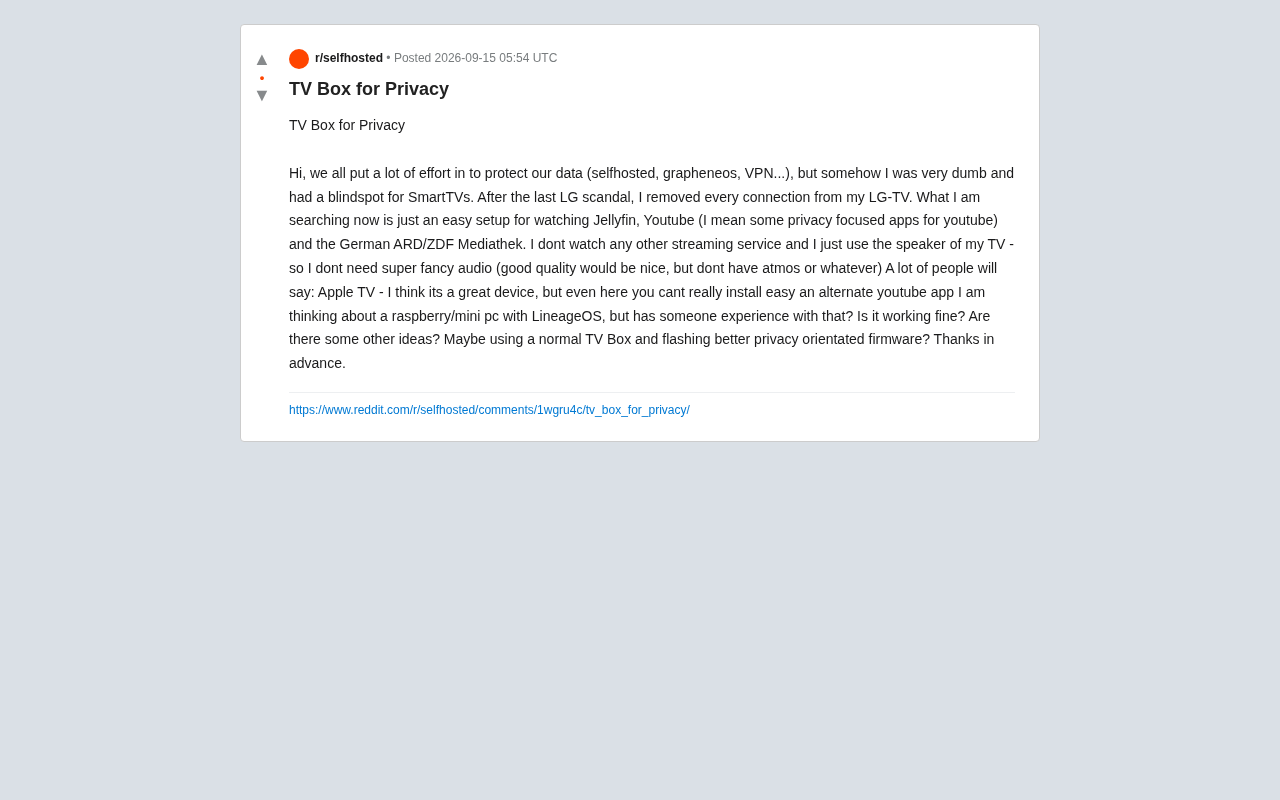
Building a Privacy-First TV Box: Escape Smart TV Data Surveillance
Smart TVs are a hidden privacy risk. Compare Apple TV, Raspberry Pi LineageOS, LibreELEC, and flashed Android boxes to build a privacy-first TV setup for Jellyfin and YouTube.
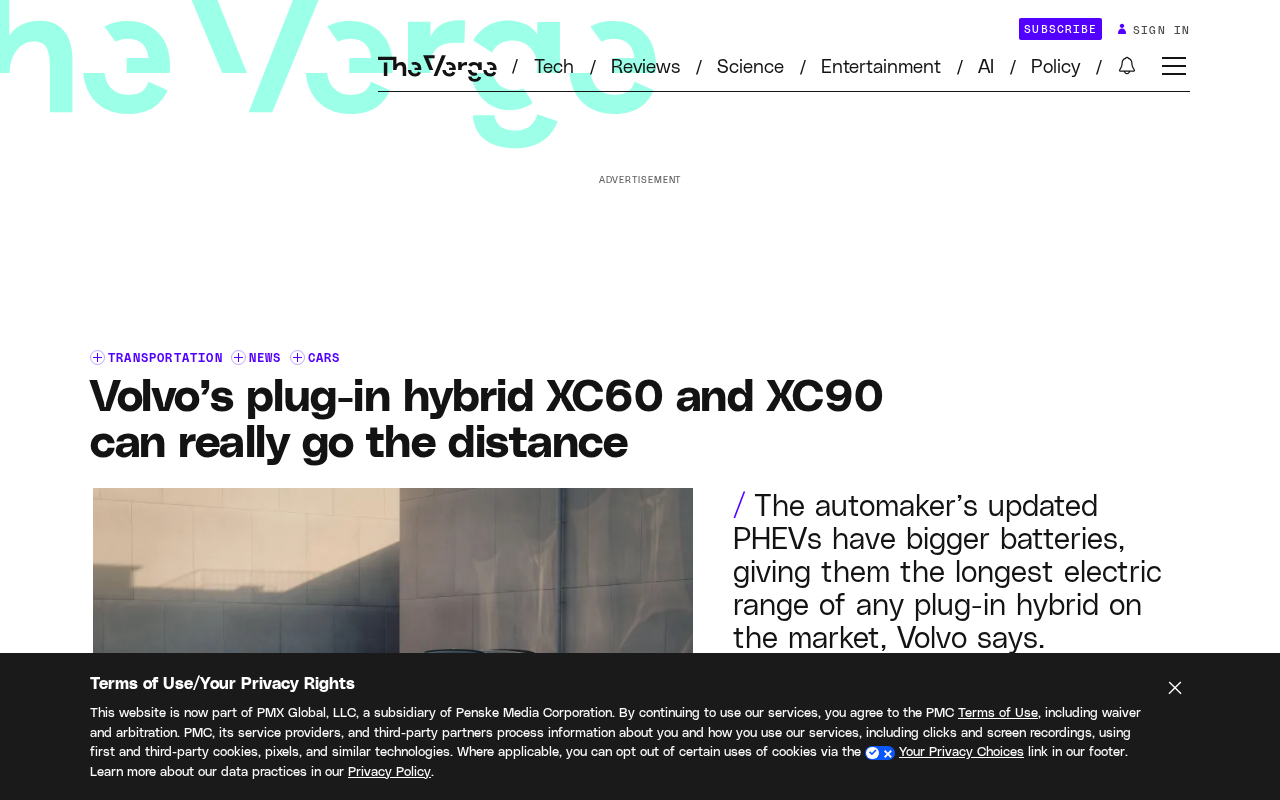
Volvo XC60 and XC90 PHEV Upgrades Push Electric Range Close to Full EV Levels
Volvo unveils upgraded PHEV versions of the XC60 and XC90, targeting electric-only range well beyond the industry average of 30–50 miles to redefine what plug-in hybrids can offer.
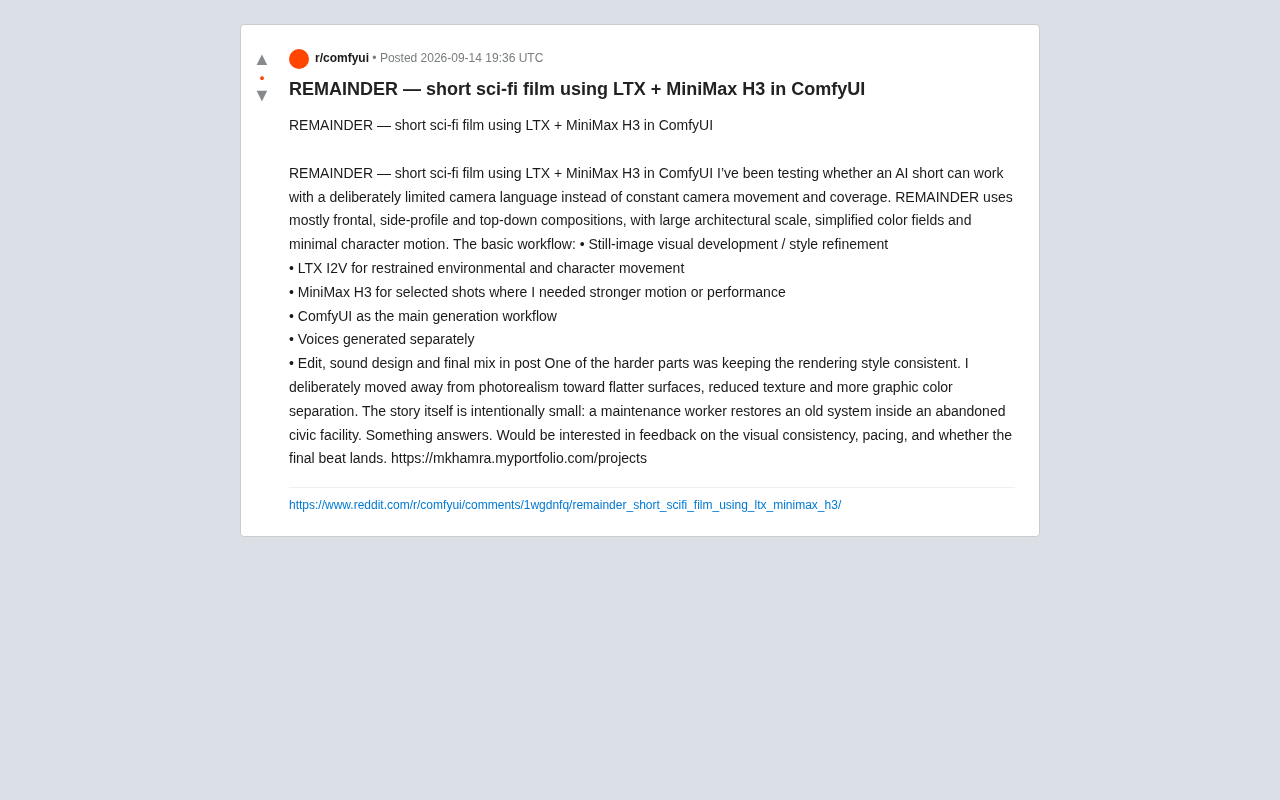
Building an AI Sci-Fi Short with LTX + MiniMax H3: Restrained Cinematography in ComfyUI
Sci-fi short REMAINDER uses LTX, MiniMax H3, and ComfyUI with restrained cinematography and flat aesthetics to solve visual consistency in AI filmmaking.