Learning AI Large Language Models from Scratch: Breaking Down a 100-Episode Beginner Course

A 100-episode LLM beginner course can clear the entry barrier, but mastery still takes long-term practice.
This article reviews a 100-episode large language model course for complete beginners, produced by a veteran tech industry engineer. Its core value lies in providing a gradual, stress-free path to building an overall understanding of LLMs, backed by mind maps, a structured roadmap, and lecture notes. The article cautions readers against taking "beginner to mastery" marketing claims at face value — LLMs span math, programming, and engineering, and a single intro course can only lay the groundwork. Three practical learning tips are offered: build a conceptual framework before diving into details, prioritize hands-on practice over passive watching, and treat the course as a starting point rather than a destination.
For many beginners looking to enter the AI field, the biggest obstacle isn't intelligence — it's not knowing where to start. Resources on large language models (LLMs) are either scattered and fragmented, or they dive straight into the deep end, leaving newcomers feeling overwhelmed. This 100-episode "beginner to mastery" LLM course series targets exactly that pain point: providing a relatively complete learning path for people with zero prior experience.
What Problem Does This Course Solve?
This collection was recorded by a self-described veteran engineer with five years of LLM experience at a major tech company, reportedly taking three months to produce. Its positioning is clear: it's aimed at absolute beginners, with an emphasis on "stress-free learning."
Many newcomers fall into one of two traps. The first is underestimating the field — thinking, "LLMs are just AI, and Python is all you need; how hard can it be?" The second is getting started and immediately feeling lost and intimidated. This gap between expectation and reality is exactly why so many people quit halfway.

The course author attempts to dissolve that fear through a gradual, step-by-step approach. The videos emphasize that no single concept should feel boring, with a goal of making episodes feel so engaging that "you finish one without even realizing it." This experience-first design philosophy is actually quite important for beginners who are prone to giving up — maintaining motivation often matters more than the knowledge itself.
What exactly is an LLM? The term "Large Language Model" (LLM) refers to neural network language models with parameter counts in the billions or even hundreds of billions. Prominent examples include the GPT series, Claude, and LLaMA. These models acquire the ability to understand and generate natural language through pre-training on massive text corpora, and can be adapted to downstream tasks — such as translation, code generation, and Q&A — through fine-tuning or prompt engineering. Beginners often conflate "LLMs" with broader terms like "artificial intelligence," "machine learning," or "deep learning." In reality, these form a nested hierarchy: AI is the broadest concept, machine learning is a subset of AI, deep learning is a branch of machine learning, and large language models are one of the most prominent applications of deep learning today. Understanding this hierarchy helps you figure out which foundational knowledge is truly necessary, rather than falling into the anxiety of feeling like you need to learn everything at once.
The Learning Logic Behind 100 Episodes
Looking at the overall structure, the course follows a fairly typical skill-building trajectory: from conceptual understanding to foundational programming, and then to practical LLM applications. The author specifically emphasizes "starting from zero with no prior background required," indicating that the difficulty curve has been deliberately kept gradual.
What's worth noting is the completeness of the supplementary materials. The author provides learning mind maps, video assets, a structured learning roadmap, lecture notes, and even beginner-friendly e-books. For self-learners, a clear learning roadmap can save enormous amounts of trial-and-error time. "Taking fewer wrong turns" essentially means someone has already mapped out the order and dependencies of the knowledge for you.

That said, it's worth keeping a realistic perspective. Claims like "become an expert in a week" or "from beginner to mastery" always carry some marketing flair. LLMs are a multidisciplinary field spanning mathematics, programming, machine learning theory, and engineering practice. True proficiency is far beyond what any single introductory course can deliver. These types of courses are better framed as tools for "building an overall mental model and clearing the initial hurdle" — not for achieving mastery.
Understanding the knowledge dependencies. Learning about LLMs typically involves several layers of prerequisite knowledge: first, Python programming basics (variables, functions, classes, commonly used libraries); next, a foundational understanding of core machine learning concepts (such as training vs. inference, parameters, and loss functions); and only then the LLM-specific content — such as an intuitive understanding of the Transformer architecture, API usage, and application patterns like RAG (Retrieval-Augmented Generation). For zero-experience learners, skipping the first two layers and jumping straight to the third is the most common reason people get stuck. A well-designed learning roadmap should clearly mark these dependencies, so learners know what foundational knowledge a given concept requires — preventing them from trying to tackle complex ideas before the groundwork is in place.
How to Use Free Courses Like This Effectively
The value of free tutorials lies in lowering the barrier to entry, but learners still need to actively evaluate their quality. Here are a few practical suggestions for getting the most out of these resources.
Build a Conceptual Framework First, Then Go Deep
For complete beginners, the first step isn't rushing to write code — it's understanding what LLMs are, what they can do, and what the basic principles behind them are. The mind maps provided in the course are precisely for building that framework. With a framework in place, every subsequent concept has somewhere to fit.

Hands-On Practice Beats Passive Watching
The biggest trap in video learning is the illusion of understanding. Finishing an episode doesn't mean you've mastered the content. Knowledge only truly sticks when you've run the code yourself and reproduced the examples. The recommended approach: code along as you watch, and treat every error message as a learning opportunity.
Low-barrier ways to get hands-on with LLMs. There are several accessible entry points for practical experimentation: First, use API access from platforms like OpenAI, Baidu ERNIE, or Alibaba Qwen to write simple Python scripts and experience the basic input/output flow of a model. Second, use an interactive environment like Jupyter Notebook, where you write and run code side by side and see results immediately. Third, leverage open-source models and sample code on Hugging Face, and reproduce foundational examples using free compute resources like Google Colab. Errors are an inevitable part of the learning process — learning to read error messages and search for solutions is itself a core engineering skill, and the key leap from "understanding it conceptually" to "actually being able to use it."
Treat the Introductory Course as a Starting Point, Not a Finish Line
Completing all 100 episodes only lays the foundation. Real growth happens afterward — reading official documentation, contributing to open-source projects, attempting your own small projects. An introductory course can get you on the road, but becoming someone who can truly work with LLMs requires sustained practice over the long term.
Final Thoughts
Systematic beginner courses like this one objectively lower the barrier for everyday people to engage with AI and large language models. They genuinely help ease the anxiety of feeling like "everyone else gets this except me." But learners should also stay clear-eyed: the "mastery" and "expert-level" language in the marketing copy is mostly motivational. The real work happens in the sustained practice that takes place outside the course itself.
If you're at the stage of wanting to learn but being afraid to start, consider using this course as a low-cost entry point. Cross that initial threshold first, build your confidence and foundational understanding — and the path forward will get clearer with every step.
Related articles
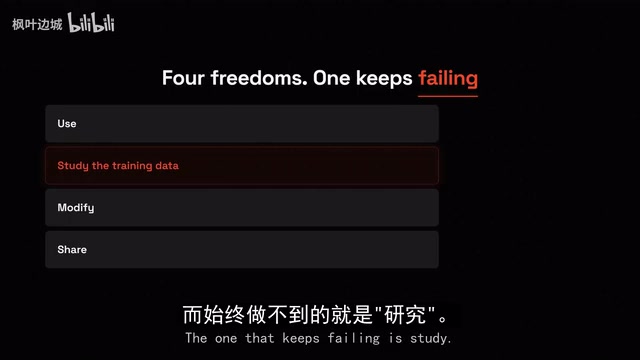
The Truth About Open-Source AI: You Got the Cake, Not the Recipe
Open-source AI exposed: what you download is weights (the cake), not training data or code (the recipe). A deep dive into open weights vs. true open source, Meta/Alibaba/DeepSeek business strategies, and how US/China/EU governments are redrawing the boundaries of openness.
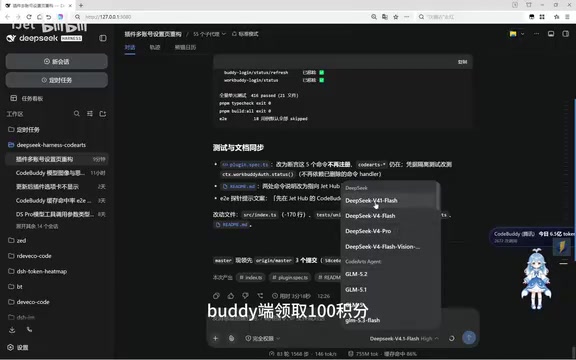
Free DeepSeek V4.1 Flash via DSH: Bulk Point Collection & International WorkBuddy Tested
DSH project update tested: WorkBuddy now offers 100 points per claim, rate limits raised beyond 80M tokens with faster resets, and international WorkBuddy supports free Hunyuan 4 and DeepSeek V4.1 Flash.
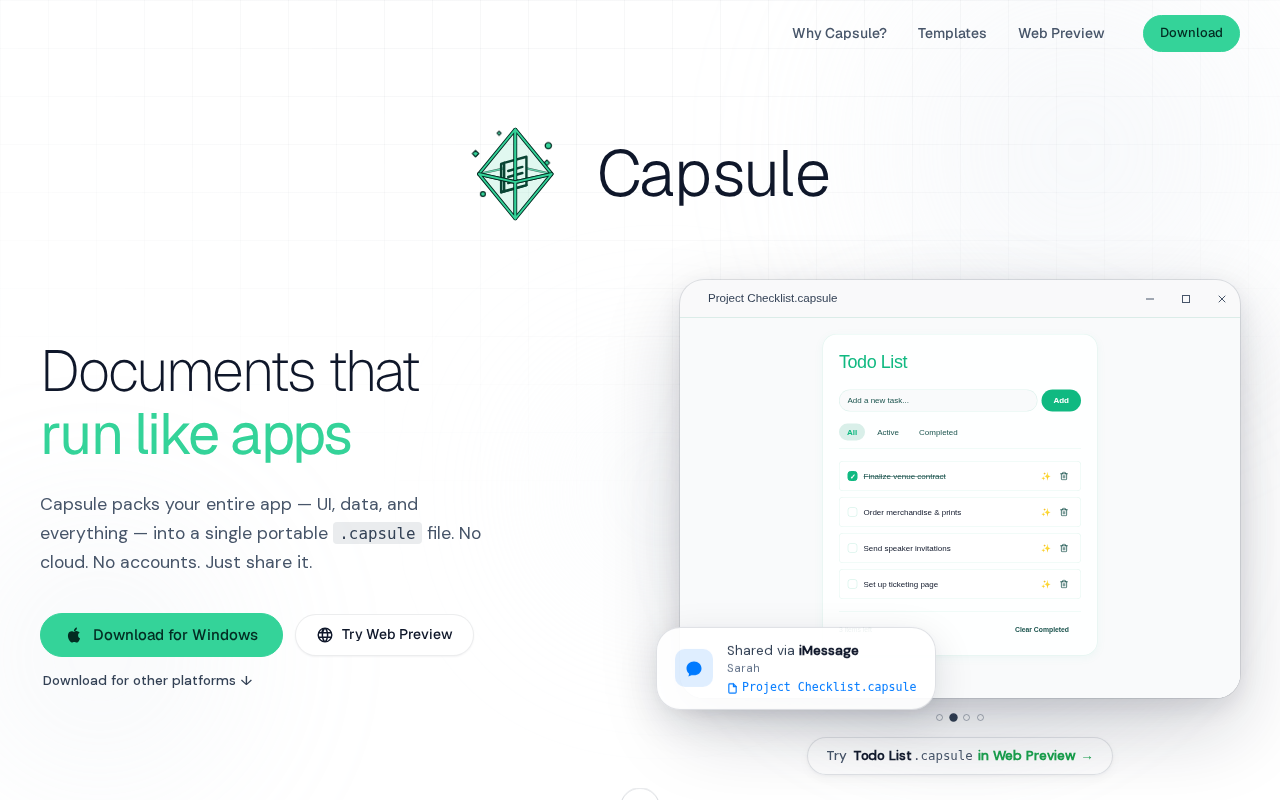
Capsule: Pack Web Apps and Data into a Single SQLite File
Capsule is a Rust/Tauri 2.0 tool that packs HTML web apps and data into a single SQLite file — privacy-first, local storage, portable sharing, with AI support.