Lenovo Legion Go Beam Leak: Could Be the Most Affordable Handheld

Lenovo Legion Go Beam leak may fill the mid-range price gap in Windows handhelds.
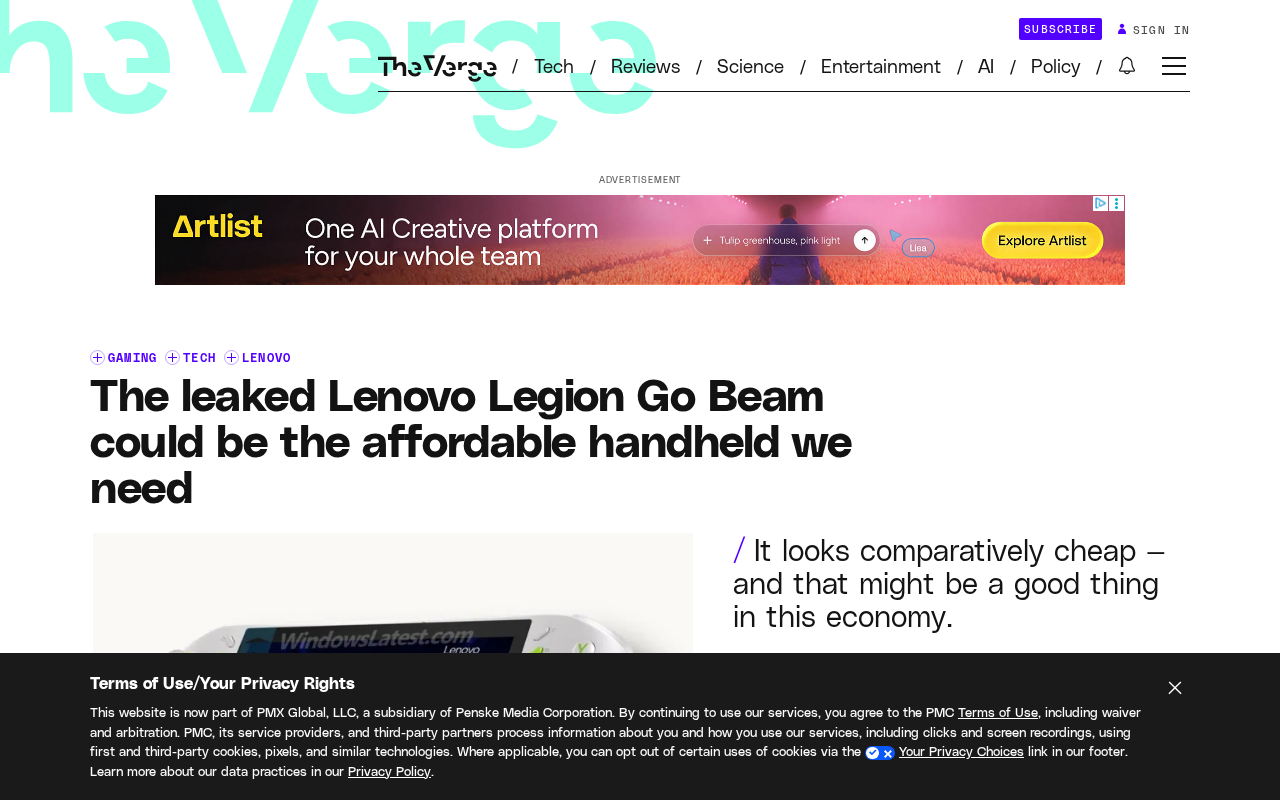
Lenovo Legion Go 2 and Legion Go S pricing is high, with some devices exceeding $1,000 or approaching $2,000, raising concerns that Lenovo has abandoned the mainstream handheld market. A new leak suggests Lenovo may be preparing a more affordable device called the Legion Go Beam. Specs and pricing remain unclear, but the name hints at a new branch for a different price segment. The article notes that the Windows handheld market lacks reasonably priced mid-range products, creating a clear gap for cheap handhelds. If the Legion Go Beam fills this void, it could lower the category's barrier to entry and change the competitive landscape—though the leak still needs official confirmation.
Lenovo's strategy in the handheld gaming market has been puzzling at times. Pricing for the Legion Go 2 and Legion Go S has climbed steadily, even surpassing competitors also burdened by memory costs—a decent device easily tops $1,000, with high-end configurations approaching $2,000. This has led many gamers to wonder whether Lenovo has abandoned its bid for the mainstream handheld market.
But the latest leak points to another possibility: Lenovo is preparing a new device called the Legion Go Beam, which may be positioned at a more affordable price point.
The Awkward State of Lenovo Handheld Pricing
Over the past period, the price trajectory of the Lenovo Legion Go series has not been friendly. Prices for the Legion Go 2 and Legion Go S have been pushed ever higher, partly due to cost pressure on core components such as memory. The entire handheld industry is enduring similar cost increases, but Lenovo's pricing strategy has been particularly aggressive.
For ordinary gamers, this means the budget threshold for getting a passable Windows handheld has risen sharply. With a price range starting at $1,000 and capping out at $2,000, handhelds have shifted from "novelty toys" to consumption decisions that require serious deliberation. Against this backdrop, market expectations for a reasonably priced Lenovo handheld have naturally risen.
In the cost structure of Windows handhelds, memory and storage often account for a considerable share. In recent years, procurement costs for LPDDR5X memory and high-speed solid-state drives have fluctuated noticeably, and combined with global supply chain adjustments, overall bill-of-materials (BOM) costs have been driven up. Unlike high-volume products such as smartphones, handhelds ship in relatively limited quantities, making it difficult to amortize R&D and procurement costs through economies of scale—so it is no surprise that high-end handheld pricing breaks $1,000. In addition, the Lenovo Legion Go series features customized designs such as detachable controllers and high-refresh-rate screens, which further increase manufacturing costs. Understanding this cost background helps in judging that if the Legion Go Beam is to target an affordable price point, it will inevitably need to make trade-offs in certain non-core configurations.
What the Legion Go Beam Leak Reveals
Information about the Legion Go Beam remains limited; the leak itself points more to "the existence of such a product" rather than a complete spec sheet. Judging by the naming, the "Beam" suffix sets it apart from the existing Legion Go 2 and Legion Go S, suggesting it may be a new branch aimed at a different price segment.
Combined with Lenovo's recent moves in its handheld product line, two questions about the Legion Go Beam are most worth watching: first, whether it can bring the price back into a more mainstream range; and second, given cost constraints, how much Lenovo will compromise on screen, performance, and expandability. The cost structure of handheld products dictates that "cheap" often means trade-offs somewhere, and Lenovo needs to find the balance point.
The "Beam" name has no precedent in Lenovo's existing product line, but it forms a contrast with the naming logic of the Legion Go 2 and Legion Go S. Naming suffixes in the tech industry usually hint at product positioning: numeric models represent orthodox iterations, while letter suffixes often correspond to segmented markets or different performance tiers. For example, "S" is commonly used for versions emphasizing slimness or simplified configurations, while "Beam" may point to an entry-level or mid-range product focused on core experience with trimmed extras. Of course, naming is only a clue; actual positioning still depends on Lenovo's market plans for the product. Before an official announcement, any speculation based on the name should be treated with caution.
Why Cheap Handhelds Are a Market Gap
The growth of the Windows handheld market in recent years has been evident, but the price structure is not healthy. High-end products keep piling on specs, pushing prices upward; entry-level products often cut corners on performance and experience. Products truly in the middle ground—reasonably priced with a complete experience—are few.
If the Legion Go Beam can fill this void, its significance would go beyond being just another new product—it would provide the entire category with a lower barrier to entry. The popularization of handhelds largely depends on whether prices can drop into the mass-consumer range, and if Lenovo takes substantive action in this direction, it could change the competitive landscape.
Of course, a leak is ultimately just a leak. Whether the Legion Go Beam will be officially released, what its final pricing will be, and whether its specs will be watered down all need to be confirmed by official information. But at least from the clues revealed so far, Lenovo seems not to have completely abandoned the mainstream path in the handheld market—a signal worth noting for players waiting for an "affordable handheld."
Currently, the main players in the Windows handheld market include Lenovo, ASUS, MSI, Ayaneo, and others, with product prices generally concentrated in the $600 to $1,500 range. High-end models often feature the latest processors and high-refresh-rate OLED screens, while entry-level models often use previous-generation chips or reduced screen specs. This polarized price structure makes products around $500—with performance sufficient to run mainstream games smoothly and acceptable screen quality—relatively scarce. Meanwhile, the Steam Deck has captured part of the mid-to-low price market through its own ecosystem and subsidized pricing, but running Windows games still requires a compatibility layer, so the experience is not perfect. This leaves traditional PC makers a window of opportunity to enter the mid-range price segment with a full Windows experience.
One-line Summary
Lenovo Legion Go Beam leak may fill the mid-range price gap in Windows handhelds.
Paragraph Summary
Lenovo Legion Go 2 and Legion Go S pricing is high, with some devices exceeding $1,000 or even approaching $2,000, raising concerns that Lenovo has abandoned the mainstream handheld market. The latest leak suggests Lenovo may be preparing a new device called the Legion Go Beam, possibly positioned more affordably. Specific specs and pricing remain unclear, but the name hints at a new branch targeting a different price segment. The article notes that the Windows handheld market piles on specs at the high end and cuts corners at the entry level, lacking reasonably priced mid-range products with a complete experience—a clear market gap for cheap handhelds. If the Legion Go Beam can fill this void, it would lower the category's barrier to entry and change the competitive landscape. However, the leak still requires official confirmation.
Related articles

Snapchat Opens AI Assistant Lens Building: Supports Claude Code and Cursor
Snapchat lets Lens creators describe AR filters in natural language, with AI assistants like Claude Code and Cursor handling the full build process, greatly lowering the AR creation barrier.
Is the Planck Length the Smallest Distance? Why Physicists Are Skeptical
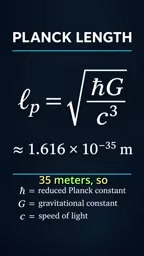
The Planck length is often called the smallest distance in the universe, but science videos point out this claim has never been experimentally confirmed. This article explains the origins of the Planck length, the obstacles of microscope thought experiments, and what it really tells us—the scale at which quantum gravity becomes unavoidable, not spacetime pixels.

AI Agents Drive Spend Management: Payhawk Raises $280M
Payhawk raises $280M at a $2B valuation. The 2018-founded enterprise finance platform uses AI agents to track and manage expenses and procurement. This article analyzes its product evolution, valuation signals, and impact on the spend management space.