Let's Play Breakdown: Cooperative Fishing Survival Game — Gameplay & Design Observations

Streamers fish, feed NPCs, and wipe on Bosses in a co-op survival game that nails the loop but tests your patience.
Based on a YouTube co-op let's play, this article breaks down the core loop of a cooperative survival fishing game: players gather resources, fish, kill creatures, and feed a hungry NPC to earn cash, then buy gear upgrades and use special bait to summon and defeat island Bosses for boat keys. The game blends fishing, action combat, and resource management, and borrows skin-collection culture from shooters for its rare "drip" creature system. Boss fights demand tight teamwork and frequently end in wipes. A second island expands weapons, fish variety, and fishing mechanics considerably — though the lead streamer notes the pacing feels slow, highlighting the classic co-op survival design tension between meaningful progression and instant gratification.
A Multiplayer Fishing Adventure in the Style of Castaway Survival
This YouTube let's play featuring Lewis Brindley and his crew — Ravs, Boba, O's, and others — looks like a casual, laugh-filled co-op session on the surface, but it actually showcases the complete gameplay loop of a distinctly designed cooperative survival fishing game. The whole thing revolves around a stranded-on-a-desert-island premise: players must gather resources, fish, kill creatures, and feed a perpetually hungry NPC called "Uncle" to earn currency, gradually upgrade their gear, and ultimately defeat the island's Boss to claim a boat and escape.
This isn't traditional "fishing simulation" by any stretch. As Lewis himself quips in the video — "This is nothing like real fishing, you're always busy doing something" — the game blends fishing, action combat, and resource management into a fast-paced co-op experience.
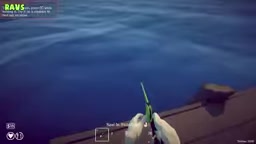
Core Gameplay Loop: Feed, Upgrade, and Fish
The game's economy is built around an entertaining NPC mechanic: players stuff whatever they've collected — clams, crabs, shrimp, lobsters — into Uncle's mouth in exchange for cash. This "never-satisfied" character serves as the central currency source throughout the entire run, and he'll gladly accept fishing rods and chunks of meat too.
The equipment upgrade path is clearly defined: starting with a $9 crab fishing rod, then progressing to brass knuckles, knives, and eventually handguns and shotguns in the later game. Combat has its own nuances too — crabs, shrimp, and other creatures will still struggle and try to escape back into the water after being reeled in, so players must finish them off with fists or weapons. Equipping a knife even lets you spin it around like in CS:GO for a bit of flair.
One mechanic that keeps coming up in the video is the "drip" creature system — a noteworthy collectible feature. Catching a rainbow-colored rare crab or fish and feeding it to a specific NPC unlocks exclusive cosmetics, like candy-colored Christmas cane brass knuckles. This loot-box-style skin reward system clearly draws from the collectible culture of shooter games.

"Drip" originates from North American streetwear culture, where it described someone whose style was impressively sharp and eye-catching. The gaming community adopted the term to refer to rare, visually striking skins or cosmetics. In shooters like CS:GO and Valorant, skin collecting has long formed its own social currency system — players flex rare skins to signal game experience and personal taste. This fishing game transplants the same logic onto marine creature collecting: the value of a rainbow rare crab or a "drip" fish isn't in any combat bonus it provides, but in the unique cosmetic rewards it unlocks. It feeds players' desire to show off and collect, and it's an effective design tool for extending long-term replayability — making "landing a rare catch" a moment worth sharing.
Boss Fight Design: Cooperation, Preparation, and Wipes
Progress in the game is gated behind Boss encounters. Players must use special bait — like beer cans — along with a radar system to locate and reel in the Boss. The crab Boss on the first island gave the team a harsh lesson: going in underprepared results in a thorough beating, and there's even a surprise mechanic where seagulls will carry off players who get too low on health.
The team's first attempt failed due to insufficient preparation, prompting Lewis to reach for a classic World of Warcraft reference: "This is like Onyxia back in the day — we've been doing raids like this for years… Illidan warned us." The comparison to a hardcore MMO raid captures the game's cooperative coordination requirements perfectly.
Once the team stocked up on knives and food, they took down the crab Boss. The "spider crab meat" that drops when the Boss explodes can also be fed to the NPC for cash, completing the loop neatly. Defeating the Boss yields a boat key to sail to the next island.

Both WoW references Lewis makes come from early raid history. Onyxia is a classic dragon Boss from vanilla World of Warcraft — she became an enduring internet meme thanks to a voice recording of a raid leader exploding at his unprepared team, becoming a symbol of chaotic coordination failures. Illidan is the iconic Boss from The Burning Crusade expansion, whose legendary line "You are not prepared" became one of gaming's most quoted phrases, commonly used to mock someone charging into a challenge without being ready. Lewis invoking both memes perfectly captures the feeling of rushing into a Boss fight underprepared and getting completely wiped.
New Areas, Content Expansion, and Pacing Issues
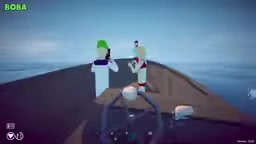
Sailing to the second island is a lighthearted segment in itself — involving ship controls, figuring out port versus starboard, and someone inevitably falling overboard. The new island introduces significantly more content: new NPCs, leech bait, proper fishing rods, and weapon shops selling handguns and shotguns.
Fishing mechanics become more involved too — players need to "tease" fish by working the rod sideways to attract bites. The variety of catchable fish expands dramatically, from piranhas and angelfish to sunfish and pike, and you can even reel in a car as a fun easter egg.
That said, Lewis flags a design concern: "Everything in this game takes too long — getting to the new island takes too long, killing the Boss takes too long, collecting all this stuff takes too long." He jokingly blames it on being an "iPad kid" raised on instant gratification. This actually touches on a tension that many survival co-op games grapple with: stretching out progress enhances immersion and the sense of achievement, but it can also make certain players feel like things are dragging.
"iPad kid" is a cultural label that's emerged in English-language internet spaces in recent years, referring to a generation of players raised on the high-frequency, bite-sized content stimulation of tablet apps — and who therefore have little patience for waiting, slow build-ups, or gradual progress in games. Lewis uses it self-deprecatingly, but in doing so he's pointing at a core tension in contemporary game design: survival co-op games need sufficient progression depth to sustain a sense of achievement and give players things to talk about, but lengthy waits and repetitive grinding clash with modern players' expectations for immediate feedback. Finding the balance between "meaningful anticipation" and "pointless padding" is a design challenge that games like Dave the Diver, Raft, and Valheim have all had to wrestle with.
What One Let's Play Reveals About the Appeal of Co-op Survival Games
The piranha Boss fight on the second island ends in another full team wipe — the Boss summons waves of minions, the piranhas scattered on the ground are both threats and potential supplies, and dying means running back to recover your dropped weapons. This high-difficulty, teamwork-dependent design makes failure itself part of the content.
What makes the let's play compelling to watch comes down to the game successfully combining comedic interactions — stuffing things into the NPC, friends ribbing each other — with a solid gameplay loop. Currency accumulation, gear upgrades, skin collecting, and Boss challenges provide clear goal-driven momentum, while co-op multiplayer amplifies the emotional payoff of both failure and success.
For players curious about this style of cooperative survival fishing game, this video clearly illustrates its core appeal and potential drawbacks: layered gameplay, a strong meme culture, but a slow progression pace that will require some patience from players willing to invest the time.
Related articles

WorkBuddy Full Tutorial: Build an AI Office Automation Agent from Scratch
A complete WorkBuddy tutorial: installation, three working modes, multimodal picture book video practice, expert team agent building, and workflow configuration for low-cost AI office automation.

WorkBuddy Agent Complete Guide: From Beginner to Automation in 7 Days
Based on Bilibili's 256-episode WorkBuddy masterclass, this systematically breaks down Tencent's AI office workbench core capabilities: Agent principles, Skill encapsulation, cross-platform connectors, scheduled automation, knowledge bases, and zero-code development, with learning path recommendations.

8 AI Accounts, 7 Failed: An Honest Review of Using AI to Get Work Done
Only 1 of 8 AI-run Bilibili accounts succeeded. We break down the real difference between "performing AI" and "using AI to get work done."