Linguistics to NLP Engineer: Comparing Three Pathways and Finding the Optimal Strategy

A practical guide for linguistics graduates transitioning into NLP engineering via three compared pathways.
This article addresses how linguistics and translation graduates can transition into NLP engineering. It compares three pathways — double major, online self-study, and a computational linguistics master's — and recommends a phased combination strategy: build ML/NLP foundations online, accumulate portfolio projects (including RAG applications), then pursue a master's degree to establish a differentiated, interdisciplinary competitive edge.
A Real-World Career Transition Dilemma
In an AI learning community on Reddit, an undergraduate studying translation and linguistics posed a highly representative question: how can someone with a pure linguistics background transition into NLP (Natural Language Processing) engineering?
This learner had a solid foundation — graduated from a STEM-focused high school, strong math skills, basic proficiency in Python and C++, and currently pursuing a degree in translation studies and linguistics. The core dilemma was: which path offers the most efficient entry into NLP engineering? Should they pursue a double major in software engineering or data science? Self-study via platforms like Coursera or Microsoft Learn? Or go straight for a master's degree in computational linguistics or NLP?
This question cuts to an important reality in today's AI industry: a linguistics background is no longer a barrier to entering NLP — it can actually become a unique advantage. This article offers a systematic analysis of this career transition path.
The Unique Value of a Linguistics Background in NLP
Many people mistakenly assume NLP falls entirely within the domain of computer science. In reality, NLP is fundamentally about enabling machines to understand and generate human language — and linguistics is precisely the discipline that studies the rules governing language.
In fact, natural language processing grew out of computational linguistics in the 1950s, and many early researchers had linguistics backgrounds. Noam Chomsky's generative grammar theory directly influenced the design of early syntactic parsers, and annotated corpora such as the Penn Treebank were built through the joint efforts of linguists and computer scientists. In the deep learning era, this interdisciplinary nature hasn't faded — if anything, it has become more prominent due to large language models' dependence on massive amounts of high-quality linguistic data. The roots of linguistics are embedded in this field's DNA.
Underrated Professional Advantages
People with a linguistics and translation background naturally grasp the following core NLP concepts:
- Morphology and syntactic analysis: The theoretical foundation for tasks like part-of-speech tagging and dependency parsing. Morphology studies the internal structure of words (roots, affixes, inflections), which directly informs tokenization strategy design in NLP — especially for morphologically rich languages like Arabic and Turkish. Dependency parsing and constituency parsing in syntax analysis are likewise modeled on linguistic theory. Understanding these underlying principles helps engineers quickly pinpoint the root cause when a model makes errors, rather than relying solely on intuition about hyperparameter tuning.
- Semantics and pragmatics: Understanding the nature of difficult problems like word sense disambiguation and coreference resolution
- Multilingual processing: A translation background is highly valuable for machine translation and cross-lingual transfer learning
- Corpus annotation quality: Knowing how to construct high-quality training datasets
In the era of large language models (LLMs), although deep learning methods dominate the tech stack, a deep understanding of language remains irreplaceable in areas like prompt engineering, model evaluation, data quality control, and error analysis. An existing math foundation and programming experience conveniently fill the technical gaps needed for this transition.
An In-Depth Comparison of Three Transition Pathways
Here is a detailed analysis of each of the three mainstream options and their return on investment.
Pathway 1: Double Major in Software Engineering or Data Science
This is the most systematic but also the most costly option. A double major provides a solid computer science foundation — data structures, algorithms, system design — which is crucial for becoming a true engineer rather than just someone who knows how to call existing libraries.
Best suited for: Learners with ample time who want a complete CS education and are targeting core R&D roles at major tech companies.
The trade-off: Extended time in school and a heavy course load. If forced to choose one, data science offers better value — it covers statistics, machine learning, and data processing, with significantly more overlap with NLP than software engineering.
Pathway 2: Self-Study via Online Courses
Resources like Coursera, Microsoft Learn, and Andrew Ng's DeepLearning.AI are low-cost and flexible. The recommended learning sequence is:
- Python programming reinforcement (existing foundation allows for fast progress)
- Machine learning fundamentals (e.g., Andrew Ng's classic course)
- Deep learning specialization (neural networks, backpropagation)
- NLP specialization (word embeddings, Transformers, attention mechanisms)
- LLM fine-tuning and applications (LangChain, Hugging Face ecosystem)
Step 4's Transformer architecture deserves special attention. Google's Transformer, introduced in 2017, fundamentally transformed the NLP tech stack. Its core innovation — the self-attention mechanism — allows the model to consider the contextual relationships of all other words in a sentence simultaneously when processing any given word, overcoming the long-range dependency limitations of earlier RNN/LSTM architectures. From BERT and the GPT series to today's LLaMA and Claude, all are built on the Transformer foundation. Understanding the mathematical principles behind the attention mechanism (Q/K/V matrix multiplication and Softmax normalization) is an essential milestone in NLP engineering, and a key knowledge checkpoint to break through during the online learning phase.
Advantages: Builds practical skills quickly and can run in parallel with an undergraduate degree.
Disadvantages: Lacks systematic accreditation, requires strong self-discipline, and carries less weight than a formal degree when job hunting.
Pathway 3: Master's Degree in Computational Linguistics or NLP
For students with a linguistics background, this is often the ideal destination. A Master's in Computational Linguistics (CL) is a bridge program designed specifically for students with interdisciplinary backgrounds — typically two years, with coursework balancing linguistic theory and machine learning methods. Carnegie Mellon's LTI (Language Technologies Institute), Stanford's NLP Group, and the University of Edinburgh are universally recognized as top programs; Johns Hopkins CLSP and the University of Washington also enjoy excellent reputations. Admission criteria are more accommodating to linguistics backgrounds than pure CS master's programs, with GRE math scores, a programming portfolio, and a statement of research interests serving as key evaluation dimensions.
A master's degree carries significant weight in NLP engineering job searches, while also providing a platform to conduct research, publish papers, and build industry connections — a critical step for linguistics career-changers to build differentiated competitive advantage.
The Recommended Optimal Combination Strategy
Overall, the most effective approach is not choosing one of the three but rather advancing through a phased combination strategy.
Phase 1: Build the Foundation During Undergraduate Studies
Rather than rushing into a double major and increasing the workload, the recommended approach is:
- Systematically study ML/DL/NLP fundamentals through online courses
- Audit core CS courses at your university (programming, algorithms, machine learning)
- Solidify mathematical ability (linear algebra, probability and statistics, calculus)
Phase 2: Accumulate Project Experience to Build a Portfolio
Projects are the hard currency of job hunting. Build gradually from simple to complex:
- Text classification, sentiment analysis (beginner level)
- Named entity recognition, machine translation (intermediate level)
- Fine-tuning pre-trained models using Hugging Face
- Building a complete LLM application (e.g., a RAG-based Q&A system)
Of particular note, RAG (Retrieval-Augmented Generation) is the dominant paradigm for deploying LLMs in production today: external knowledge bases are semantically indexed through vector databases (such as Faiss, Chroma, or Pinecone), and when a user asks a question, relevant document chunks are retrieved and concatenated into the LLM's context window to generate an answer. This architecture effectively mitigates the "hallucination" problem in LLMs and allows models to access private or real-time data. LangChain and LlamaIndex are the two leading frameworks for building RAG applications. For linguistics career-changers, the document chunking strategy and semantic retrieval quality in RAG are domains where linguistic intuition can shine — making it an ideal project for demonstrating interdisciplinary advantage.
Open-source your projects on GitHub and write technical blog posts documenting your learning journey — this is highly persuasive in interviews.
Phase 3: Graduate Study to Establish a Differentiated Position
Completing a master's in computational linguistics or NLP formally combines your linguistics advantage with engineering capability, building a core competitive edge that is difficult for purely technical candidates to replicate.
Practical Advice for Career Changers
First, don't fall into the trap of "credential anxiety." In the AI field, practical ability and project work often matter more than the prestige of a degree. A linguistics graduate with a solid GitHub portfolio may be more appealing to employers than a CS graduate who has a diploma but no hands-on experience.
Second, stay current with the technology frontier. LLMs are evolving rapidly, with Transformer architecture, RAG, Agent frameworks, and related directions continuously advancing. Developing the habit of following Hugging Face updates and arXiv papers is a baseline requirement for staying competitive.
Third, leverage your linguistics advantage to build a unique positioning. Go deep in multilingual NLP, low-resource language processing, and linguistically-informed model enhancement — these are the blind spots of purely technical candidates and the natural advantage zone of linguistics career-changers. Low-resource NLP deserves special attention as a niche field: of approximately 7,000 languages spoken worldwide, fewer than 100 have sufficient NLP training data. Meta's No Language Left Behind (NLLB) project and Google's MMS project have attempted to cover hundreds of languages, but the involvement of language analysis experts remains key to quality assurance. For researchers familiar with multiple languages and linguistic typology, this is a niche with abundant academic publishing opportunities, rapidly growing commercial value, and relatively unsaturated competition.
Fourth, actively engage with the community. Reddit discussions, Kaggle competitions, and contributions to open-source projects are all excellent ways to learn and showcase your abilities, and help you build an early professional network.
Conclusion
The transition from linguistics to NLP engineer is not only entirely feasible — in the era of large language models, it carries unique strategic value. A solid math foundation, programming experience, and linguistics expertise together form a rare starting combination. By steadily advancing through a phased strategy of "online self-study to build foundations + project accumulation for practical experience + graduate study to establish positioning," the intersection of linguistics and AI is emerging as one of the most worthwhile career opportunities to explore in this era.
Key Takeaways
Related articles
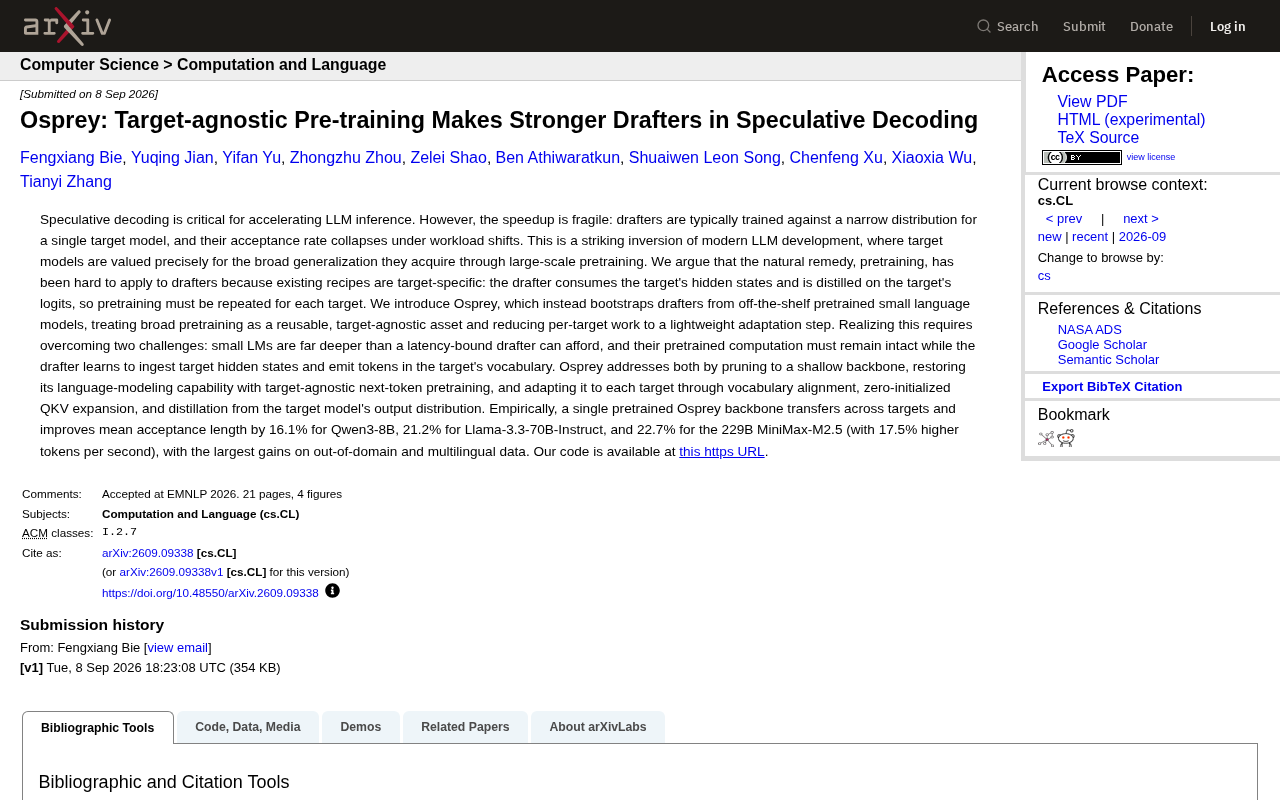
Osprey: General-Purpose Pretraining Makes Speculative Decoding Draft Models More Efficient
Osprey treats pretraining as a reusable, target-agnostic asset. Through pruning and lightweight adaptation, a single draft model transfers across multiple LLMs, boosting mean acceptance length by 16%-22%.
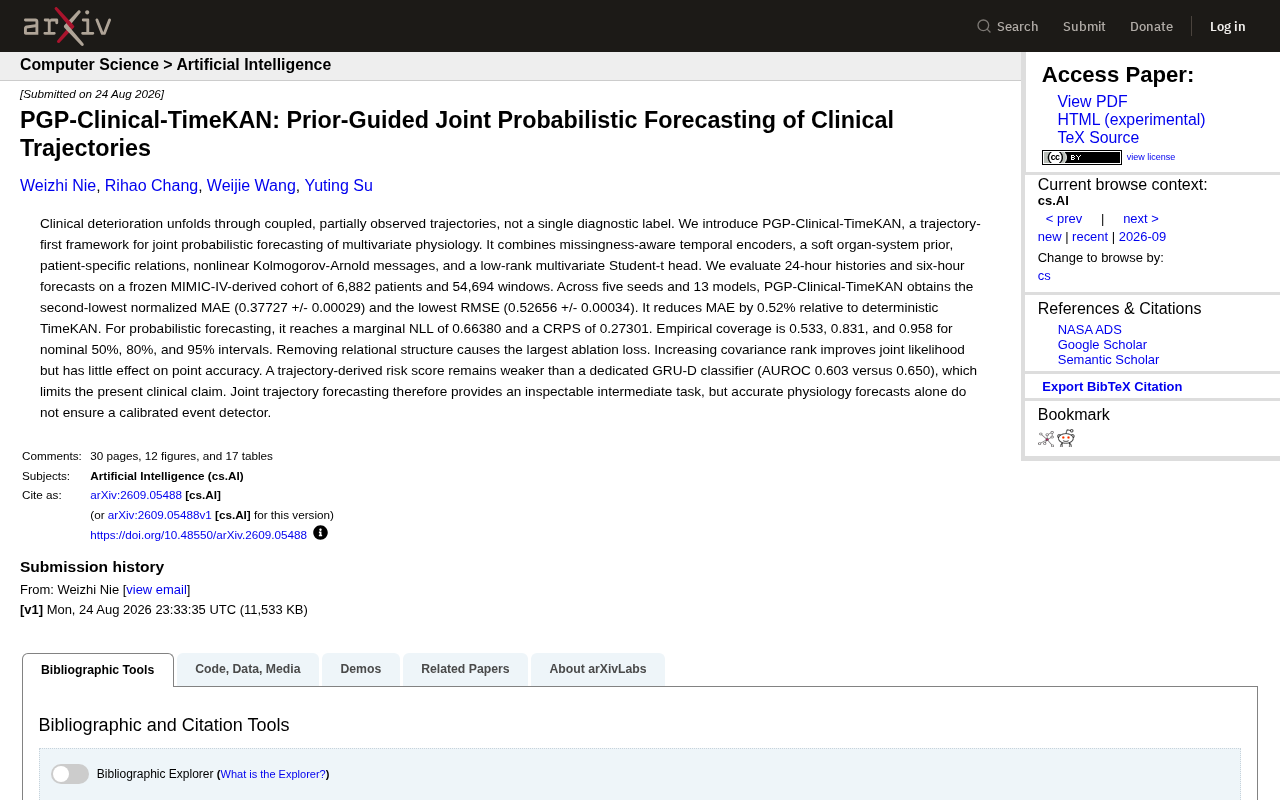
PGP-Clinical-TimeKAN: A Detailed Guide to the Multivariate Physiological Indicator Joint Prediction Framework
An in-depth analysis of the PGP-Clinical-TimeKAN framework for joint probabilistic prediction of multivariate physiological indicators, covering trajectory-first paradigm, KAN message passing, MIMIC-IV validation, and ablation studies.
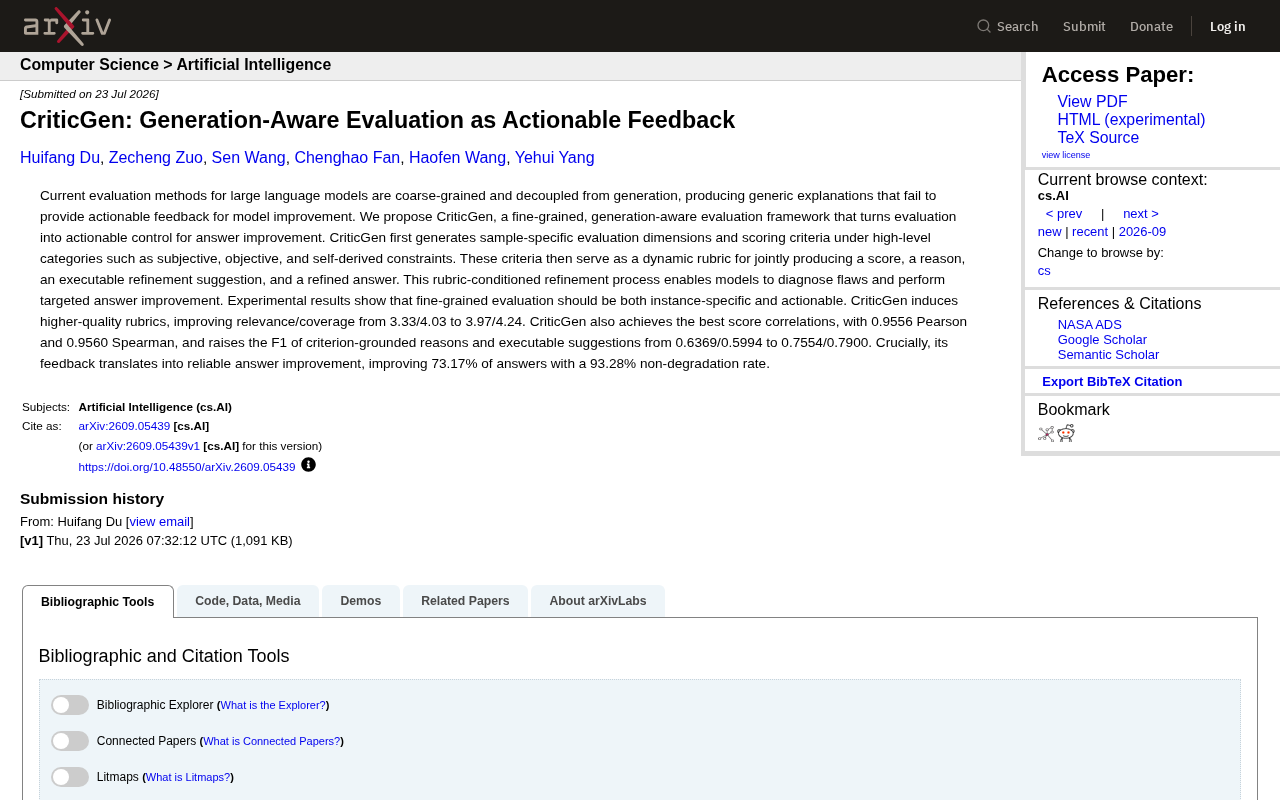
CriticGen: A New Framework That Transforms AI Evaluation into Actionable Improvement Feedback
CriticGen proposes a generation-aware evaluation framework that transforms AI assessment from passive scoring to an active optimization loop, achieving 73.17% answer improvement and 93.28% non-degradation rate.