Linux Kernel Vulnerabilities Accidentally Posted to Public Mailing List: How Coordinated Disclosure Failed

Linux kernel vulnerabilities were mistakenly posted to a public mailing list, exposing the fragility of the coordinated disclosure process.
A Hacker News thread revealed that multiple pieces of Linux kernel vulnerability-related material were accidentally posted to a public mailing list, with the specific number, subsystems, and CVE identifiers unclear. The article analyzes the private window mechanism of kernel coordinated disclosure: completing patch review, stable backporting, and distribution rollout before public disclosure to protect users through the time gap. Mistakenly posting to a public list means attackers gain clues in advance while fixes may not yet be ready. The community's usual remedies include accelerating fixes into the mainline, backporting to stable branches, requesting CVEs and publishing advisories, and conducting process post-mortems. For users, the priority is to follow distribution security updates and upgrade the kernel promptly. The core warning is that processes relying on manual transfer of sensitive security information between multiple lists are fragile, and reducing manual forwarding and strengthening automated controls is more meaningful than assigning blame after the fact.
A discussion thread on Hacker News has brought the Linux kernel's vulnerability disclosure process into the spotlight: several kernel vulnerabilities were accidentally posted to a public mailing list. The post itself only offers this conclusive description (51 points, 10 comments), without revealing the number of vulnerabilities, affected subsystems, or CVE identifiers, but the type of incident is typical enough—it touches on the most fragile link in open-source security: the boundary of private information.
The Incident Itself: Private Content Leaked on a "Public List"
According to the discussion title on Hacker News, multiple pieces of kernel vulnerability-related material were mistakenly sent to a publicly subscribable mailing list. In the Linux kernel's security practice, vulnerability reports and fix discussions typically occur in controlled private channels, where the security team and relevant subsystem maintainers collaborate within a small circle, and only after patches are ready and distributions have synchronized is the information made public.
Once the content lands on a public list, it effectively signals to everyone—including potential attackers—"where the problem is," while the corresponding fix patches may not yet have been merged into the mainline. This is precisely the purpose of the Coordinated Disclosure mechanism, and the reason such incidents are taken seriously.
The original text does not specify the exact point of the mistaken disclosure, so it is impossible to determine whether the wrong recipient was selected, the mailing list permissions were misconfigured, or negligence occurred in the forwarding chain.
Coordinated Disclosure is a vulnerability handling paradigm widely adopted by the security community: discoverers do not directly disclose vulnerability details but first privately notify the vendor or project maintainers, giving them a certain amount of time (usually 90 days) to develop and release patches, after which the information is made public. For projects with an extremely broad impact surface like the Linux kernel, coordinated disclosure is particularly important—it ensures that patches reach users before attack clues do. The opposite approach is "Full Disclosure," which immediately makes all details public; while it can force vendors to respond quickly, it also gives attackers an opportunity. This mistaken disclosure incident is essentially an accidental breach of the private information boundary within the coordinated disclosure process, disrupting the originally controlled disclosure rhythm.
Why Kernel Vulnerability Disclosure Needs a "Private Window"
The kernel is one of the few software projects whose "vulnerability impact spans all downstream consumers." A flaw in one subsystem simultaneously affects dozens of distributions, massive numbers of servers, and embedded devices.
The value of the private window lies in the time gap: completing patch review, stable backporting, distribution packaging, and rollout before public disclosure. For a project like the kernel, with its strict release cadence and patches requiring multiple rounds of review, this time gap is not formalism but a prerequisite for fixes to truly land. Disclose too early, and users get attack clues before they get patches.
From this perspective, the harm of mistakenly posting to a public list does not depend on how severe the vulnerability itself is, but on how much time elapses between "public disclosure" and "available patches."
Stable Backporting is a key mechanism in Linux kernel maintenance. The kernel mainline releases a new version every few months, but a large number of production systems use Long-Term Support (LTS) versions, such as 5.10, 5.15, and 6.1. When a security fix enters the mainline, stable maintainers need to "backport" the patch to these older versions and run compilation tests to ensure no regressions are introduced. This process typically takes days to weeks, depending on the complexity of the patch and the number of affected versions. The existence of the private window is precisely to prevent vulnerability details from leaking before backporting is complete and distributions have repackaged and pushed updates. If vulnerability information is disclosed prematurely while stable backporting is not yet complete, a large number of systems using LTS kernels will be in a dangerous state of "known vulnerability but no available patch."
How the Community Typically Remedies Such Incidents
Although the original text does not disclose the follow-up handling, the kernel community's path for dealing with such incidents is relatively mature:
- Get fixes into the mainline as quickly as possible: compress the normally step-by-step patch process, prioritize merging security fixes, and shorten the exposure window.
- Backport to stable branches: ensure Long-Term Support versions receive the fix synchronously, avoiding a situation where only the mainline is fixed while downstream is left exposed.
- Request CVEs and publish advisories: assign vulnerabilities a trackable identifier so distributions and enterprise users can assess their own risk accordingly.
- Conduct a post-mortem on the process: identify where the leak occurred and tighten the sending rules and permissions for private lists.
The key to this process is "speed," because the information can no longer be retracted. Public archives of mailing lists are essentially impossible to truly delete, and mirrors and subscribers' local copies have long since spread.
CVE (Common Vulnerabilities and Exposures) is a common identifier system in vulnerability disclosure, maintained by MITRE. Each CVE identifier corresponds to a publicly disclosed cybersecurity vulnerability, including a vulnerability description, affected products, and reference links. For Linux kernel vulnerabilities, CVE identifiers are typically requested by the kernel CNA (CVE Numbering Authority) or distribution security teams. The significance of CVE is to provide a uniquely trackable identifier for vulnerabilities, enabling distributions, enterprise users, and security tools to assess their own risk and coordinate fixes accordingly. In a mistaken disclosure incident, requesting CVEs for the leaked vulnerabilities as soon as possible and publishing advisories can help downstream users clearly identify which patches to focus on and reduce information confusion.
Practical Implications for Users
For teams running Linux, this type of incident is a reminder about patch response speed rather than a cause for panic. The mistaken disclosure itself does not equate to exploitation in the wild, and the original text does not mention any actual attacks.
The pragmatic approach is to stay attentive to kernel security advisories and distribution security updates, and to complete upgrades as soon as fixes enter the distribution in use; for critical systems exposed to the public internet, prioritize scheduling kernel update windows.
Process Issues Are More Worthy of Attention Than Individual Vulnerabilities
The real value of this discussion lies not in the vulnerability details but in the organizational risk it exposes: when a project's security information relies on manual transfer between multiple mailing lists, a single mistaken recipient is enough to make coordinated disclosure fail.
For infrastructure projects like the kernel, reducing dependence on manual forwarding and using stricter private channels and automated processes to constrain the flow of sensitive information may be more meaningful than assigning blame after the fact. As for the specific scale and impact of this incident, official statements are still awaited.
One-line Summary
Linux kernel vulnerabilities were mistakenly posted to a public mailing list, exposing the fragility of the coordinated disclosure process.
Paragraph Summary
A Hacker News discussion thread revealed that multiple pieces of Linux kernel vulnerability-related material were accidentally posted to a public mailing list; the specific number, subsystems, and CVE identifiers remain unclear. The article analyzes the private window mechanism of kernel vulnerability coordinated disclosure: completing patch review, stable backporting, and distribution rollout before public disclosure, using the time gap to protect users. Mistakenly posting to a public list means attackers gain clues in advance while fixes may not yet be ready. The community's usual remedies include accelerating fixes into the mainline, backporting to stable branches, requesting CVEs and publishing advisories, and conducting process post-mortems. For users, the priority is to follow distribution security updates and upgrade the kernel as soon as possible. The core warning of the incident is that processes relying on manual transfer of sensitive security information between multiple lists are fragile, and reducing manual forwarding and strengthening automated controls is more meaningful than assigning blame after the fact.
Related articles
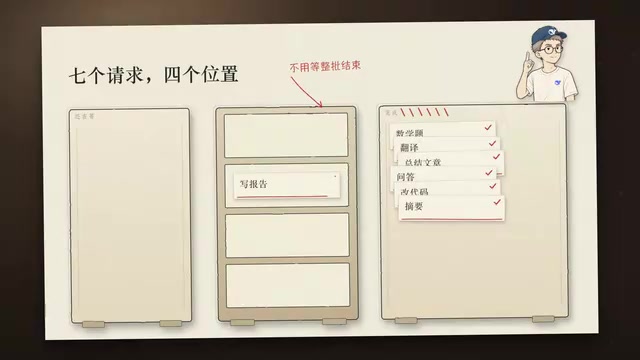
DeepSeek Open-Sources DeepInfer: What Is an Inference Framework Actually For?
DeepSeek open-sources its inference framework DeepInfer under Apache 2.0, supporting DeepSeek V4.1 Flash offline inference. This article explains its request scheduling, FlashMLA/DeepGEMM compute optimization, DSPark speculative verification acceleration, and what it means for developers and ordinary users.
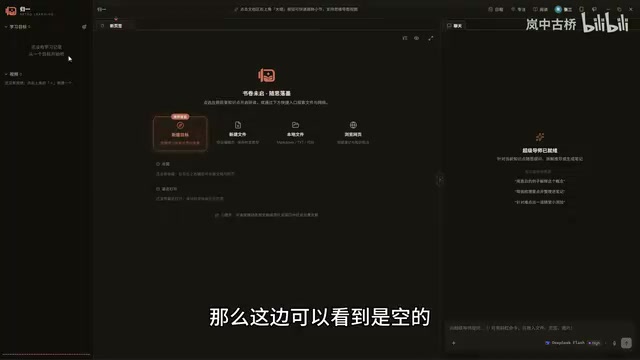
Open-Source AI Learning Agent: A Full Workflow Experience from Topology Graphs to Exam Generation
Explore an open-source AI learning agent: built on DeepSeek API, it constructs knowledge systems via topology graphs, with automatic document generation, notes, super documents, and exams. Learn about its Agent workflow and design highlights.

DeepSeek Whale Girl Open-Source MV Meme: AI Industry Coded Slang About Pivoting to Closed Source
Bilibili's DeepSeek Whale Girl rap MV uses fictional memes to tease the AI open-source vs. closed-source debate, with lyrics full of industry slang. This article explains the meme culture, the Whale Girl symbol, and the open/closed tension.