LLM-Assisted Reverse Engineering: How AI Is Reshaping Binary Analysis
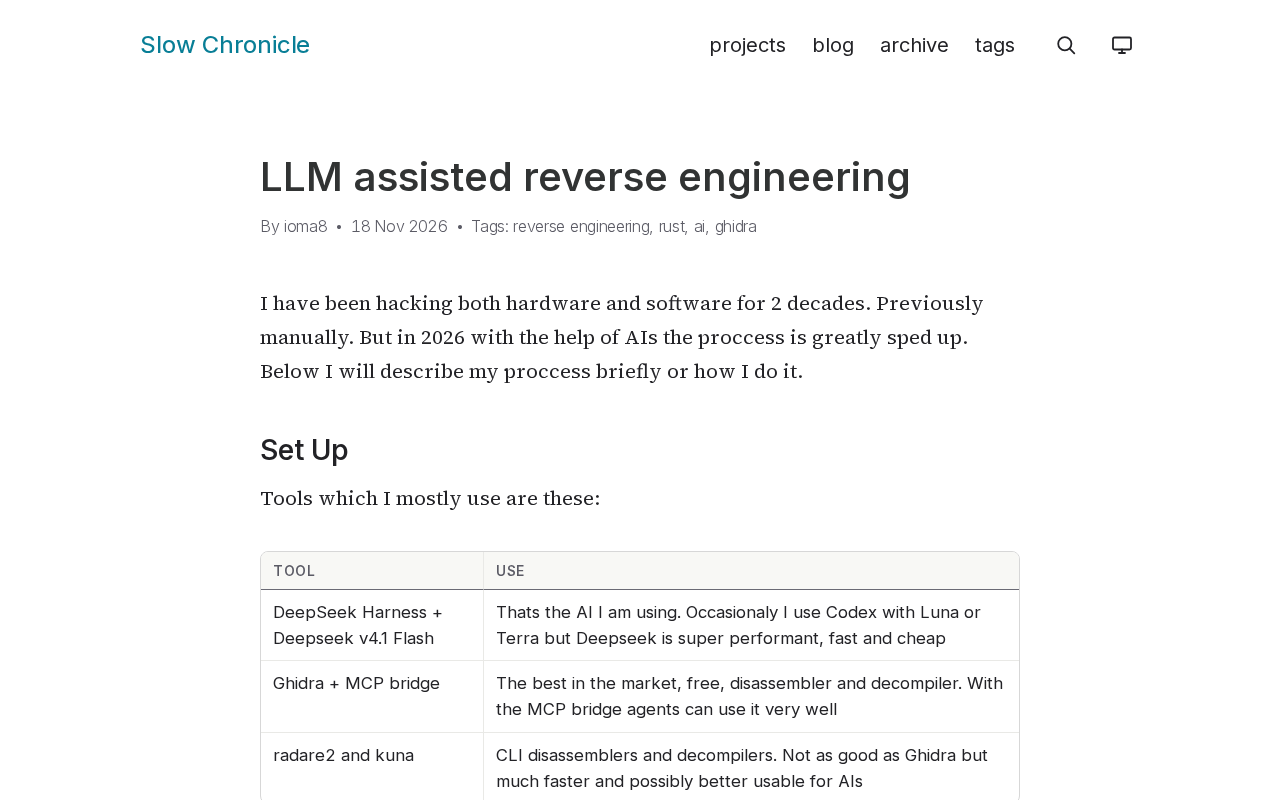
LLMs can add a semantic interpretation layer atop disassembly output to speed up initial triage, but human verification is required.
Based on a Hacker News discussion on LLM-assisted reverse engineering, the article explains that humans still need to understand code semantics after disassembly, and that LLMs can assist here. It outlines three entry points—function-level semantic summaries, suspicious pattern recognition, and type/structure reconstruction—and stresses that LLMs do not replace IDA Pro or Ghidra but add a semantic layer on top. It also covers hallucination risk, context window limits, and adversarial obfuscation, concluding that output is clues rather than conclusions. The most likely near-term path is accelerating initial triage of unknown binaries, with analysts shifting to verifying and correcting model output.
When Large Language Models Meet Reverse Engineering
Reverse engineering has long relied on the intuition and experience of analysts—disassembling, identifying control flow, and inferring data structures, each step time-consuming and error-prone. A recent discussion titled "LLM Assisted Reverse Engineering" that appeared on Hacker News introduced large language models into this traditional field, proposing a new approach in which models help understand and explain binary code. Although the discussion did not attract much attention, it points to a direction worth watching: can LLMs become the "copilot" of reverse engineers?

Why Reverse Engineering Needs LLMs
Traditional reverse engineering tools (such as IDA Pro and Ghidra) excel at restoring machine code to assembly, but "understanding" the semantics of the code is still done by humans. Once a function is compiled, variable names, comments, and type information are almost entirely lost, and analysts must reconstruct the program logic based on register usage patterns, memory access order, and calling conventions. This process relies heavily on domain knowledge, which is exactly where LLMs may add value.
LLMs already have a substantial practical foundation in code understanding tasks. They can identify common patterns from disassembly fragments—such as loop structures, string handling, and characteristics of cryptographic algorithms—and explain their function in natural language. The core point emphasized in the original article is precisely "assistance": LLMs do not replace disassemblers but add a layer of semantic interpretation on top of disassembly output.
Disassembly and decompilation are the two foundational steps of reverse engineering, and understanding their differences helps clarify where LLMs fit in. Disassembly translates machine code instruction by instruction into assembly, preserving original instruction-level information but offering poor readability; decompilation further attempts to recover high-level language structures such as control flow, variables, and function signatures, with representative tools including IDA Pro's Hex-Rays plugin and Ghidra. Decompiler output is closer to source code, but type and naming information is often missing or incorrect. LLMs do not process machine code directly but operate on the text output of disassembly or decompilation, so their effectiveness depends heavily on how completely the upstream tool can reconstruct the code.
Another key piece of background is the calling convention. Different platforms and compilers have different conventions for passing function arguments, storing return values, and determining register preservation responsibilities—for example, x86-64 System V differs from Windows x64. Reverse engineering analysts must infer function signatures based on calling conventions, and if an LLM lacks knowledge of the corresponding platform, it can easily make incorrect judgments about the number and types of parameters, which is one reason manual review cannot be omitted.
Where LLMs Fit into the Reverse Engineering Workflow
Function-Level Semantic Summaries
The first step in reverse analysis is usually to quickly determine "what a function does." An LLM can read a sequence of disassembly instructions and generate a natural language summary such as "this function traverses a linked list and frees the memory of each node." Such summaries cannot be guaranteed to be completely correct, but they can significantly reduce the cost for analysts to explore an unfamiliar codebase.

Suspicious Pattern Recognition
In malware analysis, analysts need to locate behavioral characteristics such as encryption, anti-debugging, and process injection from large amounts of code. LLMs have some awareness of common malicious code patterns and can assist in flagging suspicious fragments. However, the original article does not provide specific detection accuracy rates, and this direction is still in an early exploratory stage.
Pattern recognition in malicious code analysis relies on several classic concepts. Cryptographic algorithms often manifest in binaries as specific constant tables (such as the AES S-box) or circular shift operations; anti-debugging techniques often call platform-specific APIs or check debug registers and timing differences; process injection involves combinations of APIs for memory allocation, writing, and remote thread creation. These characteristics are relatively stable at the assembly level, making them suitable as identification clues for LLMs.
But note that malware often uses packing, code obfuscation, and control flow flattening to disrupt these characteristics. Control flow flattening rewrites normal branch structures into state-machine-style dispatch loops, causing disassembly output to lose its intuitive semantic structure. When LLMs face such code, the reliability of pattern matching drops noticeably, which also explains why the original article emphasizes that this direction is still in an early exploratory stage.
Assisting in Reconstructing Types and Structures
When struct fields are missing or types are ambiguous in decompiler output, LLMs can infer possible type layouts based on field access offsets and operation methods. Such inferences need to be combined with manual verification by analysts and cannot be trusted directly.
Limitations and Risks
LLM-assisted reverse engineering faces several practical problems.
Hallucination risk: Models may generate plausible but completely incorrect function explanations, and in security analysis scenarios, the cost of misjudgment is high. The discussion in the original article suggests that LLM output is better suited as clues rather than conclusions.
Context window limitations: Binary programs often contain thousands of functions, while LLM context lengths are limited. How to split and pass code context is an engineering challenge.
Adversarial scenarios: Malware authors can deliberately construct obfuscated code to induce LLMs to give misleading explanations. This requires that a manual review step be retained in the analysis workflow.

Context window limitations are especially prominent in reverse engineering scenarios. The context length of current mainstream LLMs is typically on the order of tens of thousands to hundreds of thousands of tokens, while the disassembly text of a medium-sized binary can easily reach millions of lines. Common engineering mitigation methods include splitting by function boundaries and analyzing each independently, building a call graph first and then aggregating context along call chains, and using retrieval-augmented approaches to feed in only relevant fragments. Each method involves trade-offs—splitting too finely loses cross-function information, while aggregating too much exceeds the window.
Specific manifestations of LLM hallucination in code understanding tasks include fabricating nonexistent function calls, incorrectly inferring variable types, and interpreting ordinary arithmetic operations as cryptographic operations. In security analysis, such errors can lead to missed detections or false positives. Therefore, the industry generally tends to position model output as a "hypothesis generator," which analysts adopt only after verification through dynamic debugging or cross-references.
Impact on the Reverse Engineering Workflow
From an engineering practice perspective, the most likely first application of LLM-assisted reverse engineering is "accelerating initial triage": when facing an unknown binary file, analysts can first use an LLM to generate summaries of key functions, quickly locate areas worthy of deeper analysis, and then use traditional tools for detailed analysis. This division of labor leverages the LLM's semantic understanding capabilities while preserving the reliability of human judgment.
For security researchers, this means the focus of work may shift from "reading assembly line by line" to "verifying and correcting model output." Skill requirements will change accordingly—in addition to assembly fundamentals, researchers will also need the ability to assess the credibility of LLM output.
Open Questions Worth Watching
As an early discussion, the original article leaves several unresolved questions: How can the accuracy of LLM reverse engineering explanations be quantified? How should prompt engineering be designed for binary code? How can binary fragments be sent to cloud models while protecting privacy? The answers to these questions will determine how quickly LLM-assisted reverse engineering moves from experimentation to practical tools.
For teams engaged in security analysis, malware research, and software supply chain review, following the development of this direction has practical significance—it may change the human-machine collaboration model of reverse engineering, but in the short term it will not replace the core role of human analysts.
One-line Summary
LLMs can add a semantic interpretation layer on top of disassembly output, helping reverse engineers accelerate initial triage, but human verification is required.
Paragraph Summary
The article centers on a Hacker News discussion about LLM-assisted reverse engineering, noting that traditional reverse engineering still requires humans to understand code semantics after disassembly, and that LLMs can provide assistance at this stage. It outlines three typical entry points: function-level semantic summaries, suspicious pattern recognition, and type and structure reconstruction, and emphasizes that LLMs do not replace tools such as IDA Pro and Ghidra but add a semantic interpretation layer on top of their output. It also analyzes the main limitations, including hallucination risk, context window limitations, and adversarial obfuscation scenarios, arguing that output can only serve as clues rather than conclusions. The most likely path to practical adoption is accelerating initial triage of unknown binaries, with analysts shifting their focus to verifying and correcting model output; in the short term, the core role of human analysts will not be replaced.
Related articles
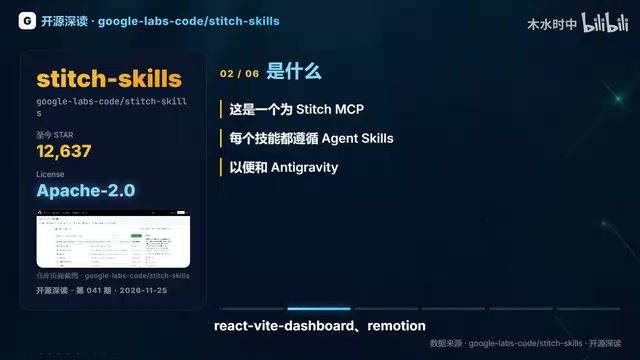
Google Stitch Skills: Connecting Coding Agents to the Design Workflow
Google Stitch Skills is an Agent Skills library following the open standard, adding a design-to-code workflow to the Stitch MCP Server. This article breaks down its three skill groups, SKILL.md directory structure, installation paths, and dependency pitfalls.

40.5-Inch Color E-Paper Art Frame: An Art Display You Charge Once a Year
The Ink Poster Tella 40.5-inch color e-paper art frame uses the E Ink Spectra 6 full-color solution: A1 format, no backlight, no noise, about one charge a year, 2,000+ licensed artworks built in, and automatic adaptation of phone photos.

Jingle Jam Memories: RT's Awkward First Encounter with Lewis
RT shares his awkward first Jingle Jam experience: unexpectedly pushed into the studio, meeting Lewis and Yogg's cast, and Toddy appearing in armor.