"LLMs Are Real, AI Is Fake": A Debate Worth Having
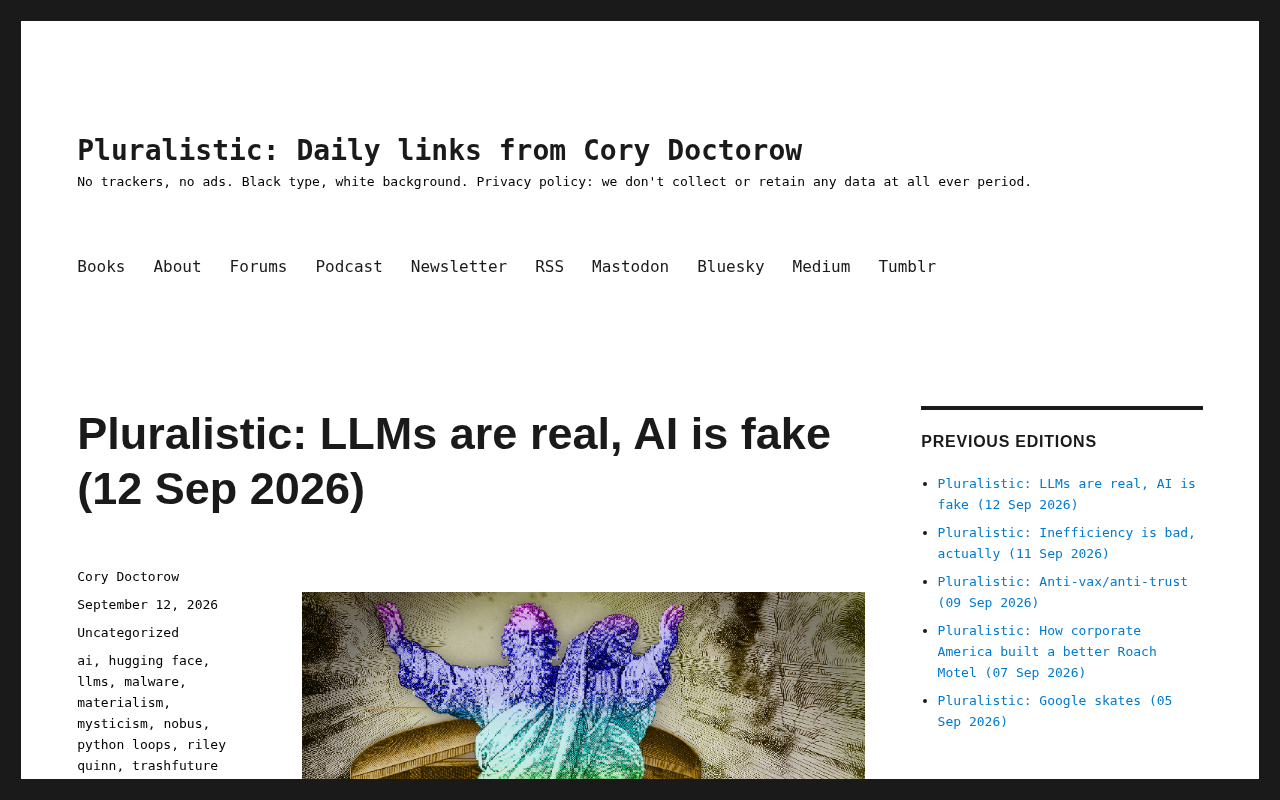
LLMs are verifiable engineering; the "AI" label distorts perception through anthropomorphism and marketing overuse.
A Hacker News post titled 'LLMs are real, AI is fake' argues that large language models are concrete, testable, and measurable technologies, while the 'artificial intelligence' label misleads through sci-fi anthropomorphism and marketing inflation. The core point is that loose terminology causes the public to overestimate model reliability and overlook hallucinations. Critics counter that AI is a legitimate decades-old academic field — the problem is misuse, not the word itself. For practitioners, the takeaway is clear: communicate with precision, evaluate based on actual mechanisms, and stay critical of marketing narratives.
A Provocative Claim
A post titled LLMs are real, AI is fake recently sparked discussion on Hacker News. While the traction wasn't explosive — 17 points and a handful of comments — the slightly provocative title touched on a long-running debate in tech circles: how should we actually define and label this wave of technology?
The claim sounds contradictory at first, but it reflects a surprisingly clear-headed technical perspective. The argument is this: as a concrete engineering technology, large language models (LLMs) are real, verifiable, and measurable. The blanket label "artificial intelligence" (AI), on the other hand, is largely a product of marketing speak and anthropomorphic imagination.
Where Is the Line Between "Real" and "Fake"?
The "real" and "fake" distinction here isn't about whether something exists — it's about conceptual precision.
Why LLMs Are Called "Real"
An LLM is a technically well-defined object: a probabilistic model built on the Transformer architecture, trained on massive amounts of text, whose core mechanism is predicting the next token. Its capability boundaries, training methods, parameter scales, and evaluation benchmarks can all be concretely discussed and quantified. When you say "an LLM," you're referring to a real system that can be run, tested, and reproduced.
Why AI Is Called "Fake"
The term "artificial intelligence" carries far more baggage than the technology itself warrants. It implies some kind of general, human-like "intelligence," and easily evokes the consciousness, understanding, and autonomy of science fiction. But current technology possesses none of these properties — there is no genuine understanding, no intent, no awareness. When vendors package a text prediction model as "AI," they're often borrowing the word's imaginative weight to inflate the product narrative.
From this angle, the author's argument is a pushback against term inflation: replacing vague marketing concepts with precise engineering terminology.
Why This Distinction Matters
The choice of terminology is far from trivial — it has real consequences for how people think and make decisions.
When the public and policymakers treat LLMs as "truly intelligent," a cascade of misjudgments follows: overestimating their reliability, mistaking their "reasoning" for genuine cognition, remaining unguarded against hallucinations, and getting trapped in sci-fi narratives when discussing regulation and ethics.
By contrast, if we consistently treat these systems as "powerful text prediction and pattern-matching engines," we can evaluate their use cases far more pragmatically — understanding what they're good at (language generation, summarization, translation, code completion) and what they're not (strict factual accuracy, complex logical inference, reliable causal judgment). This demystification doesn't diminish the technology's value; it enables us to use it more responsibly.
The Other Side of the Debate
That said, this claim is open to challenge.
"Artificial intelligence" has existed as an academic concept for decades, encompassing machine learning, computer vision, reinforcement learning, symbolic reasoning, and much more — LLMs are just one manifestation. Dismissing the entire field of AI as "fake" is a bit of an overreach. A more balanced framing might be: the problem isn't the word AI itself, but the way it gets misused.
Furthermore, "intelligence" has never had a universally agreed-upon definition. If we struggle to rigorously define human intelligence, demanding that machines demonstrate "true intelligence" may itself be a pseudo-problem. Being functionally useful might matter more than being philosophically "genuinely intelligent."
What This Means for Practitioners
Whichever side of the debate you land on, this discussion offers practical guidance:
- Be precise in communication: In technical documentation and product descriptions, saying "this is an LLM" is usually more honest — and better at managing user expectations — than vaguely calling it "AI."
- Return to first principles when evaluating: Judging whether a system can handle a task should be grounded in its actual mechanism (probabilistic prediction), not anthropomorphic assumptions ("it thinks").
- Stay skeptical of marketing narratives: When faced with relentless "AI-powered" messaging, maintaining a layer of technical clarity — distinguishing real capabilities from packaged hype — is essential.
Closing Thoughts
The value of the title LLMs are real, AI is fake isn't in delivering a black-and-white verdict. It's in forcing us to re-examine the vocabulary we use every day. Technological progress needs enthusiasm, but it also needs precision. When we describe our tools with more honest terminology, we're far more likely to wield them rationally — rather than being misled by the imaginations we ourselves have constructed.
Related articles
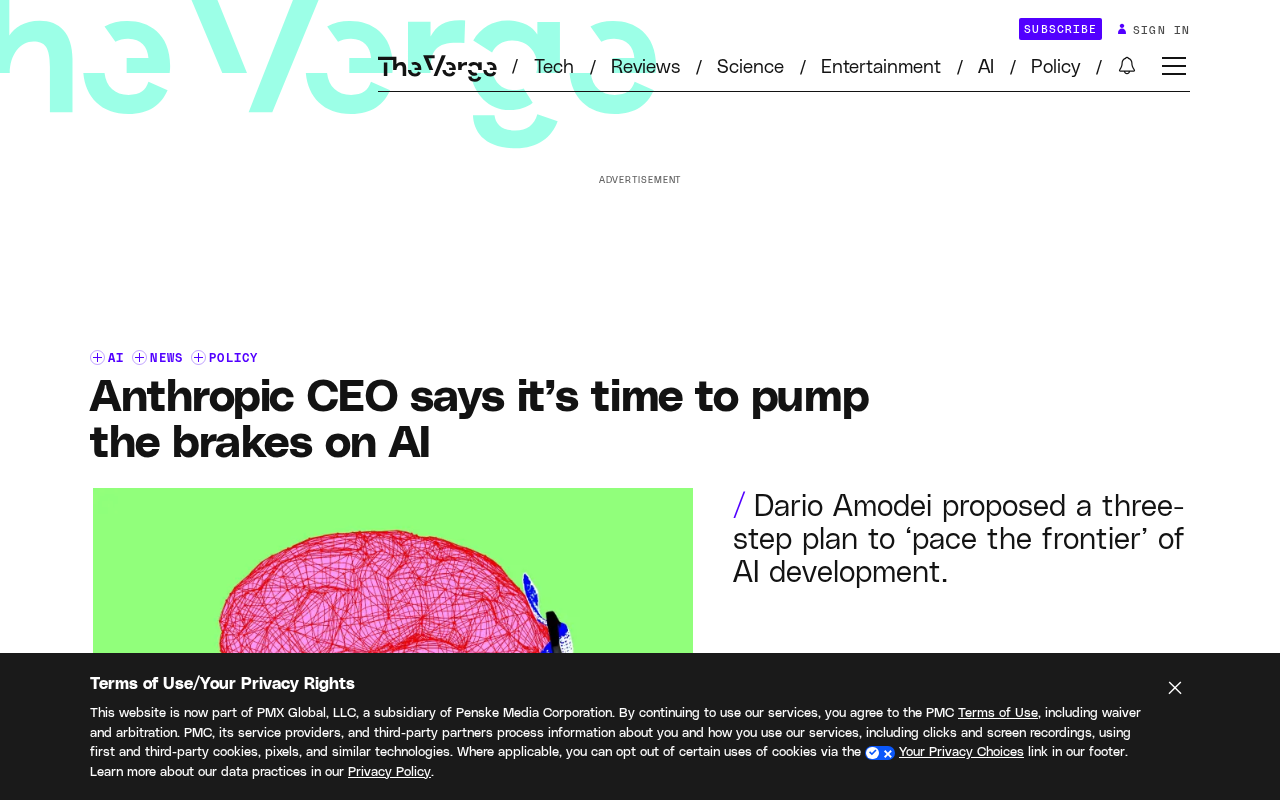
Anthropic CEO Calls for Hitting the Brakes on AI Development: A Three-Step 'Pace the Frontier' Plan
Anthropic CEO Dario Amodei calls for slowing AI development with a three-step 'pace the frontier' plan, including opening model access to third-party evaluators like METR.

Insufficient Source Material: Unable to Generate Article on Sylvan Esso
The source material provided covers music duo Sylvan Esso — unrelated to AI/tech and incomplete. No viable article could be produced; publication not recommended.
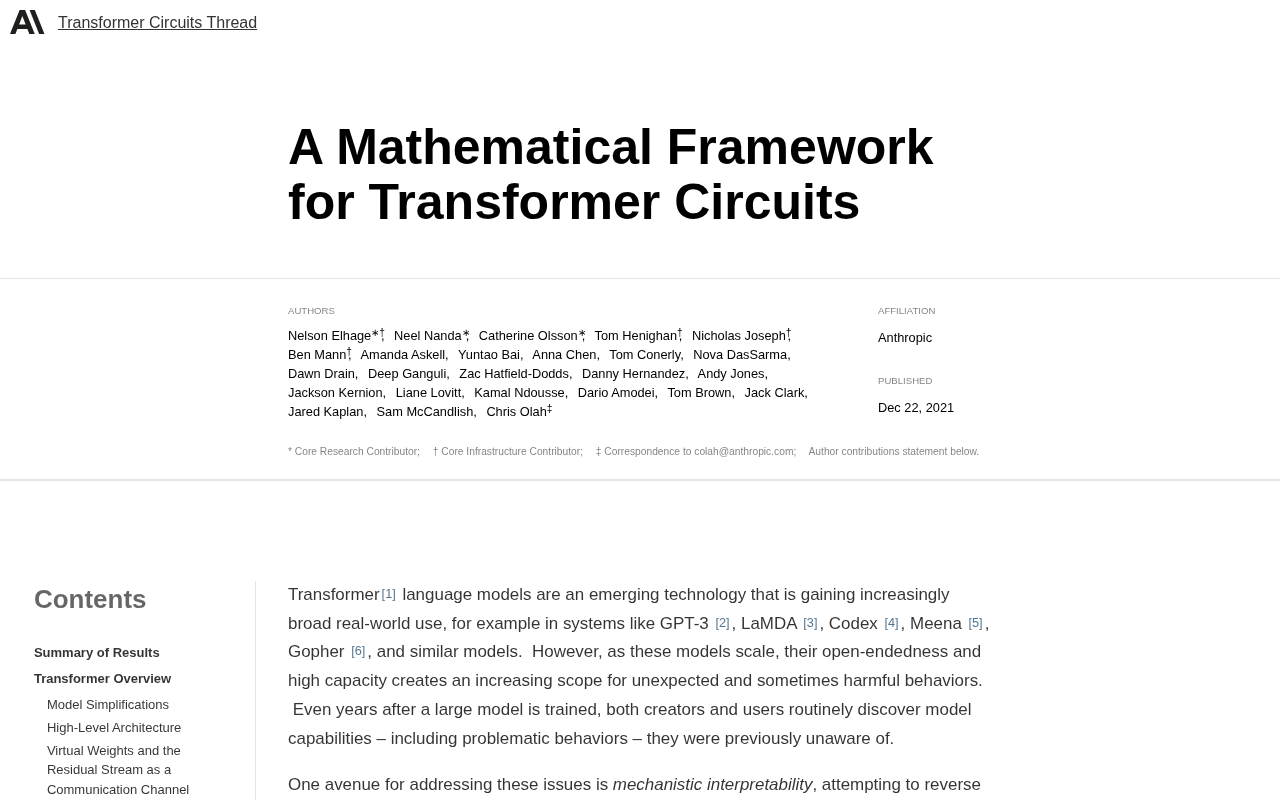
Decoding the Mathematical Framework for Transformer Circuits: A Foundational Work in Mechanistic Interpretability
A deep dive into Anthropic's Mathematical Framework for Transformer Circuits — covering QK/OV circuits, residual streams, and induction heads in mechanistic interpretability.