Local Model Training Engine: Getting Started with Idle Compute
An analysis of a project idea and its boundaries for a training engine that uses local idle compute to train local models.
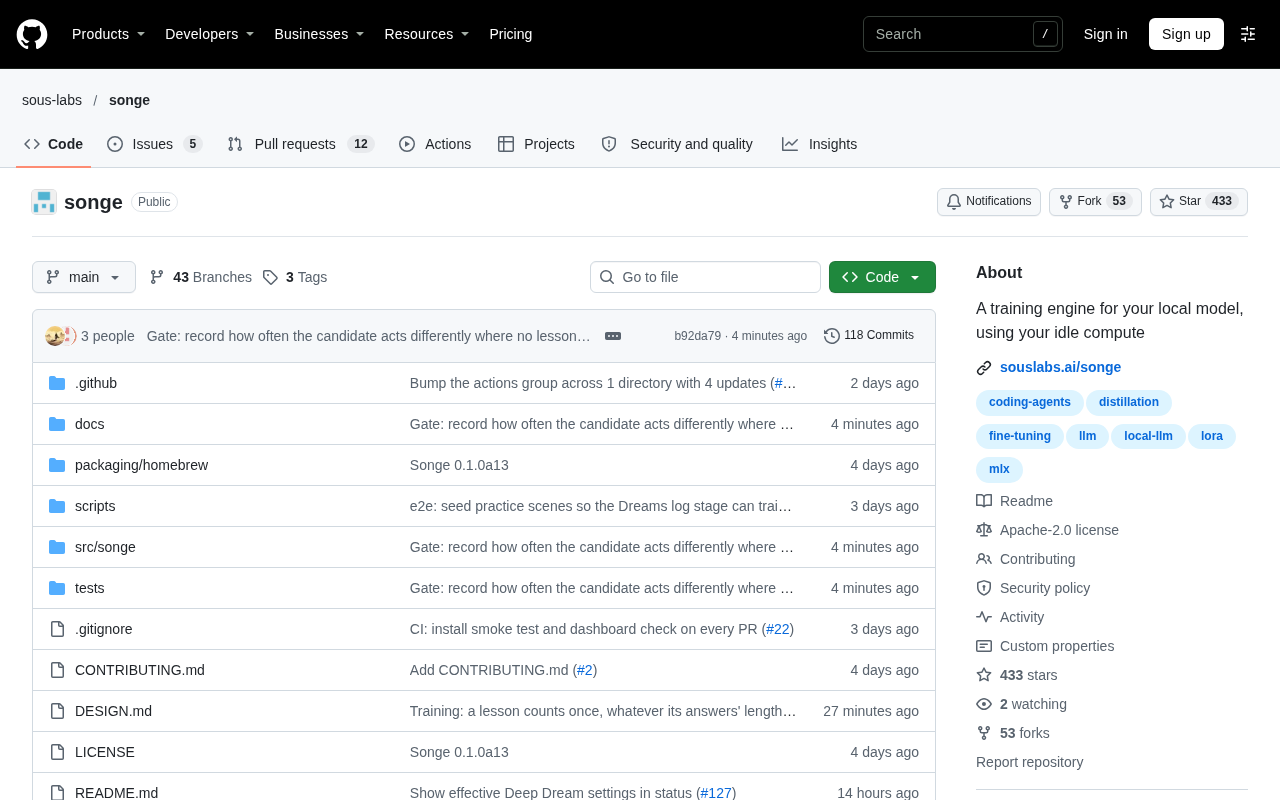
The article introduces a project on Hacker News that organizes idle compute from local hardware such as personal workstations and development machines into a schedulable training engine for local model iteration. Its core value lies in activating existing hardware, reducing dependence on rented external compute, and aligning with the "local-first" demand for data control. The training engine focuses on solving local environment and scheduling pain points and may support automatically triggering training during idle periods. The article also draws clear boundaries: local idle compute is suitable for small- and medium-scale models, fine-tuning, and experimental training, not ultra-large-scale pretraining; its value lies in lowering the cost of trial and error before deciding whether to scale up in the cloud. The project has not yet been tested at scale by the community and has limited discussion, so it is worth continuing to watch.
In discussions about AI infrastructure, local training is often seen as a high-barrier, complex process. But a project that appeared on Hacker News offers a simple yet powerful idea: put idle compute to use and provide a training engine for local models. It doesn't spin a grand narrative; instead, it points directly at a neglected reality—a large amount of local hardware sits idle most of the time.
The Real Value of Idle Compute
From a hardware utilization standpoint, personal workstations, development machines, and even home servers waste a huge amount of compute during non-training periods. The core proposition of this training engine is to turn these fragmented local resources into a schedulable training environment. It is not meant to replace large-scale cloud training, but rather emphasizes completing model iteration in a local closed loop and reducing dependence on rented external compute.
This approach aligns with the growing "local-first" tendency in the AI developer community. Keeping data on-premises, having a controllable training process, and predictable costs are real requirements for many teams in specific scenarios.
"Local-first" originated as a concept in software architecture, emphasizing that data and computation should stay on the user's device as much as possible and interact with the cloud only when necessary. In the AI training context, this idea extends to: training data does not leave the local environment, model weights and training logs are fully controlled by the developer, and compute costs shift from on-demand rental to reusing sunk costs of existing hardware. For teams handling sensitive data (such as healthcare, finance, and personal privacy), local training can also avoid compliance risks related to cross-border data transfer and third-party hosting. However, local-first also means developers must bear responsibility for hardware operations and maintenance, failure recovery, and security updates—exactly the cost that a training engine tries to offset through automated scheduling.
Engineering Pain Points the Training Engine Targets
The trouble with local training usually isn't the model code, but the environment and scheduling. If a training engine can automatically handle resource allocation, task queuing, and status monitoring on local hardware, it can free developers from tedious script operations.
Given the keyword "idle compute" in the project description, it can be inferred that its design focus is triggering training tasks during idle periods—for example, when a developer leaves their desk, the machine automatically enters a training state. This mode is especially friendly to individual developers and shifts compute from "peak procurement" to "activating existing stock."
The environment and scheduling pain points of local training manifest concretely as: GPU memory fragmentation preventing large-batch tasks from starting, OOM caused by multiple tasks competing for the same device, lack of checkpoint recovery mechanisms after training interruptions, and monitoring metrics scattered across multiple scripts that are hard to observe in a unified way. A training engine typically needs resource pooling (abstracting CPU/GPU across multiple machines into a unified scheduling unit), task queues and priority management, automatic checkpointing and resumable training, and visualization of training status and resource usage. Compared with general-purpose orchestration systems such as Kubernetes, designs for local training engines place more emphasis on low overhead and single-machine friendliness, avoiding an overly heavy control plane for small-scale tasks.
The Boundary Between Local and Cloud Training
It is important to recognize clearly that local idle compute is suitable for small- and medium-scale models, fine-tuning, and experimental training—not for ultra-large-scale pretraining. The value of a training engine lies in lowering the cost of trial and error, allowing developers to quickly validate ideas locally before deciding whether to scale up in the cloud.
This layered approach also responds to a long-standing debate in the community: is local training worth it? The answer is not either-or; rather, it is about treating idle compute as one link in the training chain and assigning it the iterative work that is suitable to be done locally.
Fine-tuning and experimental training are the scenarios that best match local idle compute: the former usually updates some or all parameters of an existing base model with a smaller learning rate, with datasets ranging from thousands to hundreds of thousands of samples, and can be completed on a single GPU or a small number of GPUs; the latter focuses on quickly validating architecture changes, hyperparameter combinations, or data mixtures, with low requirements for training throughput but high sensitivity to iteration frequency. By contrast, ultra-large-scale pretraining requires thousands to tens of thousands of accelerators working together, high-speed interconnects, and fault-tolerant training frameworks, and its communication and synchronization overhead far exceeds what single-machine idle compute can bear. A reasonable layering is therefore: local handles high-frequency, small-scale trial and error and fine-tuning, while the cloud handles low-frequency, large-scale pretraining and final alignment, with the two connected through checkpoints and data pipelines.
What Is Worth Watching
The project currently has limited traction on Hacker News, with zero comments, which means it has not yet been tested at scale by the community. For developers interested in local AI infrastructure, this is a direction worth continuing to watch: whether the training engine can truly lower the operational barrier to local training, and whether its scheduling strategy for idle compute is robust enough, both require more real-world use to answer.
One-line Summary
A project idea and boundary analysis for a training engine that uses local idle compute to train local models.
Paragraph Summary
The article introduces a project that appeared on Hacker News: organizing idle compute from local hardware such as personal workstations and development machines into a schedulable training engine for local model iteration. Its core value lies in activating existing hardware, reducing dependence on rented external compute, and aligning with the "local-first" demand for data control. The training engine focuses on solving local environment and scheduling pain points and may support automatically triggering training during idle periods. The article also draws clear boundaries: local idle compute is suitable for small- and medium-scale models, fine-tuning, and experimental training, not ultra-large-scale pretraining; its value lies in lowering the cost of trial and error before deciding whether to scale up in the cloud. The project has not yet been tested at scale by the community and has limited discussion, so it is worth continuing to watch.
Related articles

A 19-Year-Old's Rental Horror Story: Ceiling Collapse, Bug Infestation, and the Lessons It Taught Me
At 19, my first off-campus rental brought bug infestations, no heat, a collapsed ceiling, and a ruined laptop with no renter's insurance. Here are the hard-won lessons for first-time student renters.

Veda Nurse's Cranial Nerve Exam: Why ASMR Role-Play Is Going Viral
Bilibili creator Veda's cranial nerve exam ASMR video goes viral, blending humor and sensory triggers through nurse role-play. This article analyzes its unique appeal and the audience psychology behind ASMR role-play.

LG Cinebeam AI Review: 120-Inch Giant Screen + 3000 Lumens, a New Choice for the Living Room Theater
LG Cinebeam AI projector review: 3000 ANSI lumens, 4K, 100 inches from about 8 cm and 120 inches from about 18 cm. Built-in webOS, AI Concierge voice recommendations, AI Sound Pro 11.1.2 virtual surround, and Game Optimizer—positioned for fixed living room installation, complementing the portable Cinebeam S.