Long Computers, Short AI Infrastructure: One Investor's Contrarian Logic
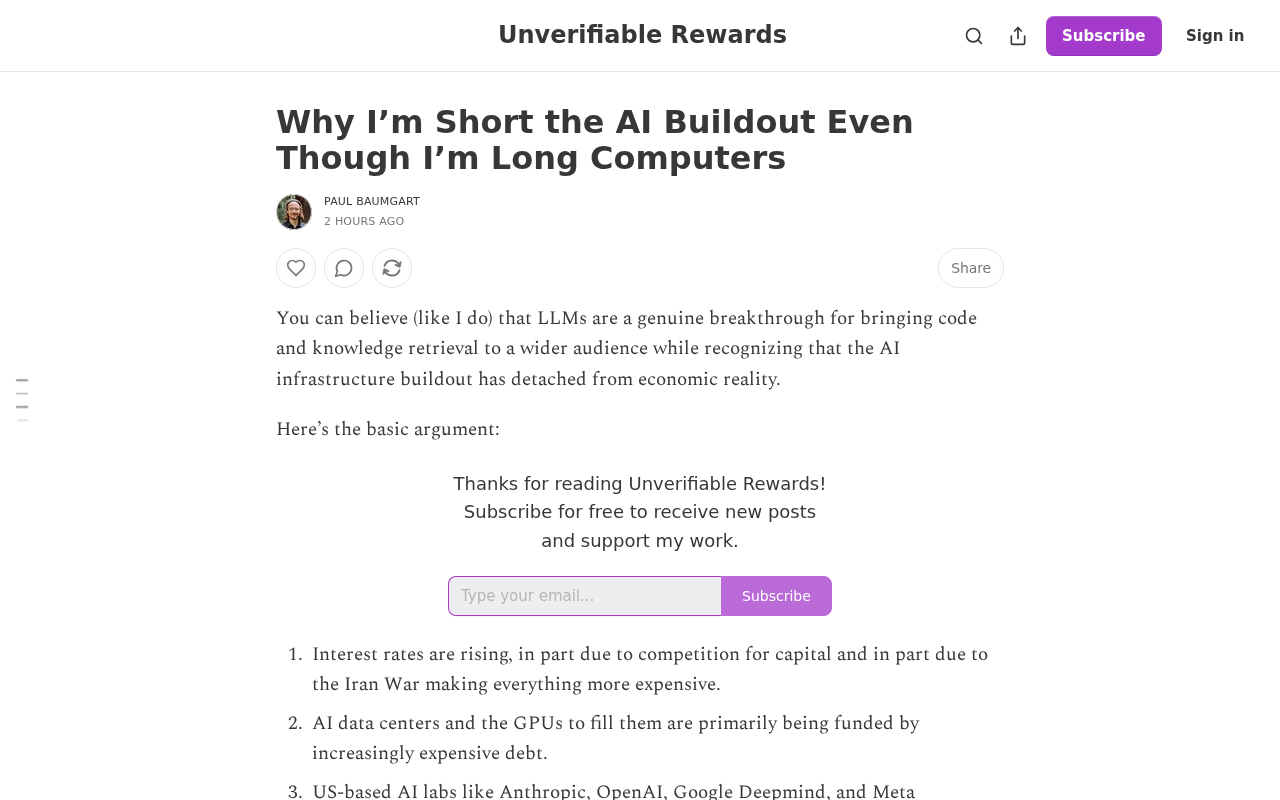
Long-term bullish on compute demand but short overheated AI infrastructure capex, separating technological certainty from capital returns.
The article unpacks a Hacker News post arguing for being long computers but short AI infrastructure. Being long computers bets on long-term compute demand with a solid foundation, while shorting AI infrastructure targets the pace and returns of heavy-asset spending, with the core risk being capex growth far outpacing revenue growth. This long-underlying, short-surface combination has a precedent in the internet bubble: the logic holds, but timing is hard to judge.
A Counterintuitive Investment Stance
On Hacker News, a post titled "Why I'm Short the AI Buildout Even Though I'm Long Computers" sparked discussion. The author lays out a seemingly contradictory investment stance: bullish on computer and compute demand over the long term, yet choosing to short the current AI infrastructure boom. This split—"long on technology, short on narrative"—precisely highlights the two things most easily conflated in today's AI investing: the certainty of the technology trend and the uncertainty of capital returns.
The core tension in the post is this: as a general-purpose technology substrate, computers have a long-term value that is almost beyond debate; but the pace, scale, and ultimate beneficiaries of the massive infrastructure spending around AI are far less clear than market sentiment suggests. The author does not lay out a detailed argument, but the stance itself is worth unpacking.
Long Computers: The Long-Term Certainty of Technology Demand
"Long computers" can be understood as optimism about long-term demand for compute resources such as processing power, chips, and cloud infrastructure. This judgment has a solid foundation: from cloud computing to the mobile internet, and now to model training and inference, compute demand continues to expand over long cycles. Even if the AI narrative cools, the compute infrastructure already built will still be absorbed by other workloads.
In other words, being long computers is a bet on a "compute-intensive economy," not on any single company or any single wave of technology. This stance tolerates short-term bubbles because it bets on the long-term scarcity of underlying resources. By separating this layer from AI infrastructure, the author shows he is not denying that compute matters—he is questioning whether the current approach to spending is reasonable.
Short AI Infrastructure: Questioning the Return Path of Capital Expenditure
Shorting AI infrastructure targets the pace and returns of heavy-asset investments such as data centers, GPU clusters, and power infrastructure. A major feature of the current industry is that capital expenditure growth far outpaces revenue growth: multiple cloud providers and AI companies keep raising their capex guidance, while the corresponding commercialization revenue is still ramping up. This mismatch is not uncommon in history and often appears in the early stages of a technology wave—but early investment does not automatically equal early returns.
The author does not give specific targets or data in the post, but from an investment-logic perspective, the short targets could include over-expanding infrastructure suppliers, compute-rental providers with stretched valuations, or listed companies overly optimistic about AI revenue materializing. The risk here lies in timing: bubbles can last a long time, and the cost of shorting accumulates over time.
The mismatch between capital expenditure (CapEx) and revenue growth is key to understanding the short logic. In heavy-asset industries, companies first invest huge sums to build infrastructure (such as data centers and GPU purchases), then recover costs through subsequent services. In a healthy state, capex should match expected revenue growth; but when capex growth consistently exceeds revenue growth, it means companies are drawing down future cash flow to pay in advance for demand that has not yet materialized. This mismatch is common in the early stages of a technology wave, but if it persists too long, it can lead to overcapacity and asset depreciation, which in turn triggers valuation corrections. Short sellers are betting that this mismatch will eventually be corrected through capex contraction or valuation downgrades.
The Risks and Rationality of Running Long and Short in Parallel
This "long the underlying layer, short the surface layer" combination is not new in investing. During the internet bubble, being bullish on the internet's long-term value and shorting telecom equipment makers with absurd valuations could both hold true at the same time. Its rationality lies in this: the correctness of a technology trend does not guarantee the profitability of its participants, especially in segments that are capital-intensive, highly competitive, and fast-iterating.
The risks are equally obvious. Shorting AI infrastructure requires judging the inflection point of the capex cycle, and that inflection point is often determined jointly by financing conditions, major customer orders, and geopolitical factors, making it hard to predict precisely. If AI application revenue materializes better than expected, infrastructure spending may prove to have been a reasonable upfront investment, and short sellers will take losses.
The precedent from the internet bubble era provides a valuable reference. In the late 1990s, telecom equipment makers (such as Lucent and Nortel) massively expanded capacity on expectations of an internet traffic explosion, and their stock prices soared. However, although actual traffic growth continued, excessive competition and overcapacity among equipment makers caused their profits to collapse and their stock prices to plunge. At the same time, the long-term value of the internet itself ultimately proved real. This case shows that the long-term correctness of an underlying technology and the short-term profitability of surface-layer participants can diverge, and shorting the latter does not negate the former. But the choice of shorting timing is extremely critical: the bubble's expansion phase can last far longer than expected, and shorting too early can bring enormous mark-to-market losses.
Implications for Practitioners
For AI practitioners and entrepreneurs, this post offers a perspective for examining their own situation: is the segment you are in "computers" or "AI infrastructure"? The former enjoys the dividend of long-term demand, while the latter must face scrutiny over cycles and returns. If a company's revenue depends on the continued expansion of AI infrastructure, it needs to be wary of the chain reactions when capex contracts.
For readers following the AI industry, distinguishing between technology trends and capital narratives is a basic skill for avoiding being swept up by sentiment. Being long on a technology and being long on every investment around it have never been the same thing.
One-line Summary
Long-term bullish on compute demand, but short on overheated AI infrastructure capex—distinguishing technological certainty from capital returns.
Paragraph Summary
The article centers on a Hacker News post titled "Why I'm Short the AI Buildout Even Though I'm Long Computers," unpacking the author's counterintuitive stance of being "long computers, short AI infrastructure." The author argues that being long computers is a bet on long-term compute demand with a solid foundation, while shorting AI infrastructure targets the pace and returns of heavy-asset investments such as data centers and GPU clusters, with the core risk being the mismatch in which capex growth far outpaces revenue growth. This "long underlying, short surface" combination had a precedent during the internet bubble; the logic holds, but timing is hard to judge. The article concludes by noting that the correctness of a technology trend does not guarantee participants' profitability, and practitioners need to determine whether they are in a long-term demand segment or a cyclical infrastructure segment.
Related articles

OpenAI Dots vs Anthropic Claude Duet: The AI Assistant Rivalry Escalates
Anthropic's Claude Duet joins OpenAI Dots and Meta Muse in a new AI assistant rivalry. We analyze their positioning, cloud execution, and sensitive-action approval.

Claude Duet Launches: Proactive Agents Take Their First Step, with Approval Cards as the Key Constraint
Anthropic releases research preview Claude Duet, where Claude can proactively push briefings and assign tasks via voice, with approval cards controlling sending, payment, and deletion. This article analyzes its proactive interaction logic, security isolation design, and the trust challenges of proactive agents.
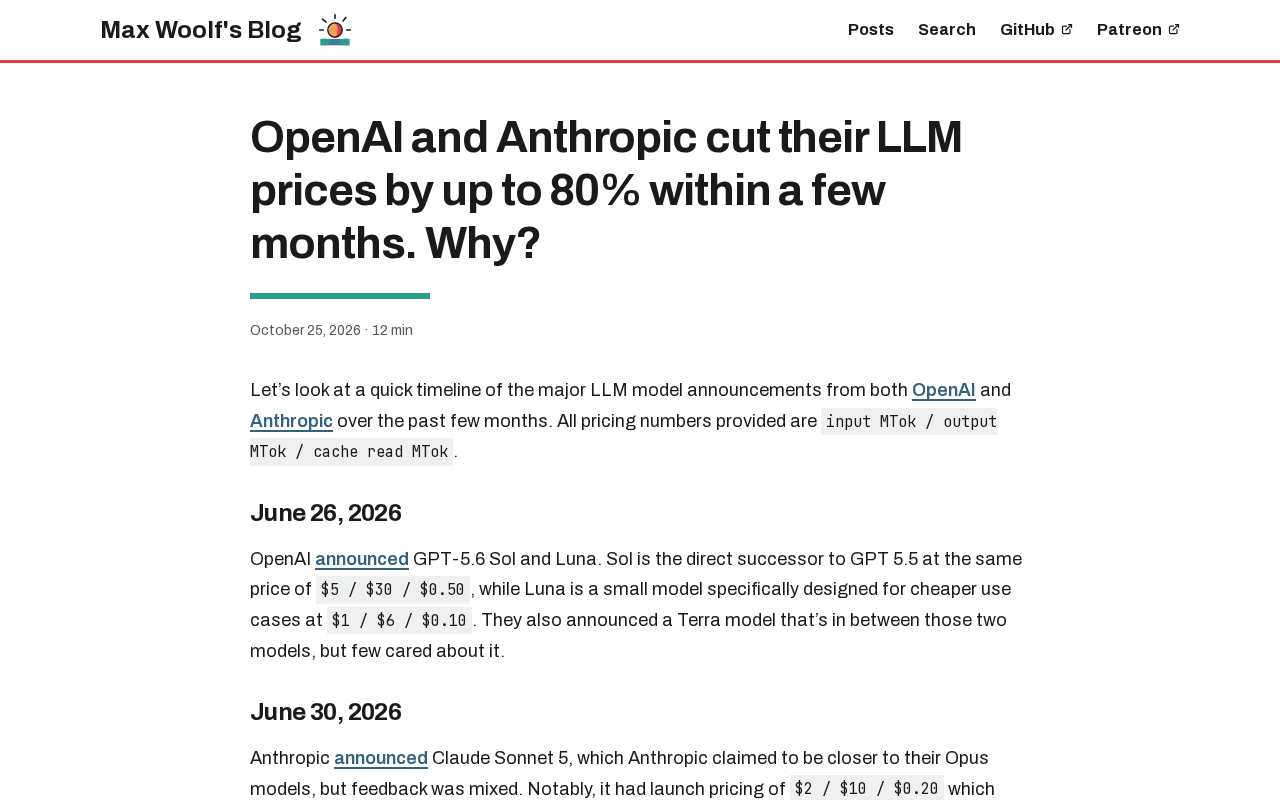
The LLM Price War: Why Did OpenAI and Anthropic Cut Prices by 80%?
OpenAI and Anthropic cut LLM prices by up to 80% in months. This article analyzes the competition, technology costs, business model shifts, and industry impact behind the price war.