Loom: One Machine for Weaving, Knitting and Braiding

Loom aims to combine weaving, knitting and braiding in one reconfigurable machine.
Loom is a new solution that drew attention on Hacker News, aiming to seamlessly integrate three textile processes with fundamentally different principles—weaving, knitting and braiding—into a single machine. The article analyzes their mechanical differences, noting that the core engineering challenge is enabling all three to share the same yarn feeding, tension control and forming system, which requires redesigning mechanisms and control algorithms. Integrated equipment has practical value for small-batch, multi-variety production and smart textile prototyping, and leaves room for software-layer process parameter optimization. However, publicly available information is limited, and key metrics such as weaving precision and switching time have not been disclosed, so more data is needed to judge its maturity.
In the traditional textile industry, weaving, knitting and braiding have long relied on completely different equipment and processes, with barriers between them that are nearly insurmountable. A new solution called Loom attempts to seamlessly integrate these three techniques into a single machine, and it has caught the attention of tech enthusiasts on Hacker News.
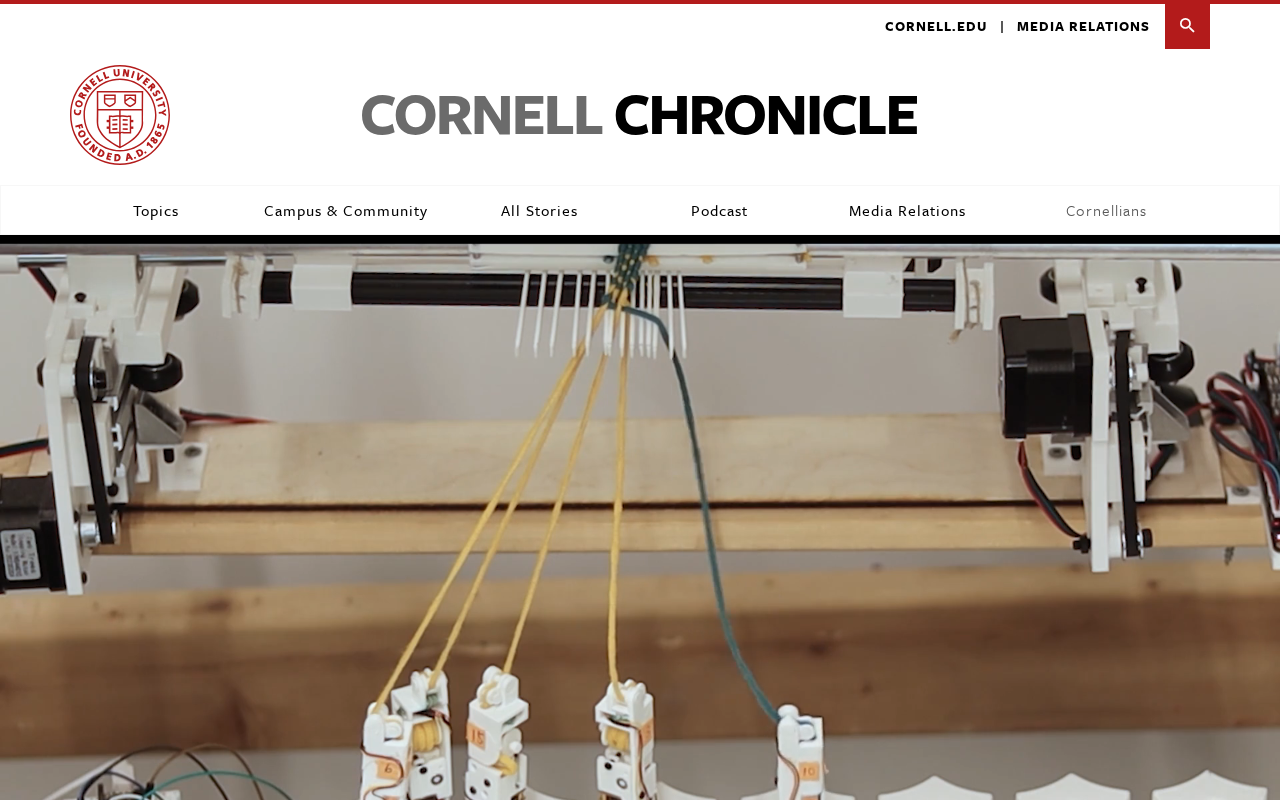
Three Processes, One Machine
Although weaving, knitting and braiding all fall under the category of "turning yarn into fabric," their mechanical principles are fundamentally different: weaving relies on the interlocking of warp and weft, knitting relies on the chaining of loops, and braiding relies on the diagonal interlacing of multiple yarn strands. Traditionally, factories need to purchase looms, knitting machines and braiding machines separately, resulting in high production line changeover costs and large floor space requirements.
Loom's core idea is to design a reconfigurable mechanism that allows the same machine to switch between or combine the three fabric-forming methods above. This means that small-batch, multi-variety production scenarios—such as custom fabrics and functional textile prototype development—could break free from the constraint of "one process, one machine."
Original title: Loom seamlessly combines weaving, knitting and braiding
The mechanical differences among weaving, knitting and braiding stem from the different ways yarns interlock. In weaving, warp and weft yarns cross perpendicularly at roughly 90 degrees to form a stable grid structure; the resulting fabric is crisp and dimensionally stable but has poor elasticity. Knitting, by contrast, bends yarn into loops and passes new loops through old ones to form interlocking chains; this structure gives fabric excellent stretchability and breathability. Braiding interlaces multiple yarn strands diagonally to form tubular or flat-banded diagonal textures, commonly found in shoelaces, ropes and composite preforms. The three have completely different requirements for yarn tension, path and forming molds—this is the fundamental reason traditional equipment struggles to be compatible.
Why "Seamless Integration" Deserves Attention
From an engineering perspective, the difficulty lies not in implementing any single process, but in enabling all three processes to share the same yarn feeding, tension control and forming system. Weaving requires stable warp tension, knitting requires precise loop formation, and braiding is highly sensitive to the path crossings of multiple yarn strands. Making these requirements coexist on one machine demands rethinking both mechanism design and control algorithms.
This kind of integration approach has direct significance for the digital transformation of the textile industry: process parameters can be modeled uniformly, changeover times are shortened, and equipment utilization improves. For teams working on smart textiles and underlying materials for wearable devices, a machine that can quickly switch among weaving, knitting and braiding is itself an experimental platform that accelerates iteration.
The yarn feeding system is the "blood supply" of textile equipment, responsible for delivering yarn from bobbins to the fabric-forming area at constant or controllable tension. Different processes have significantly different feeding requirements: weaving requires warp yarns to maintain high and stable tension during shedding, while weft yarns need to be inserted at low tension; knitting requires yarn delivery precise to each needle and each row to ensure uniform loops; braiding requires dynamic tension adjustment across multiple yarn strands along crossing paths to avoid slack or excessive tightness. Tension control typically relies on mechanical tensioners or electronic tension sensors, and an integrated machine must implement multi-channel, switchable tension management modes—this directly determines fabric quality and switching reliability.
The Bigger Signal Behind Niche Hardware
That Loom appeared in Hacker News's hardware section rather than fashion media itself shows that its appeal lies in the engineering proposition of "whether a machine can redefine the boundaries of craft." It currently has limited discussion traction, with zero comments and far less visibility than mainstream open-source hardware projects, but its design philosophy aligns with several current trends: reconfigurable mechanisms integrating software and hardware, flexible manufacturing for makers and small-batch production, and the digital reinvention of traditional crafts.
It is worth noting that such projects often lack publicly available detailed performance data. Key metrics for Loom—such as actual weaving precision, switching time, and the types of yarn it can handle—have not been disclosed in the original material, which is where more information is needed to judge its maturity.
A reconfigurable mechanism refers to a design philosophy in which the same machine can possess multiple kinematic functions by changing the mechanism topology or the way components are connected. In textiles, this means the machine's shedding mechanism, weft insertion mechanism or loop-forming mechanism can be reconfigured according to process requirements. Similar ideas have been practiced in robotics with modular robotic arms and reconfigurable fixtures. The core challenge is that the reconfiguration process must not significantly reduce precision and stiffness, and the control system must be able to automatically identify and adapt to the new mechanism state. If Loom can achieve reconfigurable switching among textile processes, it would be equivalent to turning "dedicated machine tools" into "flexible manufacturing cells"—a significant development for small-batch production.
Implications for Developers and Makers
If you follow open-source tools and hardware innovation, Loom offers a valuable case study: abstracting seemingly mutually exclusive processes into composable modules is a practical path to lowering manufacturing barriers. Similar approaches have precedents in 3D printing and CNC machining, and in an "old industry" like textiles, there is still ample room to explore integrated equipment.
For creators working in AI applications and smart hardware, Loom also points to a direction: when hardware becomes reconfigurable, the accompanying control strategies and process parameter optimization could become opportunities at the software layer—this is precisely where algorithms can play a role.
(This article is compiled from a project entry on Hacker News; the project's specific technical details and measured data await further official disclosure.)
Related articles
Google Officially Supports Pi Coding Agent: The AI Programming Tool Ecosystem Expands Further
Google adds official Google AI plan support for the open-source coding agent Pi, signaling accelerating integration between large model vendors and coding agent tool ecosystems. This article analyzes the impact on developer workflows, the tool ecosystem landscape, and model binding relationships.
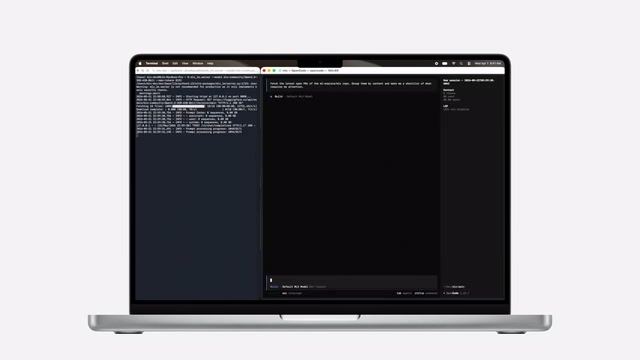
Running Local AI Agents on Mac: A Full Breakdown of the MLX Four-Layer Stack
A breakdown of Apple engineer Joanna's local Mac AI agent solution: the MLX four-layer stack, a three-step setup, and how the neural network accelerator, continuous batching, and distributed inference solve local agent performance bottlenecks.
52KB Engine Runs 2B LLM in a Browser Tab
52KB Engine Runs 2B LLM in a Browser Tab
A 52KB WebAssembly engine on Hacker News claims to run Qwen3.5-2B in a browser tab. We analyze the engine-model separation, browser inference pros and cons, and the on-device AI runtime race.