Loop Engineering Explained: The New Development Paradigm of Closed-Loop AI Agent Iteration

Loop Engineering redefines AI development by having Agents self-evaluate and iterate in closed loops rather than producing one-shot outputs.
Loop Engineering is a rising AI development paradigm that replaces one-shot model outputs with controlled, closed-loop iteration — enabling AI Agents to self-detect errors, correct course, and progressively reach goals. Built on four years of AI evolution from basic prompting to Agent tool-calling, it repositions developers from code writers to workflow and loop designers.
What Is Loop Engineering?
In the AI programming world, a new concept seems to emerge every few months. From the once-popular Harness Engineering to the now-rising Loop Engineering, the rapid turnover of these terms is itself a reflection of the industry's accelerating evolution.
Background on Harness Engineering: Harness Engineering was the dominant AI development paradigm before Loop Engineering. Its core idea was to provide AI models with a "harness" — a structured set of tools, context management mechanisms, and constraints — to improve the reliability of model outputs. This paradigm shifted engineers' focus from writing business logic to building a "runtime environment" for AI, including tool-calling interfaces, memory modules, and output format validation. The rise of early Agent frameworks like LangChain and AutoGPT were classic examples of the Harness Engineering approach.
To truly understand Loop Engineering, we need to step back and look at the broader evolution of AI development paradigms over the past four years.
Simply put, Loop Engineering emphasizes a "loop-centric" approach to AI development — enabling AI Agents to continuously self-evaluate, correct, and iterate while executing tasks, rather than delivering a one-shot result. At its core, this paradigm gradually transforms engineers from "writing code line by line" into "designing and managing AI work loops."
From Concept to Practice: Keeping a Clear Head
You may not have noticed, but despite its growing buzz, Loop Engineering is unlikely to deliver the kind of disruptive shock that ChatGPT did. It's more of a systematic reframing and naming of existing Agent development thinking. For developers, what matters isn't chasing the concept itself, but understanding the logic behind this methodology — and then judging what role it can actually play in real-world development.
Why We Need to Rethink AI Development Paradigms
For newcomers to AI development, words like Agent, Loop, and Harness might just sound familiar. But for engineers already doing AI work, understanding Loop Engineering actually requires "clearing" existing mental models first. The reason: AI programming paradigms evolve at breakneck speed. What sounds complex today was often just yesterday's news, and quickly becomes history.
Four Years of AI Development Evolution
Placing Loop Engineering on a historical timeline reveals its true significance:
-
Phase 1: Single calls to large language models — input a prompt, get an output. Essentially a question-and-answer interaction.
-
Phase 2: The rise of Prompt Engineering, where engineers improved model performance through carefully crafted prompts.
The Technical Depth of Prompt Engineering: Prompt Engineering is the systematic methodology of designing input text to optimize the output quality of large language models. Core techniques include: Chain-of-Thought prompting to guide step-by-step reasoning; Few-Shot learning to help models understand tasks through examples; Role Prompting to boost domain expertise by assigning the model a specific persona; and structured output constraints to ensure parseable responses. This phase marked "how you ask AI" becoming an engineering discipline in its own right.
-
Phase 3: The emergence of Agents and tool calling, giving models the ability to take actions and invoke external tools.
The Technical Foundation of AI Agents and Tool Calling: An AI Agent is an autonomous software entity with the ability to perceive, decide, and act. Its core technical enabler is the Function Calling capability of large language models — models can not only generate text, but also recognize when to call external tools (such as search engines, code executors, or database query interfaces) and generate structured call instructions. OpenAI's Function Calling API, launched in 2023, was a pivotal milestone, evolving models from "conversational machines" into "autonomous task executors" — laying the technical groundwork for Loop Engineering.
-
Phase 4: Loop Engineering arrives, emphasizing autonomous iteration, reflection, and optimization within a closed loop.
Each phase pushed past the capability boundaries of the previous one. Loop Engineering builds on the matured Agent capabilities of Phase 3, upgrading "single execution" to "continuous looping."
The Core Ideas Behind Loop Engineering
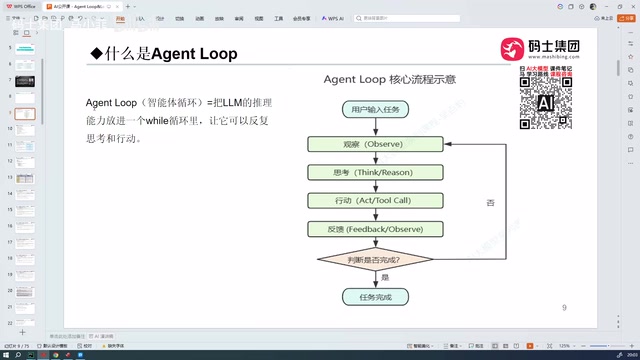
In one sentence: Loop Engineering is about letting AI continuously execute, evaluate, and correct within a controlled loop until a goal is achieved. This loop encompasses task decomposition, execution, result validation, error correction, and more — forming a complete closed-loop feedback system.
The Engineering Principles of Closed-Loop Feedback: The "closed loop" concept in Loop Engineering draws from the feedback loop ideas in Cybernetics. In classical control systems, closed-loop control dynamically adjusts system behavior by continuously comparing the "desired state" with the "actual state" — rather than relying on a one-shot open-loop command. In AI development, this means that after each execution, the Agent compares the result against the target, generates an "error signal," and adjusts its next action strategy accordingly. The ReAct (Reasoning + Acting) framework and the Reflexion algorithm are representative technical approaches for implementing this closed-loop mechanism — the former interleaves reasoning and action, while the latter introduces a language-level self-reflection mechanism.
The Capability Leap Enabled by Closed-Loop Iteration
Traditional single-shot AI calls are limited by the quality ceiling of the model's one-time output — any error requires human intervention. Under the Loop Engineering framework, AI can:
- Self-detect errors: By validating execution results, proactively identify where things have deviated from the goal.
- Dynamically correct course: Re-plan or adjust execution strategies based on feedback, rather than waiting for human intervention.
- Progressively converge on the target: Continuously improve output quality through multiple iterations, without relying on a single perfect attempt.
This model is especially effective for complex task scenarios such as code generation, automated project deployment, and multi-step workflow orchestration — tasks that are inherently difficult to nail in one shot.
How Developers Should Reposition Themselves
For developers riding the AI wave, the most critical question isn't "should I learn Loop Engineering" — it's "where do I stand in this new paradigm?" Will you continue as a hands-on code executor, or transition to higher-level loop design and Agent orchestration?
Strategies for Enterprises and Individual Developers
From an enterprise development perspective, Loop Engineering may signal a restructuring of the developer role: from writing code to designing workflows and managing AI loops.
Industry Context for the Developer Role Transition: The shift from "code executor" to "loop orchestrator" shares structural similarities with several past paradigm shifts in software engineering history — from assembly language to high-level languages, from procedural to object-oriented programming, from monolithic architectures to microservices. Each leap raised engineers' level of abstraction, offloading repetitive work to automated toolchains. In the Loop Engineering context, the emerging role of "AI Orchestration Engineer" is being actively discussed in the industry. The core skills include: workflow topology design, defining inter-Agent communication protocols, setting loop termination conditions, and handling failure-mode fault tolerance — capabilities that carry far more strategic value than pure coding skills alone.
For individual developers, developing an early understanding of this methodology enables proactive career positioning and helps avoid being swept aside by the rapidly iterating technology wave.
Whether you're a beginner or a seasoned engineer, the most pragmatic attitude toward any emerging concept remains: first get clear on "what problem is it actually solving," then judge what value it can bring to your own work context. That's the right posture for navigating the continuous evolution of AI development paradigms.
Conclusion
As an emerging concept, Loop Engineering's long-term trajectory remains to be seen. It may never become the next disruptive technological symbol — but the idea it represents, "closed-loop autonomous AI iteration," is undeniably an important step toward the maturation of Agent development. For every AI developer, understanding the essential logic behind this paradigm is far more valuable than chasing the terminology itself.
Key Takeaways
Related articles
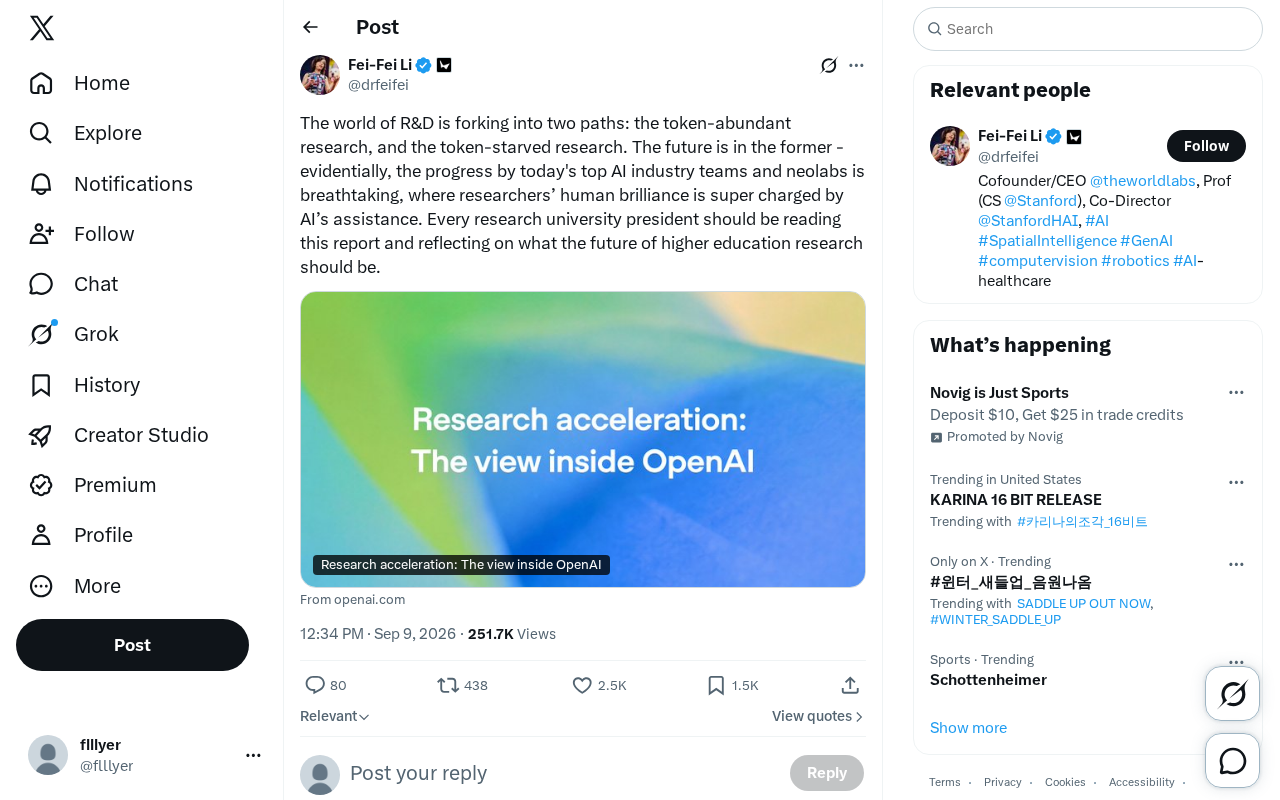
R&D Is Forking: The Coming Battle Between Token-Abundant and Token-Starved Research
R&D is splitting into token-abundant and token-starved research. Top AI labs are pulling ahead—here's what it means for universities and the future of science.
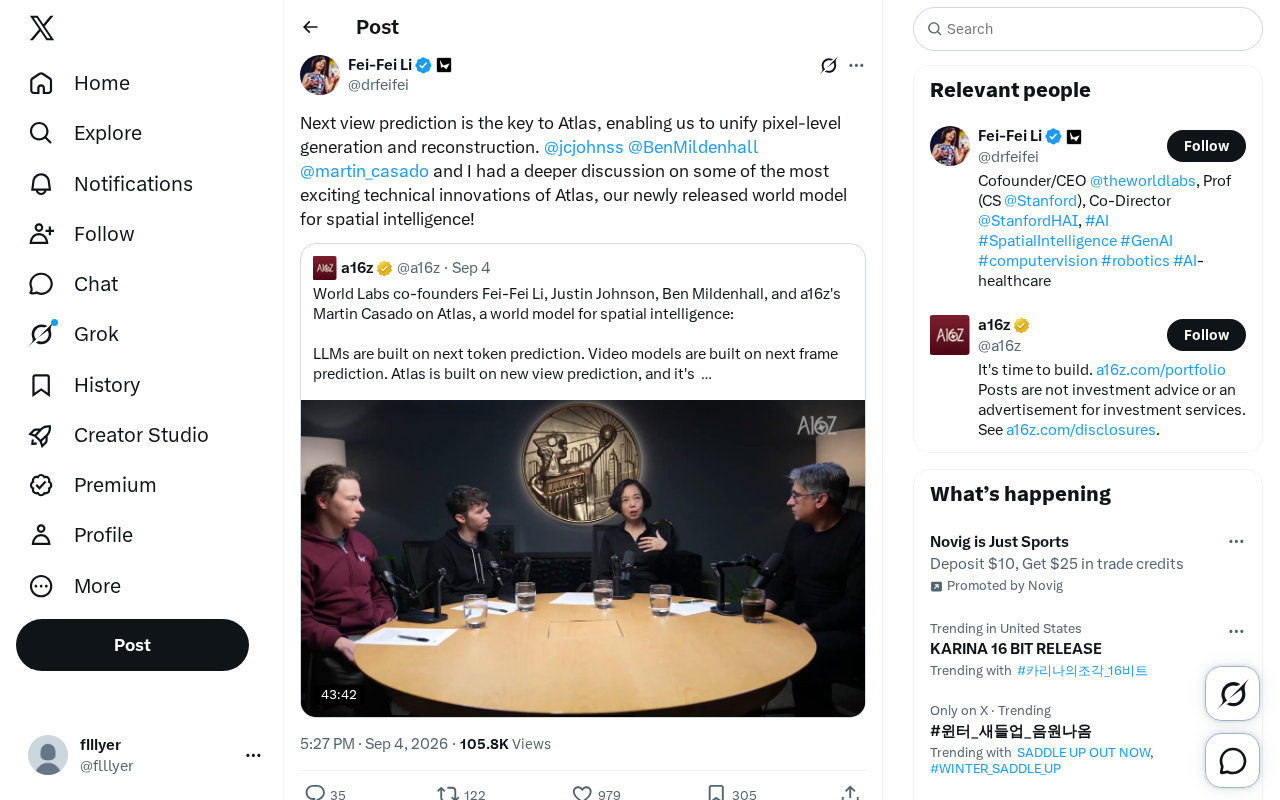
Atlas World Model Explained: How Next View Prediction Unifies Generation and Reconstruction
The Atlas world model uses Next View Prediction as its core to unify pixel-level generation and reconstruction, offering a new approach to spatial intelligence.
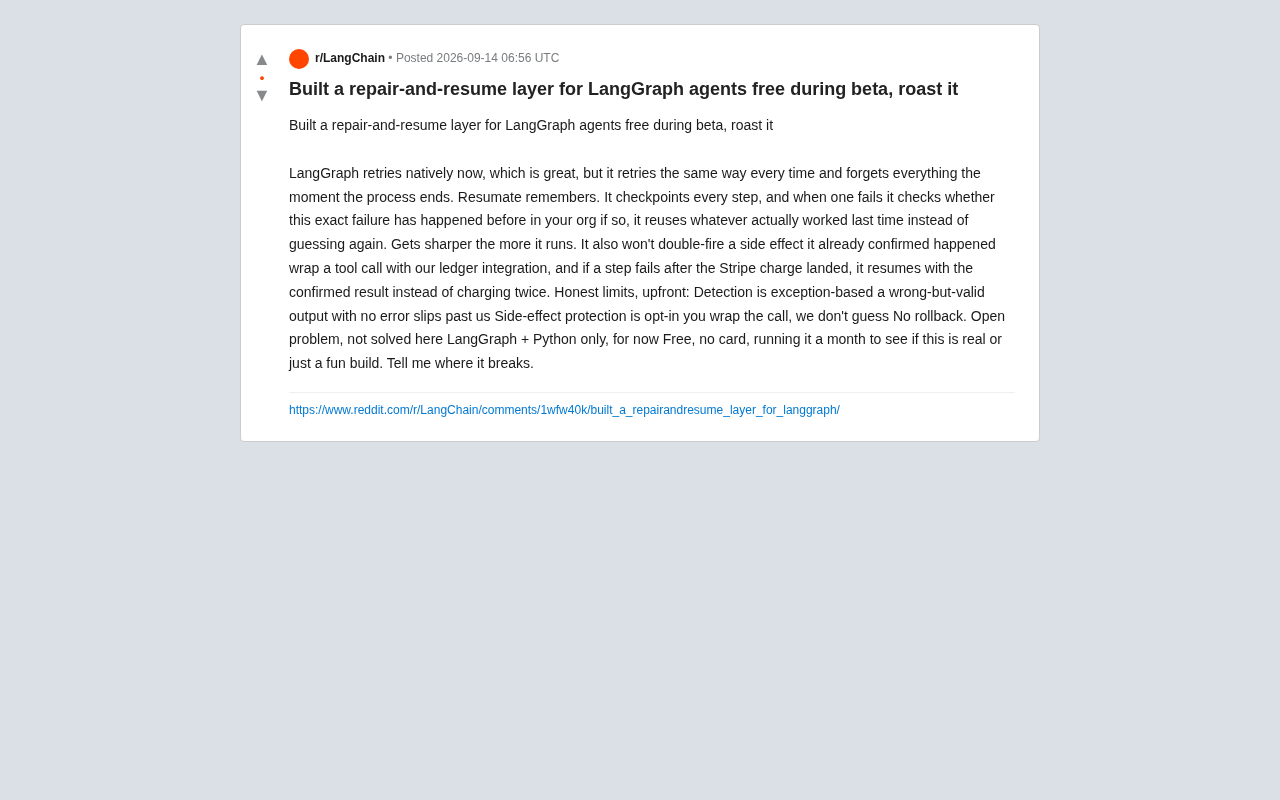
Resumate: A Deep Dive into the Repair-and-Resume Layer for LangGraph Agents
Resumate adds memory-aware checkpointing and idempotent side-effect protection to LangGraph agents, preventing issues like duplicate Stripe charges on retry.