LTX 2.3 Hands-On: How Efficient Is Local AI Video Generation on the RTX 5080?

LTX 2.3 on an RTX 5080 generates 8-second AI video clips in 2-3 minutes while running other apps.
A Reddit creator tested LTX 2.3 with ComfyUI on an RTX 5080, generating 8-second AI video clips in just 2-3 minutes while still running DaVinci Resolve. The article covers hardware specs, the ComfyUI workflow ecosystem, and a multi-tool creation pipeline for local AI video.
LTX 2.3: A New Option for Local AI Video Generation
As AI video generation technology evolves rapidly, more and more creators are turning their attention to open-source solutions that can be deployed locally. Recently, a Reddit creator shared his second experiment producing an AI music video using LTX 2.3 combined with ComfyUI, demonstrating how this workflow performs on consumer-grade hardware.
LTX is an open-source video generation model series developed by the Israeli AI company Lightricks. Compared with competitors like Stable Video Diffusion and CogVideoX, the core design philosophy of the LTX series is to strike a balance between generation quality and inference speed, with particular optimization for consumer GPUs. LTX 2.3 uses a Transformer-based diffusion architecture (DiT, Diffusion Transformer), which offers stronger temporal-consistency modeling capabilities than the traditional U-Net architecture. This is the technical foundation that allows it to produce relatively stable video clips even under limited VRAM.
The finished product of this experiment is an AI-generated music video set to the 1970 classic track "When the Revolution Comes" (performed by The Last Poets). The creator used ChatGPT to assist in generating images and prompts, completed the visual assets through an LTX 2.3 workflow in ComfyUI, and finally edited and composited everything in DaVinci Resolve.

Hardware Configuration and Real-World Generation Efficiency
The most noteworthy aspect of this experiment is how it performs on consumer-grade PC hardware. The creator's system configuration is as follows:
- CPU: Intel Core Ultra 9 285K
- GPU: MSI GeForce RTX 5080 16GB GAMING TRIO OC
- RAM: Corsair Dominator Titanium 64GB
The RTX 5080 features NVIDIA's latest-generation Blackwell GPU architecture. Compared with the previous-generation Ada Lovelace architecture, Blackwell offers significant improvements in Tensor Core density and FP8 precision computation, which is especially critical for AI inference tasks. The 16GB of GDDR7 VRAM sits in a marginally usable range for current mainstream video diffusion models—some high-resolution or long-duration models still run into VRAM overflow, whereas an optimized LTX 2.3 runs smoothly within this VRAM capacity, which is a key competitive advantage for the consumer market. In addition, the Blackwell architecture's native support for FP8 quantization further reduces inference latency.
This setup is not a professional AI workstation costing tens of thousands, but a high-end consumer gaming PC. According to the creator, generating an 8-second video clip takes an average of about 2 to 3 minutes, with the exact duration depending on the complexity of the workflow used.
Even more noteworthy is that during video generation, the machine can still smoothly run other software such as DaVinci Resolve. For content creators, this means AI video generation no longer monopolizes the entire machine—you can edit and color-grade while images render in the background, significantly boosting overall workflow efficiency.
The Combined Advantages of LTX 2.3 and ComfyUI Workflows
The LTX model series is known for being lightweight and fast, gradually making a name for itself in the open-source video generation space. Compared with solutions that require massive VRAM and long waits, LTX 2.3 can produce results quickly on the RTX 5080's 16GB of VRAM, effectively lowering the hardware barrier for local video generation.
As a node-based visual workflow tool, ComfyUI provides LTX 2.3 with tremendous flexibility. ComfyUI is built on the node graph paradigm: it abstracts each processing step—loading models, encoding prompts, denoising sampling, decoding output, and so on—into independently configurable nodes, with users building a complete inference pipeline by connecting nodes. This architecture is highly reusable; community creators can export their fine-tuned workflows in JSON format to share, and other users can import them to reproduce the exact same generation logic. In this experiment, the creator used a custom LTX 2.3 workflow called Eros10, a direct manifestation of this ecosystem mechanism, and a reflection of how the community has developed a workflow-sharing system tailored to different styles and purposes.
A Multi-Tool Collaborative AI Creation Pipeline
This experiment showcases a typical multi-tool collaborative creation pipeline:
- ChatGPT assists in generating image descriptions and prompts
- ComfyUI + LTX 2.3 turns prompts and reference images into video clips
- DaVinci Resolve handles final editing and post-production compositing
The combination of "AI-assisted ideation + AI generation + traditional post-production" is becoming the standard workflow for more and more independent creators. It leverages AI's advantages in efficiency while preserving the creator's control over artistic expression and final output quality.
The Current State and Limitations of Local AI Video Generation
The value of these community experiments lies in providing real-world usage data that is free from vendor marketing. A generation speed of 2 to 3 minutes for an 8-second video, combined with the ability to run other programs simultaneously, shows that local AI video generation is transitioning from "usable" to "practical."
Of course, there are still clear limitations at this stage. The creator admits that the finished product contains detail flaws that need post-production fixing, and the 8-second single-clip length means producing a complete music video requires stitching together a large number of assets. The consistency, controllability, and duration of video generation remain the core challenges the entire industry continues to tackle.
The so-called "consistency problem" manifests on a technical level across three dimensions: first, cross-frame appearance consistency of characters and objects—whether the same person's facial features remain stable across different shots; second, temporal motion consistency—whether object movement trajectories follow physical laws, avoiding flickering and jitter; and third, style consistency—whether multiple independently generated clips can be seamlessly stitched together in visual style. Current mainstream approaches in the industry include reference-image-based ControlNet constraints, IP-Adapter identity feature embedding, and training dedicated LoRA fine-tuning models. However, these remain unsolved challenges for long videos and complex scenes.
Conclusion
This personal experiment with LTX 2.3 representatively demonstrates the current capability boundaries of open-source local AI video tools. On a high-end consumer PC, a creator can already produce AI visual assets for a music video at an acceptable speed and cost.
As open-source models like LTX continue to iterate, and as the ComfyUI community workflow ecosystem keeps growing, localized, low-cost AI video creation is becoming increasingly accessible. For independent creators looking to explore this direction, this solution is well worth serious attention.
Key Takeaways
Related articles
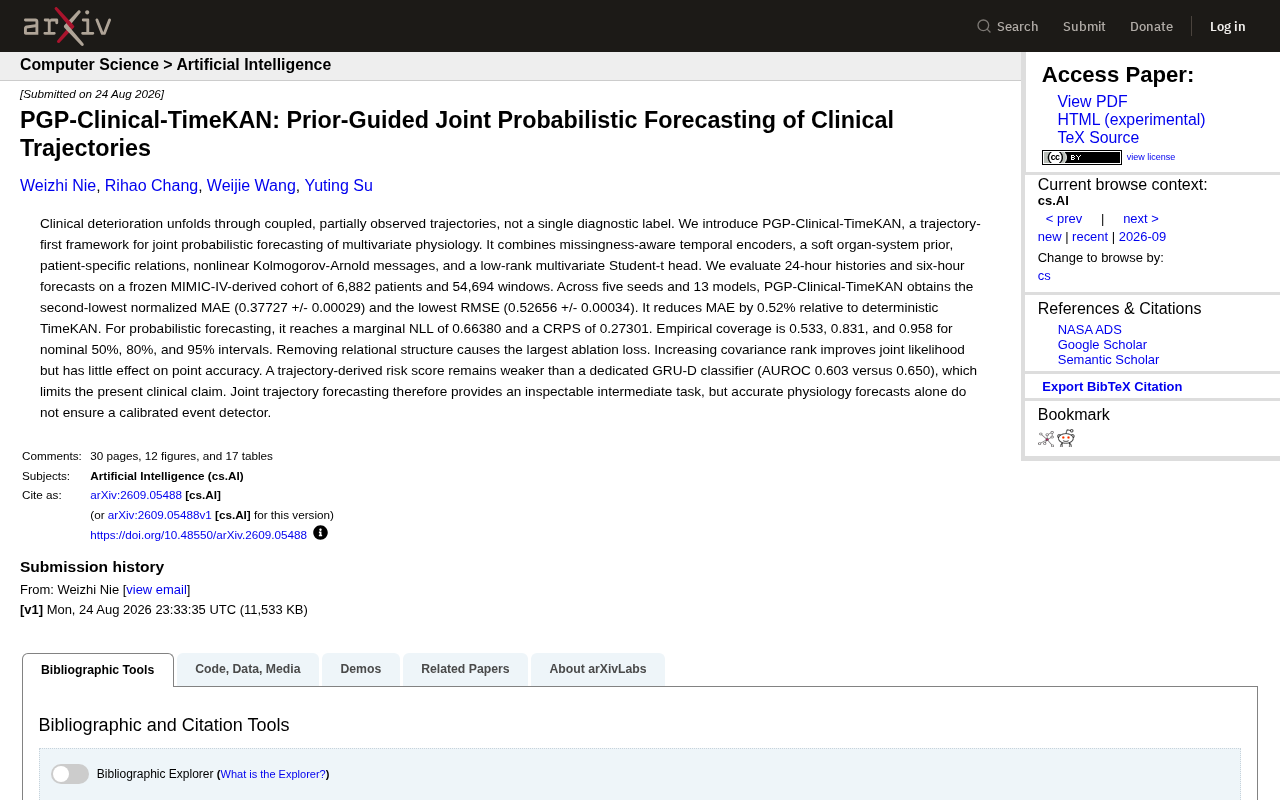
PGP-Clinical-TimeKAN: A Detailed Guide to the Multivariate Physiological Indicator Joint Prediction Framework
An in-depth analysis of the PGP-Clinical-TimeKAN framework for joint probabilistic prediction of multivariate physiological indicators, covering trajectory-first paradigm, KAN message passing, MIMIC-IV validation, and ablation studies.
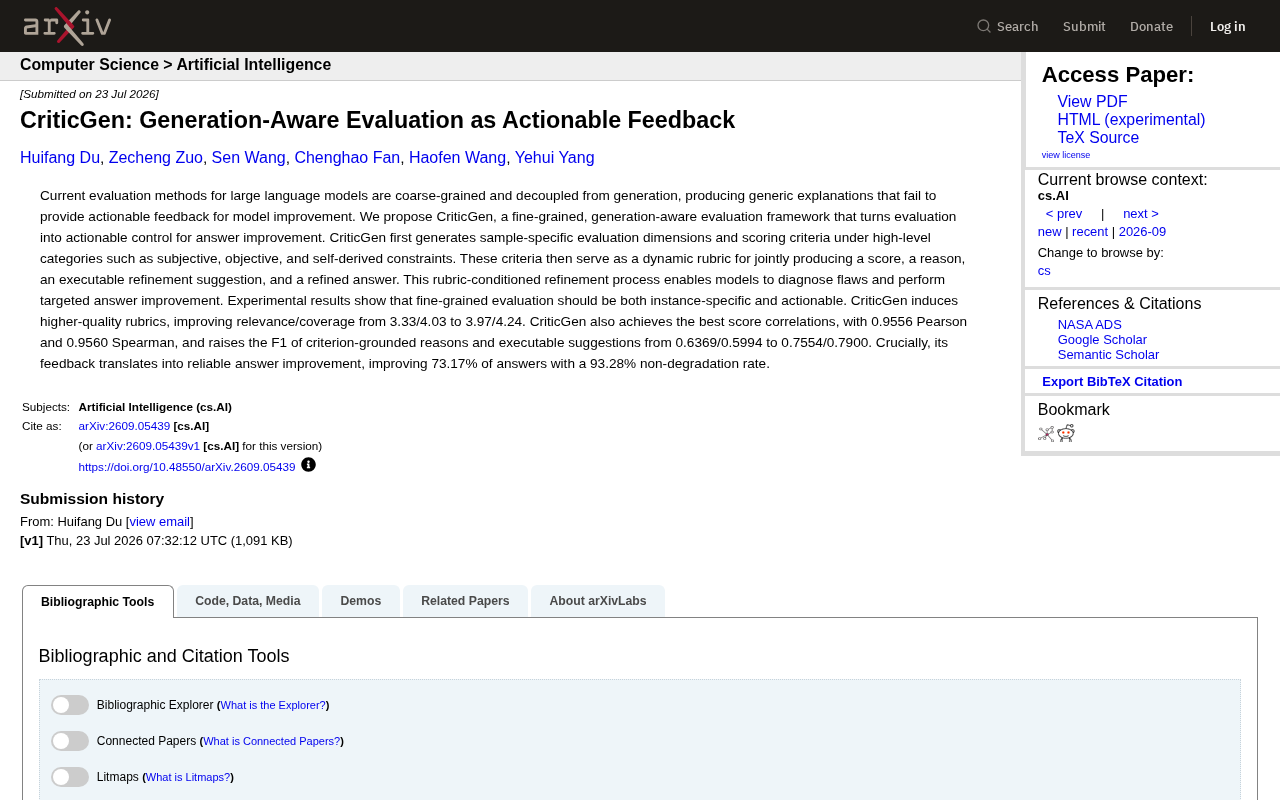
CriticGen: A New Framework That Transforms AI Evaluation into Actionable Improvement Feedback
CriticGen proposes a generation-aware evaluation framework that transforms AI assessment from passive scoring to an active optimization loop, achieving 73.17% answer improvement and 93.28% non-degradation rate.

Vercel AI SDK workflow-harness Update Analysis
Deep analysis of Vercel AI SDK workflow-harness 1.0.107 update: architecture design, engineering practices, and developer value for building reliable AI apps.