μ-Bench: A Benchmark for Multi-User Voice Agents in Shared Spaces
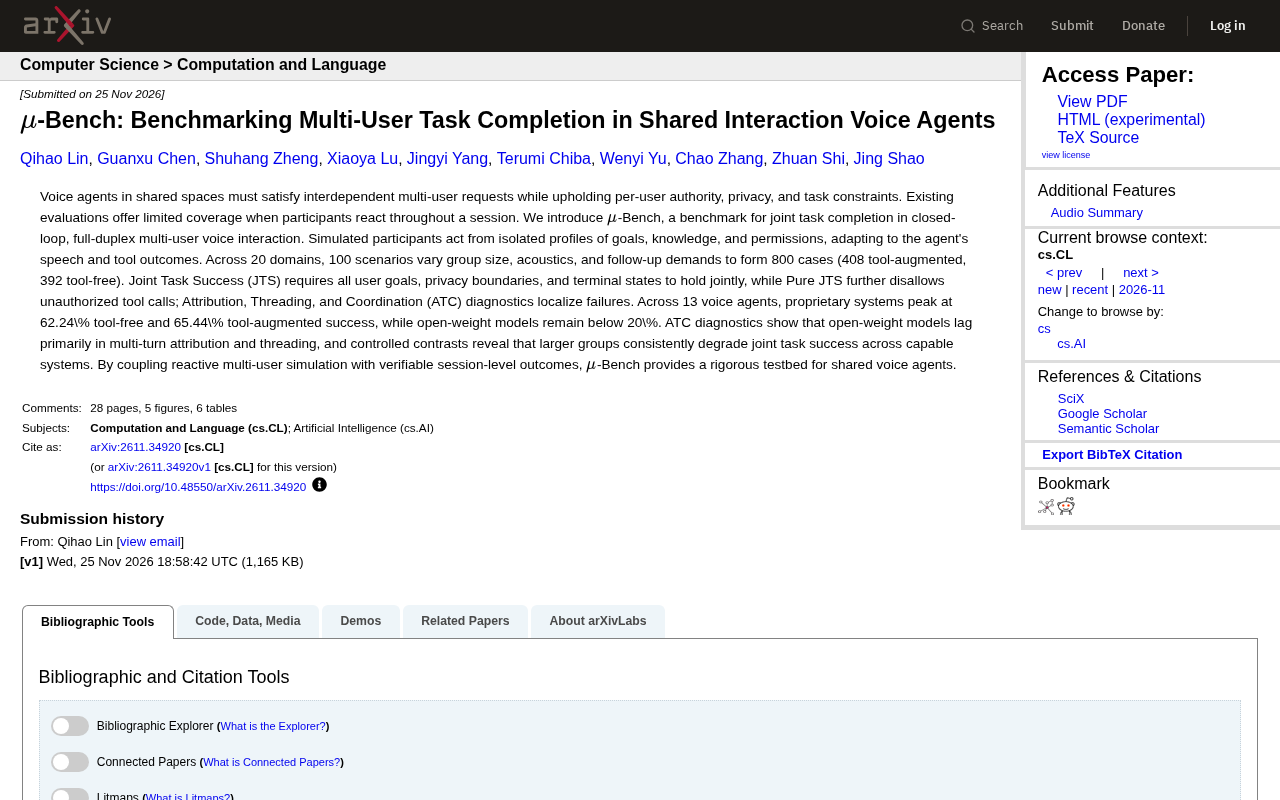
μ-Bench is the first closed-loop full-duplex multi-user voice interaction benchmark, revealing that proprietary systems lead while open-source models lag in multi-turn attribution.
μ-Bench is a systematic benchmark for scenarios in shared spaces where multiple users interact with a voice agent simultaneously. It covers 20 domains and 100 scenarios, generating 800 test cases (408 with tool calls). Evaluation uses Joint Task Success (JTS) and Pure JTS metrics, plus ATC diagnostics. Tests on 13 voice agents show proprietary systems achieve ~60% success in no-tool scenarios, while open-weight models fall below 20%, mainly due to multi-turn attribution and thread management weaknesses. Larger group sizes consistently reduce success rates, highlighting multi-user coordination as a common bottleneck.
Voice agents are moving from single-user assistants to shared spaces—family living rooms, car cockpits, and meeting rooms. In these scenarios, multiple users interact with the same agent simultaneously, each with different goals, knowledge, and permissions. How can we evaluate an agent's performance in such complex environments? The newly proposed $\mu$-Bench provides a systematic answer.
Why We Need a Multi-User Voice Benchmark
Most existing voice agent evaluations focus on single-user, single-turn, or simple multi-turn tasks, making it difficult to cover the challenges of real shared scenarios. When multiple participants react and influence each other in real time within a single session, the agent must not only understand each person's requests but also coordinate conflicts under privacy boundaries and permission constraints. The core contribution of $\mu$-Bench is to bring closed-loop, full-duplex multi-user voice interaction into a verifiable evaluation framework.
The simulated participants in this benchmark have their own independent goals, knowledge, and permission profiles, and they dynamically adjust their behavior based on the agent's speech and tool execution results. This reactive design makes the evaluation closer to the complexity of real conversations rather than static scripts.
Full-duplex interaction refers to a mode of communication where both parties can send and receive information simultaneously, rather than the traditional half-duplex turn-taking model. In voice agent scenarios, full-duplex means the agent can listen, process, and even respond while the user is speaking, much closer to the natural rhythm of human face-to-face conversation. This mode places higher demands on the system: it needs to process overlapping speech in real time, detect turn-taking, and correctly separate and attribute voice streams when multiple users speak at once. μ-Bench incorporates full-duplex interaction into its evaluation precisely to test whether agents can coordinate multiple voice inputs as smoothly as humans in real shared spaces.
Benchmark Design and Evaluation Scale
According to the paper, $\mu$-Bench covers 20 domains and includes 100 scenarios, generating 800 test cases by varying group size, acoustic conditions, and follow-up requests. Of these, 408 involve tool calls and 392 do not.
The evaluation metrics are divided into two levels: Joint Task Success (JTS) requires that all user goals, privacy boundaries, and termination states hold simultaneously; Pure JTS further prohibits unauthorized tool calls. In addition, Attribution, Threading, and Coordination (ATC) diagnostics are used to pinpoint failure points and help understand which capability dimensions the model falls short on.
Joint Task Success (JTS) is a session-level evaluation metric that requires all participants' goals to be met, all privacy boundaries to remain intact, and the session to end in the correct termination state within a single multi-user interaction for it to count as a success. Unlike single-user task success rates, JTS emphasizes the word "joint": failure of any single user's goal or any privacy leak causes the entire task to fail. Pure JTS tightens this further by requiring that the agent must not initiate any tool call without user authorization, even if that call would ultimately help complete the task. Together, these two metrics provide a comprehensive assessment of multi-user voice agents across three dimensions: task completion, privacy protection, and permission compliance.
Key Findings: Proprietary Systems Lead, Open-Source Models Lag Significantly
The paper tested 13 voice agents. Proprietary systems peaked at around 60% success in no-tool scenarios and slightly higher in tool scenarios; open-weight models generally performed below 20%, a significant gap.
ATC diagnostics further reveal that open-source models lag mainly in mid-to-long multi-turn attribution and thread management—that is, the ability to track "who said what, and which request belongs to which user." Controlled comparison experiments also found that as group size increases, the joint task success rate of capable systems continues to decline, indicating that multi-user coordination is a serious challenge for all current models.
These results point to a reality: the core bottleneck of shared voice agents is not isolated speech recognition or tool calling, but identity binding and task coordination in multi-user contexts.
Multi-turn attribution refers to the ability to correctly track which user each piece of information, request, or instruction comes from across multiple dialogue turns. In single-user scenarios, attribution is relatively simple because all input comes from the same person; but in multi-user shared spaces, the agent must continuously maintain "who said what" bindings and update them as the conversation progresses. Threading refers to managing different users' requests as independent but potentially interleaved conversation threads, ensuring that the context of each thread is not confused. These two capabilities are the main source of the gap between open-source models and proprietary systems, and they are also the most challenging cognitive tasks in multi-user voice interaction.
Implications for the Industry
$\mu$-Bench couples reactive multi-user simulation with verifiable session-level outcomes, providing a more rigorous testing platform for shared voice agents. For product teams, this means future evaluations of voice assistants cannot rely solely on single-user satisfaction; they must also examine privacy compliance, permission control, and multi-user conflict resolution. The open-source community, meanwhile, needs to focus on strengthening multi-turn attribution and thread management capabilities to close the gap with proprietary systems.
As voice interaction penetrates shared spaces such as homes, vehicles, and offices, benchmarks like this are expected to become an important yardstick for measuring the collaborative intelligence of agents.
One-line Summary
μ-Bench is the first closed-loop full-duplex multi-user voice interaction benchmark, revealing that proprietary systems lead while open-source models lag significantly in multi-turn attribution.
Paragraph Summary
μ-Bench is a systematic evaluation benchmark for scenarios in shared spaces (homes, vehicles, meeting rooms) where multiple users interact with a voice agent simultaneously. It simulates reactive participants with independent goals, knowledge, and permissions, covers 20 domains and 100 scenarios, and generates 800 test cases, 408 of which involve tool calls. Evaluation uses Joint Task Success (JTS) and Pure JTS metrics, assessing user goals, privacy boundaries, termination states, and tool call authorization, while Attribution, Threading, and Coordination (ATC) diagnostics pinpoint failure points. Tests on 13 voice agents show that proprietary systems achieve around 60% success in no-tool scenarios, while open-weight models generally fall below 20%, with the main weaknesses in multi-turn attribution and thread management. Increasing group size consistently reduces success rates for all systems, indicating that multi-user coordination is a common bottleneck.
Related articles

Stop Pasting AI Prompts Repeatedly: Optimize Your Claude Code Workflow with Skill Files
Repeatedly pasting AI prompts is inefficient and wastes tokens. Learn how to package workflows into Skill files that load on demand in Claude Code, Cursor, and Codex.
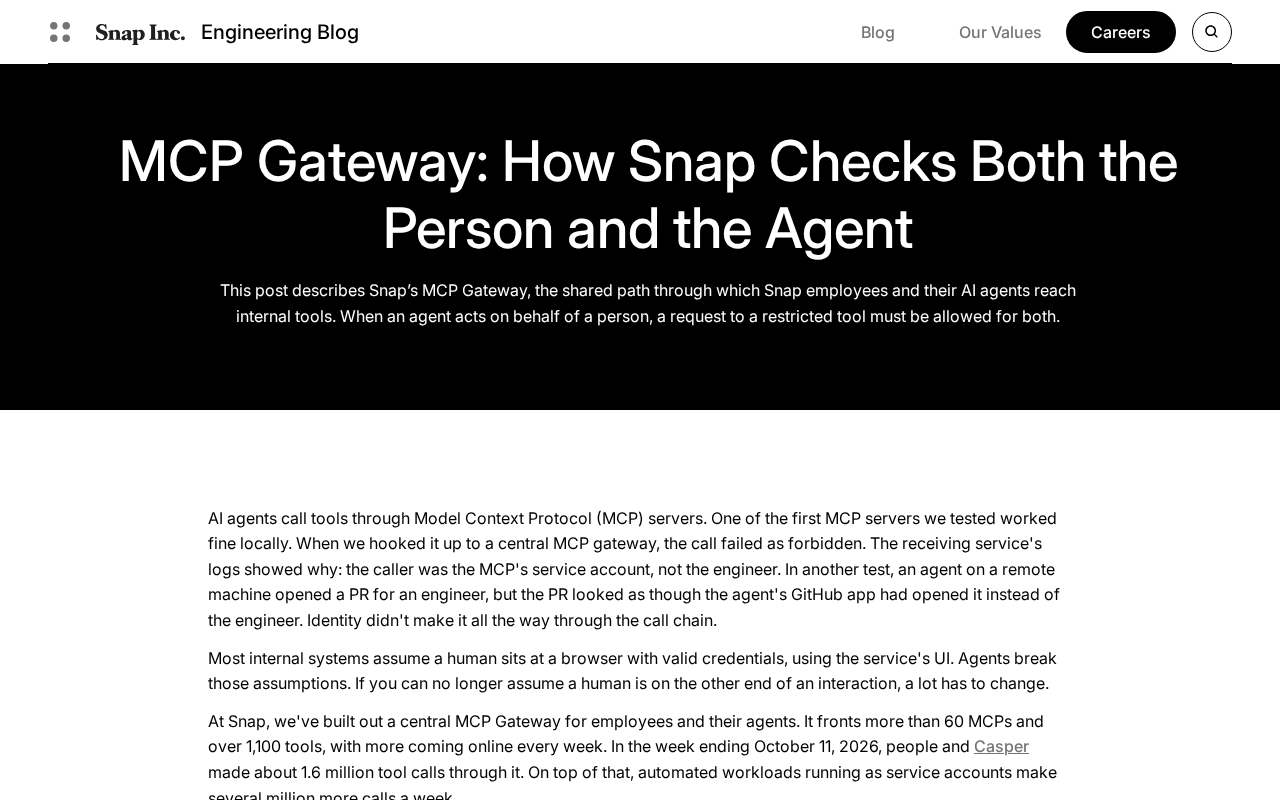
Snap's MCP Gateway: Verifying Both Human and Agent Identity
Snap's MCP Gateway verifies both user and agent identity in the agent call chain, solving the failure of traditional authentication models in LLM agent scenarios. This article analyzes the necessity of dual verification, the engineering advantages of centralizing at the gateway layer, and deployment challenges such as expressing delegation relationships and handling policy conflicts.
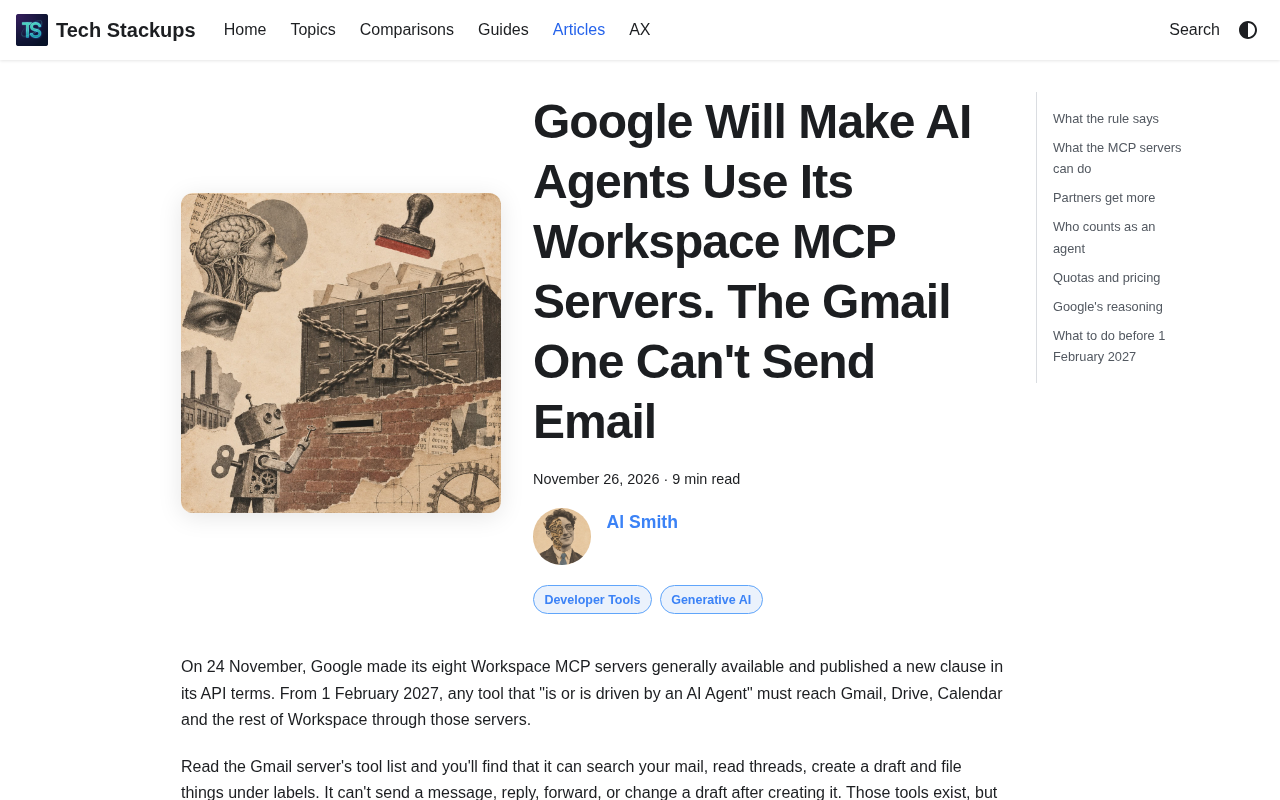
Google Forces AI Agents to Use Its Own MCP Servers, Yet the Gmail Version Can't Send Emails
Google pushes AI agents to use its MCP servers, but Gmail MCP can't send emails, sparking Hacker News debate on ecosystem control, security, and AI agent impact.