Machine-Certified Proof of the Riemann Hypothesis: A Milestone in AI-Assisted Proof and Its Unsolved Mysteries
A machine verified a proof of the Riemann Hypothesis, but humans do not yet understand it, sparking debate on proof and trust.
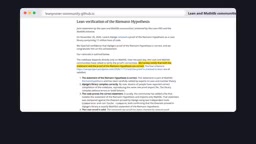
In 2026, Anthropic's Levent Alpöge claimed to have found a proof of the Riemann Hypothesis with Claude, presented as 170,000 lines of Lean code. It passed machine verification, but no human-readable paper exists. The Lean theorem prover and Mathlib community confirmed correctness, yet no one, including the author, can explain the logic. On the same day, a human proof of the Generalized Riemann Hypothesis by Alessandro Masuo was found problematic within eight hours by AI-assisted review. The event highlights the gap between machine certification and human understanding, and the publication and acceptance challenges under the Clay Mathematics Institute's million-dollar prize rules.
Introduction: When the Hardest Conjecture in Mathematics Meets Machine Proof
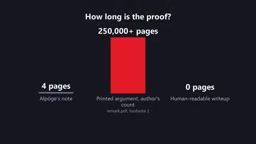
In 2026, the mathematics world was shaken by a piece of news: Levent Alpöge, a mathematician at Anthropic, claimed that, in collaboration with Claude, he had discovered a proof of the Riemann Hypothesis. However, unlike previous cases, there was no mountain of papers this time—only 170,000 lines of computer code and a four-page note. By Alpöge's own estimate, if printed on paper, it would exceed 250,000 pages. Even more surprising, the proof has already been machine-verified—not reviewed by humans, but checked line by line by the Lean theorem prover to ensure every logical step is airtight. But the problem is: to date, no human mathematician has been able to fully explain the proof. This raises a fundamental question: when a machine certifies a proof that humans do not yet understand, does it count as proven?
A Solid Step for Machine Verification
The Lean Theorem Prover: A Strict Inspector of Logic
Lean is a computer program used to verify mathematical proofs; it acts like a strict spell-checker, rejecting any logical leap that does not follow from the previous step. Alpöge's proof code was split into 14 downloadable parts and released to the Lean and Mathlib communities. Mathlib is the library of formalized mathematical knowledge in Lean. Two independent tools, Comparator and Conlecce, confirmed that the Riemann Hypothesis as stated in the code matches the definition in Mathlib. Subsequently, Lean's kernel and several checkers written in different languages (including Conlecce and Conron) verified the proof itself. The proof uses only three standard axioms—the basic rules of mathematics—without introducing any hidden assumptions.
Formal verification refers to using a computer program to translate a mathematical proof into a machine-checkable formal language and verify its logical correctness line by line. Unlike traditional peer review, formal verification does not depend on the understanding of human readers; instead, it uses strict syntax and type checking to ensure that every step of the derivation conforms to axioms and already-proven theorems. Lean is a representative tool in this field, built on dependent type theory, which represents mathematical propositions as types and proofs as terms of those types. If a proof passes the Lean kernel's check, it means that, under the given axiom system, the proposition holds. This method of verification is increasingly valued in the mathematics community because it can eliminate human error, but it has also sparked philosophical discussion about the relationship between "understanding" and "proof."
Independent Verification and Community Certification
Andrew Sutherland of MIT independently compiled the proof. He told Scientific American: "Honestly, the probability that there is anything suspicious here is essentially zero." Sutherland once said: "An AI that can prove the Riemann Hypothesis is not one I would want to meet." On November 21, the Lean and Mathlib communities issued a joint statement: "We hereby certify that both the statement and the proof of the Riemann Hypothesis are correct." This level of verification far exceeds that of an ordinary preprint—preprints are usually just posted online without any peer review.
Mathlib is the mathematics library for the Lean theorem prover, developed collaboratively by mathematicians and computer scientists worldwide, aiming to formalize almost all undergraduate- and graduate-level mathematics. It contains tens of thousands of definitions and theorems, covering a wide range from basic set theory to algebraic geometry and analysis. Mathlib not only provides a foundation for formal proofs but also unifies the way mathematical concepts are defined, ensuring compatibility between different proofs. In this event, Mathlib's role was crucial: it provided the formal definition of the Riemann Hypothesis, enabling the machine to confirm that the proposition proved by Alpöge's code matches the standard mathematical definition. The Mathlib community also independently reviewed the proof, and this community-driven verification model enhances the credibility of the result.
Scale and Limitations: The Boundaries of Machine Proof
Sutherland's page lists 175,000 compiled modules, nearly 1.5 million declarations, and a 7.7 GB compressed export file. The verification process requires about 100 GB of memory, and one checker ran for 28 minutes on 80 processor threads. This is by no means a task that a personal computer can easily complete. As of November 22, two Lean kernel runs and one end-to-end comparison were still in progress. Every completed check accepted the proof, but two older checkers exited because they could not read a certain part, while the new version passed.
What Exactly Was Proved?
What was proved is the Riemann Hypothesis, along with a generalized version for Dirichlet L-functions. Dirichlet L-functions are "close relatives" of the Riemann Hypothesis, equivalent to asking the same question in more rooms. Sutherland's page notes that other major classes of functions (such as Dedekind, Hecke, and automorphic) are not covered. Alpöge's note goes further in words than the code: he writes that the extended version "I expect will come over time." But that is only an expectation, not a result.
Machine Verification Is Not Human Understanding
Lean's Limitations and Warnings
Kevin Buzzard of Imperial College London wrote a guide eight days before the statement was released, warning: "This does not mean that any corresponding PDF also contains a correct proof." He listed real incidents: Lean's kernel once had a soundness bug that could let an incorrect proof pass, but the bug was fixed four hours after discovery. In a batch of 290 papers from OpenAI, about 38 had Lean code that did not even state the main theorem. In this event, both traps were checked and closed.
A soundness bug is a flaw in the kernel of a theorem prover that may cause an incorrect proof to be misjudged as correct. Such bugs are extremely rare, but once they appear, they undermine the reliability of the entire verification system. For example, Lean once discovered a kernel bug that allowed proving False (i.e., a contradiction) through improper use of certain features, thereby proving any proposition. The bug was fixed within four hours, but it reminds people that machine verification is not absolutely safe; its credibility depends on the quality of implementation and continuous auditing. In addition, the code of a formal proof may not state the theorem the researcher intended to prove; this "statement error" is another type of risk. Therefore, the community emphasizes independent checking of formal statements and cross-verification using multiple independent checkers to reduce the risk of a single point of failure.
The Missing PDF and the Role of Humans
There is no proof PDF here at all, only a four-page note. Alpöge's note says that writing out a detailed proof is "easy," and admits that he tried but "reached more than 250,000 pages." He also writes that Claude called it the "GRH book," and the beginning of Theorem 1 states that the real numbers are totally ordered. The first page of 250,000 pages says that numbers are ordered. Most crucially, Alpöge writes that he "knows very little" about automorphic forms on higher groups and admits that Claude played a leading role in part of the work. Therefore, he chose to present only the Lean code. The machine said "yes," but no one, including the author, has yet said "why."
The Rules and Timeline of the Million-Dollar Prize
The Clay Mathematics Institute's million-dollar prize has three rules: the solution must be published in a "qualifying outlet" recognized by Clay; two years must pass after publication; and it requires general acceptance by mathematicians worldwide. Clay also says it does not accept direct submissions. So the clock has not even started. The most certified million dollars in mathematics is still at least two years away from a paper that does not yet exist.
The Second Story of the Same Day: The Fleeting Nature of a Human Proof
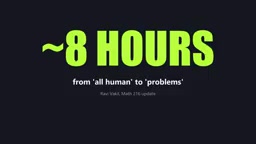
At 10:18 a.m. the same day, Ravi Vakil, president of the American Mathematical Society and a professor at Stanford University, posted a "hurried announcement": Stanford postdoc Alessandro Masuo had proposed a proof of the Generalized Riemann Hypothesis. Vakil's post said: "This was done entirely by humans, with no AI." The draft was titled "The Joy of Primes." Vakil had originally planned to announce it after a year of collaboration with Brian Conrad, but now it seemed best to release the current draft. According to The Decoder, the release was moved up because of Anthropic's announcement. About eight hours later, Vakil updated that several people had contacted him to report problems in the proposed proof, which were found with the assistance of different AI models. Thus, "entirely human, no AI" lasted only about eight hours. Then AI reviewed it. Vakil now makes no claim about the correctness of the proof strategy. Masuo told TechCrunch: "We are still here. We are very active. We are not going anywhere."
The Generalized Riemann Hypothesis (GRH) is a generalization of the Riemann Hypothesis to Dirichlet L-functions and more general L-functions. The classical Riemann Hypothesis asserts that all nontrivial zeros of the Riemann zeta function lie on the critical line Re(s)=1/2, while GRH conjectures that the nontrivial zeros of all Dirichlet L-functions also lie on that critical line. GRH has wide applications in number theory, for example in improving error terms in the distribution of primes and providing theoretical guarantees for many algorithms. Alpöge's formal proof covers one version of GRH, but it does not cover broader cases such as Dedekind, Hecke, and automorphic forms. Therefore, even if machine verification passes, its mathematical significance remains limited to specific types of L-functions.
The Chain of Trust: Who Is Verifying for Us?
The Lean and Mathlib communities say that verification did occur. Over the past day, dozens of people reported obtaining the same raw proof export file. Their checks ran on what is called a "lazy export"—a copy that cannot run any hidden code, like reading a letter through glass, where the contents cannot touch you. Sutherland's page also mentions that the checks used "clawed code." So AI helped write the proof, and AI tools helped run the checks. Humans still signed off. This required real time and hardware, with 100 GB of memory per check. Their statement says they look forward to mathematicians explaining these new ideas. In other words, that part is not done yet, and it is not their job.
The Company's Role and Public Perception
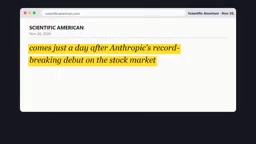
Scientific American noted that the announcement came just one day after Anthropic's record-breaking stock market debut. Alpöge directly addressed this: "The exact timing is terrible," he wrote. He said it all happened late on a Sunday night, and he messaged Anthropic CEO Dario Amodei to ask about announcing it. He also wrote: "There is an obvious cynical view about the timing, but it is wrong." Anthropic did not immediately reply to AFP, and Scientific American reported that there was no official comment. The biggest mathematics headline carried its name, while mathematicians did all the talking.
Conclusion: Proof or Certification?
As of November 22, there is one machine-checked formal proof of the Riemann Hypothesis, and several checks are still running. But there is not a single page of a paper that humans can follow or refute. The human competitor, by contrast, received problem reports from AI-assisted readers in about eight hours. That is the strange shape of this week: a machine vouched for one proof, and machines poked holes in another. What happens a month from now depends on three things: Will Sutherland's final check complete cleanly? Will Alpöge release the first readable version he promised "within the next few months"? Will Anthropic say anything? A year from now, the question will be publication. If it appears in a qualifying outlet, the two-year clock starts. Otherwise, the million dollars stays where it is, no matter how many machines agree.
One-line Summary
A machine verified a proof of the Riemann Hypothesis, but humans do not yet understand it, sparking discussion about the nature of proof and trust.
Paragraph Summary
In 2026, Anthropic's Levent Alpöge claimed to have discovered a proof of the Riemann Hypothesis in collaboration with Claude, but the proof was presented as 170,000 lines of Lean code. It passed machine verification, yet there is no human-readable paper. The Lean theorem prover and the Mathlib community confirmed the correctness of the proof, but no one, including the author, can explain its logic. On the same day, human mathematician Alessandro Masuo's proof of the Generalized Riemann Hypothesis was found to have problems within eight hours by AI-assisted review. The event highlights the gap between machine certification and human understanding, as well as the publication and acceptance challenges faced by formal proofs under the Clay Mathematics Institute's million-dollar prize rules.
Related articles

ChatGPT Plus Subscription Pitfall Guide: Go/Plus/Pro Tier Comparison and Quick Activation
A complete ChatGPT Plus subscription guide based on a Bilibili tutorial: from registering an account, comparing Go/Plus/Pro tiers, to the practical steps for quickly completing your subscription.

GPT-6.2 Sol/Astra Released! A Step-by-Step ChatGPT Plus Subscription Guide and Tier Comparison
GPT-6.2 Sol/Astra is out—here's a ChatGPT Plus subscription guide: register an account, compare Go/Plus/Pro tiers, and subscribe in a minute.

Comparing Three Channels for Subscribing to GPT Plus in China: Is Website Top-Up the Easiest?
How to subscribe to GPT Plus in China? This article compares website top-up, credit card, and mobile top-up channels—process, cost, and risk—with steps and tips to help you choose wisely.