MAGI-2: A Deep Dive into Sand AI's 480B Cinematic Video Generation Model
Sand AI releases MAGI-2, a 480B-parameter model generating 30-second 1080p videos with native audio, multi-reference support, and shot scheduling.
Sand AI launched MAGI-2 on Product Hunt, a video generation model with 480B parameters that produces up to 30-second 1080p videos with native synchronized audio. Its differentiation lies in control: it supports up to 20 image, video, and audio references to constrain consistency of characters, scenes, styles, and sound; allows direct specification of shot transitions and timeline events; and enables local editing of existing videos, merging generation with editing scheduling. The product is available through both the Sand AI platform and API, serving creators and developers alike. It received 76 votes on Product Hunt, ranking 10th, positioning it toward professional creative workflows rather than a buzz-driven product, with actual output quality still needing more case validation.
The competition in video generation is shifting from "how many seconds can it produce" to "can it control the picture like a director." MAGI-2, launched by Sand AI on Product Hunt, pushes the parameter scale to 480B and claims it can generate 1080p videos up to 30 seconds long with native synchronized audio. This combination is uncommon among current AI video products and is worth examining to see what problems it actually solves.
480B Parameters and 30-Second 1080p: Control Brought by Scale
MAGI-2 is Sand AI's flagship video generation model. Its official positioning is clear: aimed at creators who need more control, serving cinematic AI video production. A 480B parameter scale means the model has more capacity to understand complex instructions and maintain long-sequence consistency. A 30-second duration is a practical threshold for narrative content—shorter than that, it's hard to develop cinematic language; and 1080p ensures the final output is usable on regular screens.
What truly sets MAGI-2 apart from most competitors is native synchronized audio. Most video models remain at the silent-picture stage, requiring audio to be added separately in post-production. MAGI-2 makes sound part of generation, eliminating the audio-video alignment process, which is highly valuable for rapid validation of short films, ads, and concept pieces.
The Relationship Between Parameter Scale and Video Generation Capability
In generative models, parameter count is often viewed as a rough proxy for model capacity and learning ability. For video generation, the significance of parameter scale goes beyond visual fidelity—it's more about whether the model can maintain semantic and appearance consistency across multiple frames. Video is essentially high-dimensional temporal data, and the model needs to model both spatial details and temporal evolution simultaneously, which consumes more capacity than single-image generation. A larger parameter count gives the model a chance to remember longer-span context, thereby reducing common issues in long videos such as identity drift, object deformation, and scene jumps. However, parameter scale is not the only determining factor; the quality and duration coverage of training data, as well as architecture design (such as how spatiotemporal attention is organized), are equally critical. Therefore, 480B should be understood as one of the necessary conditions for "having greater capacity to carry long-sequence consistency," not a sufficient condition.
The Technical Meaning of Native Synchronized Audio
Native synchronized audio means that audio and video are jointly produced in the same generation process, rather than first generating silent video and then separately dubbing or aligning audio and video. This requires the model to have cross-modal joint modeling capability, able to infer and generate matching sound events based on visual content (such as character lip movements, object collisions, and environmental atmosphere). Compared with post-production dubbing, joint generation eliminates the manual alignment step and more easily ensures consistency between sound and picture on the timeline. But the difficulty lies in the large difference in sampling rates and temporal granularity between audio and video; joint modeling places higher demands on architecture and data pairing. For creators, the practical value of this capability lies in shortening the cycle from concept to viewable sample.
Multimodal References: Up to 20 Assets Jointly Constraining Generation
MAGI-2 supports up to 20 image, video, and audio references to constrain characters, scenes, styles, and sound. This design directly targets the most challenging consistency problem in video generation: characters "changing faces" between shots and scene style drift. By introducing multiple reference assets, creators can lock down character appearance, environmental tone, and sound texture, allowing the model to maintain continuity during generation.
For serialized content, this means establishing a reusable set of visual and auditory assets, rather than re-rolling the dice with each generation. The upper limit of 20 references also indicates that the model has sufficient fusion capability when handling multi-condition inputs.
Sources of the Consistency Problem
The root of the consistency challenge in video generation lies in the lack of global constraints when the model generates frame by frame or segment by segment. The same character may show changes in facial features and clothing details across different shots, and scene lighting and color tone may drift between segments. The idea of multiple reference assets is to input these attributes that need to be fixed as explicit conditions, so that the generation process is always anchored to the given visual and auditory features. Raising the reference limit to 20 means the model needs to handle multi-condition fusion and avoid conflicts between different references. This usually involves the design of condition encoding and attention mechanisms, enabling the model to dynamically select the reference information most relevant to the current shot during generation. For serialized content, reusable reference assets are equivalent to establishing a "setting bible" for the model, reducing the uncertainty of each generation.
Shot and Timeline-Level Editing: From "Generating a Clip" to "Directing a Scene"
MAGI-2 allows direct specification of shot transitions and timeline events, and can also edit specific parts of existing videos. These two points push the product one step from a "generation tool" toward an "editing tool." In traditional workflows, generation and editing are separate: first produce assets, then splice them in editing software. MAGI-2 brings shot scheduling into the generation stage, allowing creators to arrange the transition rhythm of multiple shots in a single generation.
Local editing capability is equally critical. If a certain segment of the final output is unsatisfactory, there's no need to regenerate the whole thing—just modify the local part. This greatly reduces trial-and-error costs and makes iteration closer to the modification logic of traditional film and television post-production.
Differences Between Timeline-Level Editing and Traditional Editing
In traditional film and television workflows, generation or shooting and editing are two separate stages, with editing software responsible for organizing assets along the timeline. Timeline-level editing moves this layer of control forward to the generation stage: creators can describe shot order, transition timing, and event nodes in the generation request, and the model directly produces video with an editing structure. Compared with generating segment by segment and then splicing, this reduces the risk of discontinuity at segment junctions. Local editing draws on the idea of image inpainting, limiting the editing scope to a time window and spatial region, regenerating only that part while keeping the remaining frames unchanged. The technical difficulty lies in maintaining temporal coherence between the edited region and surrounding frames, avoiding flicker or jumps. Such capabilities make iteration closer to the working style of post-production modification, rather than starting over each time.
Dual Channels: Platform and API for Creators and Developers
MAGI-2 is available through the Sand AI platform and API. The platform serves users who create directly, while the API makes it easy for developers and teams to embed video generation capabilities into their own toolchains or products. This dual-channel strategy is becoming increasingly common among video model products, covering both individual creators and enterprise-level integration needs.
On Product Hunt, MAGI-2 received 76 votes and 2 comments, ranking 10th. This level of attention isn't explosive, but combined with its positioning—a control-oriented tool for professional creative workflows—it suggests it leans more toward practical scenarios than a buzz-driven product.
Who This Kind of Model Is For
MAGI-2's capability combination points to several clear user groups: advertising and short film teams that need to quickly produce concept pieces with sound; serial content creators who need to maintain character and style consistency; and developers who want to integrate video generation into their own workflows. The 480B scale, 30-second duration, native audio, and the upper limit of 20 reference assets together constitute its differentiation in cinematic video generation. As for the shot stability and audio quality of actual final outputs, more real-world cases are needed to verify.
Related articles
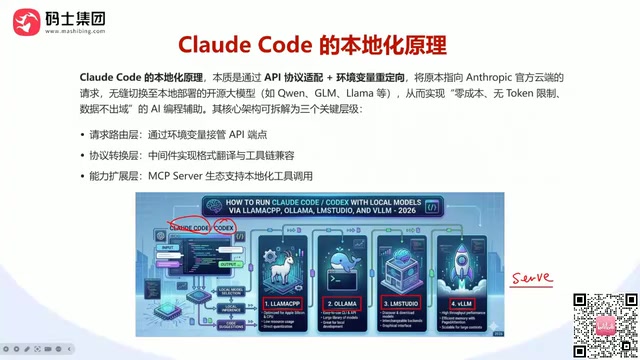
Connecting Claude Code to Local Models: A Four-Layer Architecture Breakdown and GPU Cloud Deployment Guide
Explaining Claude Code's four-layer architecture for connecting to local models: environment variable API endpoint redirection, inference engine service wrapping, protocol conversion, and the MCP tool ecosystem, plus GPU cloud deployment paths and Ollama selection considerations.

How to Learn AI Agents? A Roadmap That Cuts Your Learning Load in Half
Confused by the flood of Agent concepts? A Bilibili tutorial offers a three-step roadmap: build a knowledge map to cut learning load in half, drive learning with real projects, and calculate ROI—plus three questions to ask about any new concept, helping application developers escape tech anxiety.
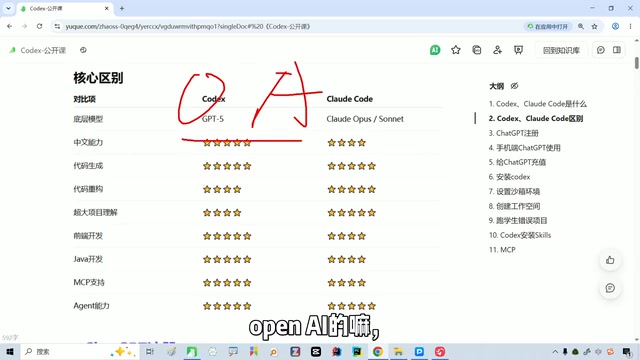
Codex Zero-Basics Hands-On: Local Sandbox and MCP Ecosystem Explained
Bilibili tutorial on zero-basics Codex AI programming: Codex vs Claude Code, ChatGPT registration and mobile setup, local sandbox, Spring MVC debugging, Skills for PPTs, and MCP with Amap—ideal for non-programmers.