MAI Code 2 and Code 2 Flash: New Developments in AI Coding Tools

Speculating on the positioning, capabilities, and developer ecosystem impact of MAI Code 2 and Code 2 Flash based on limited public information.
Based on limited discussion on Hacker News about "MAI Code 2 and Code 2 Flash" (48 points, 13 comments), this article combines naming logic and community direction to make reasonable speculations about two AI coding assistants. As a second-generation product, MAI Code 2 may focus on improvements in code generation accuracy, context understanding length, and IDE integration; Code 2 Flash may be a lightweight version focused on fast response and low resource usage, aimed at education, small projects, or rapid prototyping. The article analyzes community reaction and the competitive landscape, noting intensifying competition in the AI coding assistant space, and suggests developers comprehensively evaluate integration capabilities, privacy and security, and actual coding performance, and try tools first in non-critical projects. Since official technical details have not yet been disclosed, all analysis is speculative.
Introduction: A New Contender Enters the AI Coding Tool Race
Recently, a discussion on Hacker News about "MAI Code 2 and Code 2 Flash" has drawn attention. Although the original information only includes a title and engagement data (48 points, 13 comments), the naming logic and the direction of community discussion offer a glimpse into a new round of competition unfolding in the AI coding assistant space. Based on currently available public information, this article offers reasonable speculation and analysis of these two products and explores their potential impact on the developer ecosystem.
MAI Code 2: Positioning and Possible Capability Upgrades
Judging by the name, "MAI Code 2" is clearly the second-generation product of some AI coding assistant. The number "2" implies an iteration on the first-generation product, typically meaning enhancements in code generation accuracy, context understanding length, or integrated development environment (IDE) support.
In Hacker News discussions, community members tend to focus on the actual coding performance of such tools—for example, their ability to understand complex codebases, the coherence of multi-file editing, and the practicality of debugging suggestions. Although official technical details are currently lacking, it is reasonable to infer that MAI Code 2 may optimize in the following areas: more precise code completion, more natural conversational programming interaction, and broader coverage of mainstream programming languages and frameworks.
For developers, iteration on such tools means potential improvements in daily coding efficiency. At the same time, however, it is important to note that AI-generated code still requires human review, especially in security-sensitive or high-reliability scenarios.
Context window length is one of the key metrics for measuring the capability of an AI coding assistant. It refers to the number of tokens a model can process simultaneously in a single inference pass, usually measured in thousands (K) or millions (M). For programming scenarios, a longer context window means the tool can "see" more code files, function definitions, and comments at once, thereby maintaining cross-file logical consistency when generating suggestions. For example, when a developer modifies an interface referenced by multiple modules, a long-context model can more accurately identify all call sites and provide matching modification suggestions. The context windows of current mainstream AI coding tools have expanded from the early 4K–8K range to 128K or even 1M token levels, which directly determines the practical upper limit of a tool's ability to handle large codebases.
Code 2 Flash: The Possibility of a Lightweight Version
In the name "Code 2 Flash," the word "Flash" in tech products usually refers to a lightweight, fast, or low-latency version. This may be a streamlined or mobile-adapted version of MAI Code 2, focused on fast response and low resource usage.
In the AI coding tool space, lightweight products are often aimed at educational scenarios, small projects, or rapid prototyping. They may sacrifice some advanced features (such as deep codebase indexing) in exchange for shorter startup times and lower computational costs. If Code 2 Flash is indeed positioned this way, it will help lower the barrier to using AI coding assistance and attract more beginners and independent developers.
However, a lightweight version may also compromise on the complexity and accuracy of code generation. In community discussions, some users may worry whether the "Flash" version is sufficient for the demands of real production environments. This kind of trade-off is common in product design, and ultimately depends on the actual needs of the target user group.
In the context of AI coding tools, "lightweight versions" are typically implemented through model distillation or quantization techniques. Distillation refers to training a small "student model" using the outputs of a large "teacher model" so that it approaches the large model's performance on specific tasks while greatly reducing parameter count and computational requirements; quantization converts model weights from high-precision floating-point numbers (such as FP32) to lower-precision formats (such as INT8) to reduce memory usage and inference latency. These two techniques enable lightweight versions to run on local devices or low-spec environments, but at the cost of potentially lower accuracy when handling complex, multi-step programming tasks. Therefore, lightweight products are often better suited to relatively simple scenarios such as code completion and syntax checking, rather than architecture-level code generation that requires deep reasoning.
Community Reaction and Competitive Landscape
As a technical community, Hacker News discussions often reflect developers' most direct feedback on new products. A score of 48 points and 13 comments indicate that the topic has received some attention but has not yet generated large-scale heated discussion. This may be because product information is limited, or because the community has become accustomed to AI coding tools.
From a competitive landscape perspective, the AI coding assistant market already includes multiple well-known players. The entry of MAI Code 2 and Code 2 Flash will further intensify competition in this space. For developers, the benefit of competition is more choices and faster feature iteration; at the same time, however, they need to carefully evaluate each tool's reliability, data privacy policy, and long-term maintenance commitments.
Hacker News's scoring mechanism deserves a brief explanation: a post's score is calculated from user upvotes minus certain weighting, while the number of comments reflects discussion depth. A score of 48 is moderately low on Hacker News—front-page popular posts usually exceed 200 points—and 48 points means the post entered the view of some users but did not generate broad resonance. The 13 comments indicate that discussion is still at an early stage and may lack substantive technical details or controversial viewpoints. This data helps objectively assess the topic's热度: it is not "ignored," but it is also far from "heated community discussion," which is consistent with the article's judgment that it "received some attention but has not yet generated large-scale heated discussion."
Practical Significance for Developers
Regardless of the final form of MAI Code 2 and Code 2 Flash, they both represent the trend of AI-assisted coding tools moving toward greater segmentation and ease of use. Developers can pay attention to the following points:
- Evaluate integration capabilities: Can the tool integrate seamlessly into existing workflows (such as VS Code, JetBrains, and other IDEs)?
- Focus on privacy and security: Will code be uploaded to the cloud? Are there enterprise-level data protection measures?
- Trial and feedback: Try it first in non-critical projects and provide feedback to the community based on actual experience.
IDE integration capability is one of the core dimensions for evaluating AI coding tools. Current mainstream integration methods include: VS Code's extension API, the JetBrains plugin system, and universal access via the Language Server Protocol (LSP). Good integration means not only that the tool can display suggestions in the editor, but also that it can coordinate with debuggers, version control, terminals, and other components. For example, can the tool synchronously update all references during refactoring? Can it provide modification suggestions directly in the code review interface? These details determine whether AI assistance is merely "icing on the cake" or "deeply integrated into the workflow." When evaluating, developers should prioritize tools that provide official plugins, support shortcut invocation, and can read project configuration files (such as package.json and pom.xml).
Conclusion
Public information about MAI Code 2 and Code 2 Flash is still limited, and the analysis in this article is based on reasonable speculation from naming conventions and the direction of community discussion. As more details are disclosed, we will be able to more accurately assess the actual value of these two products. Readers interested in AI coding tools can continue to follow subsequent discussions on Hacker News or updates from official channels.
Related articles

Zero-Code Replication of a $10,000 3D Website with Claude Code: A Six-Tool Breakdown
Bilibili creator Yomi used Claude Code plus five free tools to build a 3D product landing page quoted at $10,000 overseas—zero code. Breakdown of the six-tool division of labor, image-to-3D workflow, and the core collaboration method: "give AI a reference, not 'make it look better.'"
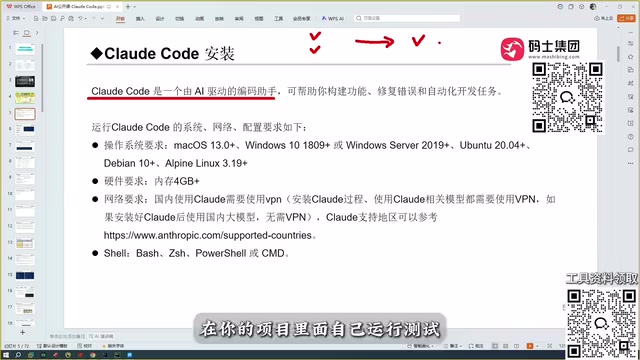
Claude Code in Practice: Install, Connect Models, Calculate Tokens, and Ship a Full-Stack Project with a Single Document
Based on a Bilibili public course demo, this covers Claude Code installation, model connection, token cost calculation, and the practical path of shipping a full-stack project with a single document, plus comparisons with Copilot, Cursor, Trae, and other coding assistants.
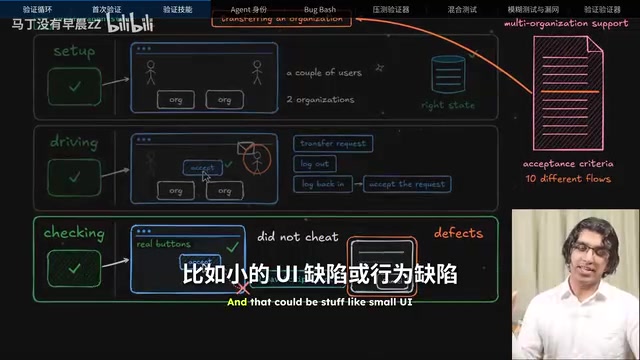
Who Accepts AI-Written Code? A 25-Minute Deep Dive into Verification Loops and the New Code Review Paradigm
After AI writes lots of code, how should Code Review verify it? This article breaks down the Claude Code team's verification loop framework: surface-level end-to-end verification, setup/drive/check three-stage skills, hybrid end-to-end testing and reliability checklists, and how to tighten the loop when issues slip through.