MailFlow Open Source Email Client: A Developer's Guide to Contribution and Value
MailFlow Open Source Email Client: A D…
MailFlow is recruiting developers for an open source, privacy-first email client worth evaluating carefully.
MailFlow is an open source email client project actively recruiting developers via Reddit. This article explores why email clients are still worth rebuilding from scratch, the real value of contributing to early-stage open source projects, and how developers should rationally assess the risks before getting involved.
A Fresh Take on Open Source Email Clients
Against a backdrop of heavily commercialized email tooling and growing privacy concerns, an open source email client project called MailFlow is actively recruiting developers through the Reddit community. Projects like this reflect a long-standing desire among developers for self-controlled, privacy-first, and extensible email tools.
While public information remains limited, its positioning as an open source email client signals an intent to carve out space in a niche long dominated by a handful of commercial products. Previous open source efforts in this space include Thunderbird, Nylas Mail (now discontinued), and its successor Mailspring. MailFlow's arrival breathes new life into this landscape.
Why Email Clients Are Still Worth Rebuilding
The Inherent Limitations of Commercial Products
Mainstream email clients routinely make significant compromises on privacy protection, data ownership, and feature customization. Many free products sustain their business models by analyzing email content — a practice that directly conflicts with rising privacy expectations. Research from 2018 even found that several popular email clients were leaking user email content to third-party marketing platforms. After GDPR took effect that same year, European regulators began scrutinizing email service providers' data handling compliance more rigorously, further fueling demand for self-hosted, auditable email tools among businesses and technical users alike. More critically, feature development in closed-source products is entirely vendor-driven, leaving users unable to deeply customize workflows to suit their own needs.
The Core Value of the Open Source Model
For developers, an open source email client means:
- Auditable code: You can personally verify that email data isn't being uploaded or misused;
- Self-hosting and private deployment: Meets data compliance requirements for enterprises and technical teams;
- High extensibility: Personalized workflows through plugins or direct source code modification;
- Community-driven iteration: Feature priorities are determined by real user needs, not commercial metrics.
The value of an open source email client in this context goes beyond technical transparency — it provides an independently verifiable trust mechanism. Users don't have to blindly trust vendor privacy promises; they can audit the code directly. These are precisely the qualities that allow projects like MailFlow to find their footing in a competitive space.
What This "Call to Action" Actually Means
The core message in MailFlow's Reddit post is a clear developer recruitment drive. This is a critical milestone in an open source project's lifecycle, typically occurring at one of three stages:
- Early bootstrapping: The author has built a foundational framework and wants to attract core contributors to push it forward;
- Accelerated iteration: The project has accumulated a user base and needs more hands for feature development and bug fixes;
- Community building: The goal is to transition from a "personal project" to a "community project" with a sustainable maintenance structure.
For any open source project, the ability to attract active contributors often determines whether it lives or dies. This is well-studied territory — the Linux Foundation and Harvard University's joint Census II report found that many open source projects critical to global infrastructure are maintained by just one or two developers. The "Bus Factor" — a common metric measuring how many core contributors need to leave before a project collapses — signals extreme fragility when it equals 1. History bears this out: Nylas Mail was forked into Mailspring after its parent company pivoted away from it; Atom was discontinued in 2022. Conversely, successful examples like VS Code and Thunderbird were built on healthy contributor ecosystems, backed by clear contribution guidelines, rigorous code review processes, and some form of community governance.
What Contributing to Open Source Actually Means
Personal Growth Value for Developers
Joining an early-stage open source project like MailFlow offers concrete benefits:
- Technical breadth: Email clients span IMAP/SMTP protocols, OAuth authentication, local caching, UI rendering, and more — an excellent scenario for developing full-stack skills;
- Portfolio credentials: Joining early and becoming a core contributor is a competitive advantage that's hard to replicate on a résumé;
- Product influence: You can directly shape a product's technical direction and user experience.
It's worth emphasizing that email protocols are a technically deep domain in their own right. SMTP, dating back to 1982, handles the sending and relaying of mail; IMAP, proposed in 1986, allows clients to manage email directly on the server and supports multi-device sync — making it far more suitable for modern multi-device use than the earlier POP3 protocol. For email client developers, correctly implementing these two protocols means wrestling with connection pool management, TLS encryption, MIME format parsing, attachment handling, folder synchronization, and a host of other complex engineering challenges. The technical depth here is not to be underestimated.
Long-Term Significance for the Open Source Ecosystem
Every healthy, functioning open source email client is a contribution to a decentralized, privacy-friendly internet. When users have more tool choices that don't depend on major tech platforms, the autonomy and resilience of the entire digital ecosystem grows stronger.
A Realistic Assessment: Risks of Early-Stage Projects
It's worth noting that the current information is still at the community call-to-action stage. Key details — maturity, code quality, technical architecture, and community activity — remain unclear. Developers looking to contribute or try it out should complete a basic evaluation first:
- Check the GitHub repository: Focus on star count, issue response times, commit frequency, and the number of contributors;
- Understand the tech stack choices: The frameworks a project uses directly affect performance and long-term maintenance costs. To illustrate common options: Electron is built on Chromium, has a mature ecosystem, but carries significant memory overhead (often hundreds of MB); Tauri is written in Rust and reuses the system's native WebView, keeping installers as small as a few MB with significantly better memory efficiency; native desktop technologies (such as Swift/AppKit or Qt) offer the best performance but come with the highest development costs. MailFlow's framework choice will substantially influence both its user experience ceiling and the barrier to entry for contributors;
- Verify the open source license: MIT is the most permissive, allowing commercial closed-source use and making enterprise adoption more likely; GPL uses a "copyleft" clause requiring derivative works to also be open source, helping prevent commercial privatization; AGPL goes further by requiring network service providers to open-source modified code as well, and is common in privacy-sensitive projects. For MailFlow, the license choice will directly shape the boundaries of community ecosystem and commercial partnership possibilities;
- Evaluate the roadmap: Does the author have a clear, actionable long-term plan?
Closing Thoughts
For now, MailFlow looks more like one of many "seed projects" in the open source community. Its ultimate trajectory depends on whether it can rally enough developer consensus and momentum. For developers who care about privacy and security, enjoy contributing to open source, or are looking for a meaningful project to sharpen their skills on, this kind of recruitment is worth taking seriously — the beauty of open source is that anyone can go from being a spectator to a genuine builder.
If you're interested in email protocols or desktop application development, head over to Reddit or the relevant code hosting platform to learn more. Maybe the first PR you submit will be the starting point of an open source tool's journey to maturity.
Key Takeaways
Related articles

Alibaba Launches Happy Shrimp: AI-Powered One-Click Complete Song Generation
Alibaba launches Happy Shrimp, an AI music generation tool that creates complete songs with lyrics, melody, arrangement, and vocals from natural language descriptions. In-depth analysis of its core features, differentiation from competitors like Suno, and industry impact.
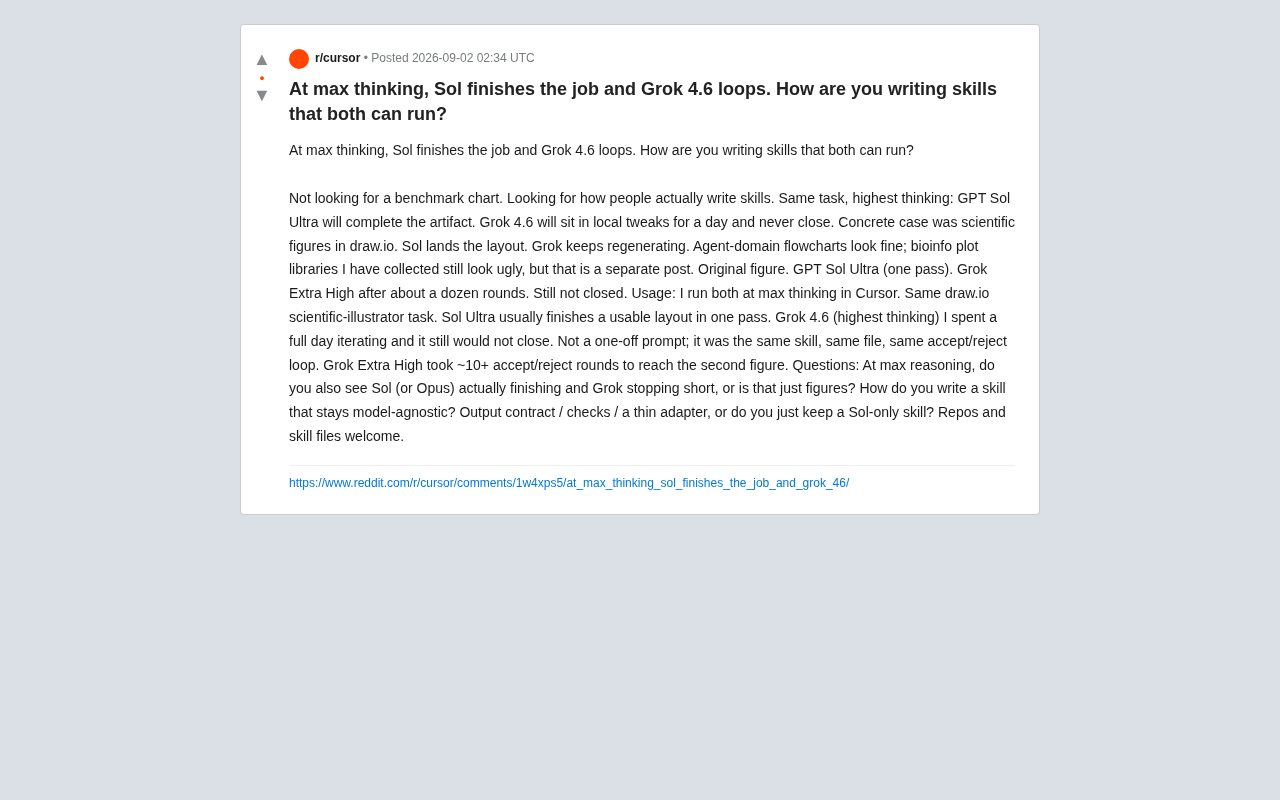
GPT Sol Ultra vs Grok 4.6: Real-World Task Completion Benchmark in Reasoning Mode
Developer benchmark reveals GPT Sol Ultra completes draw.io scientific diagrams in one iteration while Grok 4.6 fails to converge despite maximum reasoning mode, exposing that reasoning depth ≠ task delivery capability.
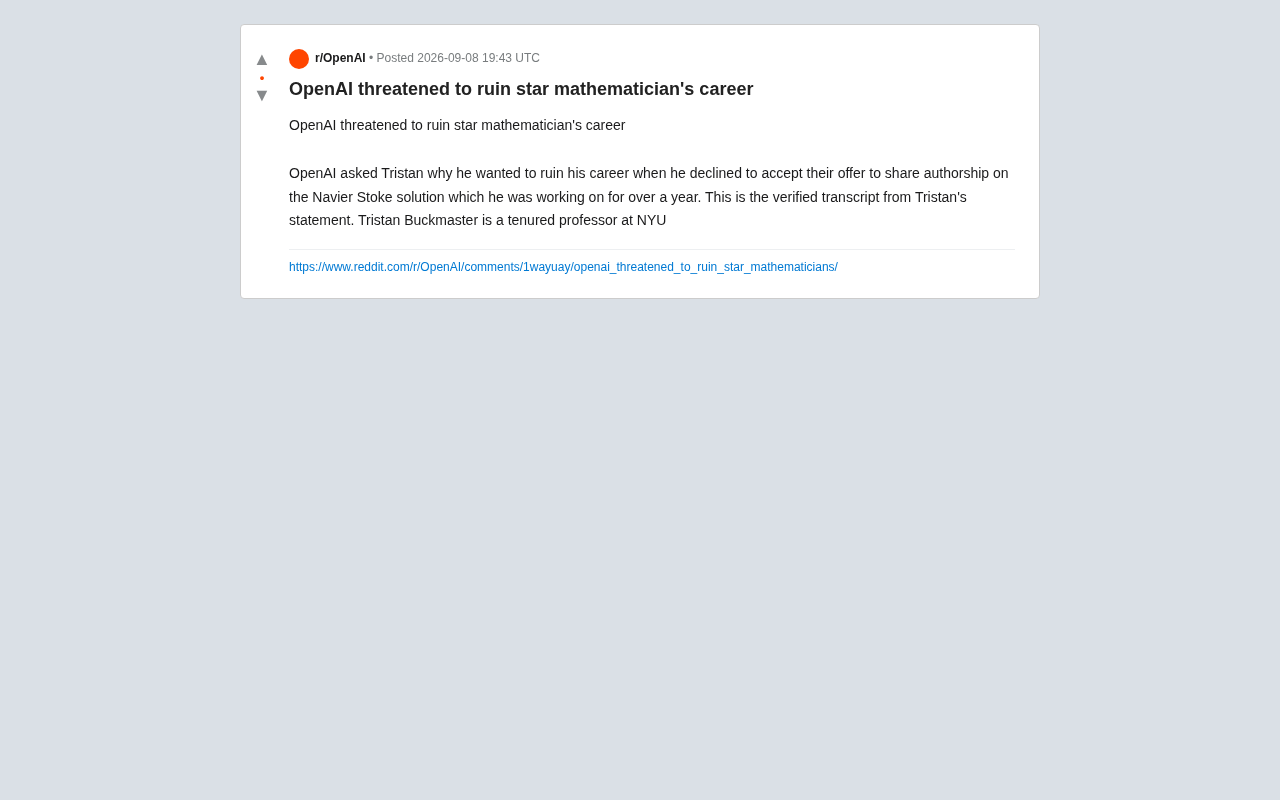
OpenAI Authorship Dispute: The Battle Over Academic Boundaries in the AI Era
OpenAI disputes authorship with mathematician Tristan Buckmaster over Navier-Stokes research, raising ethical questions about AI involvement in science.