Mark Wahlberg Launches Budget Gym to Challenge High-Priced Longevity Clinics
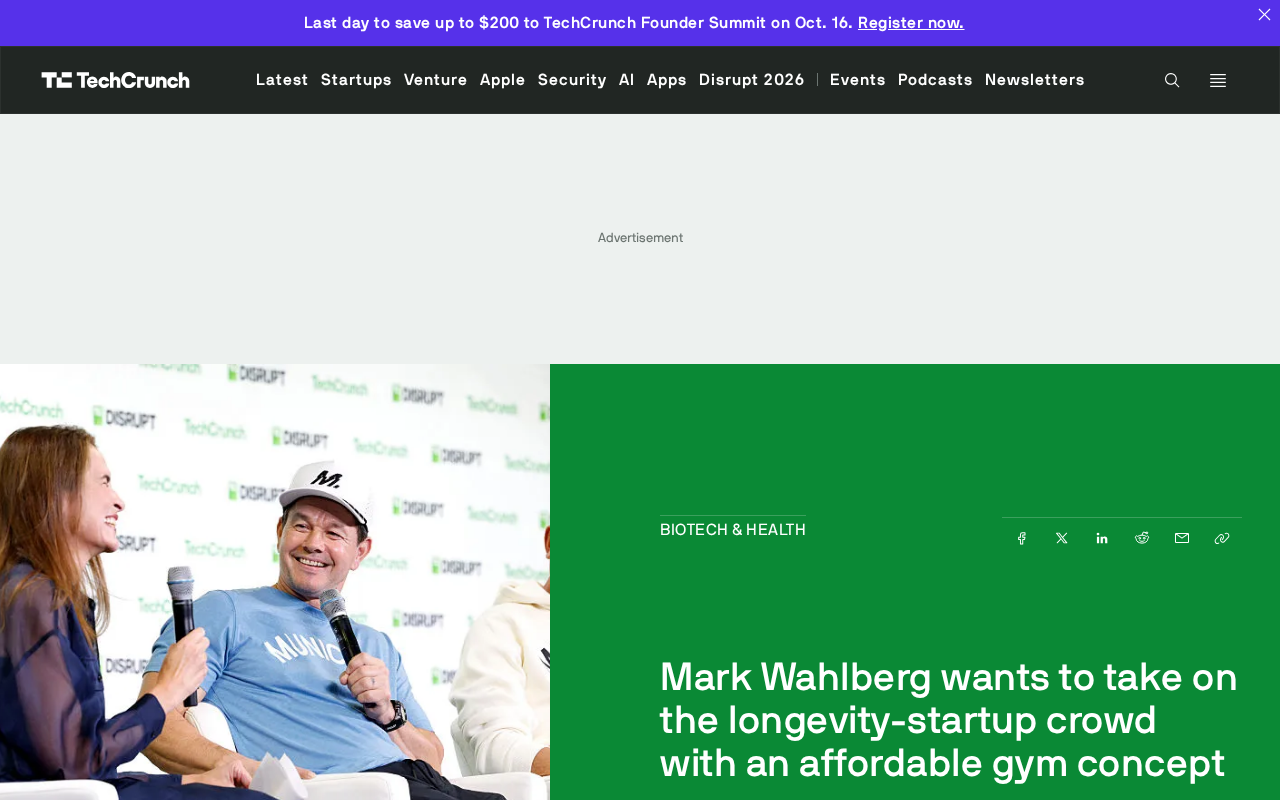
Mark Wahlberg builds a budget gym to challenge high-priced longevity clinics with cold plunges, blood panels, and protein muffins.
After his failed investment in F45 Training, Mark Wahlberg pivoted to personally operating a budget fitness brand featuring cold plunges, blood panels, and protein muffins, promising affordable prices without a trust fund. The model directly targets high-priced longevity clinics, attempting to drive down costs through standardization and scale. The article analyzes whether it can succeed based on three variables: the scaling cost challenges of cold plunge and blood testing, the double-edged sword of brand trust from celebrity halo, and the squeeze competition between high-end longevity clinics and traditional budget gyms. If successful, it could push longevity services from elite experiments to mass consumption and further compress the price range.
Mark Wahlberg Launches Budget Gym to Challenge High-Priced Longevity Clinics
Hollywood star Mark Wahlberg once invested in a gym chain that was ultimately delisted from the NYSE. Now he's decided to jump into the arena himself, building a fitness brand that promises you can enjoy "cold plunges, blood panels, and protein muffins without a trust fund." The news, disclosed by an rss feed, quickly sparked discussion in health-tech circles: when longevity services are branded as "exclusive to the wealthy," can a budget approach pry open a gap?
From NYSE Delisting to Hands-On Operation: Wahlberg's Fitness Obsession
Wahlberg's relationship with the fitness industry hasn't been smooth sailing. The gym chain he previously invested in, F45 Training, once made a splashy public listing, only to see its stock plummet and get delisted from the NYSE—becoming a cautionary tale of celebrity cross-industry investing. But this actor, known for his disciplined physique, clearly hasn't given up. The new project shifts from "investing" to "building," attempting to re-enter the market with a more controllable model.
This shift is worth noting: celebrity IP is no longer just a name on a endorsement—it's deeply tied to brand operations. For consumers, this means service quality is directly linked to the founder's reputation; for the industry, it adds a competitor with built-in traffic.
The "Democratization" Experiment of Longevity Services: Cold Plunge, Blood Panel, Protein Muffin
The new gym's core selling points are condensed into three items: cold plunge, blood panel, and protein muffin. These three correspond exactly to typical longevity industry services—recovery, biomarker monitoring, and nutritional supplementation—but Wahlberg emphasizes the price will be "affordable," no trust fund required.
According to the rss source, this model directly targets the longevity-startup crowd that has emerged in recent years, which typically charges high fees through membership systems, high-end equipment, and personalized medical plans. Wahlberg's strategy is "dimensional reduction": keep the core services, cut the premium labels, and use standardization and scale to drive down costs.
Cold plunge refers to a recovery method involving immersing the body in water at about 10-15°C, widely adopted in longevity and athletic recovery circles in recent years. Proponents believe it can reduce inflammation, improve circulation, and boost dopamine levels, but scientific evidence is still accumulating. On the equipment side, it requires refrigeration units, water filtration, and temperature control—a single commercial cold plunge tub can cost tens of thousands of dollars, and daily utilities and maintenance aren't cheap either. This is the first cost barrier the budget model must face.
Blood panel in longevity services typically refers to testing multiple biomarkers such as lipids, blood glucose, inflammatory markers (e.g., hs-CRP), vitamin D, and hormones, used to assess metabolic health and aging-related risks. The problem is that such testing is largely a medical practice, involving practitioner qualifications, result interpretation, and privacy compliance. If the gym merely provides sampling and forwards it to a third-party lab, the model is lighter—but if it wants to do personalized interpretation and follow-up, compliance costs rise significantly.
Can a Budget Longevity Gym Work? Three Key Variables
Cost Structure: The Scaling Challenge of Cold Plunge and Blood Testing
The upfront investment and daily maintenance costs of cold plunge equipment are significant, and blood testing involves medical compliance and staffing of professionals. For the budget model to work, it must optimize equipment utilization rates, testing frequency, and supply chain. Wahlberg's team hasn't disclosed specific pricing, but the word "affordable" suggests it's targeting middle-class fitness enthusiasts, not ultra-high-net-worth clients.
Brand Trust: The Double-Edged Sword of Celebrity Halo
Wahlberg's personal image aligns strongly with fitness—a natural advantage. But the F45 delisting experience has also kept some investors and consumers on the sidelines. The new brand needs to prove it's not just another celebrity pop-up, but a sustainable business.
F45 Training is an Australian-origin high-intensity interval training (HIIT) chain brand that went public on the NYSE in 2021 through a SPAC, with Wahlberg as an early investor and brand ambassador. After listing, the company's stock plummeted due to rapid store expansion, questions about its profit model, and financial reporting issues, ultimately leading to NYSE delisting. This experience shows that celebrity endorsement can bring initial traffic but cannot replace unit economics and franchisee support systems; for a budget gym, if costs are cut too aggressively and service quality declines, celebrity reputation may instead accelerate trust collapse.
Competitive Landscape: Caught Between Longevity Clinics and Budget Gyms
High-end longevity clinics are expanding, and traditional budget gyms are also adding recovery services. Wahlberg's new brand sits between the two—it must differentiate while avoiding being squeezed from both sides.
Implications for the Health-Tech Industry
Wahlberg's attempt reflects a broader trend: longevity and health optimization services are moving from "elite experiments" to "mass consumer goods." Blood testing, cold therapy, and other services that once belonged to clinic settings are being broken down, standardized, and embedded into gyms. If this model proves successful, it could push more players to follow suit and further compress the price range of longevity services.
Of course, affordable doesn't mean low quality. How to ensure testing accuracy and recovery effectiveness while controlling costs is a question such models must answer. Wahlberg's promised "protein muffin" may just be marketing talk, but the signal behind it is clear: health and longevity shouldn't be a privilege for the few.
Conclusion
From the F45 lesson to self-operating a new brand, Mark Wahlberg is using a budget strategy to challenge the high-price conventions of the longevity industry. Whether this path works depends on three hurdles: cost control, brand trust, and differentiated positioning. For ordinary consumers, having one more affordable option is always a good thing.
One-line Summary
Mark Wahlberg builds his own budget gym, challenging high-priced longevity clinics with cold plunges, blood panels, and protein muffins.
Paragraph Summary
After his failed investment in F45 Training, Mark Wahlberg pivoted to personally operating a budget fitness brand featuring cold plunges, blood panels, and protein muffins, promising affordable prices without a trust fund. The model directly targets high-priced longevity clinics, attempting to drive down costs through standardization and scale. The article analyzes whether it can succeed based on three variables: the scaling cost challenges of cold plunge and blood testing, the double-edged sword of brand trust from celebrity halo, and the squeeze competition between high-end longevity clinics and traditional budget gyms. If successful, it could push longevity services from elite experiments to mass consumption and further compress the price range.
Related articles

Claude Pro Doesn't Include API Access? Max and Team Plans Now Add API Credits Explained
Claude Pro has no API access; API is billed separately. But Max and Team plans now include monthly API credits: Max 5x $100, Max 20x $200, Team up to $500 per seat. This article details each tier's credits, how to claim them, and the impact on developers.

Testing the 350K-Star REA in an Isolated Environment: 4-Second Install, but Watch Out for Two Pitfalls
Isolated lab test of the 350K-star open-source reverse-engineering tool REA: 4-second install, 15 seconds to list a screenshot tool's outbound addresses, 565 communication channels mapped, while exposing two pitfalls—user-level settings writes and 31 high-risk tool permissions—plus three safety rules.
Reverse Engineering + AI Agents: The T…
Reverse Engineering + AI Agents: The Technical Truth Behind Cloning Adobe Apps in Weeks
A developer used AI Coding Agents for reverse engineering to build 7 open-source Adobe alternatives in weeks. We explore how it works, the MCP Server that hit 100K stars in 6 days, and the real technical and legal limits.