Marqly 6.0: Make Your Bookmarks Talk — Now with AI Workflows
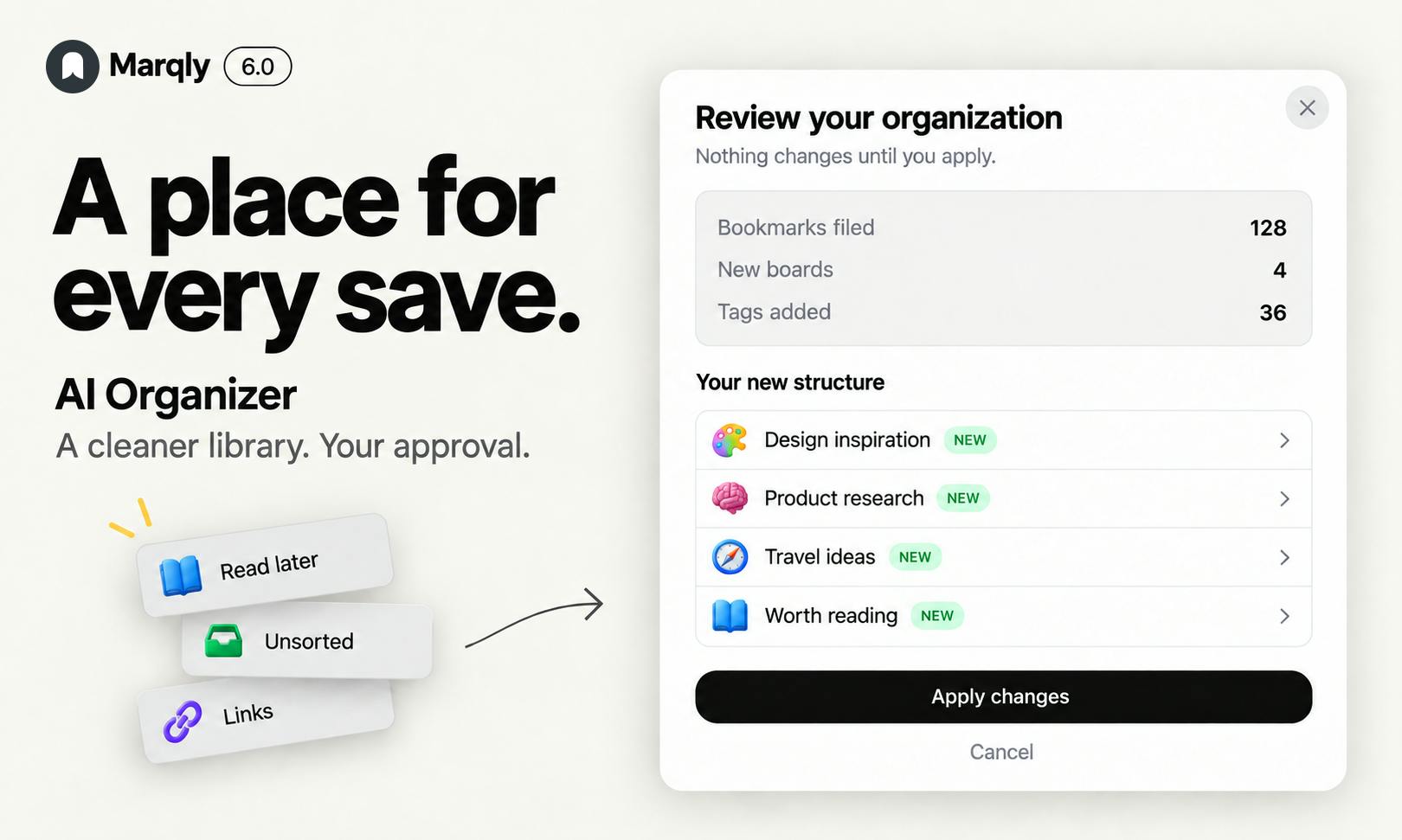
Marqly 6.0 adds AI Q&A, smart organization, and MCP support to make your bookmarks actually useful.
Marqly 6.0 deeply integrates AI into bookmark management, tackling the universal problem of "saved but never revisited." Key updates include an AI Assistant for querying saved content conversationally, an AI Organizer that suggests organizational structures for user approval, and MCP (Model Context Protocol) support that connects your bookmark library to Claude, ChatGPT, and Cursor. It also unifies articles, videos, highlights, and AI chat logs into one searchable knowledge base. AI features are available in the Pro plan, with coverage across Web, browser extension, and iOS.
Bookmark tools often fall into an awkward trap: we save hundreds of articles, videos, and research materials, yet rarely go back to them — and our collections slowly turn into digital graveyards. Marqly 6.0, which just launched on Product Hunt, aims to break this cycle. It gives traditional bookmark management an AI brain, transforming dormant saved content into something you can actually query and use.
From "Save It" to "Ask It"
Marqly 6.0's core idea is straightforward: your bookmarks are packed with information — they just lack a way to surface it. This update revolves around three key capabilities.
AI Assistant is the most immediate change. Instead of manually digging through folders, you can ask questions directly and get answers drawn from your saved content. It essentially turns your personal collection into a conversational knowledge base — everything you've ever read and saved can now be recalled through natural language.
AI Organizer tackles another long-standing headache: bookmark chaos. It proactively analyzes your saved links and suggests a cleaner organizational structure, which you then review and approve. This "AI proposes, human decides" model avoids the misclassification risk that comes with fully automated sorting, keeping users in control of the final outcome.
MCP Support: Bring Your Research Into AI Tools
What truly sets Marqly 6.0 apart from ordinary bookmark apps is its support for MCP (Model Context Protocol). Through MCP, users can feed their saved research directly into AI tools like Claude, ChatGPT, and Cursor.
This is worth unpacking. Today's AI assistants are powerful, but they typically lack any understanding of your personal context. The technical docs, industry articles, and code snippets you've bookmarked are essentially invisible to them. MCP, as a standardized context-integration protocol, lets Marqly act as a bridge — piping your private collection into AI tools so you get responses that are genuinely relevant to your own context.
For developers, being able to pull up bookmarked technical references directly inside Cursor makes coding lookups far more fluid. For researchers and content creators, Claude or ChatGPT can help analyze topics based on your curated library rather than relying solely on general training data.
MCP (Model Context Protocol) is an open standard proposed by Anthropic in late 2024, designed to solve the "last mile" connection problem between AI models and external data sources. Previously, every tool that wanted AI to read local files or third-party data had to build its own custom integration layer — expensive and incompatible across the board. MCP defines a unified "host–client–server" communication specification: AI applications (like Claude Desktop or Cursor) act as hosts, communicating with data servers through MCP clients. Tools like Marqly simply implement the MCP server side, making them callable by any AI tool that supports the protocol. The design logic mirrors that of USB standardization — once the protocol is widely adopted, data sources and AI tools can be mixed and matched freely without redundant development. Cursor, Claude Desktop, and other tools have already announced MCP support, which is a key reason Marqly is betting on this protocol.
Unified Storage for Multiple Content Types
Marqly isn't limited to web links. It supports saving articles, highlights, videos, and AI conversation logs all in one place. This "multi-format unified storage" design fits the fragmented reality of how we consume information today — our knowledge no longer comes exclusively from web pages, and AI conversations themselves have become content worth preserving.
The inclusion of AI chat logs in the bookmark system is a particularly interesting detail. Many valuable ideas and solutions are generated in conversations with AI, but that content often disappears when the session ends. Marqly lets those exchanges be saved and made searchable, completing a more holistic personal knowledge loop.
Platform Coverage and Pricing
Marqly is currently available on Web, as a browser extension, and on iOS, with Android reportedly coming soon. Cross-platform availability is especially critical for bookmark tools — saving behavior happens across all kinds of devices and contexts, and a gap in any one platform disrupts the whole experience.
On pricing, all the AI features are included in the Pro plan. This suggests that basic bookmark management may still be available free or at a lower tier, while AI Assistant, AI Organizer, and MCP integration are offered as paid premium capabilities.
A Few Observations
Marqly 6.0's 68 upvotes and #19 ranking on Product Hunt isn't exactly a viral hit, but the product direction it represents is significant: more and more tools are shifting from "storage" to "activation," trying to make users' accumulated data generate second-order value.
The MCP integration is particularly worth watching. As the protocol gains wider adoption among mainstream tools like Claude and Cursor, the combination of "personal data + AI context" is emerging as a new product design paradigm. Bookmarks are just the entry point — tools like this could eventually expand into notes, documents, and the broader personal knowledge management space. Of course, the accuracy of AI retrieval, privacy and security, and the reasonableness of the paywall will all be critical tests of whether products like this can retain users long-term.
Related articles

The Hidden Risks of Culvert Failure: An Overlooked Infrastructure Hazard
Culverts are hidden drainage structures buried beneath roads. Their failure can silently hollow out road beds, cause localized flooding, and trigger deadly collapses — yet they remain chronically overlooked.
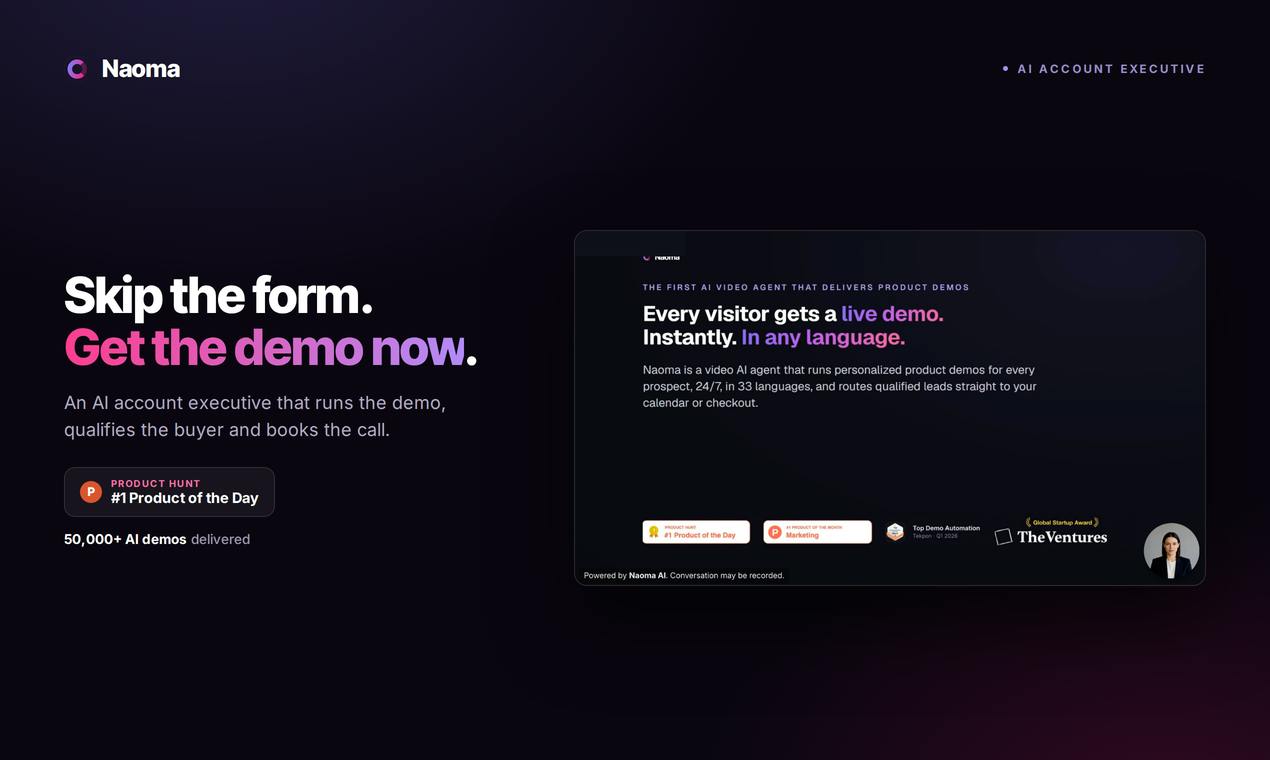
Naoma AI Demo Agent V2: Turning Website Traffic into Booked Meetings with AI Sales
Naoma AI Demo Agent V2 replaces demo request forms with an AI sales rep that demos products, qualifies leads, and books meetings in real time. 50K+ demos run.
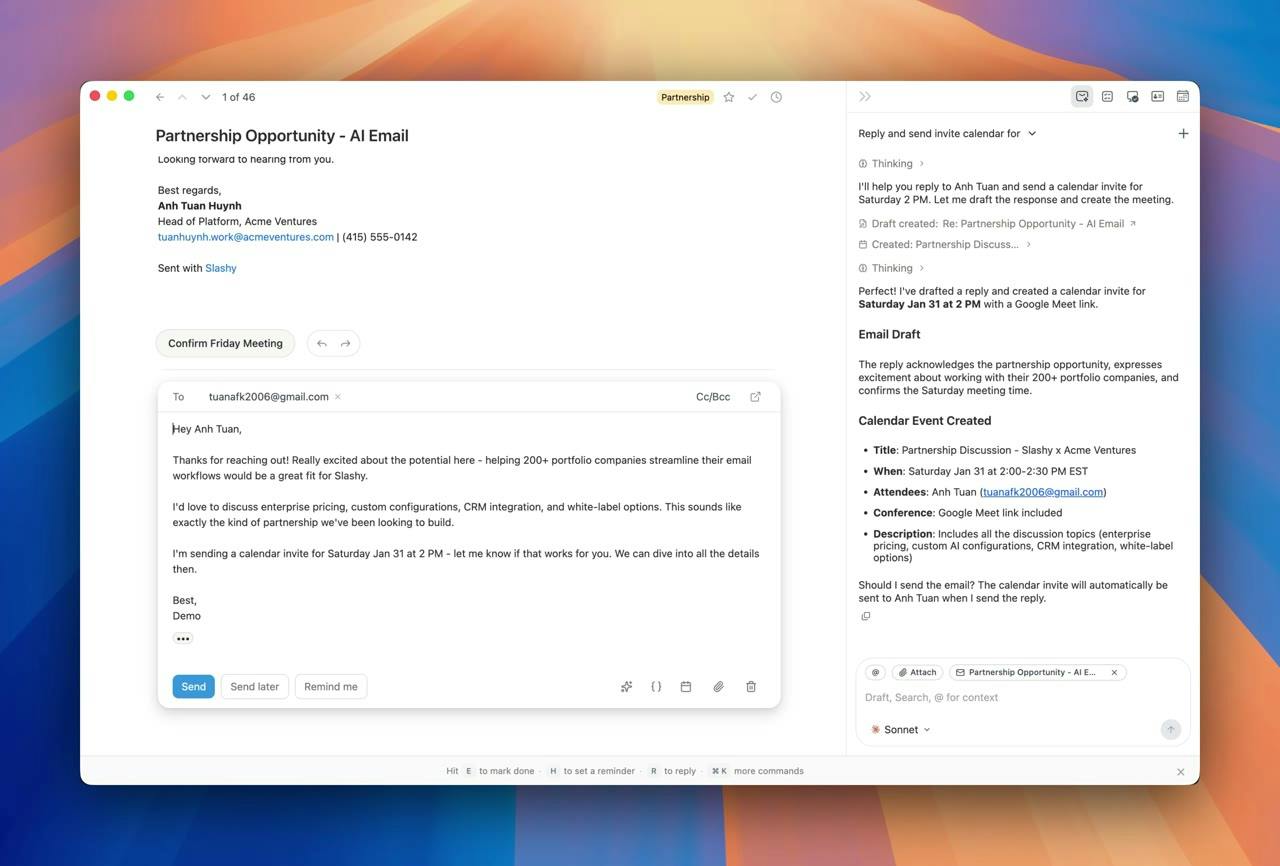
Slashy Assistant: The AI Email Assistant That Handles Your Inbox for You
Slashy Assistant is an AI-native email client with a built-in smart assistant that drafts replies in your voice, organizes email, schedules meetings, and tracks follow-ups. Accessible via iMessage, Slack, and phone — set up in five minutes.