Masayoshi Son's All-In Bet on OpenAI: The Unicorn Hunter from Yahoo to GPT-6

How Masayoshi Son went from shantytown kid to OpenAI's biggest backer — betting big, losing big, and winning bigger.
Using SoftBank's $70 billion market cap surge following the GPT-6 Astra launch as a starting point, this article traces Masayoshi Son's decades of investment history — from selling a patent at 19, to hitting 5,000x returns on Alibaba, losing 98% in the dot-com crash, and now sitting on an estimated $290 billion in paper gains from ARM and OpenAI. His core philosophy: you don't need to win every hand, just a few — and win them big enough to cover everything else.
After OpenAI released GPT-6 Astra, co-founder Greg Brockman's declaration "Welcome to the AGI era" sent shockwaves through the global tech community. Behind the scenes of this technological wave, a Japanese entrepreneur once again emerged as the biggest winner — SoftBank founder Masayoshi Son. In just four trading days after the new model's launch, SoftBank's market cap surged by approximately $70 billion, the equivalent of conjuring an entire Nintendo out of thin air.
From Yahoo to Alibaba, and now to OpenAI, nearly every one of Son's bets has landed squarely at the inflection point of a new era. Is this so-called "unicorn hunter" a gambler or a genius? This article traces decades of his investment history to decode the wild — yet internally consistent — logic behind his moves.
From Shantytown Kid to Millionaire
Masayoshi Son's grandparents smuggled themselves from the Korean Peninsula to Japan hidden inside a fishing boat. He grew up in a shantytown where the family raised pigs and sheep on kitchen scraps. Because of his background, classmates threw stones at him, and his family even changed their surname to "Yasumoto" to better assimilate into Japanese society. His difficult childhood only fueled a fierce drive to make something of himself — by middle school, he had already set his sights on becoming the most successful businessman in all of Japan.
As a teenager, Son idolized Den Fujita, the business mogul who brought McDonald's to Japan. Determined to meet his hero, he made over 60 phone calls and was rejected every time — so he bought a plane ticket and flew to Tokyo to ambush him in person. That stubborn persistence moved Fujita, who offered him two pieces of advice: get into computers, and go to America.
At 16, Son headed to the United States. While studying in California, he was already obsessed with spotting the next big opportunity — constantly asking classmates whether there was a job that paid $10,000 a month for just five minutes of work a day. He distilled innovation down to three paths: solve your own problems, flip conventional thinking on its head, or combine existing things in new ways. At 19, he partnered with a physics professor to develop a handheld electronic translator, which he sold to Sharp for over a million dollars. Around the same time, he imported the wildly popular Japanese arcade game Space Invaders to the United States, netting over a million dollars in six months — cleverly leveraging credit terms and air freight to recoup his investment before payments came due.
SoftBank's Rise and the Obsession with Survival
In 1981, at age 24, Son returned to Japan and did two significant things: he officially reclaimed his birth surname "Son," and he founded SoftBank (Software Bank). Personal computers were still in their infancy, with little public interest, yet he was utterly convinced of the industry's future. Standing on a cardboard box in his office, he announced to his only two employees that SoftBank would one day be a billion-dollar company.
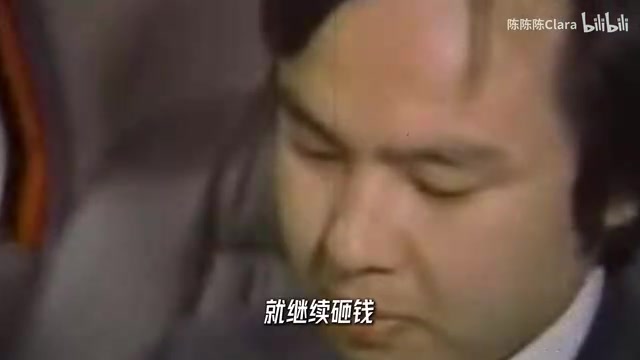
The early days were brutal. Both employees quit, and everyone around him urged him to cut his losses. He pressed on regardless, keep pouring in money. By the time personal computer demand exploded in the 1990s, SoftBank was finally riding the wave. Then came a devastating blow: he was diagnosed with chronic hepatitis, with doctors giving him just three to five years to live. To avoid spooking the banks into pulling his credit lines, he secretly slipped out of the hospital during his three-year stay to attend company meetings. Rather than prompting a quieter life, his illness made him push even harder — he realized time was finite and he had to build the company as large as possible before it ran out. By the mid-1990s, SoftBank had 800 employees, $1 billion in revenue, and a listing on the Tokyo Stock Exchange.
Yahoo and Alibaba: Building an Investment Legend
Once his business was established, Son began transforming SoftBank from a company that sold things into a venture capital firm that bought things. When Yahoo was valued at just $40 million, he invested several million dollars; a few months later, Yahoo went public and its market cap had multiplied 20 times over. In 1998, he called the founder of E*TRADE out of the blue and promptly invested $400 million. He spread $3 billion across more than 800 startups, meeting 200 entrepreneurs every three months.
During this period, he crystallized a key insight: you don't need to win every hand — you just need to win a few of them big enough to cover every loss along the way.
In 2000, this logic received its most textbook-perfect validation — Alibaba. As Son recalls it, he decided to invest $40 million within five minutes of meeting Jack Ma. Ma only asked for $20 million, so $20 million it was. That investment was eventually worth over $100 billion around 2020, representing 48% of SoftBank's net assets and delivering a return of roughly 5,000x. (SoftBank began steadily trimming its Alibaba stake starting in 2022 and had largely exited by 2024.)
From the World's Richest to a 98% Wipeout, and Back to a Telecom Gamble
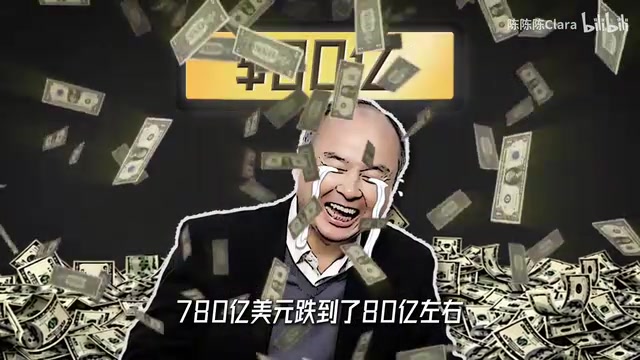
At its peak in mid-2000, SoftBank's market cap reached $200 billion and Son briefly surpassed Bill Gates as the world's wealthiest person, earning the nickname "Japan's Bill Gates" from The New York Times. Then the dot-com bubble burst. He lost roughly $70 billion; his net worth plummeted from approximately $78 billion to $8 billion — a near-98% evaporation, the equivalent of turning $100 into $2.
The catastrophic losses didn't make him fold. If anything, his subsequent bets grew even larger. To break into the broadband business, he stormed into Japan's telecommunications regulatory offices demanding answers, and eventually secured access to the last-mile infrastructure. He then entered the market at half the price of his competitors, even dispatching salespeople in miniskirts to hand out free routers on the streets of Tokyo. Two and a half years later, SoftBank Broadband was number one in Japan with over 35% market share.
In 2007, he pitched Steve Jobs on the idea of a "mini computer" (a phone) and wanted exclusive rights to sell the iPhone in Japan. Jobs shot him down — "You don't even have a carrier." Son's solution: borrow over one trillion yen to acquire Vodafone Japan outright, completing the largest leveraged buyout in Japanese history, and securing the exclusive iPhone deal he wanted.
The Vision Fund and the AI Mega-Bet
Burned by missing out on Amazon, Son resolved to raise a war chest so large he would never again pass on an investment for lack of capital. That became the Vision Fund — a $100 billion vehicle, four times the size of the world's largest venture fund at the time. By one account, during the flight to meet Saudi Arabia's sovereign wealth fund, he casually changed the target raise from $30 billion to $100 billion; 45 minutes into the meeting, he walked out with a $45 billion commitment.

Son believes society is approaching the "Singularity" — the moment when artificial intelligence surpasses human intelligence. Today, SoftBank's core holdings are essentially two companies: OpenAI and ARM. ARM controls approximately 95% of the smartphone chip architecture market; Son acquired it in 2016 for $32 billion at a premium of over 40%, a move widely criticized at the time as overpaying. As ARM moved into AI data center chips, SoftBank's valuation surged to record highs, and Son reclaimed the title of Asia's richest person for the first time in over a decade.
Even more pivotal is OpenAI. According to the video's narrator, Son made a major move into OpenAI as early as 2024, liquidating his Alibaba and Nvidia positions to fund the bet. He now holds approximately 13% of OpenAI, making SoftBank the largest shareholder after Microsoft — earning it the nickname "the OpenAI proxy stock." Following the release of GPT-6 Astra, SoftBank's market cap rose roughly $70 billion in four trading days. While his most criticized investment, WeWork, lost over $14 billion, ARM and OpenAI's combined paper gains are reportedly around $290 billion — roughly 20 times the WeWork loss.
A note on ARM: ARM (Acorn RISC Machine) is a British chip design company whose core business is designing processor architectures and licensing them to chip manufacturers — it doesn't fabricate chips itself. This asset-light IP licensing model has given ARM near-ubiquitous presence in smartphones: Qualcomm, Apple, and Samsung all build their mobile chips on ARM architectures. Controlling ~95% of smartphone chip architecture means that for virtually every smartphone sold worldwide, ARM collects a licensing fee. As AI model demand for compute has expanded from the cloud to edge devices, ARM has begun launching new architectures optimized for AI inference — transforming it from "infrastructure for the smartphone era" into "infrastructure for the AI era." This is the core thesis Son paid a premium for and was mocked for, and which has since been repeatedly validated.
Next Stop: Physical AI and the "Time Machine" Philosophy
Son believes AI will eventually move off screens and into the physical world. He expects the next trillion-dollar company to emerge from physical AI and humanoid robotics, and SoftBank's investment portfolio is already shifting in that direction.
He also operates by a distinctive "time machine management" philosophy: every country goes through the same technological transitions, just at different times. The America of the past is the future of other countries. So once you identify a business model that works in the United States, you invest to replicate it elsewhere — effectively traveling back in time to bet on the future.
As a young man, Son wrote himself a 50-year life plan: start a company at 20, accumulate capital at 30, invest aggressively at 40, resolve unfinished business at 50, and hand over the reins at 60. But at last year's shareholder meeting, at age 67, he announced he wants to keep going for another decade — until he's 77. After all, very few gamblers choose to leave the table on their own. Whether he's a genius or a madman, everyone is likely to have their own answer.
A note on Physical AI: Physical AI refers to artificial intelligence systems capable of perceiving, understanding, and manipulating the real physical world — as opposed to "digital AI" that runs on servers or screens. Typical applications include humanoid robots, autonomous vehicles, and industrial automation equipment. Unlike purely software-based AI, physical AI requires deep integration of large model reasoning capabilities with sensors and actuators, creating extremely high technical barriers. But once proven, it can directly replace vast numbers of physical labor roles, and its market potential is widely seen as far exceeding software-layer AI. Nvidia CEO Jensen Huang has called physical AI "the next wave of AI." Tesla, Figure, Boston Dynamics, and others are all making heavy bets in this space. Son's shift of SoftBank's investment focus toward this field is a continuation of his signature logic: bet on the foundational infrastructure that changes how humanity produces.
Related articles
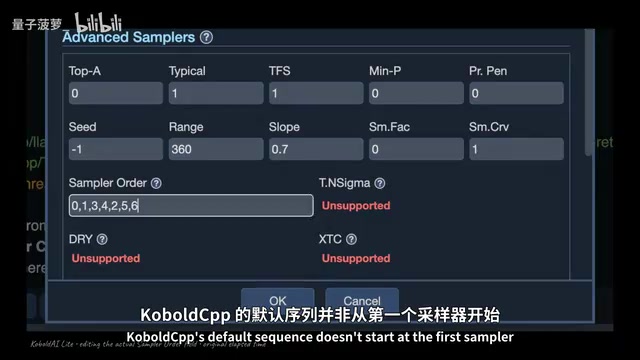
Can KoboldCpp Replace Ollama? A Deep Dive into Local AI Tool Control
KoboldCpp and Ollama both run on llama.cpp. This deep dive compares control granularity, default settings, context shifting, and exclusive features to help you decide which local AI tool to use.
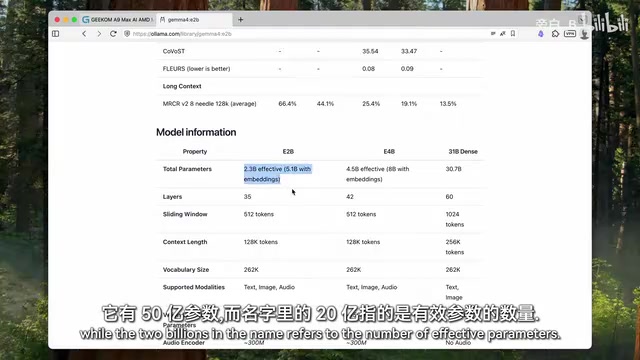
Running Local LLMs on a Regular Home PC: Which Models Are Actually Worth Keeping?
A Bilibili creator tested local LLMs on a Geekom mini PC with 24GB VRAM. MoE models like Gemma 26B hit 31 tok/s; Qwen3 27B runs at 14 tok/s — no workstation needed.

Structural Infertility: Why This Generation Finds Having Children Nearly Impossible
Vox podcast interview with journalist Anna-Louise Sussman unpacks "structural infertility": how housing costs, childcare, the anxious class, climate anxiety, and financialized fertility tech make family formation feel impossible.