Matt Pocock on AI Programming: The Core Logic of Making Agents Work Efficiently

The competition in AI programming has shifted from whether to use AI to how to build a high-quality code environment and precise communication for Agents.
Matt Pocock shared his journey from skepticism about AI to fully embracing Agents in a podcast interview, noting that once model capabilities cross the threshold, the core barrier is no longer writing code but communication quality with Agents. He stresses that software engineering fundamentals matter more than ever since Agents run in the codebase. He introduces "unknown unknowns," uses skills like "grill me" to uncover requirement blind spots, and applies DDD's ubiquitous language for conceptual precision. His spec-driven development experiment failed due to neglecting code environment health. He runs four Agents and pushes 200-300 commits daily with medium-to-low effort, proving environment optimization beats model parameters.
In an era where AI programming tools are iterating at breakneck speed, a pointed question has surfaced: when anyone can rapidly build products with the help of AI, what does a developer rely on to stand out? In a podcast interview with Nate Herk, TypeScript educator and AI Hero founder Matt Pocock shared his journey from a decade of hand-writing code to fully embracing AI Agents, and offered a seemingly counterintuitive answer—the real barrier isn't the model itself, but the quality of communication between the developer and the Agent.
From Skepticism to Full Commitment: A Watershed Moment
Matt Pocock was not an early believer in AI. He admits he spent about ten years programming as a hobby and eight years as a professional developer, and for a long time was skeptical of AI programming, even comparing it to the Web3 and crypto bubbles. The real turning point came around the release of Opus 4.5 and the formation of the OpenClawAd ecosystem.
"From that moment on, I realized I would never write a line of code myself again."
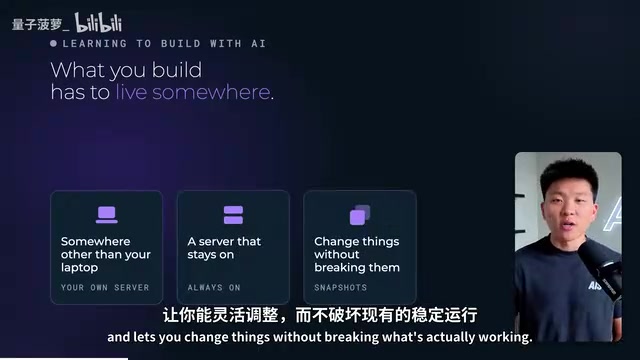
Behind this judgment lies a pragmatic observation: in the year prior, he could see the various benefits of AI programming, but it never "really clicked." When model capabilities crossed a certain threshold, his years of accumulated engineering experience—especially his ability to help colleagues improve efficiency and build internal tools—suddenly found a new leverage point. He stopped writing code and turned his energy toward how to make Agents produce better results.
This experience reveals an easily overlooked fact: the key to transformation isn't that the tools appeared, but that the tools became good enough for you to reallocate your attention. Before the threshold arrived, going all-in too early might actually have been half the result for twice the effort.
Opus 4.5 refers to a version of Anthropic's Claude series models, which showed significant improvements over its predecessors in code generation, long-context understanding, and multi-step reasoning, and is regarded by many developers as the inflection point where AI programming moved from "assistance" to "agency." OpenClaw is an open-source Agent tool ecosystem built around Claude (often compared to an Agent runtime for coding tasks), providing infrastructure such as session management, tool calling, and file system operations, enabling the model to continuously execute tasks within a codebase rather than merely performing single-turn completion. The combination of the two means that model capabilities and engineering scaffolding crossed the threshold simultaneously, and only then did Agents truly become feasible for "taking over the entire development workflow." For Pocock, this was precisely the technical backdrop for his shift from skepticism to "no longer writing code by hand."
Software Development Principles Matter More Than Ever in the AI Era
Pocock repeatedly emphasizes one point: the fundamentals of software engineering are not obsolete—they have become more important than ever. The reason is that the Agent's operating environment is the codebase itself—if the codebase is a pile of unmanaged "vibe coding" garbage, the Agent will only produce more garbage, creating a classic "garbage in, garbage out" situation.
He proposes a thought experiment: suppose you manage a hundred human programmers—what strategy would you use to "raise the floor" so that even the worst programmer performs better? The answers include rigorous testing, automated checks, and guardrails that prevent entire classes of bugs. These strategies have been studied in software engineering for decades, and those classic books "read as if they were written last week."
The key insight here is: the Agent doesn't care about your codebase unless you encode that care into the environment. Tests, type checking, CI pipelines—these traditional engineering practices now play the role of "setting behavioral boundaries for the Agent." When the environment is well designed, the lower bound of model capability is raised—which is also why Pocock can still achieve high-quality output under low-effort settings.
Communication Is the New Core Competency
If you can remember only one thing from this article, let it be this: the ability to communicate with Agents is becoming the core variable that distinguishes excellent developers from ordinary ones.
Pocock observes that every top developer he has met is, without exception, an excellent communicator. When they submit code changes, they write detailed descriptions—clear in thought and easy to understand. For Agents, this ability translates directly into output quality—people who can't communicate can neither describe requirements to the Agent nor accurately point out what went wrong.
He uses a line from The Pragmatic Programmer as an analogy: no one knows exactly what they want. Whether person-to-person, person-to-Agent, or person-to-developer, the communication gap always exists. The Agent can't read minds; it doesn't know what you care about, so you have to tell it again and again.
The Underestimated "Unknown Unknowns"
Pocock especially emphasizes the concept of "unknown unknowns." When you describe requirements to an Agent, there are things you don't even know you don't know—perhaps security issues, perhaps deployment methods, perhaps some implicit constraint. If you don't actively dig out these blind spots, the Agent will either make things up or default to "if you didn't mention it, it's not important," ultimately producing something completely different from what you imagined.
This explains why Pocock designed a skill called "grill me": it lets the Agent relentlessly interview you in turn, forcing out your intentions, preferences, and concerns. The reason this skill has become one of his most-used tools is precisely that it systematically combats unknown unknowns.
Unknown unknowns originates from former U.S. Secretary of Defense Rumsfeld's famous classification of knowledge: known knowns, known unknowns, and unknown unknowns. In the context of software requirements, it refers to constraints and risks that the requester (or the developer themselves) is not even aware exist and therefore would not proactively raise—such as implicit compliance requirements, performance boundaries, or exception-path handling. Unlike "known unknowns," such blind spots cannot be directly enumerated through a checklist of questions; they can only be exposed through systematic questioning, reverse interviews, or bringing in external perspectives. Pocock's "grill me" skill is precisely an engineering response to this epistemological dilemma: letting the Agent play the role of a tough interviewer, using continuous questioning to force assumptions the user wasn't even aware of into the open, thereby reducing the gap between output and expectations.
Domain-Driven Design and Ubiquitous Language
When discussing communication quality, Pocock introduces a classic concept from software engineering: the "ubiquitous language" in Domain-Driven Design (DDD). The core idea is that the terminology in the code, the words developers use when discussing the product, the words customers use to describe requirements, and the understanding users have when actually using the product should all remain consistent.
He gives an example: if there is an "order" concept, then it should look the same in the code, in the database, in the UI, and in your conversations with customers. This precision of language directly determines whether the Agent can align with what you truly want. He even created a variant skill called "grill with docs" specifically to build this domain language synchronously during the conversation.
This viewpoint deserves the attention of everyone in AI programming: the essence of prompt engineering is not rhetoric, but precise conceptual modeling.
Domain-Driven Design (DDD) was proposed by Eric Evans in his 2003 book of the same name, arguing that software structure should be modeled around business domain concepts rather than around technical layering. One of its core practices is the ubiquitous language: the development team and domain experts jointly agree on a strict, unambiguous set of terminology and use it consistently in code, documentation, conversations, and the UI, keeping the model (code) in sync with business understanding. In AI programming scenarios, the role of this language is amplified—the Agent can only infer intent from the vocabulary and context you provide it, and inconsistent terminology translates directly into implementation deviations. Therefore, maintaining a precise, shared domain vocabulary is essentially providing the Agent with an alignable "coordinate system of meaning," which is why Pocock redefines prompt engineering as conceptual modeling.
A Failed Spec-Driven Development Experiment
The most informative part of the interview is the failure Pocock shares. Influenced by OpenAI researcher Sean Grove's idea that "specs are the new code," he spent months trying spec-driven development—first writing detailed specification documents, then having the Agent convert the specs into code.
The result? Code quality steadily deteriorated, and the Agent's output got worse and worse. He persisted for several months because "this is what someone from OpenAI said, and he should know what he's talking about." Eventually he abandoned the approach.
The turning point came when he re-examined a fundamental question: the Agent runs in a code environment, and if the environment itself is rotting, no amount of good specs can save it. He shifted focus to "what is good code"—easy to modify, changes that don't break parts the Agent didn't consider, everything changeable at low cost. Only after returning to the code itself did he truly begin to achieve controllable output.
"Spec-driven development just didn't work."
The value of this experience lies in the counterexample it presents: the effectiveness of a methodology depends on the quality of the underlying environment. No matter how detailed the specs, if the codebase itself is chaotic, the Agent will still produce even more chaotic results amid the chaos. This is also why Pocock believes that rather than agonizing over which model or which harness to use, it's better to spend energy improving the Agent's operating environment.
Where the Career Opportunities Are: Processualizing Knowledge Work
When asked how people from non-technical backgrounds can seize AI opportunities, Pocock gives a concrete direction: bring Agents into knowledge work processes and bring those processes to organizations.
The reason is straightforward: every organization does things slightly differently, and standardized solutions can't be applied directly. Connecting Agent capabilities with specific organizational processes is a combined skill that requires deep business understanding, communication ability, and engineering thinking. He himself has been exploring this for a year and a half and still finds it very difficult—and difficulty is precisely where opportunity lies.
He also notes that the reason code was the first domain conquered by Agents is that code is easy to verify. The same goes for math problems—proofs can be generated. But real-world knowledge work has a much higher verification cost, which is precisely the main bottleneck for current Agent deployment and the source of differentiated capability.
For practitioners who want to transition, Pocock's advice is to climb the "trust ladder": first apply the Agent to the trivial tasks you hate most, and watch it until you understand what it's doing and when you can trust it. Don't hand your grandest goals to the Agent right away—that's more like model vendors' marketing talk. He recommends starting with simple, measurable, correctable tasks and expanding gradually.
How Big Is the Efficiency Gap?
Pocock currently runs four Agents simultaneously handling long-term tasks across different projects, pushing 200 to 300 commits to GitHub every day. By comparison, during his hand-coding days, a "good day" was about 20. His conclusion: "The gap is absurdly large—not even comparable."
But he also offers a counterintuitive configuration recommendation: he uses a medium or even low effort level on Opus 5.5. The reason is that when the Agent's operating environment (tests, checks, guardrails) is good enough, the Agent doesn't need to "think hard" to produce qualified code, and low effort brings higher token efficiency and faster response times.
"Most people set effort way too high."
Effort level is a reasoning-investment control parameter offered by some frontier models (such as the Claude series), typically expressed as "low/medium/high" tiers, which determines the token budget and computation the model spends on internal thinking before generating a response. Raising effort generally improves performance on complex reasoning tasks, but at the cost of longer latency and higher token consumption, with diminishing marginal returns for tasks that already have sufficient context and clear constraints. Pocock's observation is: when the codebase's tests, type checking, and guardrails are sufficiently robust, the Agent's output quality is determined mainly by environmental constraints rather than the model's "depth of thought," so qualified results can still be obtained at medium or even low effort while improving throughput and reducing cost. This experience suggests that developers should shift the focus of optimization from model parameters to runtime environment design.
Next Steps: Software Factories and Open Models
Speaking of the future, Pocock makes clear that he is not a prophet, just someone who wants things to work now. The direction he is most excited about is the "software factory"—mechanisms that automatically initiate work and continuously improve the codebase. He believes current Agents perform poorly at long-term codebase thinking, and that it would be extremely valuable to create that "annoying developer who always says 'no, we should do it the right way.'"
Another hope is that open models catch up with top closed-source models. He admits he doesn't need a model to be strong to a certain degree, because environment and process can compensate, but an open model at the Opus 5.5 level would make him very happy.
Conclusion
Matt Pocock's sharing points to a clear conclusion: competition in AI programming has shifted from "whether to use AI" to "how to build an environment for AI." Software engineering fundamentals, precise communication, domain language modeling, and the systematic excavation of unknown blind spots—these seemingly traditional skills are precisely where the gap is created. Models will keep improving, but they will never read minds—that layer of communication and process bridge still needs to be built by humans.
One-line Summary
The competition in AI programming has shifted from whether to use AI to how to build a high-quality code environment and precise communication for Agents.
Paragraph Summary
In a podcast interview, Matt Pocock shared his journey from skepticism about AI to fully embracing Agents, pointing out that once model capabilities cross the threshold, the developer's core barrier is no longer writing code but the quality of communication with the Agent. He emphasizes that software engineering fundamentals matter more than ever in the AI era, because the Agent runs in the codebase and environment quality directly determines output quality. He introduces the concept of "unknown unknowns" and systematically uncovers requirement blind spots through skills like "grill me," while introducing the ubiquitous language of Domain-Driven Design to improve conceptual precision. He candidly admits that his spec-driven development experiment failed, rooted in neglecting the health of the code environment. On efficiency, he runs four Agents simultaneously and pushes 200-300 commits a day, yet uses medium-to-low effort, proving that environment optimization is more critical than model parameters.
Related articles

Chain of Thought Isn't Just for AI: How Humans Can Use CoT to Improve Thinking Quality
Chain of Thought isn't just a prompt trick for large models. Starting from a Hacker News discussion, this article analyzes why CoT works for human thinking too, breaks down actionable ways to transfer it, and highlights the key differences between human CoT and machine CoT.
Cloudflare Teams Up with OpenAI: Closi…
Cloudflare Teams Up with OpenAI: Closing the Loop from Vulnerability Discovery to Defense with AI
Cloudflare uses OpenAI Daybreak to investigate security vulnerabilities and generate reviewable remediation plans, while developers use Codex to boost coding efficiency and quality.

Orca Multi-Agent Orchestration in Practice: A Guide to Parallel Collaboration with Claude and Codex
Orca is Stable AI's free open-source agent workbench supporting 34 agents like Claude Code and Codex in parallel. Learn its Git worktree isolation, multi-model orchestration, and mobile management.