Maximizing Claude Subscription Tokens: A Complete Guide to Multi-Account Parallel Agent Programming

An aggressive methodology for squeezing AI subscription value via parallel Agents, proxy routing, and inbox-zero thread management.
A developer demonstrates that Claude/Codex subscriptions offer far more implied inference value than direct API purchases, and builds an aggressive parallel Agent workflow around this insight: a CLI Proxy layer manages multi-account auth, Tailscale funnels traffic through a residential IP to avoid bans, and threads are treated as inbox-zero to-do items — shifting Agent involvement to the very start of thinking, not the end. The core methodology centers on de-risking code merges in both directions. The article also flags account-ban and compliance risks, recommending readers prioritize the Agent collaboration methodology over copying the multi-account mechanics.
A seasoned developer posed a sharp question in a video: how many Agent threads do you have running in the background right now? If the answer is fewer than five, you might be squandering a remarkably unique window of opportunity in today's AI programming landscape. This piece revolves around squeezing every bit of token value out of Claude (referred to as "Fable" in the video) and Codex subscriptions — with parallel, large-scale Agent programming as the core strategy for converting subsidized subscription quotas into real productivity.
A quick disclaimer: some of the practices discussed here push against Terms of Service boundaries and carry real account-ban risks. This is shared purely as industry observation and technical insight, not as operational advice.
The Economics Behind Subscription Subsidies
The video author ran the numbers to explain why professional developers widely bypass the API in favor of stacking subscription accounts. According to him, spending $200 on API access gets you exactly $200 worth of tokens — but a $200 Claude subscription translates to roughly $8,000 in inference value. Even accounting for a 50% allocation cap, that's still around $4,000 in usable compute. A $200 Codex subscription is even more striking: roughly $12,000 in inference across all model tiers.
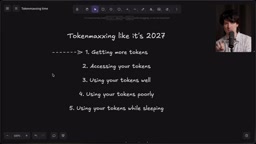
The author also shared a key pricing detail: Anthropic's internal enterprise pricing was reportedly $25 per million input tokens and $125 per million output tokens, while the effective cost for subscription users comes in at nearly a 30% discount off that. His explanation: vendor gross margins are estimated at around 95%, leaving plenty of room to undercut competitors and maintain their lead. In other words, the current wave of subsidies is deliberate — vendors are voluntarily giving up margin to win mindshare.
One operational detail that gets repeated emphasis: in Codex settings, go to data controls and disable "improve the model for everyone." Once that's off, personal subscription Terms of Service align closely with team accounts, and your data won't be used for training. The author puts it bluntly — if someone is paying API prices just to avoid data training, they're basically throwing money away.
A note on "cache": The "cache" mentioned here refers to the KV Cache (Key-Value Cache) mechanism in LLM inference. When a model processes a conversation, it computes attention weights for every token in the message history — and those intermediate results (Key and Value matrices) can be cached to avoid redundant computation. Anthropic offers significant discounts on prompt cache hits for Claude, reducing input token costs to roughly 10% of the standard rate. This means the longer and more reused a context is on the same account, the lower the marginal cost. Switching accounts invalidates the cache and forces a full recomputation of the same context — which is the core economic reason the author emphasizes "session affinity," keeping the same thread routed to the same account.
Managing Multi-Account Routing Through a Proxy Layer
Once you have multiple accounts, auth management becomes a nightmare — especially with Claude Code, where authorization often expires every two to three days. The author's solution is a proxy layer (a CLI Proxy API, which he built on top of Vibe Proxy with substantial modifications). Here's how it works: you log each of your Codex and Claude accounts into the proxy, the proxy maintains their auth states, and it exposes a unified API endpoint that tools like Claude Code and Codex point to instead of the official OAuth servers.
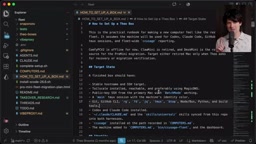
Around this proxy setup, the author shares several practical lessons:
- Don't log in from a VPS or cloud server, especially with Claude Code. Anthropic is particularly suspicious of login attempts and requests originating from known server IP ranges (AWS, Hetzner, etc.), since this is a classic pattern for subscription reselling. The ideal setup has all traffic originating from a single residential IP.
- Account prioritization: CLI Proxy distributes traffic evenly across accounts by default, but a smarter strategy is to burn through the quota of whichever account resets soonest.
- Session affinity: Since caching is tied to the account, follow-up requests within the same thread should be routed to the same account whenever possible — otherwise you'll incur unnecessary cache rewrites.
- WebSocket optimization: Codex subscriptions don't use WebSocket by default; enabling it manually yields a noticeable improvement in message round-trip performance.
The author also uses a machine on his home network as the proxy hub, connected via Tailscale, so that other machines anywhere in the world can route inference through it. All traffic appears to come from a single residential IP, making it nearly impossible to detect externally as a server. He even maintains a "fleet management" repository — new machines just SSH in, an Agent reads the repo, and the environment configures itself automatically.
A note on Tailscale: Tailscale is a zero-config VPN tool built on the WireGuard protocol. It creates encrypted peer-to-peer tunnels between devices across different networks, forming a private virtual LAN (called a "tailnet"). Unlike traditional VPNs that route everything through a central server, Tailscale connects devices directly wherever possible, resulting in very low latency. In the architecture described here, Tailscale connects laptops, phones, cloud dev machines, and the home proxy hub into one internal network — letting requests from any location exit through the residential IP, while all devices share a single authentication system with no per-machine firewall rules or port-forwarding required.
A note on WebSocket: WebSocket is a protocol that enables full-duplex communication over a single TCP connection. Unlike traditional HTTP request-response cycles, it allows the server to push data proactively — eliminating the overhead of repeatedly establishing connections. In AI inference scenarios, model output is typically generated as a token-by-token stream, and WebSocket transmits this real-time stream far more efficiently, reducing per-token round-trip latency. This is the technical reason the author reports a meaningful performance boost after enabling WebSocket for Codex.
From Issue to Merge: Redefining the Agent Workflow
This section contains the most valuable methodology in the entire piece. The author admits that only about 10–15% of his token usage actually goes toward writing code — the remaining 85% or so is spent verifying code. His core philosophy is de-risking in both directions around the "merge" button.
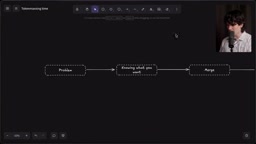
Pre-merge de-risking: Have the Agent resolve as many potential issues as possible upfront, driving the probability of a defective PR from 5% down to 1%. This lets you spread your attention across far more PRs. Post-merge de-risking: Build systems that can intercept problems before they reach users, or roll back quickly. His line on this is direct — if undoing a bad change takes more than 15 seconds, you're probably not ready to be vibe coding.
The more critical mindset shift is about when to bring in an Agent. The author says he used to wait until he'd thought through a solution before involving an Agent. Now, he brings in the Agent at the moment he starts thinking. He recalls spending three weeks puzzling over a problem, only to have an Agent produce a simpler solution in minutes. He's quick to clarify this isn't "stop thinking" advice — it's "first decide whether this problem is worth your personal cognitive effort." Reserve your brainpower for novel problems that Agents can't solve. He draws an analogy to managing a team: you give the team interesting problems, not pre-baked answers. Only when the team repeatedly fails to produce good solutions does it signal the problem is novel enough to warrant your direct involvement.
A note on "de-risking around the merge button": This framing maps onto the Pull Request (PR)-centric collaboration workflow in modern software development. A PR is a change request submitted before code is officially merged into the main branch — typically involving code review, automated testing, and CI/CD pipeline checks. "Pre-merge de-risking" means using the PR phase to minimize the probability of introducing defects through comprehensive testing and validation. "Post-merge de-risking" means building mechanisms to quickly detect production issues and roll back — such as feature flags, canary releases, or one-click rollback scripts. The author's "15-second rollback" benchmark is essentially quantifying system recoverability: the faster you can roll back, the smaller the risk exposure per merge, and the higher the frequency of parallel PR merges you can sustain.
Managing Threads Like a To-Do List
Humans are single-threaded; Agents aren't — the author repeatedly drives home that we are the bottleneck. The way we work needs to change: instead of watching a thread generate output, manage threads the way you manage an inbox.

He built several corresponding design choices into his own open-source tool, T3 Code: threads are fundamentally tasks; once done, "settle" them to make them disappear, with the goal of achieving inbox zero in the sidebar; use command+enter to send a thread to the background while you stay put; actively running threads are displayed semi-transparently to dampen your focus on them; threads idle for more than a few days auto-settle. He estimates roughly half his threads auto-archive after merging — he never reads the last message, "because it just doesn't matter."
To complement this workflow, he recommends writing more complete Agent instructions — not just ask it to build something, but also to spin up a Tailscale environment for you to try out, open a PR, and "babysit" it by continuously monitoring until merge conditions are met. That way, the next time you open a thread, it's ideally ready to merge. Multiple machines connected via Tailscale or T3 Connect to the same UI can also enable automatic load balancing, distributing threads across machines for execution.
Remote Boxes and "Using Tokens While You Sleep"
The final section is about "using tokens while sleeping" — both literally and in the sense of not being tethered to your local laptop. The author's advice is practical: find an old computer (even a hand-me-down from a friend or family member with 8GB RAM and four cores), install Ubuntu, set up Tailscale and CLI Proxy, keep it on a residential IP at home, connect via T3 Code, and you can offload tasks to it anytime.
He's clearly negative on cloud VPS: cloud IPs are more likely to trigger account bans, and buying a physical machine often works out cheaper than renting a server long-term. He also strongly advises against using a Mac for this kind of parallel workload — macOS's filesystem and security policies seriously limit concurrency. Switch to Linux and the problems largely disappear.
At the end of the video, the author also notes something worth paying attention to regarding Opus 5.5: he's found that a single subscription's Opus 5.5 quota is now quite hard to hit, which suggests that in the future, you may not need to stack five to ten Claude subscriptions to run these patterns effectively.
A Sober Look at All This
This content is information-dense, but its perspective deserves critical scrutiny. The author is himself the creator of T3 Code — the open-source tool heavily promoted throughout — which introduces obvious product bias. The token conversion math and the 95% gross margin figure are napkin-math estimates with no official backing. More importantly, practices like multi-account routing, disabling data sharing, and evading server IP detection carry genuine account-ban and compliance risks — risks the author himself hedges against repeatedly.
What's genuinely worth absorbing is the Agent workflow methodology: bring Agents in at the start of thinking, not the end; de-risk in both directions around the merge; manage threads like a to-do inbox; acknowledge that humans are the single-threaded bottleneck and restructure collaboration accordingly. These ideas have real reference value for any developer who heavily uses Agent-based programming — even stripped entirely of the token-maximization controversy.
Related articles

Random Pruning of the DPO Computation Graph: 1.4x Training Speedup and Lower Peak Memory
DPO training too slow and memory-hungry? This paper proposes a random pruning framework for the DPO computation graph, sampling independently across position, sequence, and branch dimensions; branch pruning achieves a 1.426x step-time speedup and cuts training time by about 30%, with in-depth attribution of memory and time gains.

Why Does JEPA Underperform MLM in Longitudinal EHR Representation Learning?
New study compares JEPA and MLM for longitudinal EHR representation learning on MIMIC-IV: three JEPA variants train stably without collapse but underperform MLM; target size, not heterogeneity, drives prediction error.

Transfer Learning + Visible Light Communication: A New Approach to Energy-Efficient Indoor Positioning
A study proposes a transfer learning-based visible light communication indoor positioning method, achieving 47% accuracy improvement on the BOSCH factory dataset, 67.5% model efficiency under high noise, and introducing the ME composite metric for energy-efficient positioning in energy-constrained industrial IoT scenarios.