May Mobility Plans $1.4B SPAC Listing to Accelerate Asset-Light Robotaxi Strategy
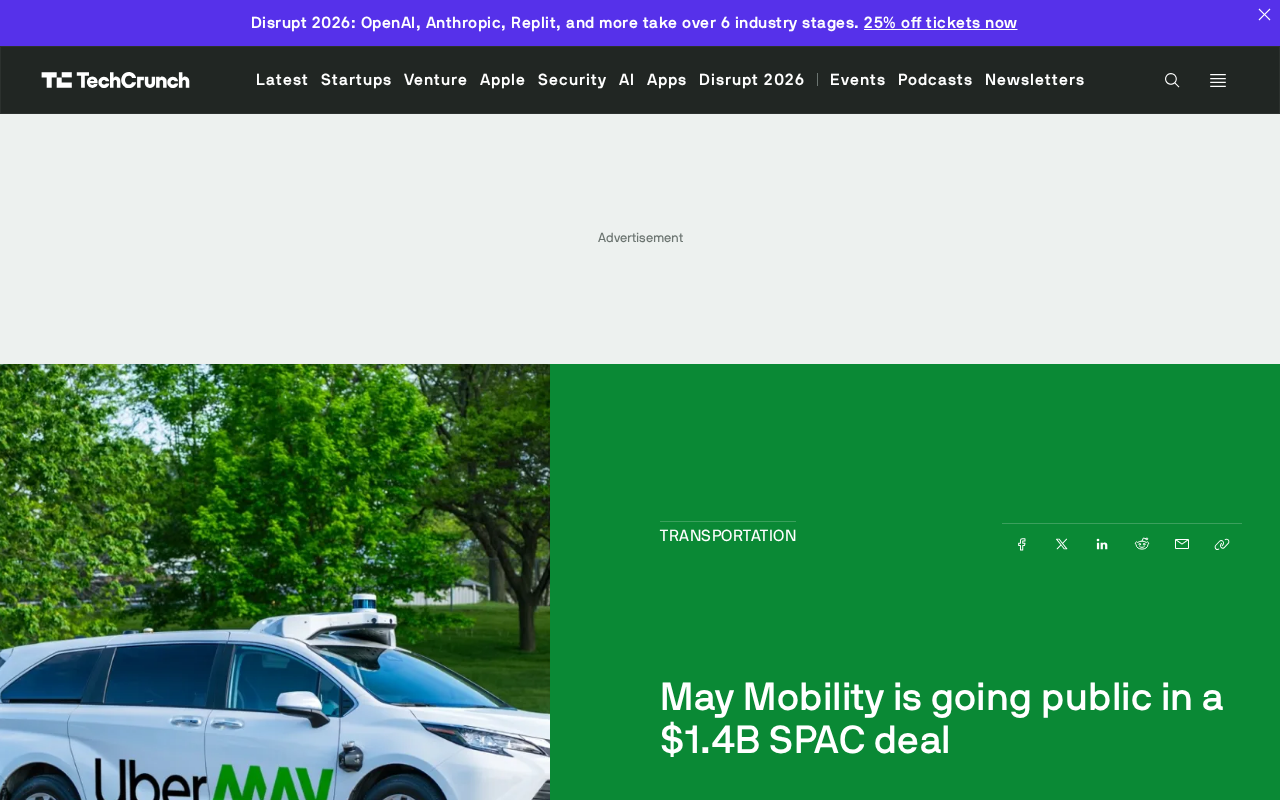
May Mobility targets public markets via a $1.4B SPAC deal to fund its asset-light Robotaxi expansion.
Autonomous ride-hailing company May Mobility has announced plans to go public through a SPAC valued at approximately $1.4 billion, expecting to raise over $300 million in net proceeds. Positioned as an asset-light Robotaxi company, it focuses on autonomous driving systems and operational dispatch while offloading heavy assets like vehicle procurement through partnerships. The SPAC route offers speed and funding certainty over traditional IPOs, though it comes with heightened scrutiny on valuation and performance. The deal signals continued investor interest in AV players with clear commercial paths, but May Mobility's long-term success will hinge on translating capital into solid operational metrics post-listing.
The autonomous driving industry is seeing fresh capital moves. May Mobility, an autonomous ride-hailing company, is planning to go public through a SPAC (Special Purpose Acquisition Company) deal valued at approximately $1.4 billion, a transaction expected to deliver more than $300 million in net proceeds.
The Deal: $1.4B Valuation and $300M+ in Funding
According to disclosed information, May Mobility plans to access the public markets via the SPAC route, with the transaction implying a company valuation of roughly $1.4 billion. For an autonomous driving company still in an expansion phase, this valuation reflects sustained investor interest in the long-term prospects of the Robotaxi sector.
Equally significant is the funding itself. The deal is expected to bring May Mobility more than $300 million in net proceeds. At a time when autonomous driving R&D and operations demand continuous capital investment, this funding will directly determine the company's pace of technology development, fleet expansion, and urban deployment.
Why Choose the SPAC Route
SPAC listings became a popular path to public markets for tech and mobility companies in recent years. Compared to traditional IPOs, SPACs typically offer a faster process, a more predictable timeline, and the ability to lock in a defined fundraising amount during the listing. For autonomous driving companies that need to replenish capital quickly and seize market windows, this certainty holds real appeal.
That said, SPACs come with heightened scrutiny around valuation reasonableness and subsequent performance delivery. Many mobility companies that went public via SPAC previously experienced significant stock price volatility in the secondary market — meaning May Mobility will still need to back up capital market confidence with solid operational data after the transaction closes.
What is a SPAC? A Special Purpose Acquisition Company (SPAC) works like this: a shell company first raises funds through an IPO and lists on an exchange, then within a set timeframe (typically 18–24 months) identifies and acquires a target company, which completes its public listing through this "reverse merger" structure. For investors, SPACs offer access to assets at a pre-IPO stage; for the acquired company, the entire process can be compressed to a few months, versus the year or more that traditional IPO roadshows and due diligence typically require. SPACs exploded in popularity in 2020–2021 across tech and mobility sectors, with companies like Lucid and Arrival going public through this route. However, many SPAC-listed stocks subsequently saw sharp declines, and regulators tightened disclosure requirements, cooling overall enthusiasm. May Mobility's decision to pursue this path during a relatively calm market period represents both an opportunity and a need to manage more cautious investor expectations.
Asset-Light Model: May Mobility's Differentiated Approach
Notably, May Mobility is positioned as an "asset-light" Robotaxi company — a model that stands in contrast to competitors that build large proprietary fleets and shoulder heavy hardware and depreciation costs.
An asset-light strategy generally means the company focuses on the autonomous driving system, operational dispatch, and technology platform, while distributing vehicle procurement and parts of the infrastructure through partnerships or external arrangements. This structure helps reduce upfront capital expenditure pressure, improves capital efficiency, and allows the $300M+ in funding to be concentrated on core technology development and commercial expansion.
From an industry perspective, Robotaxi commercialization has long faced challenges around extended payback periods and difficult unit economics. Whether the asset-light model can genuinely help May Mobility strike the right balance between cost control and scale remains the central thesis it will need to validate after going public.
About May Mobility: Founded in 2017 and headquartered in Ann Arbor, Michigan, May Mobility's core business model revolves around partnering with cities, corporate campuses, and public transit agencies to provide "last-mile" autonomous shuttle services — rather than offering consumer-facing point-to-point ride-hailing. The company uses a Multi-Policy Decision Making (MPDM) technology framework, emphasizing the system's ability to adapt to complex, mixed-traffic environments. On the partnership side, May Mobility has received strategic investment from Toyota and has signed operating agreements with multiple U.S. municipal transit authorities. This B2B and B2G (business-to-government) oriented commercial approach makes it easier to establish stable contract revenue in the early stages compared to competing directly in the consumer Robotaxi market — and is a key pillar supporting its asset-light positioning.
What This Means for the Autonomous Driving Sector
May Mobility's capital move is, in some ways, a signal about the broader autonomous driving funding environment. After a round of capital cooling, the fact that a company can still attract public market funding at a substantial valuation suggests that investors retain interest in players with a clear commercial path and a differentiated model.
For the industry as a whole, converting capital into sustainable operational capability matters far more than the size of any single funding round. The $300 million is a starting point, not a finish line. May Mobility's progress on city deployment numbers, operational safety records, and unit economics performance going forward will be the real determinants of its long-term value.
Conclusion
This $1.4 billion SPAC deal opens the door to public markets for May Mobility and provides financial ammunition for its asset-light Robotaxi strategy. Against a backdrop of ongoing uncertainty in autonomous driving commercialization, whether this capital market bet ultimately pays off depends on the company's ability to translate its technology and model advantages into tangible operational results.
Related articles

AI Agent Developer Job Hunt Guide: Four Hard Standards to Clear Before You Apply
A practical guide for landing AI Agent developer roles: four measurable standards — project runs, problems debuggable, solution explainable, interviews survivable.
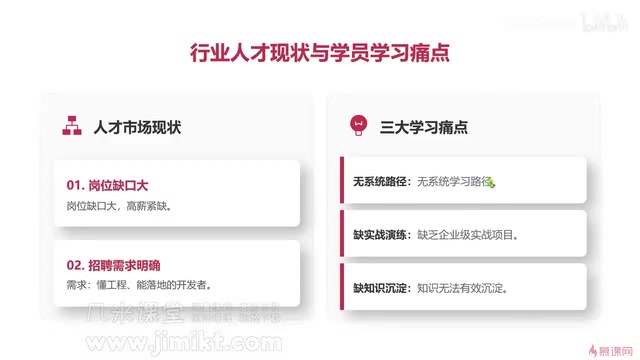
Multi-Agent Development Guide: From Monolithic AI to Team Collaboration in Practice
A beginner's guide to multi-agent development covering core advantages, common learning pain points, enterprise tech stacks, and engineering methodology for AI developers.
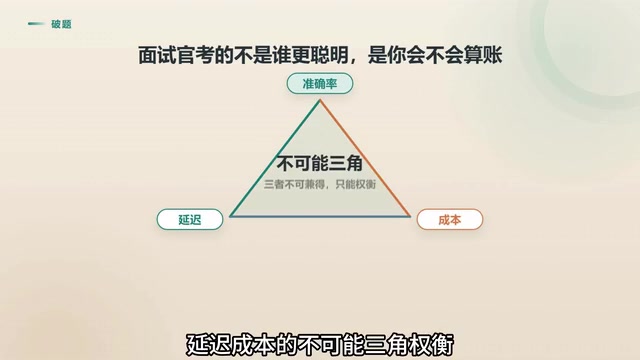
Agent Skill Routing: Retrieval vs. LLM vs. Two-Stage Architecture Compared
Retrieval or LLM for Agent skill routing? Compare coarse-filter vs. fine-select architectures on latency, accuracy, and cost — with 4 key production considerations.