MCPJam: The Testing & Evaluation Platform for MCP Servers
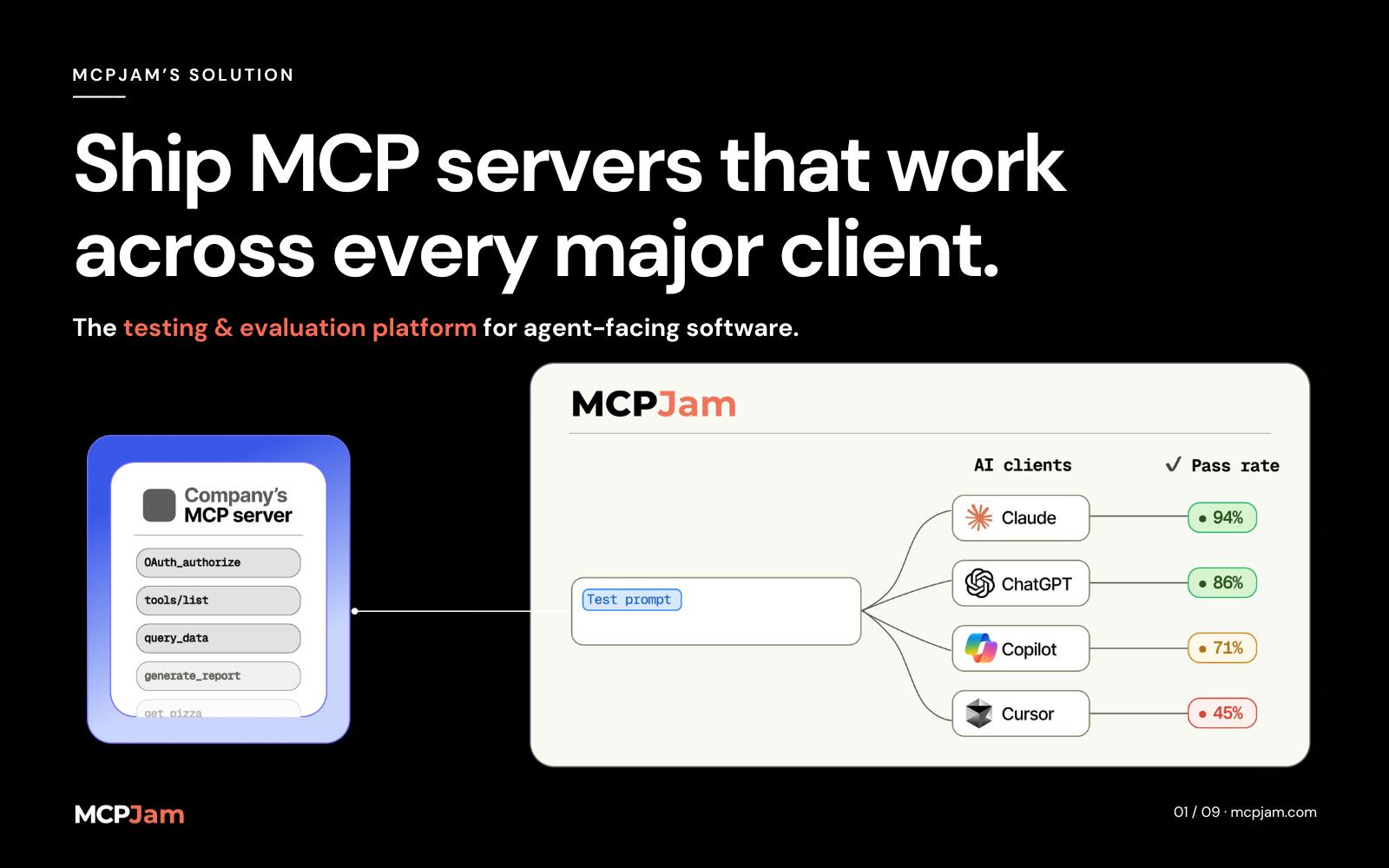
MCPJam is an open-source testing and evaluation platform built specifically for MCP servers.
MCPJam is an open-source testing and evaluation platform for MCP (Model Context Protocol) server developers, designed to solve a quality verification challenge unique to the MCP ecosystem. Unlike traditional API testing, it evaluates whether probabilistic language models can correctly invoke tools and complete tasks in real conversations. It offers User Testing, Swarms, Evals, and CI/CD Gates, accessible via a desktop app, CLI, or SDK — including support for local server testing. The product debuted at #7 on Product Hunt with 89 upvotes.
As the Model Context Protocol (MCP) steadily becomes the standard interface for connecting large language models to external tools, the engineering ecosystem surrounding it is rapidly maturing. MCPJam is one tool built precisely to address a critical gap — it brings "testing" and "evaluation", two practices that are taken for granted in traditional software development, into the MCP server development workflow.
The product launched on Product Hunt to 89 upvotes and 14 comments, landing at #7 on the day's leaderboard, under categories including Open Source, Developer Tools, and Artificial Intelligence.
What Problem MCPJam Solves
MCP servers expose tools, data sources, and capabilities to AI clients like ChatGPT, Claude, and Copilot that support the protocol. The challenge: after building an MCP server, developers have no reliable way to confirm that "the model can actually use it well."
A tool can have a clearly defined interface and return correct results, yet that doesn't mean a large language model will invoke it correctly in a real conversation. The model might misinterpret parameter meanings, skip necessary steps, or lose context across multi-turn interactions. MCPJam's official description targets this directly — it aims to verify whether "users can actually complete tasks successfully in ChatGPT, Claude, and Copilot", not just whether the interface works at the protocol level.
This is a testing challenge unique to the MCP ecosystem: traditional API testing focuses on the deterministic nature of requests and responses, whereas the "consumer" of an MCP server is a probabilistic language model. The evaluation dimension expands from "is the interface correct?" to "does the model use it well?"
Model Context Protocol (MCP) is an open standard introduced by Anthropic in late 2024, designed to standardize communication between AI models and external tools and data sources. Think of it like a USB port — before MCP, every AI application had to write custom integration code for each tool. MCP provides a standardized "slot." An MCP server is essentially a middleware process that wraps capabilities like file system access, database queries, and API calls into standard Tools, which MCP-compatible clients (such as Claude Desktop or Cursor) can dynamically discover and invoke. The model's judgment about when to call which tool and with what parameters relies entirely on its own reasoning — this is the fundamental difference from deterministic traditional API calls.
Four Core Capabilities: From Testing to CI/CD
According to the product description, MCPJam offers four categories of core capabilities, covering the full lifecycle of an MCP server from development to production.
User Testing and Swarms
User Testing simulates real user scenarios in AI clients, observing whether tasks can be completed successfully. Swarms suggests batch, concurrent testing — essentially using large volumes of simulated interactions to cover more edge cases and surface issues that single-run tests would miss.
Evals (Evaluations)
Evals have become an increasingly critical part of LLM application engineering. For MCP servers, evaluation means quantifying the success rate, accuracy, and consistency of model tool invocations — turning "feels like it works" into measurable metrics. This type of evaluation capability is a key indicator of whether an MCP server meets production standards.
The concept of Evals (model evaluation) originated from systematic testing frameworks used by organizations like OpenAI in training and aligning large models, and has since evolved into an engineering practice in LLM application development. The core idea: use a batch of test cases with known answers or judgment criteria, run the model at scale, and compute quantitative metrics like pass rate and accuracy — rather than relying on manual spot-checks. In the MCP context, Evals must address the challenge of evaluating "tool call chains" — a single task may involve multiple sequential tool calls, where parameter choices and result interpretation can go wrong at any step. Unlike model-level Evals, MCP server evaluation is also affected by the quality of the tool interface design, so results reflect both model capability and interface usability.
CI/CD Gates
Integrating evaluation results into CI/CD pipelines is one of MCPJam's more mature offerings. CI/CD gates mean teams can set quality thresholds — blocking code merges or deployments when an MCP server's tests or evaluations fall short. This gives MCP server iteration the same quality assurance mechanisms found in conventional software engineering.
CI/CD (Continuous Integration/Continuous Delivery) is a foundational practice in modern software engineering: every time a developer commits code, an automated pipeline runs the test suite, and only code that passes all checks (the "gates") is allowed to merge or deploy. Bringing this mechanism to MCP server development means setting minimum thresholds for metrics like tool invocation accuracy and response stability — for example, "core task completion rate must not fall below 95%". If a code change causes metrics to drop, the pipeline automatically blocks and alerts the developer. This is especially important for MCP servers, because underlying API changes or prompt adjustments can silently degrade a model's actual invocation effectiveness without changing the interface definition at all — something traditional interface tests have no ability to detect.
Flexible Integration Options
MCPJam supports three integration modes to accommodate different workflows:
- Desktop App: Ideal for visual testing during local development, with direct support for testing locally running MCP servers;
- CLI: Easy to integrate into scripts and automated workflows;
- SDK: Lets developers define and run tests programmatically, fitting into existing engineering stacks.
Notably, it explicitly supports testing local servers. During development, being able to validate without deploying to production has real value in shortening the feedback loop.
Why This Kind of Tool Is Timely
MCP went from introduction to adoption by mainstream AI clients remarkably quickly, but the ecosystem's maturity is still in its early stages. The protocol itself solved the "how to connect" problem, while quality questions like "is the connection solid?" and "is it being used correctly?" are only now beginning to surface. MCPJam's decision to focus on testing and evaluation is fundamentally about filling in the engineering middleware layer for MCP.
As an open-source tool, its positioning also makes it easier for the developer community to embrace. For teams building MCP servers, a standardized testing and evaluation workflow could gradually become the default — much like unit tests and CI have become defaults in traditional software engineering.
Of course, as a newly launched product, MCPJam's real-world evaluation effectiveness, compatibility across different models, and the scientific validity of its evaluation metrics all still need to be proven in production. But the direction it points toward — engineering the reliability of AI applications — is clear and valuable.
Related articles
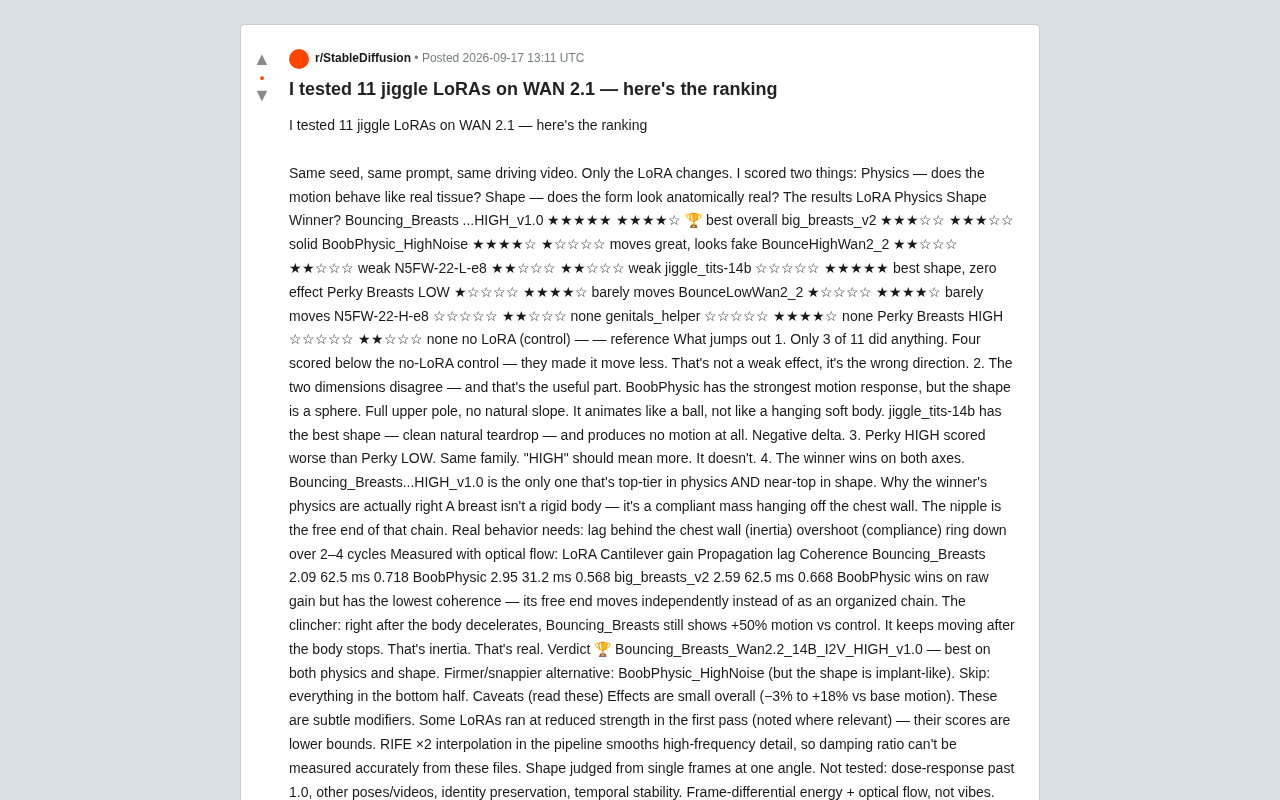
WAN 2.1 Physics Motion LoRA Benchmark: Rankings and Methodology for 11 Models Tested
A Reddit user benchmarked 11 physics-motion LoRAs on WAN 2.1 using optical flow analysis. Only 3 worked meaningfully; 4 scored below the no-LoRA baseline. Full rankings and methodology inside.

Lucid Partners with Bolt to Target European Robotaxi Market
Lucid Motors has signed a letter of intent with European mobility platform Bolt to explore Robotaxi services in Europe, though no vehicle orders have been placed yet.
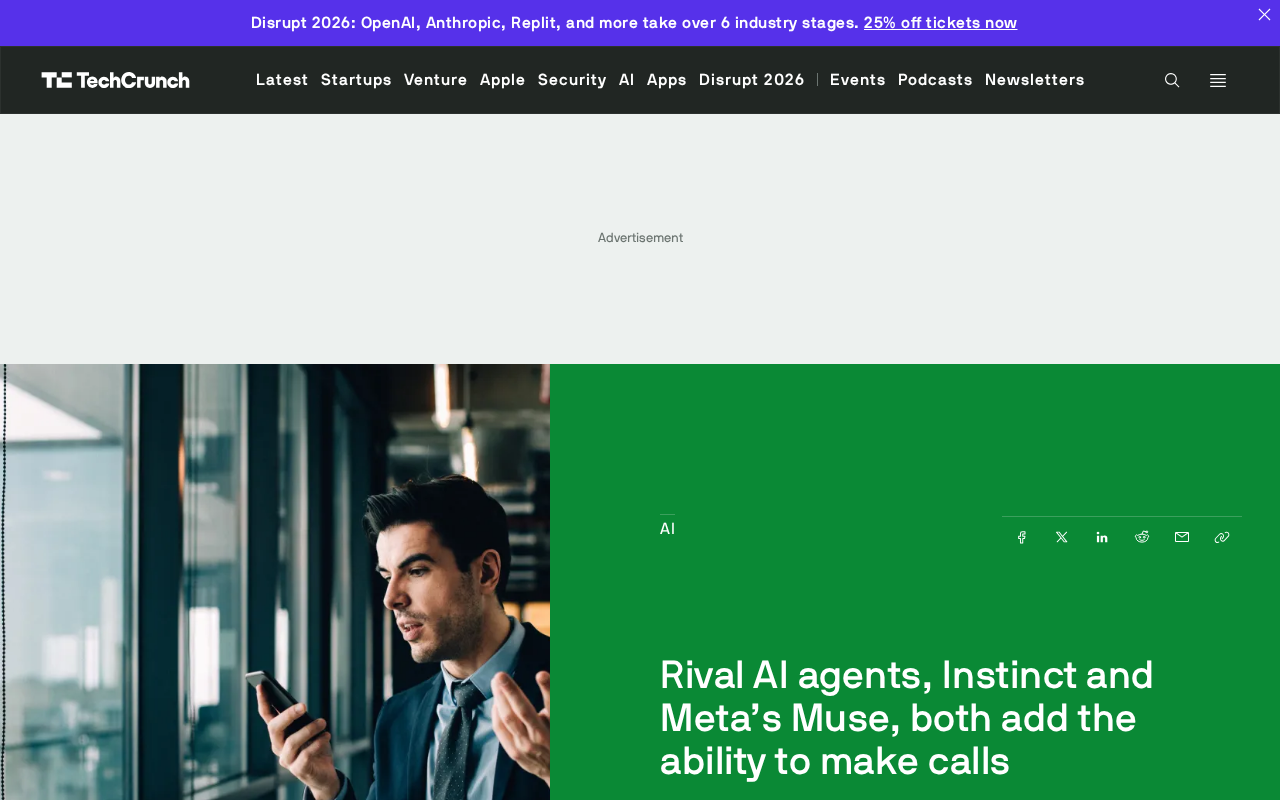
AI Assistants Enter the "Phone Call" Era: Instinct and Meta Muse Add Voice Task Execution
AI assistants Instinct and Meta Muse now make phone calls on your behalf — booking restaurants, canceling subscriptions — marking a leap from chat tools to real-world agents.