Medium Launches TK Writing App: Deeply Integrating AI Assistance into the Creative Process

Medium launches the TK app, deeply embedding AI into the writing process and contrarily embracing AI amid controversy.
Medium has launched a new writing app called TK, whose core idea is not to add a side chat window but to let AI run through every stage of writing and become part of the writing flow, reducing context-switching costs. As AI controversies over copyright, attribution, and content quality heat up in publishing, most platforms remain cautious, but Medium makes AI assistance a core selling point, reflecting a "include first, govern later" judgment. The article analyzes that TK may lower the threshold for starting to write and improve structuring and expansion efficiency, but it also brings new issues such as defining authorship and labeling AI content. Platform competition is shifting from publishing tools to depth of AI integration, and whether TK can retain creators depends on whether the actual experience truly reduces the burden.
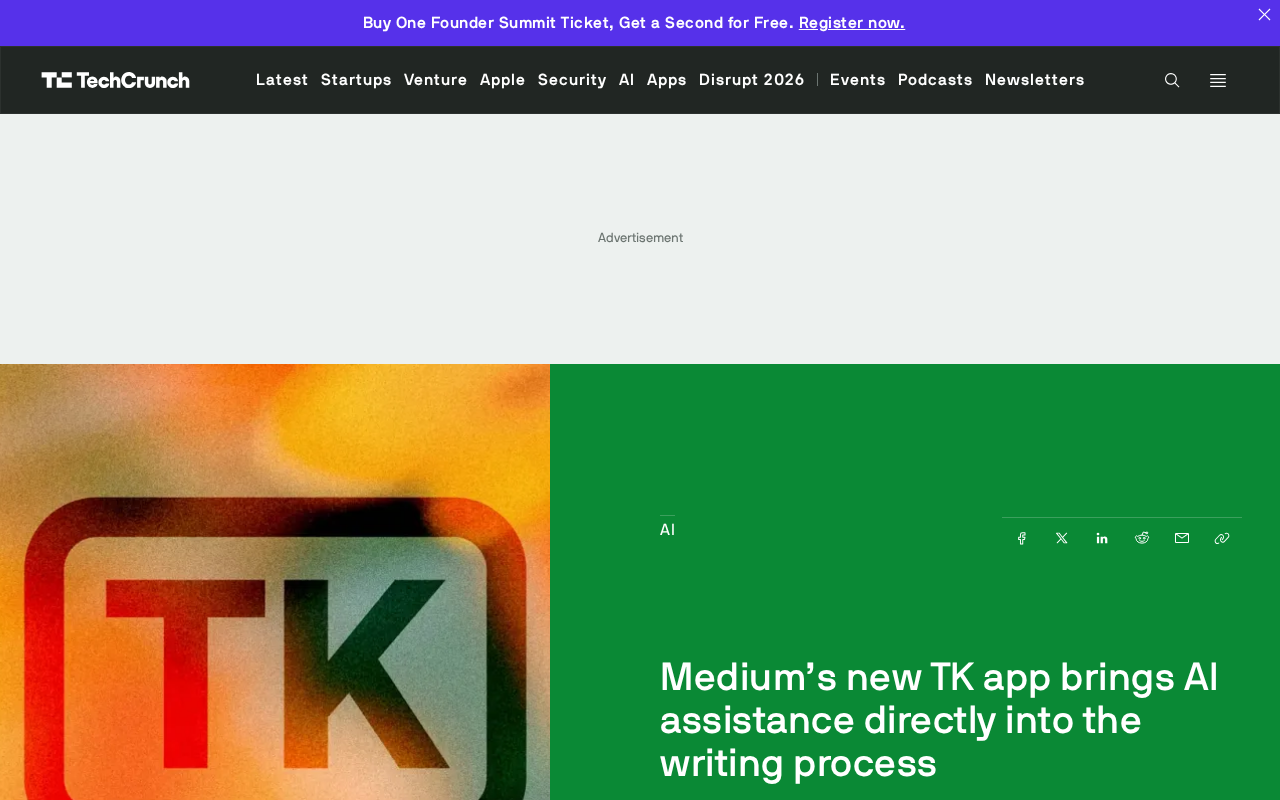
Medium recently launched a new writing app called TK that embeds AI assistance directly into the writing process. The move is rather intriguing—amid growing controversy over AI's role in publishing, Medium has chosen to actively embrace the technology.
A Shift in Positioning: From "Assistance" to "Integration"
The core idea behind Medium's TK app is not simply adding a chat window to the editor's sidebar, but letting AI capabilities run through every stage of writing. This means AI is no longer an external tool that users must actively summon, but part of the writing flow.
This positioning differs subtly from most AI writing assistants on the market. Most products position AI as a "ghostwriter" or "polishing tool"—users finish a paragraph and then hand it to AI for processing. TK's approach is closer to having AI continuously offer suggestions, organize structure, and expand content throughout the creative process, reducing the cost of context switching for users.
"Context-switching cost" is key to understanding this product approach. In a traditional writing workflow, if an author wants to use AI, they typically need to leave the editor, open another conversation window, copy and paste text, and then carry the results back—a process that interrupts the flow state of writing. Research in cognitive psychology shows that frequent task switching leads to attention residue, requiring a period of time to regain focus after returning to the original task. TK attempts to compress this cost by embedding AI into the writing interface, so suggestions appear without the user leaving the current document. This is similar to the evolution logic of code completion in IDEs gradually replacing external searches: the value of a tool lies not only in its capability itself, but also in whether its location and timing fit the user's current task.
A Contrarian Choice Amid Controversy
The timing of Medium's move is noteworthy. The original report pointed out that AI's role in publishing is sparking increasing controversy—from copyright attribution to content quality, from author credits to platform responsibility, discussions around AI-generated content continue to heat up.
In such an environment, most content platforms tend to be cautious or even low-key about AI features. Medium, however, goes the opposite way, making AI assistance the core selling point of its new app. Behind this contrarian choice may be the platform's judgment of creators' real needs: rather than avoiding AI, it is better to incorporate it into a controllable writing process, letting authors always retain the leading role.
Publishing controversies around AI-generated content focus on several specific issues. The first is copyright and training data: generative models are typically trained on massive amounts of copyrighted text, and rights holders question unauthorized use of their works. The second is attribution and transparency: when AI participates in writing, do readers have the right to know, and how should authors declare the proportion of contribution? There is currently no unified industry standard. The third is content quality and platform ecosystem: large amounts of low-cost AI-generated content may dilute distribution opportunities for high-quality content, affecting the platform's recommendation quality and community trust. Medium's contrarian choice can be understood as a "include first, govern later" strategy—rather than having authors use invisible AI tools outside the platform, it is better to bring capabilities inside the platform, thereby preserving the possibility of constraining and labeling how they are used.
What It Means for Creators
For writers on Medium, the changes brought by the TK app may manifest at several levels. The threshold for starting to write is further lowered; the resistance of facing a blank page can be eased through AI prompts. The efficiency of structuring and content expansion may also improve, especially in long-form writing, where AI can help authors quickly sort out logical threads.
But this also brings new questions: when AI is deeply involved in the creative process, how is the "authorship" of a work defined? Will the platform require labeling of AI-assisted content? The answers to these questions will affect creators' acceptance of the TK app. The original report did not disclose these details, but it is foreseeable that Medium needs to find a balance between feature promotion and community trust.
"Authorship" refers to the part of a work that reflects the human author's original judgment, choices, and expression. In a writing process where AI is deeply involved, authorship is not either-or but presents as a spectrum: from AI merely offering structural suggestions while the author independently completes the expression, to AI generating a first draft that the author heavily rewrites, to nearly directly adopting AI output. Different positions correspond to different creative responsibilities and ethical expectations. Related to this are content provenance and labeling mechanisms—for example, content provenance standards such as C2PA attempt to record the generation and editing process of content through metadata, enabling platforms and readers to discern the degree of AI involvement. For Medium, whether to introduce similar labeling requirements will directly affect TK's acceptance in the community and also relate to how the platform balances improving efficiency with maintaining trust.
A New Dimension of Platform Competition
Medium's launch of the TK app also reflects a shift in the focus of competition among content platforms. As publishing tools themselves become homogenized, the depth of AI capability integration is becoming key to differentiated competition. Whether TK can attract and retain creators with its selling point of "AI integrated into the writing process" depends on whether the actual experience truly lightens the writing burden rather than adding new distractions.
From a broader perspective, Medium's choice represents an attitude: AI is not the enemy of publishing, but can be tamed into part of the creative infrastructure. Whether this judgment holds will ultimately be tested by writers voting with their feet.
One-line Summary
Medium launches the TK app, deeply embedding AI into the writing process and contrarily embracing AI amid controversy.
Paragraph Summary
Medium has launched a new writing app called TK. Its core idea is not to add a side chat window, but to let AI run through every stage of writing and become part of the writing flow, thereby reducing context-switching costs. As AI controversies over copyright, attribution, and content quality heat up in publishing, most platforms remain cautious, but Medium makes AI assistance a core selling point, reflecting a "include first, govern later" judgment. The article analyzes that TK may lower the threshold for starting to write and improve structuring and expansion efficiency, but it also brings new issues such as defining authorship and labeling AI content. Platform competition is shifting from publishing tools to depth of AI integration, and whether TK can retain creators depends on whether the actual experience truly reduces the burden.
Related articles

5.3-Inch Phone Crowdfunding: Small-Screen Revival or a $599 Compromise?
Enough Phone crowdfunds on Kickstarter with a 5.3-inch screen, 8GB RAM, and 50MP sensor at $599. The Vergecast asks: can small phones find a middle ground?
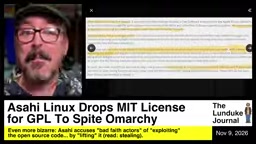
Asahi Linux Ditches MIT for GPL: A Farce Aimed at Omarchy?
Asahi Linux switched its code license from MIT to GPL V2, accusing Omarchy of stealing code and commercializing it. Analysis suggests the move is poorly justified and violates the MIT license, exposing political divisions and AI controversies in the open source community.
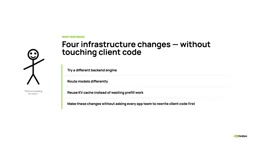
Understanding NVIDIA Dynamo Frontend in 5 Minutes: An OpenAI-Compatible Entry Point for Inference Architecture
What is the NVIDIA Dynamo frontend? Based on the official 5-minute series, this article explains how it uses an OpenAI-compatible API as a stable boundary to enable backend engine replacement, routing, and KV cache reuse in a decoupled architecture.