Mehdi Hasan on the Media Credibility Crisis: How Mainstream Media Undermined Its Own Trust

Mehdi Hasan on media failure, Gaza coverage, misplaced antisemitism charges, and America's racial political future.
In this in-depth interview, journalist Mehdi Hasan systematically dissects multiple crises facing American media and politics. He argues mainstream media's credibility collapse is largely self-inflicted — from WMD lies before the Iraq War to a lack of consistency facing Trump's press crackdowns. On Israel/Gaza, he shows how "genocide" is deliberately avoided in traditional media, and how the issue has become a symbol of populist anger at establishment dark money. He criticizes the misdirected focus on left-wing protesters in the antisemitism debate while real mainstreamed hatred comes from the right and government officials. Finally, he offers a counterintuitive take: demographic change hits the Republican Party hardest, has become its core political driver, and the Great Replacement Theory is moving from the fringe into GOP mainstream discourse.
Journalist and Zeteo News co-founder Mehdi Hasan joined host Astead on America, Actually for a wide-ranging conversation about media credibility, Gaza coverage, and the shifting landscape of American politics. The interview touched on the rise of independent media, Trump's crackdown on the press, and how the Israel question is reshaping the core dynamics of both political parties.
From Cable News to Independent Media: What Does "Freedom" Really Mean?
Hasan left MSNBC (now rebranded as MSNow) about two and a half years ago after his show was cancelled. Looking back, he admits it was a blow at the time — but now sees it as "the best thing that ever happened to me."
For him, the greatest value of independent media is freedom: the ability to respond instantly, turn things around quickly, and — most importantly — say what you actually think. One of his explicit motivations for founding Zeteo was to create a journalism space where he could use "the F-word (fascism), the R-word (racism), and the G-word (genocide)."
He points out that in cable news, calling the situation in Gaza a "genocide" is nearly impossible — the moment you use the word, you're accused of being "one-sided" or even of engaging in "blood libel." The word "racism" is similarly fraught. Since Trump's first term, editors have pushed back with lines like "we can't know what's in his heart." Hasan's view: if calling Trump's statement that "all Somalis are garbage" isn't racism, then the word has lost all meaning.
It's worth noting that Hasan insists on positioning himself as an opinion journalist, not an activist. He doesn't attend candidate fundraisers, doesn't endorse candidates, and Zeteo made no electoral endorsements.
Zeteo News is an independent journalism subscription platform Hasan launched in 2024, operating primarily within the Substack ecosystem on a paid membership model rather than an ad-driven one. Its rise reflects a broader wave of independent media in the United States — as traditional cable news channels face declining ratings and pressure from corporate mergers, a cohort of prominent journalists and commentators have struck out on their own, building news brands with direct audience relationships. The term "opinion journalist" carries a specific meaning in the American media context: distinct from reporters bound by norms of objectivity and neutrality, yet also distinct from political activists. The core is publicly stating a position and making judgments grounded in fact. This identity is key to understanding Hasan's critique — he isn't positioning himself as a neutral observer, but as a journalist with a declared point of view, challenging mainstream media's habit of hiding behind "neutrality" to avoid moral judgment.
The Media's Credibility Crisis: "We Brought It on Ourselves"
On Trump's move to expel MSNow, CNN, and Politico from the White House press pool, both Hasan and his host agree it's an assault on press freedom. But Hasan goes further, arguing that the media itself bears significant responsibility.
He criticizes the White House Correspondents' Association for its inconsistency — condemning Trump's press crackdowns on one hand while hosting him at dinner twice on the other. "If I were a member of the public, I wouldn't take the WHCA seriously either." He calls for consistency and solidarity in the press, but adds a sardonic note: this "unprecedented unity" is long overdue. "It only took eleven years, Astead."
Hasan traces the credibility crisis back to the weapons of mass destruction coverage in the lead-up to the 2003 Iraq War. The real "fake news," he argues, was the lies pushed by mainstream outlets including The New York Times, The Washington Post, the BBC, and CNN. He also cites Trump telling a female reporter to "be quiet, you little pig" — a moment that should have unified the entire press corps in protest, yet prompted no collective response.
On the media's performance during Trump's second term, Hasan gives it a lower grade than during the campaign. He believes the press has "slid back downhill" since the election, a dynamic he links to corporate structure and the institutional tendency to "bow down" under fear and financial pressure — pointing specifically to the merger and capital pressures facing Paramount, CBS, CNN, and others.
The Israel Question: A Larger "Symbol"
Hasan argues that media coverage of the violence in Gaza has severely damaged press credibility, too often "reflecting the biases of the powerful rather than holding them accountable."
On whether foreign policy affects votes, he partially agrees with centrist consultants who argue voters don't vote on foreign policy — Gaza genuinely isn't the top issue for most voters. But he cites YouGov polling commissioned by IMEU showing that in swing states like Michigan, the Gaza issue ranks among the most important concerns for voters who shifted from Democrats to the Green Party or sat out entirely.
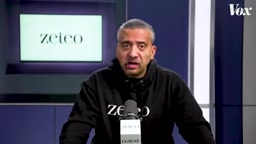
More critically, Hasan argues the Israel issue has become a symbol — one embedded in a broader populist anger at an out-of-touch establishment. Politicians who bow to AIPAC or accept its money are seen as embodying weak politics, corrupt politics, and dark money. He points to the Michigan Senate race, where AIPAC poured $30 million into a candidate race, creating a 9-to-1 spending ratio. "Nobody is happy about that."
As for whether "Israel is committing genocide in Gaza" will become a litmus test in the next Democratic presidential primary, Hasan says it depends on how many candidates are willing to talk about Gaza on the debate stage. If only Ro Khanna raises it, others can still dodge it. But if AOC, Chris Van Hollen, and others speak up together, those who stay silent will have a much harder time getting away with it.
AIPAC (the American Israel Public Affairs Committee) is one of the most influential lobbying organizations in the United States, long seen as a key driver of bipartisan pro-Israel policy. Starting in 2022, AIPAC established a Super PAC and began directly pouring large independent expenditures into Democratic primaries, targeting progressive candidates seen as insufficiently supportive of Israel. This shift made its political role far more visible and controversial in the 2024 election cycle. IMEU (the Institute for Middle East Understanding) is a nonprofit dedicated to providing media resources for Palestinian Americans; its YouGov polling is among the few quantitative studies specifically tracking the impact of the Gaza issue on swing-state voters. Hasan cites this data to push back against the common establishment Democratic consultant argument that foreign policy doesn't move votes.
The Antisemitism Debate: Who Is Really Spreading Hate?
When asked whether the left has lost credibility by failing to police itself, Hasan expresses sharp frustration. He says he's living in an "upside-down world" — the "vast majority of mainstreamed, old-fashioned antisemitism" he sees is coming from the right and neo-Nazis, yet the entire political media conversation is focused on the left.
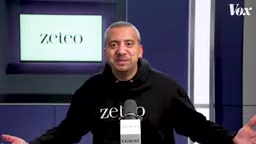
He runs through a list of right-wing examples: Marco Rubio's chief speechwriter at the State Department previously left the DeSantis campaign after using Nazi imagery; according to Politico, Nick Fuentes — who has praised Hitler — allegedly has support among multiple Hill staffers; and Trump himself hosted a Holocaust denier for dinner at his home.
Hasan criticizes organizations like the ADL for focusing on students holding signs on college campuses while ignoring the real power imbalance. "I'm talking about sitting members of Congress, senators, the President of the United States." He warns that labeling people like Macklemore and Ms. Rachel as antisemitic is "draining the word of all its meaning" — ultimately weakening the very fight against antisemitism.
The Rise of Muslim Candidates and Identity Politics
On the rise of Muslim candidates like Zohran Mamdani and Abdul El-Sayed, Hasan notes this should be a positive story about Muslim civic integration — but Muslims are in a "heads I win, tails you lose" situation. Don't participate, and you're accused of not integrating. Participate, and you're accused of spreading Sharia law.

He points out that Mamdani and El-Sayed are more liberal on transgender and LGBTQ rights than many Republicans — there is no Sharia being imposed. Yet the right has openly and racistly labeled them "terrorists" and called for their deportation. Meanwhile, some Democrats have either been similarly racist (such as Gillibrand accusing Mamdani of advocating "global jihad" without ever publicly apologizing) or have simply stayed silent.
On Kamala Harris joining El-Sayed on the campaign trail, Hasan argues this shows Harris shifting toward El-Sayed's positions — not the other way around — since El-Sayed hasn't changed any of his policy stances on the Israel-Palestine issue. He also frankly acknowledges the longstanding tensions between Black and Arab American communities, as well as anti-Black racism and Islamophobia that exist "within every community."
How Demographic Change Is Reshaping American Politics
In the interview's closing stretch, Hasan offers a counterintuitive take on the political implications of America's shifting demographics. The old assumption was that a growing minority population would deliver Democrats an "unstoppable majority" — but Trump's gains among working-class voters across ethnic groups in 2024 proved that wrong.
Hasan argues people have misread the direction of this change's impact: "It hits the Republican Party hardest — it is the driving force of the modern Republican Party." He says today's GOP "exists to fight the browning of America," and that "Make America Great Again" is essentially "Make America White Again."
He cites a study (which he recalls being covered by Vox during Trump's first term): when told that America would become a majority-minority country within a few years, that group of voters became significantly more likely to support Trump. Hasan also notes that the "Great Replacement Theory," which was still considered fringe a decade ago, is now deployed in the campaigns of nearly every major Republican candidate at the federal and state level.
He even offers a half-serious prediction that Nick Fuentes becoming the Republican presidential nominee in 2032 is "very possible" — because that's the direction the party is heading.
The "Great Replacement Theory" originates with French author Renaud Camus's 2011 book of the same name, arguing that white people are being deliberately "replaced" through immigration policy. The theory initially circulated in far-right fringe circles in Europe and the United States, but entered mainstream consciousness after the 2017 Charlottesville "Unite the Right" rally and the 2019 Christchurch mosque shootings, with perpetrators citing its narratives in their manifestos. The shift Hasan identifies — from a fringe theory a decade ago to campaign language now used openly by mainstream Republican candidates — has been documented by multiple political scientists as a structural change in the American mainstream right, not an isolated phenomenon. Nick Fuentes is a prominent figure in the far-right "America First" movement, known for his white nationalist positions and Holocaust denial. Hasan uses him as the logical endpoint of the Republican Party's current trajectory — invoking an extreme case to warn where the present trend leads.
Related articles

"Black October": Did AI Uncover 3% of All Critical Vulnerabilities Ever?
A Reddit post claims 3% of all critical software vulnerabilities ever were found in the past month, dubbed 'Black October.' We break down the statistical issues, how AI-assisted code auditing accelerates discovery, and how developers should respond.

Microsoft Project Gecko: Using AI to Bridge Language Gaps for African Farmers
Microsoft's Project Gecko launches PharmaChat, letting African farmers ask questions in their native language and get precise video clips and farming book chapters via AI. The project also releases three interactive manuals to advance inclusive AI.

Musk's Space Dominance: How Starlink Throttling Undermines Ukraine's Defense
SpaceX's Starshield throttling disabled Ukraine's high-speed interceptor drones, exposing how Musk's private control over low Earth orbit communications affects battlefield dynamics and national security, and highlighting the risks of commercial space militarization and space governance dilemmas.