Meme Culture in Open-Source AI Communities: A Look at Self-Organization Through Reddit
How meme culture in r/StableDiffusion reveals the self-organizing power of open-source AI communities
Through a joke petition on Reddit's r/StableDiffusion, this article explores how meme culture reflects the unique self-organizing nature of open-source AI communities—from bottom-up governance and identity formation to distributed innovation and governance challenges, revealing what truly binds technical communities together.
A Joke That Reveals Open-Source Community Culture
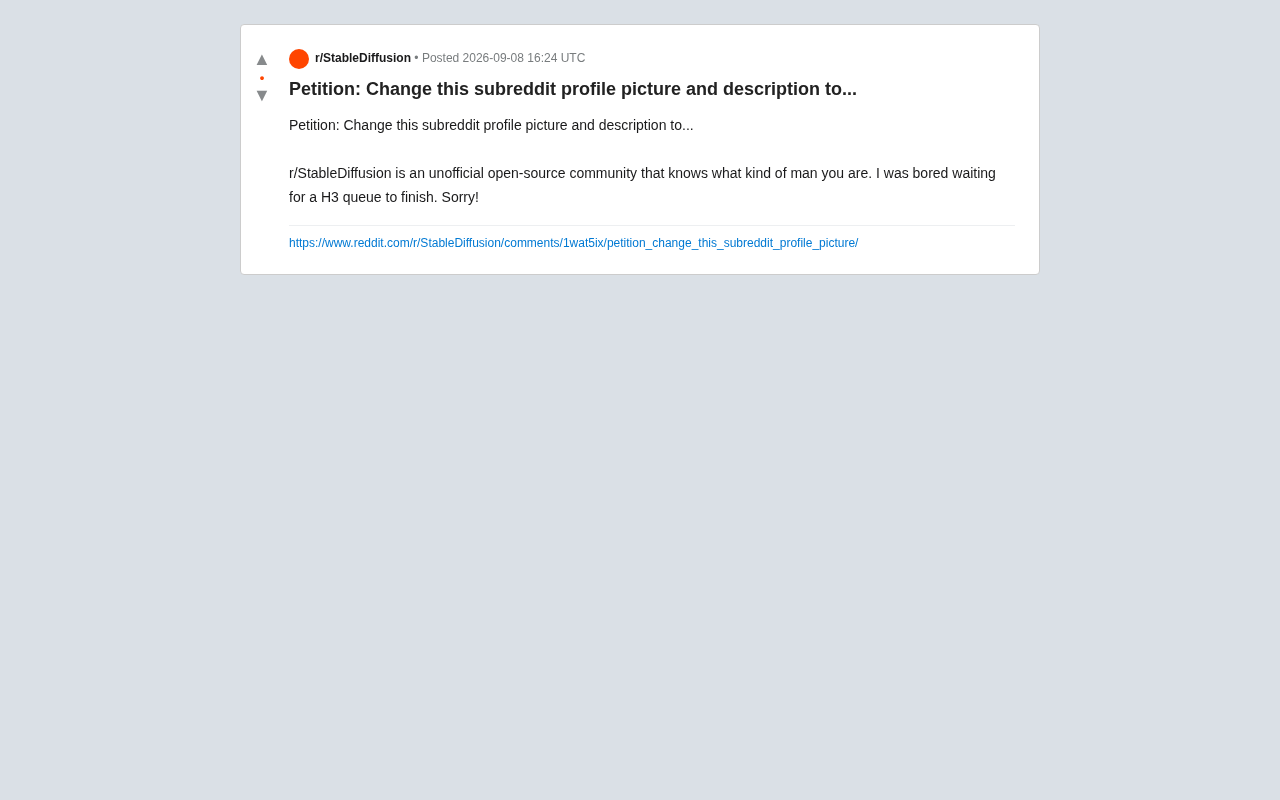
On Reddit's r/StableDiffusion community, a user launched a seemingly frivolous "petition": calling for a change to the subreddit's avatar and description. The poster admitted this was simply the product of boredom while waiting for H3 (a model training or inference task queue) to complete—"Sorry!"
This post might seem trivial, but it perfectly reflects the unique self-organizing culture of open-source AI communities. As an unofficial open-source community, r/StableDiffusion brings together Stable Diffusion enthusiasts, developers, and regular users. There's no strict corporate management here—the community's direction is largely shaped by the collective behavior of its members.
Stable Diffusion is a Latent Diffusion Model publicly released by Stability AI in 2022. Its core innovation lies in shifting the image generation process from pixel space to a compressed latent space, dramatically reducing computational costs. Unlike closed-source commercial products like DALL·E and Midjourney, Stable Diffusion chose the open-source path from the start—model weights, code, and training details are all publicly available. This decision had profound implications: it enabled anyone with a consumer-grade GPU to run image generation locally, completely breaking down the technical barriers to AI art. This openness has spawned a massive community ecosystem around it.
Why Open-Source Communities Are Full of "Meme Culture"
Bottom-Up Community Governance
Unlike official product forums, communities like r/StableDiffusion exhibit distinctly bottom-up characteristics. Users can launch "petitions," vote, discuss community rules, or even express their sense of community identity through jokes at any time. This low-barrier sense of participation is the social extension of the open-source spirit.
Reddit's subreddit structure is itself a unique experiment in community governance. Each subreddit is managed by a volunteer moderator team that sets community rules, reviews content, and handles disputes—all without compensation. Reddit's Karma point system (based on upvotes and downvotes on users' posts and comments), while not directly affecting permissions, creates an implicit reputation mechanism—high-Karma users' statements naturally carry more community credibility. This governance model based on reputation rather than authority mirrors the logic of open-source projects where contributors earn influence through code commits.
The poster mentioned making the post while "waiting for the H3 queue to complete." This detail genuinely reflects AI creators' daily reality—model training and image generation often require long wait times, making community interaction a way to pass the time. In AI workflows, whether it's model fine-tuning or batch image generation, tasks are typically queued for execution. Even with high-end consumer GPUs (like the NVIDIA RTX 4090), generating a high-resolution image can take dozens of seconds, while training a LoRA model might take hours. When using cloud GPU services or shared computing resources, waiting in queues is commonplace. This compute-intensive work rhythm objectively creates substantial "fragmented idle time" for users, and community interaction fills these gaps. The prevalence of meme culture is, to some extent, a product of this "waiting economy."
Identity and Belonging
The phrase "knows what kind of man you are" in the post carries obvious playful undertones—a community inside joke understood by members. These internal memes construct bonds of identification among members—only those truly immersed in the community can smile knowingly.
For open-source projects, this sense of belonging is crucial. The technology itself can be replicated, but an active, cohesive community is difficult to simply replace. Stable Diffusion's ability to maintain influence among numerous AI art tools owes much to its large and vibrant user base. From a sociological perspective, this phenomenon can be explained by "Community of Practice" theory: a group of people gathered by common interests and practices who, through continuous interaction, form shared knowledge systems, behavioral norms, and identity markers. Internal memes, terminology, and shared experiences constitute the "boundary markers" of this practice community—they both unite internal members and naturally distinguish "insiders" from "outsiders."
The Value and Challenges of Open-Source AI Communities
The Power of Distributed Innovation
Communities like r/StableDiffusion are典型 examples of distributed innovation. Users share models, prompt techniques, fine-tuning experiences, and even spontaneously write tools and plugins. Many important technical improvements and usage paradigms incubated from community discussions rather than from some centralized official team.
Specifically, the Stable Diffusion community has produced several milestone technological innovations. The widespread adoption of LoRA (Low-Rank Adaptation) fine-tuning is a典型 case—it allows users to train adapters for specific styles or characters on top of pre-trained models with minimal computational resources and training data, with file sizes typically just tens of megabytes. The community platform Civitai already hosts hundreds of thousands of user-created LoRA models. ControlNet—a conditional control module developed by Stanford's Lvmin Zhang—was initially published as an academic paper, but it was community users who quickly integrated it into AUTOMATIC1111's WebUI, developing dozens of application pipelines including pose control, edge detection, and depth map guidance, enabling its真正 mass adoption. Additionally, AUTOMATIC1111 WebUI itself is a community-organized product—not developed by Stability AI officially, but created by community developers as a graphical interface that became Stable Diffusion's primary usage portal thanks to its plugin ecosystem and ease of use.
The advantages of this model are obvious: fast innovation speed, low iteration costs, and broad scenario coverage. When hundreds or thousands of users each try different directions, the community as a whole forms powerful exploratory capabilities.
Balancing Chaos and Governance
However, highly free communities also face governance challenges. While a joke petition about "changing avatars" is harmless, as the community scales, balancing open atmosphere with content quality maintenance and avoiding chaos becomes a challenge for管理者.
This issue has deep theoretical roots in the open-source movement. In his classic work "The Cathedral and the Bazaar," Eric Raymond distinguished two software development models: the top-down, strictly controlled "cathedral" model, and the open, decentralized "bazaar" model. Open-source communities naturally tend toward the latter, but the pure bazaar model is not without costs—increased information noise, declining discussion quality, and even "tragedy of the commons" (everyone wants to free-ride, but no one wants to maintain public resources). Nobel laureate Elinor Ostrom's research shows that successful public resource governance typically requires clear boundary rules, collective decision-making participation mechanisms, graduated sanction systems, and low-cost conflict resolution pathways. In Reddit communities, these elements exist as subreddit rules, voting mechanisms, ban/mute permissions, and appeal processes, but their effectiveness highly depends on moderator team investment and community member self-discipline.
Open-source communities often rely on volunteer moderators and community consensus to maintain order. This "soft governance" is both their charm and a potential vulnerability.
Summary: Community Vitality in a Joke
A casually posted joke, seemingly insignificant, vividly demonstrates the unique ecosystem of open-source AI communities: low-barrier participation, identity-affirming meme culture, and self-organizing governance logic.
For observers of AI development, such phenomena remind us: technological prosperity depends not only on improved model capabilities, but also on the vitality and cohesion of the communities behind them. It's these seemingly "useless" interactions that constitute the soil for continuous evolution of the open-source ecosystem. When we discuss AI's future, model parameters and benchmarks are certainly important, but those joke posts made while waiting for queues to complete, parameter-tuning insights shared on late-night forums, and the trust and mutual understanding established among community members—these are the truly irreplaceable moat of the open-source ecosystem.
Related articles
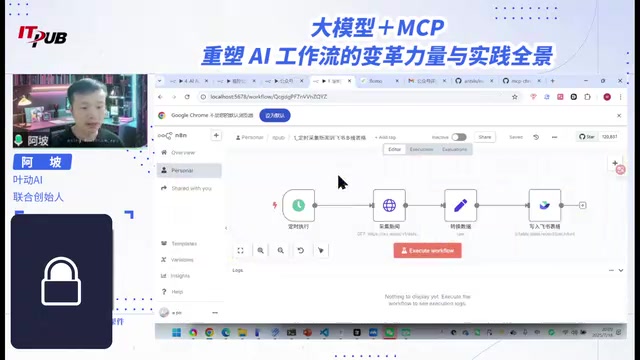
The Evolution of AI Workflows: A Three-Stage Leap from Automation to Intelligent Agents
Three real-world examples reveal the core differences between AI workflows and Agents: traditional automation follows rules, AI workflows add intelligent decisions, and Agents achieve autonomous planning.

Tension Wood: Nature's Built-In Actuator Material
Tension wood is a unique reaction wood tissue in plants that can achieve bidirectional movement like muscle. This article explores tension wood's contraction mechanism, mechanical principles, and implications for biomimetic materials and soft robotics.

AlphaGenome Atlas Explained: How DeepMind Uses AI to Decode 3 Billion Base Pairs
Deep dive into DeepMind's AlphaGenome Atlas platform: how AVI scores assess 9 billion genetic variants and how this petabyte-scale genomic resource accelerates precision medicine research.