Meridian: A Local AI Work Journal That Makes Your Efforts Visible
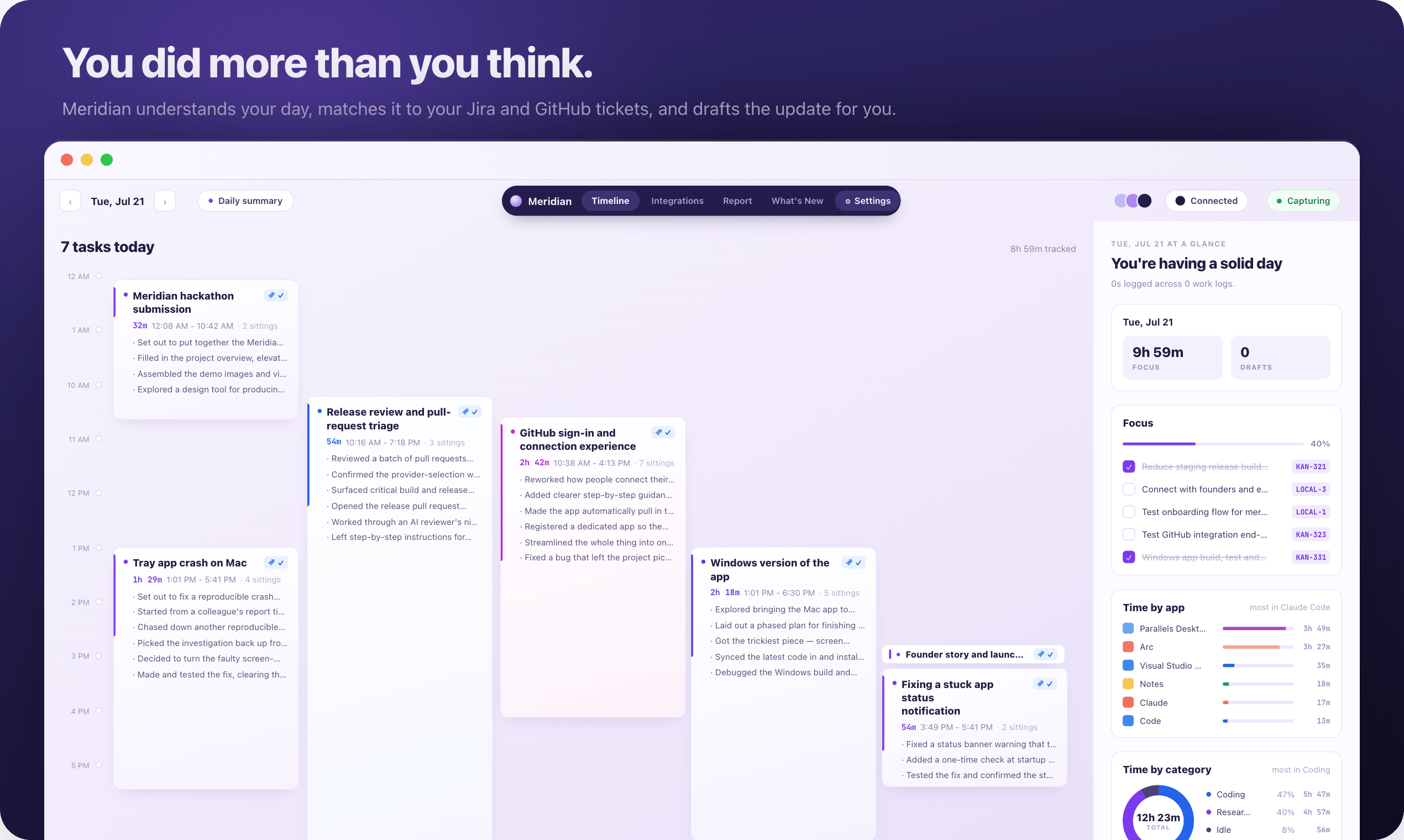
Local-first AI work journal that auto-records your work and generates reports for better visibility
Meridian is an MIT-licensed, open-source AI work journal that runs entirely on your local device. It automatically records your daily work in plain English and generates update drafts for project management tools like Jira, helping developers make their contributions visible without compromising privacy.
In an era of increasingly prevalent remote work and asynchronous collaboration, an uncomfortable reality plagues countless developers and knowledge workers: you've done substantial work, but failed to clearly document and showcase it. When weekly meetings, performance reviews, or even promotion evaluations roll around, you can't recall what you actually accomplished over the past few weeks.
Remote Work and Asynchronous Collaboration are major trends in the software industry in recent years. Remote work breaks geographical constraints, allowing team members to work across different time zones and locations. Asynchronous collaboration emphasizes non-real-time communication through documentation, code commits, ticket updates, and other methods, reducing meeting dependency. This work model accelerated after the COVID-19 pandemic, but also brought new management challenges: managers struggle to directly observe employee work status, employee contributions are easily overlooked, and work visibility has become a key factor affecting performance evaluation and career development.
The open-source tool Meridian, which recently surged to #2 on Product Hunt's daily rankings with 159 votes, directly addresses this pain point. Product Hunt is one of the world's most renowned new product discovery platforms, founded in 2013. It uses a community voting mechanism to showcase the latest tech products, apps, and tools daily. Products are ranked by upvotes received, and landing at the top of the daily list brings enormous exposure and early adopters. For startups and open-source projects, achieving high rankings on Product Hunt often signals that the product has hit a real pain point and gained recognition from the tech community.
What is Meridian: A Local-First AI Work Journal
Meridian's product positioning is crystal clear, with its slogan driving the point home—"Don't let your work go unnoticed. Get promoted!" It's essentially an open-source AI work journal tool that runs completely on your local device.
Unlike the vast majority of efficiency tools that rely on the cloud, Meridian emphasizes several key characteristics: no cloud dependency, no account registration required, MIT open-source license, completely free. This means your work records, code activity, project details, and other sensitive information all stay on your own device and never upload to any third-party servers.
Local-first is a software architecture philosophy emphasizing that data and computation primarily occur on users' local devices rather than relying on cloud servers. This architecture has several core advantages: data privacy (sensitive information never leaves the device), offline availability (works without network connection), fast response (no network latency), and user data ownership. In AI tools, local-first means model inference executes locally, which requires certain device computing power but completely avoids data leakage risks. For enterprise developers, this aligns with many companies' data compliance policies (such as GDPR, SOC2, etc.), since code and work records never upload to third-party servers. For developers at large companies or those with strict data compliance requirements, this point is extremely attractive.
The MIT License is one of the most permissive open-source licenses, developed by the Massachusetts Institute of Technology (MIT). It allows anyone to freely use, copy, modify, merge, publish, distribute, sublicense, and sell copies of the software, with the only requirement being to retain the original copyright notice and license notice in all copies. Unlike copyleft licenses like GPL, the MIT License doesn't require derivative works to also be open-source, making it very friendly for commercial applications. Open-source projects choosing the MIT license typically seek maximum dissemination and adoption while giving users maximum freedom.
Its core workflow can be summarized in one sentence: you focus on getting things done; let it handle the memory work. Meridian records what you do throughout the workday in plain English, and by the end of the day, you get a complete summary of your work.
Core Features: A Complete Loop from Auto-Recording to Reporting
Meridian's most valuable feature isn't just "recording"—it's bridging the last mile from recording to external reporting.
Auto-Generate Update Drafts for Jira and Other Project Management Tools
According to official documentation, Meridian can automatically draft updates for Jira and other project management tools. Jira is a project management and issue tracking tool developed by Atlassian, dominating software development teams. It adopts agile development methodologies, supporting frameworks like Scrum and Kanban. Developers track tasks, bugs, and requirements by creating issues/tickets. Each ticket contains status, priority, assignee, work logs, and other information. However, Jira usage is often criticized by developers: frequently manually updating ticket status, writing progress descriptions, and other administrative work consumes substantial coding time.
The drafts Meridian generates await your confirmation, and once you approve them, they can be published directly. This "AI drafts + human review" model retains the efficiency of automation while avoiding the risk of AI-generated content getting out of control through human confirmation.
For engineers switching between multiple tasks daily, manually updating Jira ticket status and writing work progress is tedious and easily neglected. Meridian automates this "administrative burden," allowing developers to truly focus on coding and problem-solving.
Decoupling "Doing Work" from "Showcasing Results"
This tool actually embodies a noteworthy product philosophy: decoupling "creating value" from "demonstrating value."
Many excellent engineers suffer from focusing only on heads-down work without excelling at managing up and self-promotion. Managing Up is an important soft skill in the workplace, referring to proactively communicating with superiors and keeping managers informed of your work progress and value contributions. In tech, many excellent engineers neglect this because they focus on technical work, resulting in "doing much but saying little," putting them at a disadvantage during performance evaluations and promotions. Self-promotion is more accepted in Western workplace culture but often viewed as immodest in East Asian cultural contexts. Modern workplace research shows that work visibility is crucial for career development, especially in remote work environments.
Meridian helps this demographic "visualize" their daily contributions through automated work journals and reporting mechanisms, giving them solid factual evidence during performance evaluations and promotion reviews. From this perspective, it's not just an efficiency tool but a career development aid.
Open Source and Privacy: Meridian's Differentiating Advantages
In an era where AI applications are generally moving toward cloud subscription models, Meridian has chosen a relatively niche but clear path.
It's categorized under Productivity, Open Source, and Developer Tools—three categories with a quite precise target user profile: tech-savvy individuals who value privacy, recognize open source, and are accustomed to localized workflows.
Adopting the MIT License means developers can not only use it for free but also freely view the source code, redevelop it, or even use it commercially. For those worried about "AI tools spying on my code," the combination of local execution + auditable open source provides a much stronger trust foundation than closed-source cloud services.
However, we need to view this rationally: running AI models locally requires trade-offs between privacy, cost, and performance. Cloud large models (like GPT-4, Claude, etc.) have hundreds of billions of parameters, require massive GPU clusters to run, are powerful but require data upload. Local models are typically quantized, compressed small models (like Llama 7B, Mistral, etc.), with parameter scales ranging from billions to tens of billions, runnable on consumer-grade hardware. Running local AI models typically requires: 8-16GB+ RAM, recent CPU (or GPU acceleration-capable graphics card), and sufficient storage space. For relatively simple tasks like work journals, small local models are usually sufficient. Local AI typically means certain device computing power requirements, and model capabilities may not match top cloud large models. This is the trade-off that the "privacy-first" route must make.
Who Should Use Meridian
Based on its functional positioning, the following groups are worth trying:
- Privacy-conscious developers: Engineers who don't want work data in the cloud
- Team members who report frequently: People who use tools like Jira extensively daily and are tortured by updating tickets
- Action-oriented employees who aren't good at self-promotion: Workplace professionals who want their contributions "seen" by management
- Open-source enthusiasts: Tech geeks who like auditable, customizable tools
Conclusion: Let AI Remember for Us, Not Think for Us
Meridian's emergence reflects that AI efficiency tools are moving from "showing off" to "pragmatism"—it doesn't pile on flashy features but addresses a real and high-frequency pain point: working hard yet struggling to be documented and seen.
Through a local-first architecture, open-source free strategy, and automated loop from recording to reporting, it provides tech workers with a solution that both protects privacy and aids career development. Of course, as a new product just launched on Product Hunt, its actual recording accuracy and adaptability to different workflows still await validation from more real users over time. But at least it points to an interesting direction: let AI "remember" for us, not "think" for us.
Related articles

Personal Reasoning Models: How to Make AI Truly Understand Your Values and Way of Thinking
Explore how to build a personal reasoning model that lets AI reason based on your values and decision preferences. Covers system prompts, RAG, fine-tuning, and the echo chamber risk.
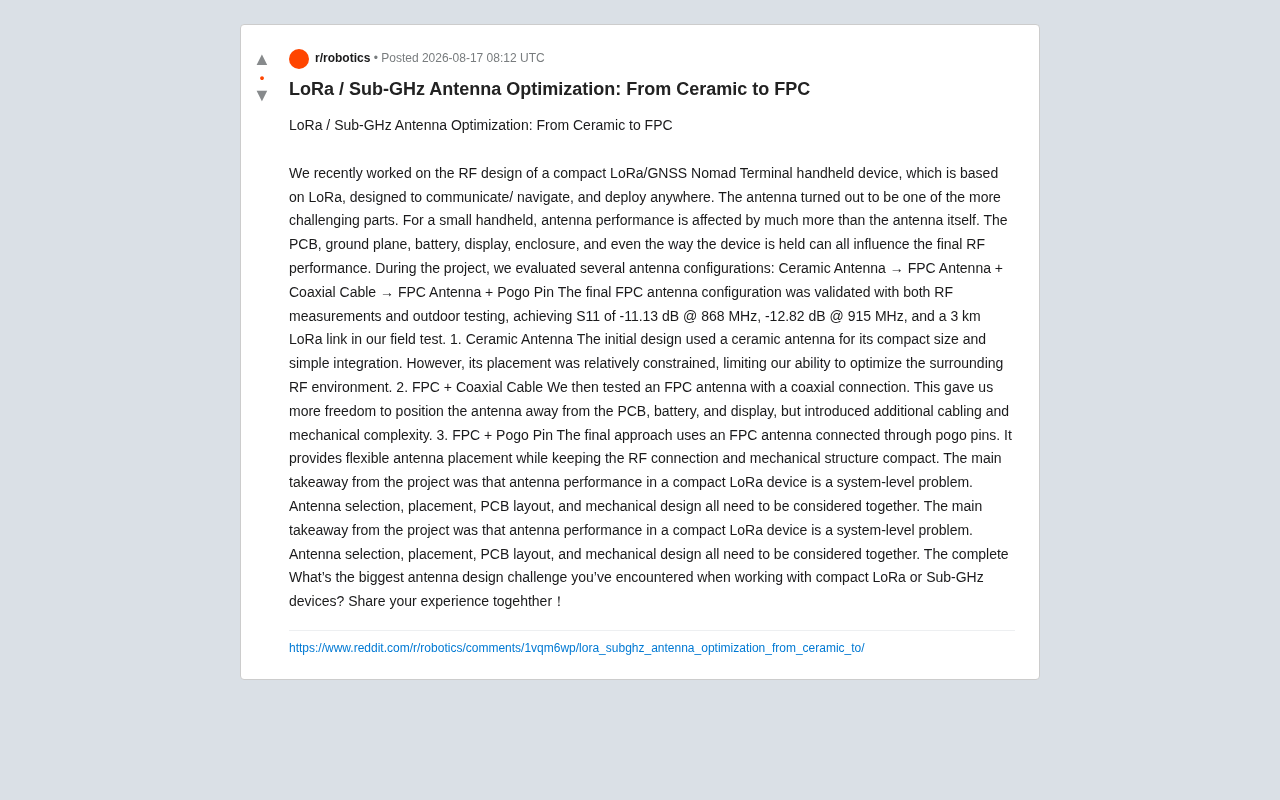
LoRa Handheld Device Antenna Optimization in Practice: Iterating from Ceramic to FPC Antennas
A deep dive into LoRa handheld antenna optimization: from ceramic to FPC antenna + Pogo Pin across three iterations, with S11 return loss data and 3km field testing of compact Sub-GHz RF design.
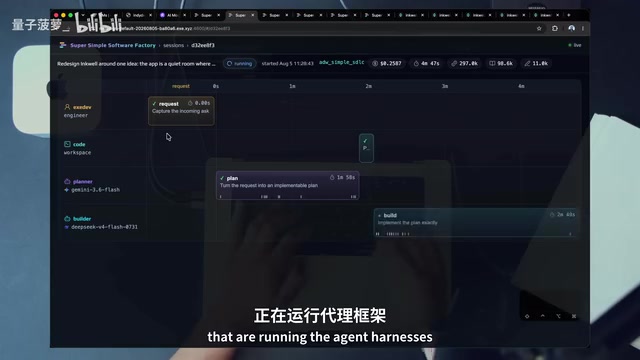
Agent Sandbox in Practice: Boxing Software Factories with Three-Layer Architecture
Deep dive into agent sandbox three-layer orchestration architecture, running multiple software factories in parallel with Best-of-N mode for true isolation, scale, and autonomy. Covers tech stack choices, model layering strategies, and test results analysis.