Meta AI Director Leaves to Found Startup, Taking On Microsoft Office and Google Workspace

Meta AI director leaves to found Ndoc, taking an AI-native approach against Microsoft Office and Google Workspace.
After eight years at Meta, AI director Rohit Patel has left to found the startup Ndoc, directly targeting Microsoft Office and Google Workspace. Patel's background in AI evaluations and reinforcement learning suggests Ndoc may build around model capabilities rather than feature stacking. Office scenarios are a high-frequency AI entry point, and workflow-embedded tools build more stickiness than chatbots. But Microsoft and Google have massive enterprise bases and ecosystem moats, and foundation model capabilities are commoditizing fast. Ndoc must differentiate and build trust while going deep in specific workflows.
After eight years at Meta, AI director Rohit Patel has announced his departure to found a startup called Ndoc, aimed squarely at Microsoft Office and Google Workspace. According to an exclusive report by TechCrunch, Patel focused on AI evaluations and reinforcement learning during his time at Meta. The move reflects both the broader outflow of AI talent from big tech and the fact that office productivity tools are entering a new round of AI-native competition.
From AI Evaluations to Office Tools: An Unusual Pivot
Patel's background centers on two areas: AI evaluations and reinforcement learning — both of which happen to be critical to bringing AI products to market today. AI evaluations determine whether model outputs are reliable, while reinforcement learning determines whether a model can keep improving through feedback. Bringing that technical background into office software suggests Ndoc may not follow the traditional path of piling on features in a document tool, but instead build its product logic around model capabilities.
The office suite market has long been dominated by Microsoft Office and Google Workspace, with newcomers mostly competing on collaboration experience or lightweight design. Patel's choice to take on the two giants head-on suggests he believes an AI-native way of working can fundamentally reshape users' expectations of basic tools like documents, spreadsheets, and presentations.
AI evaluations refer to a systematic set of methods for measuring the quality and safety of AI model outputs, including benchmarks, red teaming, human ratings, and automated graders. The core question they answer is: is the model reliable in real tasks, and will it produce harmful or incorrect outputs? In the productization of large models, evaluations determine whether a model can ship, when to iterate, and how to define its capability boundaries. Companies like OpenAI and Anthropic all have dedicated evaluation teams, and evaluation results are increasingly becoming the basis for regulatory and procurement decisions.
Reinforcement learning is a machine learning paradigm in which a model continuously adjusts its strategy by interacting with an environment and responding to reward signals. In the context of large models, RLHF (reinforcement learning from human feedback) and RLVR (reinforcement learning with verifiable rewards) are widely used to align model behavior and improve reasoning. Evaluations and reinforcement learning often form a closed loop: evaluations surface problems, and reinforcement learning optimizes the model accordingly. This also explains why leaders with experience in both areas are relatively scarce.
Industry Signals Behind the Talent Flow
According to TechCrunch, Patel's eight years at Meta coincided with a period of rapid evolution in the company's AI systems. AI evaluations and reinforcement learning went from research topics to product infrastructure, making the experience of the people responsible for them highly scarce. When this kind of talent flows to startups, it usually means capital and technical judgment have converged on a particular direction.
Office scenarios are a high-frequency entry point for AI adoption — every day, users generate large amounts of structured and unstructured data in documents and spreadsheets that models can understand. Compared with general-purpose chatbots, AI tools embedded in workflows are more likely to build stickiness, which is part of what makes Ndoc's choice of this track reasonable.
AI-native tools are fundamentally different from "layering AI features onto traditional software." The latter typically adds a chat box or autocomplete to an existing interface, with the product logic still centered on manual operation; the former makes model capabilities the core architecture of the product, with the model understanding intent, generating content, and executing multi-step tasks, while the interface plays more of a confirming and adjusting role. For an AI-native office suite, this means documents, spreadsheets, and presentations may no longer be independent files, but artifacts dynamically generated and linked around task goals. Whether enterprises will accept this approach depends on reliability, controllability, and compatibility with existing workflows.
The Real Challenges Facing Ndoc
Challenging Microsoft and Google is no easy task. The two platforms have massive enterprise customer bases, mature permission and compliance modules, and ecosystems built around their office suites. As a startup, Ndoc needs to establish advantages in both product differentiation and enterprise trust. Patel's technical background helps with the former, while the latter depends on long-term accumulation.
Another variable is the speed at which AI capabilities are becoming commoditized. Foundation model capabilities are spreading rapidly through APIs, and AI features in office tools are easy to replicate. If Ndoc wants to build a moat, it may need to go deep in specific workflows rather than compete on general capabilities.
Editorial View
The value of this news is not that yet another executive is founding a startup, but that it marks a direction: AI evaluation and reinforcement learning experts are beginning to turn their attention to the most everyday productivity scenarios. The competitive logic of office suites may shift from features and collaboration to the quality of model-driven task completion. Whether Ndoc can deliver on this judgment remains to be seen, but the thinking it represents is worth watching.
One-line Summary
Meta AI director leaves to found Ndoc, taking an AI-native approach to challenging Microsoft Office and Google Workspace.
Paragraph Summary
After eight years at Meta, AI director Rohit Patel has left to found the startup Ndoc, taking direct aim at Microsoft Office and Google Workspace. Patel's technical background centers on AI evaluations and reinforcement learning — two capabilities critical to bringing AI products to market — suggesting Ndoc may build its product logic around model capabilities rather than feature stacking. The article argues that office scenarios are a high-frequency entry point for AI, and that AI tools embedded in workflows are more likely to build stickiness than general-purpose chatbots, which is part of what makes Ndoc's choice of this track reasonable. But the challenges are significant: Microsoft and Google have massive enterprise customer bases, mature permission and compliance modules, and ecosystem moats, while foundation model capabilities are rapidly commoditizing through APIs, making office AI features easy to replicate. Ndoc needs to establish advantages in both product differentiation and enterprise trust, and may need to go deep in specific workflows to build a moat.
Related articles
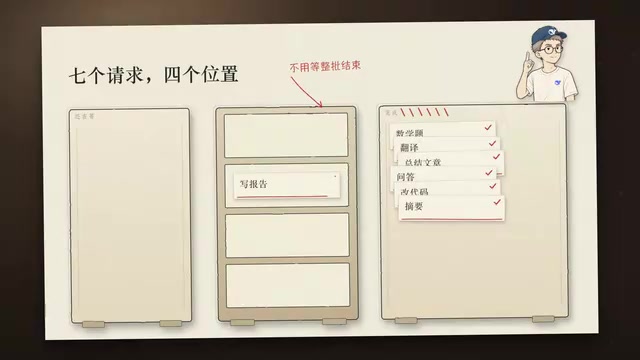
DeepSeek Open-Sources DeepInfer: What Is an Inference Framework Actually For?
DeepSeek open-sources its inference framework DeepInfer under Apache 2.0, supporting DeepSeek V4.1 Flash offline inference. This article explains its request scheduling, FlashMLA/DeepGEMM compute optimization, DSPark speculative verification acceleration, and what it means for developers and ordinary users.
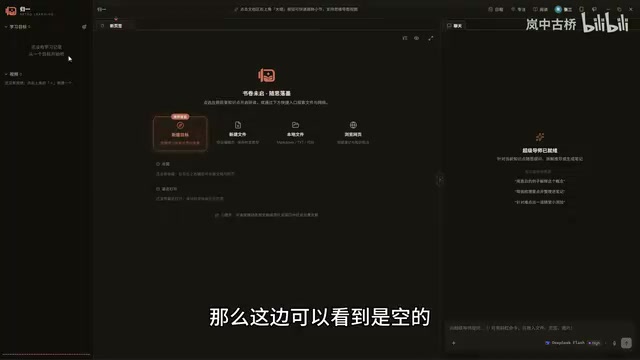
Open-Source AI Learning Agent: A Full Workflow Experience from Topology Graphs to Exam Generation
Explore an open-source AI learning agent: built on DeepSeek API, it constructs knowledge systems via topology graphs, with automatic document generation, notes, super documents, and exams. Learn about its Agent workflow and design highlights.

DeepSeek Whale Girl Open-Source MV Meme: AI Industry Coded Slang About Pivoting to Closed Source
Bilibili's DeepSeek Whale Girl rap MV uses fictional memes to tease the AI open-source vs. closed-source debate, with lyrics full of industry slang. This article explains the meme culture, the Whale Girl symbol, and the open/closed tension.