Meta Muse Charm: AI Hardware Dressed in Gen Z Fashion

Meta's Muse Charm dresses AI hardware in Gen Z fashion by channeling Tamagotchi nostalgia and the bag charm trend.
Meta's Muse Charm borrows the iconic silhouette of the 1990s Tamagotchi and adopts a dangling, bag-charm form factor — not out of pure nostalgia, but as a calculated move targeting Gen Z's love of bag accessories and retro-tech aesthetics. Meta's core strategy repositions AI hardware as a fashion accessory, prioritizing "looks good" and "worth posting" over raw specs — two key purchase drivers for younger consumers. The piece argues that as technology becomes commoditized, design language and cultural identity may matter just as much as features.
Meta's new AI gadget, the Muse Charm, looks a lot like a Tamagotchi at first glance — but its dangling form factor isn't a simple nostalgia play. It's a calculated move that taps into Gen Z's obsession with bag charms, retro tech aesthetics, and the desire to turn everyday devices into fashion accessories.
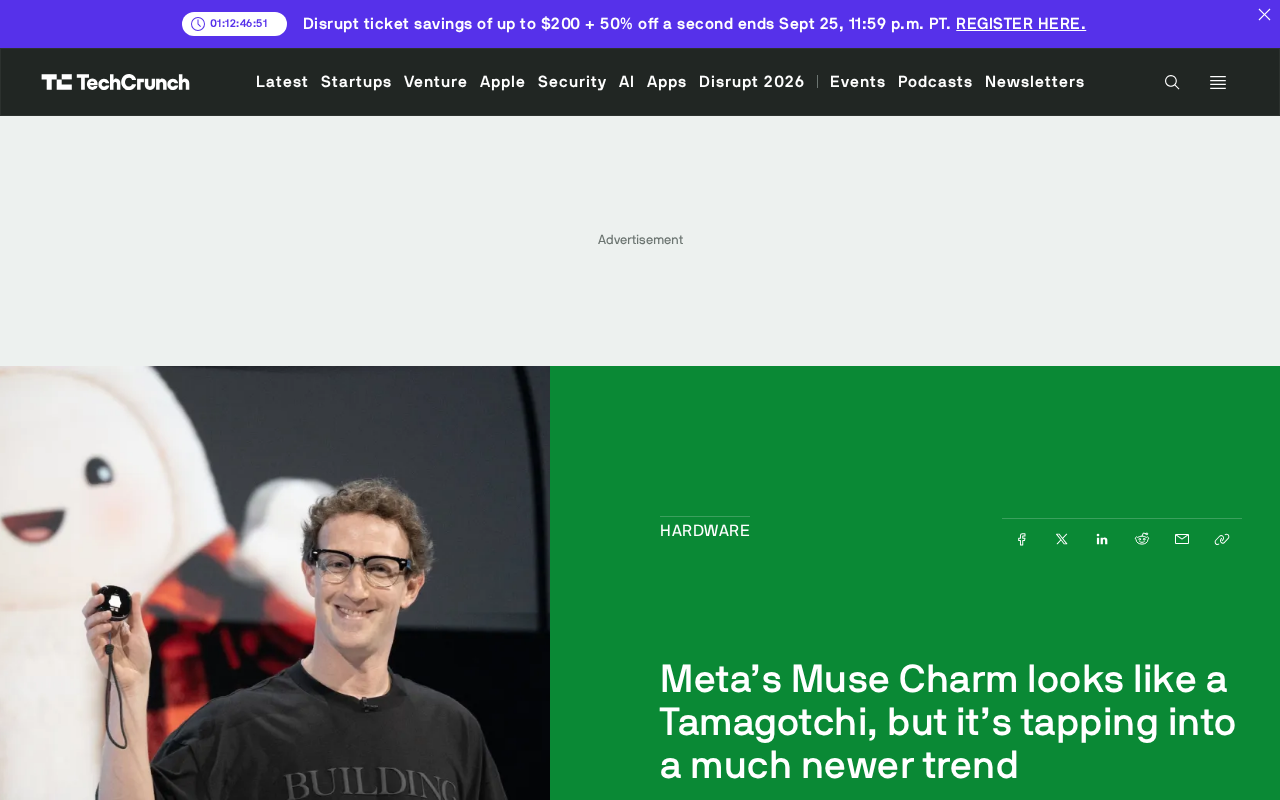
An AI Pendant That Looks Like a Digital Pet
The Muse Charm's design clearly borrows from the visual language of retro handheld electronics like the Tamagotchi — compact, rounded, and made to be carried everywhere. This wasn't an accident. When an AI hardware product wants to break into younger consumer markets, how it looks often matters more than what it can do.
Unlike conventional wearables such as earbuds or smartbands, the Muse Charm takes a "dangling" form factor. It's not worn on the body or placed in the ear — it hangs off a bag or other everyday carry item like a charm. This shift in form transforms an AI device from a "tool" into an "accessory."
Tamagotchi was launched by Bandai in Japan in 1996 and became the world's first wildly popular handheld virtual pet. Users had to feed, clean, and play with their digital pet regularly — or it would "die." Its iconic design featured an egg-shaped shell, a small LCD screen, three buttons, and a strap loop so it could be worn like a keychain. By the late 1990s, Tamagotchi had sold over 76 million units globally, leaving a lasting impression on an entire generation's concept of portable electronics. That cross-generational cultural memory has since made the Tamagotchi form factor a key symbol of retro-tech aesthetics. For Gen Z — who grew up hearing about it rather than living through it — the nostalgia is romanticized in a way that can be even more appealing than firsthand memory.
The Bag Charm Economy and Gen Z's Fashion Logic
Behind the dangling design lies a booming trend: the bag charm craze among Gen Z consumers. In recent years, young shoppers have enthusiastically decorated their bags with all sorts of small objects — plush toys, keychains, mini figurines — as a way to express personality and aesthetic sensibility. Bags are no longer just for carrying things; they've become a canvas for self-expression.
Meta clearly picked up on this. Designing an AI device as a hangable charm means it naturally slots into the styling habits young people already have. Users don't need to change their lifestyle to accommodate a new gadget — they can treat it as part of their existing fashion expression.
The broader retro tech revival also provides fertile cultural ground for a product like this. From the resurgence of flip phones to the comeback of film cameras, young consumers have a particular affinity for the aesthetics of "old electronics." The Muse Charm's nod to Tamagotchi's design plugs directly into this nostalgia-driven aesthetic.
The rise of bag charms has a specific consumer culture context. Luxury brands have long sold bag charms as high-margin accessories, while social media platforms — especially TikTok and Instagram — have pushed bag styling into the mainstream through "GRWM" (Get Ready With Me) content. Meanwhile, "personalization" has become a core demand for Gen Z consumers. Rather than buying the same trendy bag as everyone else, adding unique charms to an affordable bag is lower cost and allows for more expressive freedom. This logic has given rise to what could be called a "charm economy" — from Jellycat plushies to Loewe leather pendants, products at every price point are competing for a few centimeters of bag strap real estate. By entering this space, Meta is essentially competing for a share of young people's "visible identity markers" — not just a functional market.
What It Means to Turn AI Hardware into an Accessory
What's really worth paying attention to is the strategic shift in how Meta is positioning this product: making tech a fashion accessory. Most wearables have traditionally emphasized functionality and a high-tech look. The Muse Charm takes the opposite approach — prioritizing how it looks in everyday outfits and whether it's visually appealing to begin with.
This strategy makes real-world sense. For Gen Z, whether a product gets adopted often comes down to whether it "looks good" and whether it's worth showing off on social media. When AI hardware drops the cold, utilitarian image and shows up instead as a cute, shareable accessory, its chances of crossing the consumer adoption threshold rise significantly.
From the Tamagotchi silhouette, to the bag charm form factor, to the retro-tech aesthetic — the Muse Charm weaves together multiple strands of youth culture into a single AI device. This might hint at a new path forward for AI hardware: winning not by stacking up specs, but by earning the aesthetic approval of younger consumers first.
Conclusion
The Muse Charm may look like a nostalgic novelty, but it's really Meta's precise probe into Gen Z consumer psychology. As technology reaches mass audiences, design and cultural resonance often matter just as much as functionality. Whether this AI pendant truly catches on remains to be seen — but it at least demonstrates one compelling vision of how AI could integrate into everyday fashion.
Related articles

WorkBuddy Full Tutorial: Build an AI Office Automation Agent from Scratch
A complete WorkBuddy tutorial: installation, three working modes, multimodal picture book video practice, expert team agent building, and workflow configuration for low-cost AI office automation.

WorkBuddy Agent Complete Guide: From Beginner to Automation in 7 Days
Based on Bilibili's 256-episode WorkBuddy masterclass, this systematically breaks down Tencent's AI office workbench core capabilities: Agent principles, Skill encapsulation, cross-platform connectors, scheduled automation, knowledge bases, and zero-code development, with learning path recommendations.

8 AI Accounts, 7 Failed: An Honest Review of Using AI to Get Work Done
Only 1 of 8 AI-run Bilibili accounts succeeded. We break down the real difference between "performing AI" and "using AI to get work done."