Meta Muse Ember Lands on AI Gateway: A Lightweight Reasoning Model
Meta's lightweight reasoning model Muse Ember launches on AI Gateway, targeting high-frequency bounded agent tasks.
Meta's lightweight reasoning model Muse Ember has officially launched on AI Gateway. Rather than chasing leaderboard scores, it targets the high-frequency repetitive bounded tasks in agent runs—coding subtasks, tool calls, and document analysis. It supports text, image, and video inputs with a 1M-token context window, and reasoning effort can be adjusted from minimal to max. Under the unified name meta/muse-ember, it's callable via AI SDK, Chat Completions, Responses, and the Anthropic Messages API, and usable in coding agents like Claude Code, Codex, and Cursor. AI Gateway passes through provider pricing as-is with no markup or platform fees, and offers retries, failover, budget controls, and Zero Data Retention. Official benchmarks and latency data haven't been published, so actual performance still needs verification.
Meta's Muse Ember model has officially launched on AI Gateway. This isn't yet another flagship model chasing leaderboard scores—it's a lightweight reasoning model explicitly aimed at the "high-frequency repetitive steps" in agent runtime. Meta positions it for bounded, batch-executable scenarios like coding subtasks, tool calls, and document analysis.
Why We Need a "High-Frequency" Reasoning Model
In a complete agent run, the tokens are often not consumed by the hardest decision point, but by the hundreds or thousands of small actions in between: implementing a helper function, making a tool call, compressing a document into a summary. These tasks aren't individually difficult, but they repeat frequently and are sensitive to latency and cost. Using a flagship reasoning model for these steps is a classic case of resource misallocation.
According to official materials, Muse Ember is designed precisely for these "bounded tasks"—the bounded tasks an agent repeatedly executes within a single run. This positioning is pragmatic: rather than going head-to-head with large models on general capabilities, it's better to make the high-frequency segment faster and cheaper.
Reasoning Model is a class of large language models that has emerged in recent years. Its defining feature is explicit multi-step thinking (such as chain-of-thought) before generating the final answer, which yields better performance on complex tasks like math, programming, and logical planning. Typical reasoning models include OpenAI's o series and DeepSeekAd-R1. The trade-off is that the reasoning process consumes more tokens, with latency and cost significantly higher than ordinary chat models.
For this reason, the industry has begun to stratify reasoning models: flagship reasoning models handle planning and hard problem-solving that require deep thinking, while lightweight reasoning models take on high-frequency subtasks with fixed formats and clear boundaries. Muse Ember belongs to the latter—it retains reasoning capability but focuses optimization on throughput, latency, and per-call cost, making it suited to the large number of repetitive, low-to-medium-difficulty steps in the agent loop.
Multimodal Input and 1M Context
Muse Ember accepts text, image, and video inputs, with a context window of 1M tokens. This means an agent can feed code, screenshots, documents, and video clips to the model in a single run without switching interfaces across modalities.
For coding agents, this is clearly valuable: error screenshots, relevant source code, and design documents can all be loaded into the context at once, reducing information loss across multiple calls. Tool calling lets each step's return value flow directly into the next step, forming a closed loop.
Reasoning effort can be adjusted from minimal to max, letting teams allocate compute by task complexity—keeping simple helper-function implementations at low settings and raising them for tasks that require multi-step reasoning.
Context window refers to the maximum total tokens a model can receive and process in a single call, covering both the input prompt and generated content. 1M tokens roughly corresponds to hundreds of thousands of Chinese characters, or thousands of lines of code plus multiple images, enabling an agent to load longer source code, logs, documents, and screenshots into a single request, avoiding information loss caused by repeated truncation and summarization.
However, the longer the context, the more prominent the issues of effective attention utilization and reasoning cost become—the model may not uniformly attend to all positions in the window, and tail information is easily diluted. Therefore, the practical value of a 1M window depends on how information is distributed in the task. For long-context scenarios, it's still advisable to place the most critical materials in prominent positions and evaluate recall quality through testing.
Integration: One Model Name Across Multiple APIs
Muse Ember's invocation paths cover several mainstream interfaces: AI SDK, Chat Completions, Responses, and the Anthropic Messages API. The model name is uniformly meta/muse-ember.
Using AI SDK as an example, invocation is quite straightforward:
import { streamText } from 'ai';

const result = streamText({
  model: 'meta/muse-ember',
  prompt: 'Write a JavaScript helper that deduplicates strings while preserving order.',
});
When using it in coding agents like Claude Code, Codex, or Cursor, you first need to install the latest Vercel CLI and run npx vercel ai-gateway setup, then select meta/muse-ember in the agent. An official model playground is also available for direct testing.
What AI Gateway Provides
Muse Ember is distributed through AI Gateway rather than only through proprietary channels, reflecting a full set of engineering capabilities at the gateway layer: unified API calls, usage and cost tracking, retry and failover configuration. For production agent applications that need "higher availability than any single provider," these capabilities matter more in practice than the model's parameters.
On billing, AI Gateway passes through provider pricing as-is, with no markup and no platform fees on reasoning, and BYOK (bring your own key) requests are covered as well. It also offers custom reports, Zero Data Retention support, API key budget controls, and routing rules.
BYOK (Bring Your Own Key) means users use their own API keys obtained from the model provider, with requests forwarded through the gateway. The benefit: calls still go through the gateway's unified interface, logging, and retry mechanisms, but billing is settled directly between the user and the provider, making it easy for enterprises to continue using existing procurement contracts and quotas.
Zero Data Retention is a privacy compliance option that requires request and response content not to be persistently stored—processed in memory and discarded immediately. For agent applications handling sensitive data like source code and internal documents, this is often a prerequisite for going to production. Together, the two allow the gateway to provide engineering convenience while meeting enterprises' dual requirements for cost attribution and data compliance.
A Few Takeaways Worth Noting
From a product positioning standpoint, Muse Ember reflects a trend: competition among reasoning models is shifting from "strongest at a single point" to "tiered configuration." Agent systems need a combination of models—flagship models handle complex planning, lightweight models handle high-frequency execution. Muse Ember fills in exactly the latter piece.
Another signal is the standardization of integration. Supporting all three APIs—Chat Completions, Responses, and Anthropic Messages—means Meta wants this model not to be locked into a specific ecosystem, but to minimize migration costs as much as possible. For teams already using multi-model routing, this will save considerable adaptation work.
It's worth noting that official materials do not provide specific performance benchmarks or latency data. The actual effective utilization of the 1M context and the reasoning quality at the minimal setting still need to be verified through real testing. The true test of a lightweight reasoning model lies in stability and the cost curve under high-frequency calls, not just single-call performance.
For teams building agent pipelines, Muse Ember is worth adding to the candidate pool for a round of comparative testing—especially for projects where tool calls and document summarization have consumed a large share of the budget.
One-line Summary
Meta's lightweight reasoning model Muse Ember launches on AI Gateway, targeting high-frequency bounded agent tasks.
Paragraph Summary
Meta's lightweight reasoning model Muse Ember has officially launched on AI Gateway. It's not positioned as a flagship model chasing leaderboard scores, but as a model for the high-frequency, repetitive bounded tasks in agent runs—coding subtasks, tool calls, and document analysis. It supports text, image, and video inputs, has a 1M-token context window, and lets reasoning effort be adjusted from minimal to max so teams can allocate compute by task complexity. Under the unified name meta/muse-ember, it can be invoked via AI SDK, Chat Completions, Responses, and the Anthropic Messages API, and used in coding agents like Claude Code, Codex, and Cursor. AI Gateway passes through provider pricing as-is with no markup or platform fees, and provides retries, failover, budget controls, and Zero Data Retention. Official performance benchmarks and latency data have not been published, so actual performance still needs testing.
Related articles
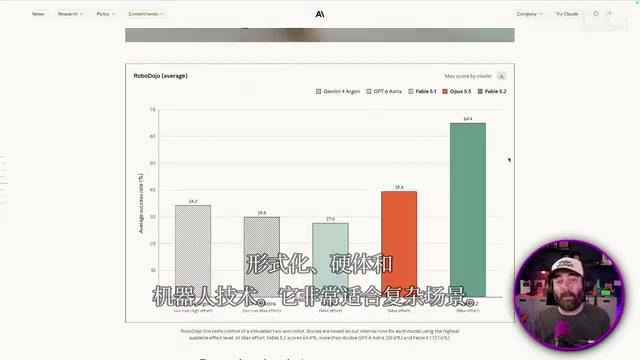
Claude Fable 5.2 Hands-On: Top Intelligence but Absurdly Expensive
Anthropic releases Claude Fable 5.2 and Mythos 5.2, topping the Artificial Analysis intelligence leaderboard with big gains in scientific reasoning, strong game and hardware design, but max mode costs ~$26.54 per task. Hands-on game, circuit board design, and pricing advice.

1,000 AI Agents Formalize Fermat's Last Theorem in 30 Hours, Anthropic Releases New Claude Models
Anthropic releases Claude Fable 5.2 and Mythos 5.2: 1,000 agents formalize Fermat's Last Theorem in 30 hours, coding costs halved, plus hardware design and physics.

Claude Fable 5.2 Released: A Thousand AI Agents Build a Bootable OS in 8 Days
Anthropic releases Claude Fable 5.2 and Mythos 5.2—same model, two safety tiers. Demo shows 1,000 AI agents build a bootable OS in 8 days, formalize Fermat proof in 30 hours, score 64.6 beating Gemini 4 Carbon, price cut 20%.