Meta Open-Sources Localized Agent AI Model: A New Starting Point for Edge Intelligence

Meta releases open-weight models for local Agentic AI, pushing intelligence to the edge.
Meta has released a new open-weight model targeting localized Agentic AI, enabling developers to deploy and customize autonomous AI agents on local devices. This move addresses privacy, latency, and cost concerns while deepening Meta's open-source ecosystem strategy. The article explores the technical foundations of Agentic AI, edge hardware readiness, and critical safety challenges facing local agent deployment.
Introduction: Agent AI Goes Local
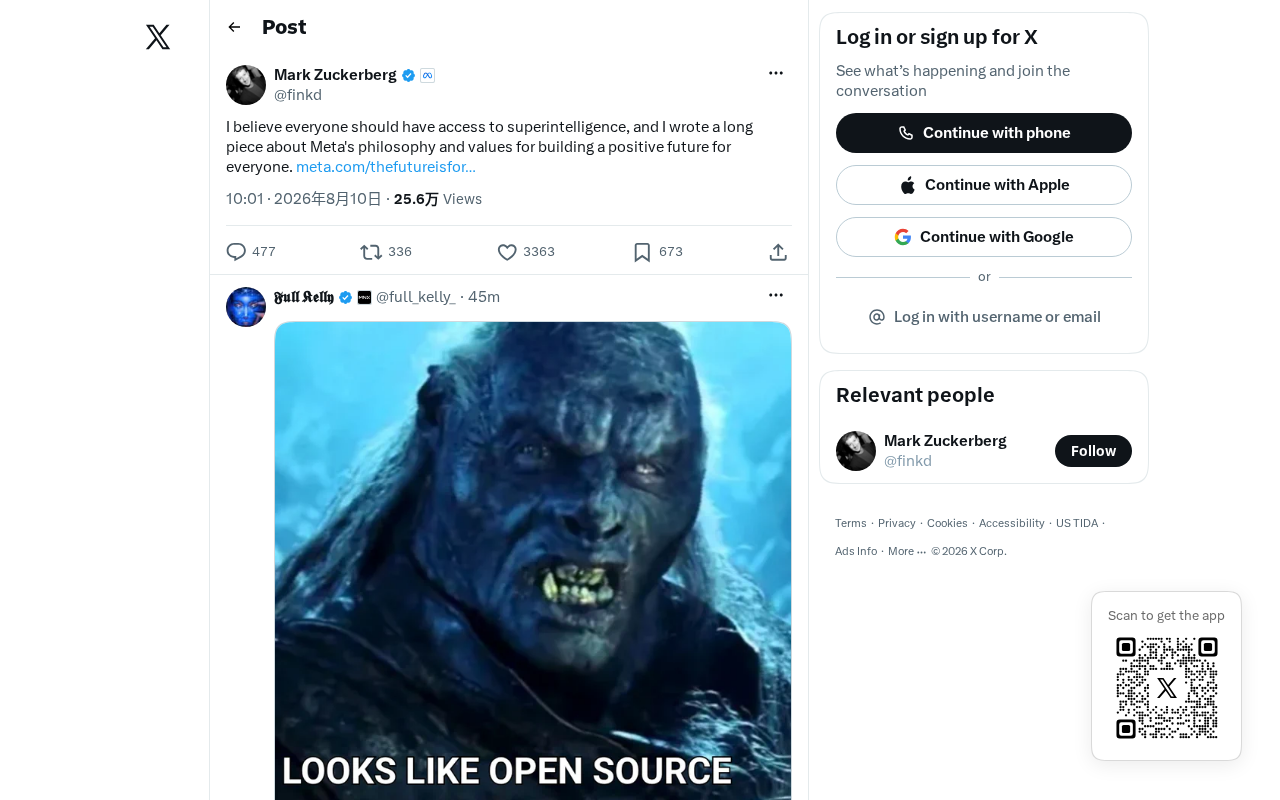
Meta recently released a new open-weight model squarely targeting one of the hottest directions in AI today—localized Agentic AI. This move not only continues Meta's longstanding strategy in open-source large models but also reflects the industry's strong bet on the trend of "bringing AI capabilities back to the edge."
"Open-weight" means the model's parameters are publicly available—developers can freely download, deploy, and fine-tune them without relying on cloud APIs. This stands in stark contrast to the closed-source commercial models of companies like OpenAI and Anthropic, giving Meta a unique position in the developer ecosystem. It's worth noting that there's a subtle but important distinction between open-weight and fully open-source. Fully open-source typically means not just the model parameters are public, but also the training data, training code, and data processing pipelines, in accordance with OSI (Open Source Initiative) standards. Open-weight, on the other hand, usually only releases the final parameter files—developers can use these weights for inference and fine-tuning, but the training data and complete training pipeline may not be disclosed. Meta's Llama series follows exactly this approach, with a community license that permits commercial use but with certain restrictions—for example, companies with over 700 million monthly active users must apply for a separate license. This strategy allows Meta to attract a large developer base while retaining a degree of commercial control.
What Is Localized Agentic AI
From Conversation to Action: The Essential Shift of Agentic AI
Traditional large language models primarily serve as "conversationalists"—you ask, they answer. Agentic AI takes this further: it can autonomously plan tasks, invoke tools, execute multi-step operations, and even accomplish complex objectives without human intervention. These models are no longer passive information providers but active "executors."
Agentic AI typically relies on several key technical components: First is Planning—the model needs to decompose complex goals into executable sub-task sequences. Second is Tool Use/Function Calling—the model can identify when external tools are needed (such as search engines, code interpreters, file system operations, etc.) and correctly construct the call parameters. Third is Memory, including short-term working memory (conversation context) and long-term memory (knowledge accumulation across sessions). Finally, there's Reflection—when execution results don't meet expectations, the model can identify errors and adjust its strategy. Current mainstream Agent frameworks like LangChain's LangGraph, Microsoft's AutoGen, and CrewAI all build different orchestration logic around these core capabilities. The ReAct (Reasoning + Acting) paradigm is one of the most widely adopted Agent reasoning patterns, allowing the model to alternate between reasoning and action in a closed-loop feedback cycle.
Why Emphasize "Local" Deployment
Meta's positioning of this model for "local agentic" scenarios is driven by several key considerations:
- Privacy and Data Security: Agents typically need access to sensitive user information like files, emails, and calendars. Running the model on local devices means data never needs to be uploaded to the cloud, fundamentally reducing leakage risk.
- Latency and Response Speed: Local inference eliminates network round-trip delays, which is especially critical for agent tasks requiring real-time decision-making.
- Cost Control: Frequent cloud API calls are expensive, while local deployment involves a one-time investment with unlimited subsequent use.
- Offline Availability: In environments without network access, local Agents can still function normally.
Continuation and Deepening of Meta's Open-Source Strategy
Meta has long been the standard-bearer of the open-source AI camp. From the successive releases of the Llama series to the massive developer community built around them, Meta has expanded its technological influence through open weights while carving out a differentiated path against closed-source giants.
This new model's focus on agentic scenarios can be seen as a vertical deepening of Meta's open-source strategy. It's no longer content with providing a "general-purpose chat model" but aims to establish standards and ecosystems around a specific application paradigm—agents. For developers, a locally runnable, freely customizable Agent base model undeniably lowers the barrier to building autonomous AI applications.
From a broader business logic perspective, Meta's underlying motivation for promoting open source is closely tied to its core business. Meta's primary revenue comes from advertising, and open-sourcing AI models can lower AI adoption costs across the industry, stimulate more AI applications, and thereby increase user activity and advertising value on Meta's platforms. This is similar to Google's logic in open-sourcing Android: the operating system is free, but ecosystem prosperity drives search advertising revenue. At the same time, open source is both a talent strategy and a technical standards strategy—it attracts top researchers to contribute code and discover vulnerabilities, while making Meta's technical architecture the de facto industry standard.
Industry Significance and Potential Impact
Accelerating Edge AI Deployment
With the increasing computational power of end devices—whether phones equipped with NPUs or PCs with high-performance GPUs—running medium-scale AI models locally is becoming increasingly feasible. If Meta's model can run efficiently on consumer hardware, it will further accelerate the adoption of edge AI.
NPU (Neural Processing Unit) is an accelerator chip specifically designed for AI inference tasks. Unlike general-purpose CPUs and GPUs, NPUs are deeply optimized for matrix operations and low-precision computation, enabling AI inference at lower power consumption. Current mainstream NPU solutions include Qualcomm Snapdragon X series' Hexagon NPU (45-75 TOPS), Apple M-series chips' Neural Engine (38 TOPS), and Intel Core Ultra series' NPU (up to 120 TOPS). On the PC side, Microsoft's Copilot+ PC standard requires devices to have at least 40 TOPS of NPU compute. Combined with quantization techniques in model compression—compressing models from FP16 (16-bit floating point) to INT4 (4-bit integer)—models that previously required tens of GB of VRAM can now run on consumer devices. While there is some precision loss, it's sufficient for many practical scenarios.
Reshaping the Developer Ecosystem
Open weights mean developers can fully control model behavior. Compared to calling black-box APIs, a locally controllable Agent model allows developers to perform deep customization—from tool-calling logic to safety boundaries, everything can be adjusted as needed. This is particularly attractive for enterprise private deployments.
For enterprise users, choosing between open-source and closed-source requires weighing Total Cost of Ownership (TCO): closed-source APIs have clear but continuously accumulating marginal costs, with fees incurred per call that scale linearly or even super-linearly with usage; open-source models have higher upfront deployment and operations costs (requiring hardware procurement, inference environment configuration, and model optimization), but extremely low long-term marginal costs—particularly suitable for high-frequency, data-sensitive scenarios.
Intensifying the Open-Source vs. Closed-Source Debate
Meta's continued open-sourcing objectively puts pressure on closed-source business models. When high-quality open-weight models can meet most Agentic needs, user dependence on expensive closed-source APIs may decline. This route war over AI infrastructure will continue to heat up.
Real-World Challenges Worth Watching
It's worth noting that information about this release is currently limited (only preliminary discussions on HackerNews, without widespread community feedback). Key details about the model's specific parameter scale, performance benchmarks, and hardware requirements still await further disclosure in Meta's official documentation. Readers should rely on official technical reports and independent third-party evaluations when assessing its actual capabilities.
Additionally, local Agentic AI faces significant real-world challenges:
- Capability Ceiling: Constrained by local compute power, local models typically have weaker reasoning capabilities compared to top-tier cloud models.
- Safety Governance: How to set effective guardrails while granting AI autonomous execution capabilities—preventing misoperations or malicious exploitation—remains an unsolved challenge.
In terms of safety governance, local Agentic AI involves challenges across multiple layers. First is permission management: when Agents need to execute operations like file deletion, email sending, or code execution, designing a Principle of Least Privilege and Human-in-the-Loop confirmation mechanisms is crucial. Second is the risk of Prompt Injection attacks: malicious content may be embedded in documents or web pages processed by the Agent, inducing it to perform unintended operations—for example, a seemingly ordinary email containing hidden instructions could make the Agent leak sensitive information. Third is cascading failure risk: during multi-step execution, small errors in early steps can be amplified in subsequent steps, leading to serious consequences. Current industry solutions include: sandboxed execution environments, operation reversibility design, tiered authorization mechanisms, and dedicated Guardian Models to audit Agent behavioral intent in real time.
Conclusion
Meta's release of an open-weight model for local Agentic AI is another important signal of the industry's shift from "cloud-centralized" to "edge-distributed" and from "passive Q&A" to "active execution." It reflects both the direction of technological evolution and Meta's strategic intent to leverage open source to build ecosystems. For developers and enterprises, this may be a new tool worth closely tracking and experimenting with at the right time. Its true value remains to be validated through more complete technical documentation and real-world applications.
Key Takeaways
Related articles

Chain of Thought Isn't Just for AI: How Humans Can Use CoT to Improve Thinking Quality
Chain of Thought isn't just a prompt trick for large models. Starting from a Hacker News discussion, this article analyzes why CoT works for human thinking too, breaks down actionable ways to transfer it, and highlights the key differences between human CoT and machine CoT.
Cloudflare Teams Up with OpenAI: Closi…
Cloudflare Teams Up with OpenAI: Closing the Loop from Vulnerability Discovery to Defense with AI
Cloudflare uses OpenAI Daybreak to investigate security vulnerabilities and generate reviewable remediation plans, while developers use Codex to boost coding efficiency and quality.

Orca Multi-Agent Orchestration in Practice: A Guide to Parallel Collaboration with Claude and Codex
Orca is Stable AI's free open-source agent workbench supporting 34 agents like Claude Code and Codex in parallel. Learn its Git worktree isolation, multi-model orchestration, and mobile management.