Meta to Launch a Prediction Market App: Can Zuckerberg's New Bet Shake Up Polymarket?

Meta plans a standalone prediction market app, leveraging its social ecosystem to challenge Polymarket.
Meta CEO Mark Zuckerberg is planning to launch a standalone prediction market app that will leverage Facebook and Instagram for user acquisition. The strategy mirrors Meta's proven playbook of standalone apps with parent-platform traffic. While Meta's social graph offers unique differentiation, the company faces significant regulatory hurdles and must compete against established platforms like Polymarket that already have deep liquidity and professional trading communities.
Prediction Markets Become the New Battleground for Tech Giants
Meta CEO Mark Zuckerberg is planning to have Meta launch its own prediction market app. According to The New York Times, the app will operate independently from Meta's other social media products, though platforms like Facebook and Instagram may funnel users toward it, driving engagement with the prediction market.
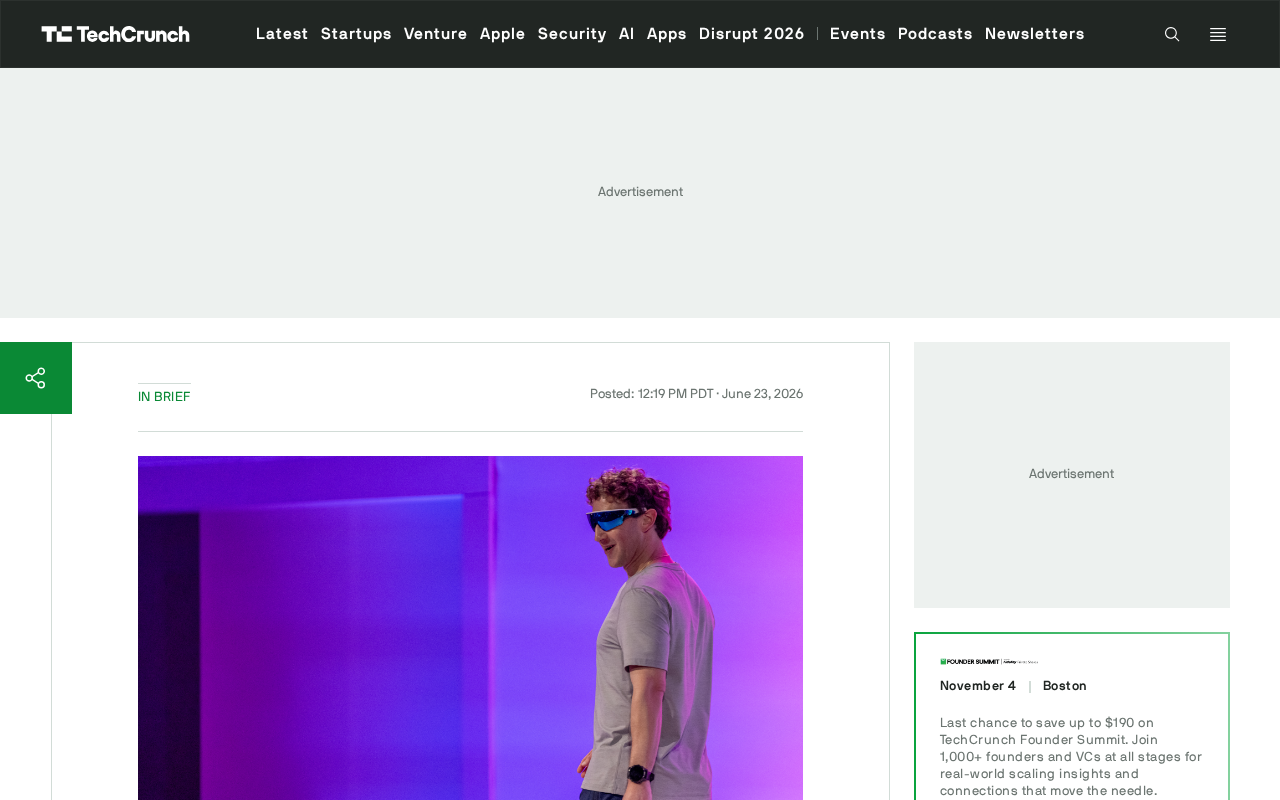
This news marks yet another significant move by Meta to find new growth engines beyond social media, and it reflects the growing interest from tech giants in the prediction market space.
What Are Prediction Markets, and Why Are Giants Piling In?
A prediction market is a platform that allows users to "bet" or "trade" on the outcomes of future events. Users can make predictions on everything from political elections and sporting events to economic indicators and tech product launches, with market prices reflecting the crowd's real-time assessment of the probability of each outcome.
The theoretical foundation of prediction markets traces back to Austrian economist Friedrich Hayek's 1945 theory of "dispersed knowledge" — the idea that market prices can effectively aggregate information scattered across countless individuals. The modern prototype of prediction markets was the Iowa Electronic Markets, established by the University of Iowa in 1988, originally designed to predict U.S. presidential election outcomes. Its predictions outperformed mainstream polls on multiple occasions. Since then, prediction markets have evolved from academic experiments into commercial ventures. Kalshi, founded in 2014, and Polymarket, founded in 2020, represent two distinct development paths — the regulated compliance route and the blockchain-based decentralized route, respectively.
The information-aggregation advantage attributed to prediction markets stems from the concept of the "Wisdom of Crowds." Statistician Francis Galton discovered as early as 1907 that the median of a crowd's guesses about the weight of an ox at a county fair was almost perfectly accurate. Nobel laureate Daniel Kahneman's research further demonstrated that when participants have diverse information sources, make independent judgments, and aggregate them through a market mechanism, the crowd's predictions often outperform those of most individual experts. By requiring participants to put real money behind their judgments, prediction markets effectively filter out noise — because incorrect judgments lead to financial losses, this incentive mechanism encourages participants to evaluate information more carefully.
In recent years, prediction market platforms led by Polymarket have risen rapidly, experiencing explosive growth particularly during the 2024 U.S. presidential election. Polymarket is built on the Polygon blockchain, with users trading in USDC stablecoins. Each prediction contract's price fluctuates between $0 and $1, representing the market's real-time assessment of the probability of a given event. During the 2024 U.S. election, Polymarket's cumulative trading volume surpassed billions of dollars, and its prediction of Trump's winning probability closely matched the final result weeks before the election — while multiple traditional polling organizations still showed a tight race. This performance catapulted prediction markets from a niche financial tool into a focal point of mainstream media attention, with outlets like CNN and Bloomberg routinely citing Polymarket data in their election coverage.
This "wisdom of crowds"-driven approach to information aggregation is considered more accurate than traditional forecasting methods in certain scenarios. The boom in prediction markets has naturally caught the attention of tech giants. Zuckerberg's entry at this point clearly signals that he sees enormous potential in this space.
Strategic Considerations Behind Meta's Prediction Market App
The Standalone App Positioning Strategy
Interestingly, Meta has chosen to launch its prediction market as a standalone app rather than integrating it into Facebook or Instagram. This strategy carries several layers of meaning:
- Risk Isolation: Prediction markets involve financial transactions and gambling-like characteristics, operating in a complex regulatory environment. Running it independently avoids compliance risks to the core social media business.
- Precise Targeting: The core user base for prediction markets differs from typical social media users. A standalone app can deliver a more professional, focused product experience.
- Cross-Platform Synergy: Although it's a standalone app, Meta's massive social network ecosystem can serve as a powerful user acquisition channel. According to sources, platforms like Facebook and Instagram will guide users toward the app, meaning Meta can rapidly build a user base at extremely low customer acquisition costs.
This strategy of launching the prediction market as a standalone app is consistent with Meta's historical product playbook. In 2014, Facebook spun Messenger out of the main app into a standalone product. While the move initially frustrated users, Messenger ultimately grew into an independent messaging platform with over 1 billion users. Similarly, Meta's Threads was launched as a standalone app, leveraging Instagram's social graph for a cold start and surpassing 100 million registered users within five days of launch. This "standalone app + parent platform traffic" model has been repeatedly validated by Meta. Its core advantage lies in maintaining product focus and flexibility while leveraging the network effects of the existing ecosystem for rapid user acquisition.
The Differentiation Advantage of Social DNA
Meta's biggest trump card in entering prediction markets is its social graph. Most existing prediction market platforms are purely transactional products, lacking a social interaction dimension. Meta can deeply integrate prediction behavior with social sharing, friend-based competitions, group discussions, and other features to create an entirely new "social prediction" experience.
Imagine this scenario: you see a discussion on Instagram about a tech company's upcoming product launch, and you can seamlessly jump to the prediction market app to predict the launch date or product specs, then compare your prediction accuracy with friends. This kind of cross-platform seamless experience is something standalone platforms like Polymarket would find very difficult to replicate.
Industry Challenges Facing Meta's Prediction Market
Regulation Is the Biggest Uncertainty
Prediction markets face a complex regulatory landscape globally. In the United States, the Commodity Futures Trading Commission (CFTC) has had an evolving stance on prediction market regulation. The CFTC views contracts in prediction markets as a form of derivatives or swap contracts, and therefore exercises regulatory authority over them. In 2022, Polymarket was fined $1.4 million by the CFTC for offering binary options trading without registration and was required to shut off access for U.S. users. Meanwhile, Kalshi chose the compliance route, obtaining a Designated Contract Market (DCM) license from the CFTC. However, its application to list political event contracts was initially rejected by the CFTC, and the legal dispute between the two parties wasn't resolved until a federal court ruled in Kalshi's favor in 2024.
This regulatory landscape means that if Meta wants to launch a prediction market product involving real-money transactions in the U.S., it must make meticulous compliance arrangements regarding licensing, contract design, and user access. As a company already facing multiple regulatory pressures in areas like privacy and antitrust, Meta's entry into prediction markets will undoubtedly invite even more scrutiny. Notably, Meta's previous foray into finance — the digital currency project Libra (later renamed Diem) — was ultimately abandoned under fierce opposition from global regulators. This cautionary tale means Meta needs to be especially careful with its compliance strategy for prediction markets.
Impact on Existing Players Like Polymarket
If Meta does launch a prediction market product, its global monthly active user base of over 3 billion would pose enormous competitive pressure on existing platforms like Polymarket and Kalshi. However, first-mover advantage and the stickiness of professional user communities shouldn't be underestimated — core prediction market users tend to prioritize liquidity and market depth, both of which take time to build. In financial markets, liquidity refers to the ability to quickly buy or sell an asset at close to market price, while market depth measures the volume of trades a market can absorb without significantly impacting the price. After years of operation, Polymarket has built considerable liquidity pools for popular event contracts, and the ecosystem of market makers and professional traders it has cultivated is not something Meta can simply replicate in the short term. Meta's advantages lie in user scale and social distribution, but whether it can convert social users into active prediction market traders remains a key assumption that needs to be validated.
Conclusion: Competition Heats Up in the Prediction Market Space
Zuckerberg's bet on prediction markets is both an extension of Meta's diversification strategy and a rapid response to one of the hottest internet trends. The standalone app plus social traffic model demonstrates Meta's mature thinking in product strategy. But whether it can successfully navigate the complex regulatory environment and truly challenge the market position of established players like Polymarket remains to be seen. What is certain is that the prediction market space is getting increasingly crowded — and increasingly worth watching.
Related articles
AlphaGenome 2 Released: Predicting Variant Effects by Cell Type
Google DeepMind releases AlphaGenome 2, a conditional DNA sequence model predicting regulatory activity and variant effects by cell type, open via AlphaGenome API for non-commercial research. This article examines the significance of conditional modeling, API distribution trade-offs, and validation challenges.
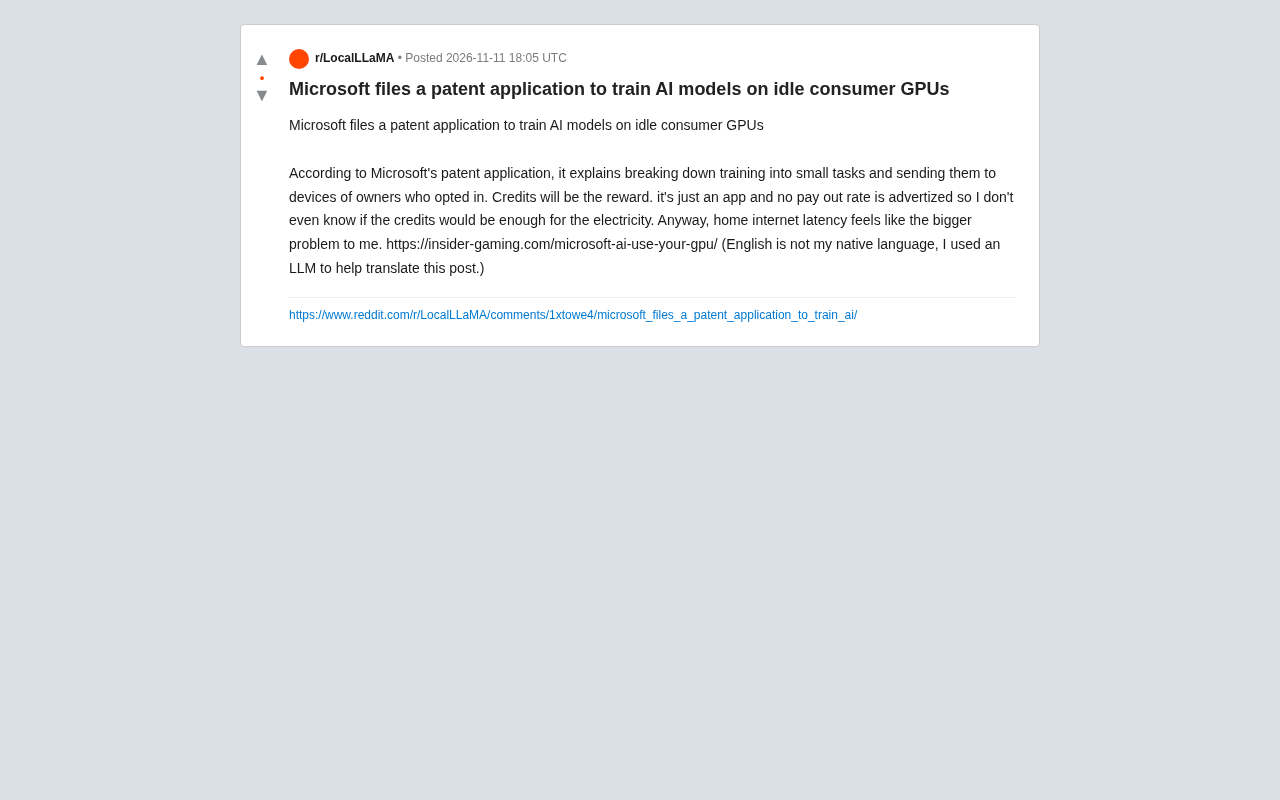
Microsoft Patent: Train AI on Your Idle GPU for Points—Is It Worth the Electricity Bill?
A Microsoft patent proposes splitting AI training tasks across users' idle GPUs with points as rewards. This article analyzes its incentive design, network latency bottlenecks, and differences from existing distributed training, exploring whether the model can be deployed.

Reddit User Shares Free Fable Credits, Sparking Discussion
A Reddit user claims to have received 3 free Fable credits, sparking debate over whether AI tool freebies are universal. This article reviews the post and common operational logic, reminding users to rely on official statements.