Microsoft 365 Price Hike of 42%: AI Feature Bundling and What Users Should Do

Microsoft 365 raises prices up to 42% by bundling Copilot AI — here's what it means for you.
Microsoft has raised Microsoft 365 subscription prices by up to 42%, citing deep integration of its Copilot AI assistant. This article breaks down the GPU compute economics behind AI inference costs, the RAG architecture driving Copilot's design, regulatory risks from EU bundling rules, and how enterprises and individuals should evaluate ROI — along with a look at Google Workspace and open-source alternatives.
Microsoft Revamps Pricing with AI as the Central Driver
Microsoft has officially rolled out new Microsoft 365 subscription pricing, with some plans seeing increases of up to 42%. According to discussions on the HackerNews community, the stated justification squarely points to AI feature integration — most notably the deep embedding of the Copilot AI assistant suite.
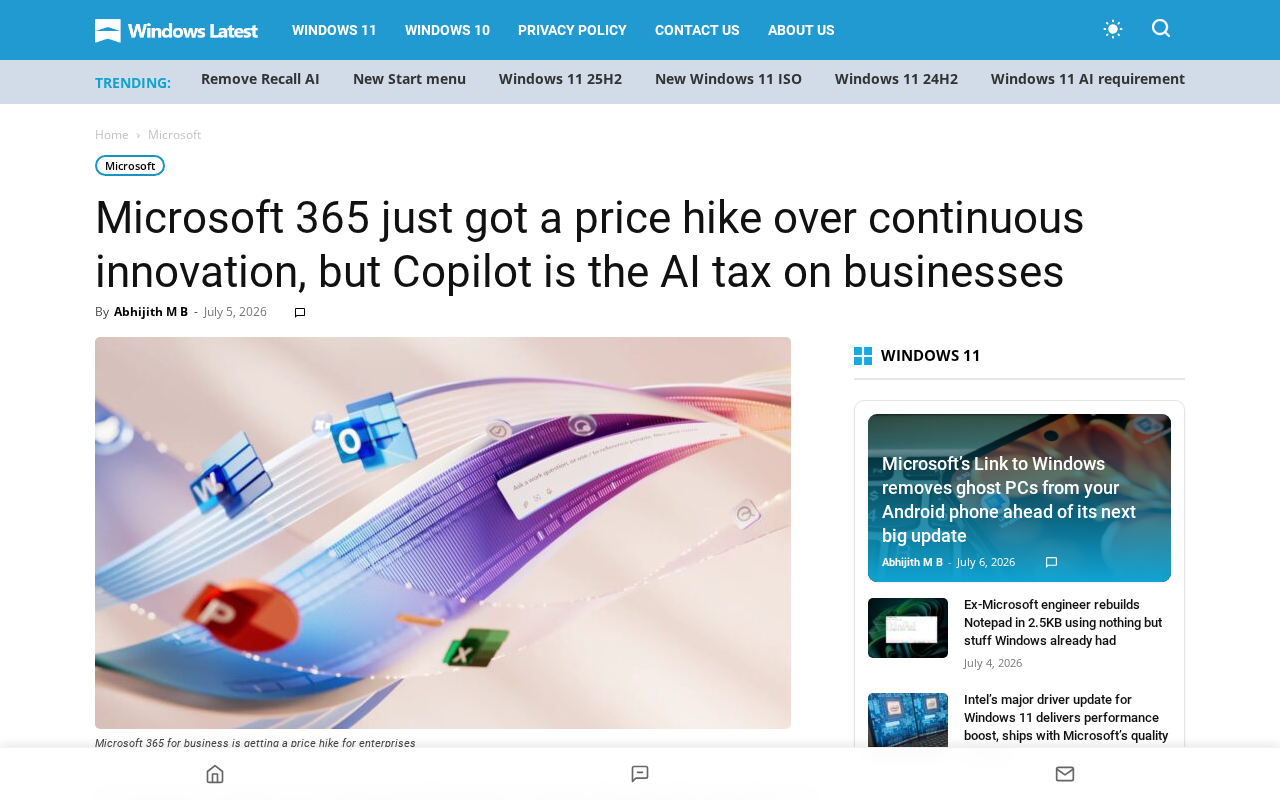
For businesses and individual users who have long relied on the Office ecosystem, this is a signal worth taking seriously. As productivity software evolves from document editing tools into "intelligent workstations" powered by large language models, repricing has a certain internal logic — but whether users are willing to pay for it is an entirely different question.
Why Does Adding AI Justify a 42% Price Increase?
The Inescapable Reality of Compute Costs
Running generative AI features costs far more than running traditional software features. Every Copilot invocation triggers an inference pass through a large-scale language model, consuming expensive GPU compute resources. Unlike traditional software — where development is a one-time cost and marginal cost approaches zero — AI features incur real, ongoing costs with every use.
To appreciate this cost gap, it helps to understand the technical economics of generative AI inference. The inference process of a large language model is fundamentally different from traditional software at a computational economics level: a model at the scale of GPT-4 is estimated to have over one trillion parameters, and each forward pass requires enormous matrix multiplication operations, with GPU compute time per response typically ranging from hundreds of milliseconds to several seconds. Crucially, inference is distinct from training — training is a one-time large-scale compute investment, while inference is a real-time, recurring cost incurred on every single user interaction. An NVIDIA H100 GPU carries a market price of $30,000–$40,000 per unit, and supporting millions of concurrent AI users requires tens of thousands of such chips — which directly explains why companies like OpenAI have operated at a loss for extended periods. Compared to a traditional database query, a single Copilot call can cost hundreds to thousands of times more in compute.
Copilot also uses a RAG (Retrieval-Augmented Generation) architecture, which layers additional operational costs on top. The core idea of RAG is to retrieve relevant document excerpts from an external knowledge base and inject them into the prompt before the language model generates a response — enabling the model to access real-time enterprise data while reducing hallucinations (instances where the model fabricates plausible-sounding but incorrect information). Microsoft Copilot's RAG implementation is built on the Microsoft Graph API — the unified data gateway for the Microsoft 365 ecosystem, providing access to users' emails (Exchange), documents (SharePoint/OneDrive), calendars, Teams messages, and other structured and unstructured data. The Graph API is essentially the "data nervous system" of Microsoft's ecosystem, connecting dozens of Microsoft cloud services through a unified REST interface, enabling Copilot to perform cross-source lookups across email, meeting notes, and documents when answering questions like "summarize all my customer communications from last week." This means every Copilot response actually involves semantic vector retrieval, multi-turn context assembly, and model inference — multiple compute-intensive steps far beyond a simple API call.
From a business logic standpoint, Microsoft's decision to pass AI-related costs onto subscription pricing is understandable. While a 42% increase is aggressive, framing it as a bundled price for "traditional Office suite + AI subscription service" makes it somewhat easier to accept.
From "Optional" to "Default": A Strategic Shift
Notably, Microsoft is transitioning AI features from "optional paid add-ons" to "built-in defaults." This means users who don't use Copilot still pay for plans that include it. This bundling strategy has generated industry-wide controversy — some users argue it effectively removes their right to opt out of paying for AI.
From a regulatory perspective, this approach also carries potential risk. EU competition regulators previously launched an investigation into Microsoft's bundling of Teams within Office 365, ultimately forcing Microsoft to unbundle the two products in Europe in 2023. This context is directly relevant to the Digital Markets Act (DMA), which came into full effect in 2023 as the EU's dedicated competition regulation targeting large digital platforms. Platforms designated as "gatekeepers" — including Microsoft, Google, Apple, Meta, and Amazon — must comply with a range of interoperability and unbundling obligations; Article 5 explicitly prohibits "mandatory bundling of core platform services with other services." Unlike the GDPR's focus on data privacy, the DMA specifically targets market competition structures, with fines of up to 10% of global annual revenue for violations and even mandatory business divestiture in severe cases. Microsoft's current strategy of embedding Copilot by default into subscription plans could trigger similar regulatory scrutiny — EU competition commissioners have repeatedly signaled they will continue monitoring how AI features are integrated into mainstream software suites. Bundling is commercially rational (reducing user decision friction, accelerating feature adoption), but when a dominant platform uses it to aggressively push a new business line, antitrust boundaries are worth watching.
Community Response: A Divide Between Perceived Value and Forced Consumption
Discussions on HackerNews revealed a clear split in user sentiment. Some tech professionals argued that if AI features genuinely improve productivity, the price increase represents a fair value exchange; others expressed frustration at being forced to pay for features they don't need.
This debate reflects a challenge facing the entire SaaS industry: Does the actual value delivered by AI features justify its price tag? The answer varies significantly across job roles — GitHub data shows developers using Copilot merge pull requests approximately 55% faster, providing a clear, quantifiable efficiency benchmark. But the value for administrative roles or basic document editing is far harder to standardize. This uneven value distribution means a one-size-fits-all subscription price hike will inevitably generate resistance from some user segments — who are, in effect, cross-subsidizing the productivity gains others receive from AI. Cross-subsidization isn't unusual in SaaS pricing (think of how enterprise plan costs are spread across heavy and light users), but when the price premium reaches 42%, the perceived cost for those being subsidized rises sharply, triggering the entirely reasonable question: "Why am I paying for someone else's AI?" For knowledge workers who heavily use document collaboration, email management, and data analysis, Copilot may genuinely save substantial time. But for users who only need basic document editing, the additional cost is difficult to justify.
Real-World Impact on Businesses and Individual Users
Enterprises Need to Recalculate
For organizations with hundreds or thousands of seats, a 42% price increase will translate directly into meaningful IT budget expansion. Enterprise IT decision-makers need to assess: will employees actually use AI features broadly? Can efficiency gains offset the added cost?
This assessment requires a systematic ROI (Return on Investment) measurement framework rather than gut instinct. Common evaluation dimensions include: time savings (hours saved in document generation, email drafting, meeting summarization), improvements in decision quality (better decisions enabled by data analysis support), and reduction in error rates (code review, document proofreading, etc.). McKinsey's 2023 research suggests generative AI has the potential to improve knowledge worker productivity by approximately 20–45%, but actual results are highly dependent on employee willingness to adopt, training quality, and workflow redesign. One critical factor to note is the J-curve effect common in AI tool ROI — productivity may temporarily dip in the early stages due to learning costs and workflow adjustments, with positive returns only becoming visible after a 3–6 month adaptation period. This means companies cannot draw conclusions from early deployment data alone, and need to design evaluation mechanisms that cover a complete adaptation cycle. When assessing whether a 42% price increase is justified, enterprises should incorporate these variables into quantitative models and develop differentiated seat allocation strategies by role — providing full-featured plans for R&D and analytics roles that use AI heavily, while maintaining lower-cost plans for basic-use roles, in order to manage the incremental increase in total IT spend.
The Growing Appeal of Alternatives
Price increases tend to drive users toward alternatives. For cost-conscious individuals and small teams, Google Workspace (which includes the Gemini AI assistant with relatively flexible pricing), open-source office suites (such as LibreOffice paired with locally deployed open-source LLMs like Llama for zero incremental AI cost), and independent AI tool combinations (pairing ChatGPT or Claude with basic productivity software) may all become more attractive options.
Microsoft's pricing strategy is fundamentally also a stress test of its ecosystem lock-in strength — how deep does users' dependence on Office run, and how large a price increase will they tolerate? The core sources of ecosystem lock-in include: file format compatibility (.docx/.xlsx as de facto standards), workflow habits (keyboard shortcuts, interface memory), and deep integration with enterprise IT infrastructure (Active Directory, Azure AD, etc.). A price increase is essentially measuring the "elastic ceiling" of these lock-in factors — if switching costs are high enough, users will accept the increase; otherwise, a migration wave may be triggered.
The Broader Industry Implication: The AI Tax Is Going Mainstream
Microsoft's price hike is not an isolated event — it reflects a broader industry-wide repricing as software enters the AI era. As large model capabilities are increasingly embedded into all manner of SaaS products, the "AI tax" is becoming a widespread phenomenon.
This trend has followed a clear trajectory over the past two years: Salesforce raised prices on some enterprise plans after launching Einstein GPT; Adobe increased pricing on relevant Creative Cloud plans by approximately 30% after integrating Firefly AI; Zoom introduced its AI Companion feature with an associated premium; and GitHub Copilot is offered as a standalone subscription (personal: $10/month, enterprise: $19/month). Price premiums have generally clustered in the 20–50% range, broadly consistent with Microsoft's current increase.
Looking at broader SaaS industry patterns, products that deeply embed AI capabilities into workflows consistently achieve higher Net Revenue Retention (NRR) than purely tool-based products. NRR is a core indicator of SaaS business health, calculated as (revenue from existing customers in the current period) / (revenue from those same customers in the prior period) × 100%; a figure above 100% means revenue grows even without adding new customers. AI features improve NRR through three mechanisms: they increase product usage depth (making it harder for users to leave), create upsell opportunities (tiered pricing for advanced AI capabilities), and raise switching costs (AI features become harder to migrate once deeply integrated with enterprise data). This provides a structural foundation for ongoing price increases and explains why major software vendors are racing to bundle AI features into core subscriptions rather than selling them separately. The shared commercial logic: major software companies need to convert their substantial upfront AI R&D and infrastructure investments into sustainable business returns, and raising subscription prices is the most direct monetization path. Users may increasingly find that almost every tool they regularly use is raising prices under the banner of "AI enhancement" — the mainstreaming of the AI tax is becoming a new standard expense for digital workers.
This raises a question worth pondering: should AI feature commercialization take the form of optional add-on subscriptions that give users genuine choice, or default bundling that drives mass adoption? The former respects user autonomy but may slow adoption; the latter can rapidly scale AI usage but risks generating user backlash. Microsoft has leaned toward the latter — and the market response will serve as an important reference point for the entire industry.
Conclusion: Evaluate Rationally, Don't Overpay for Features You Won't Use
On the surface, this round of Microsoft 365 price increases is a pricing adjustment. In substance, it reflects a profound transformation of AI technology from "experimental feature" to "core business model." For users, the key is to honestly assess your actual need for AI features and avoid paying a premium for capabilities you won't use. For the industry as a whole, Microsoft's pricing experiment will be an important case study in whether AI monetization can win market acceptance.
In this phase — where AI infrastructure costs have yet to decline significantly, GPU supply chains remain constrained by geopolitical factors (TSMC advanced process capacity and U.S. semiconductor export controls continue to affect GPU supply and pricing), and improvements in inference efficiency (through Transformer architecture optimization, model distillation, quantization compression, and similar techniques) have yet to catch up with the pace of model scale growth — pricing battles like this one may only be getting started.
Related articles

Gaussian Process Bandit Optimization: Exploration Strategies and Inference Regret Guarantees
Cumulative regret guarantees in Bayesian optimization fail to reflect final recommendation quality. This article examines a new study that provides inference regret guarantees for Gaussian process bandit optimization through exploration query strategies and fill distance analysis, validated on hyperparameter optimization and control tasks.

The Most Detailed Codex Guide on Bilibili: From Installation to Real-World Practice
The most detailed Codex guide on Bilibili: from app store installation to daily work mode configuration, with a real coffee shop project demonstrating file organization, data extraction, dashboard creation, and other practical tasks. Learn to use Plan Mode and desktop pets to leverage Codex efficiently.

Appearance Compensation in Volume Rendering: Why RGB Accuracy Cannot Guarantee Density Correctness
Volume rendering research reveals that volumetric data perfectly reproducing external RGB views may still contain density errors: appearance compensation can double central density and keep external rays unchanged even when L2 error exceeds 14.52%. Density recovery depends on appearance capacity, spatial resolution, and measurement design.